Google's AI watermarking technology 'SynthID' is being adopted by OpenAI.

Images and text generated by Google's AI are watermarked using a technology called '
Tools to understand how content was created and edited
https://blog.google/innovation-and-ai/products/identifying-ai-generated-media-online/

Advancing content origins efforts towards a safer and more transparent AI ecosystem | OpenAI
https://openai.com/ja-JP/index/advancing-content-provenance/
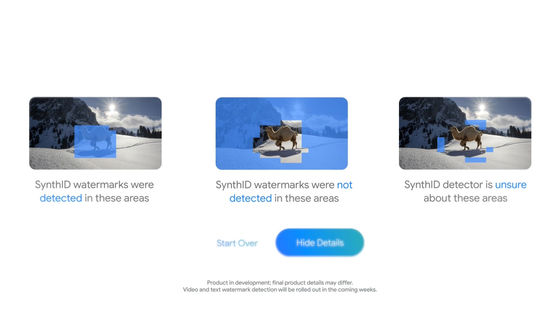
SynthID is a technology that embeds signals imperceptible to humans into AI-generated images, videos, audio, and text. In the case of images, the signals are less likely to be lost even when processed such as cropping, rotating, or taking screenshots, and in the case of text, the signals are said to remain effective even if some words are changed or the wording of sentences is slightly adjusted.
Google expands its 'SynthID' feature, which uses digital watermarks on AI-generated content to prevent the spread of fakes, to text and video. How exactly does it watermark text? - GIGAZINE

OpenAI will adopt SynthID. OpenAI plans to initially apply SynthID to images generated through ChatGPT, Codex, and the OpenAI API. This, along with 'content credentials' which store content history information as metadata, will improve the identifiability of content.
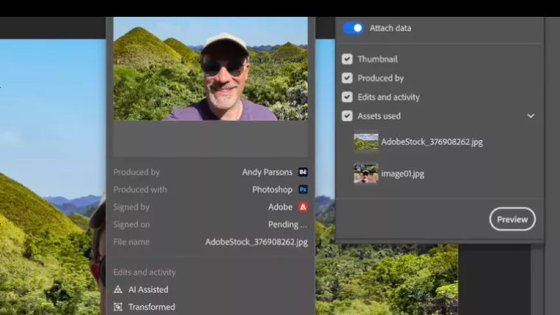
Content credentials are a mechanism developed by the Coalition for Content Provenance and Authenticity (C2PA), a standardization body in which OpenAI also participates. They attach metadata to content, such as the creator, alternative text, and whether or not AI was used. This data can be viewed in content credential-compatible applications (such as Adobe Photoshop), allowing users to learn more about its history.
How does the 'AI watermarking' promoted by Microsoft and Adobe work? - GIGAZINE

Google has also adopted content credentials in its Pixel devices, embedding metadata in captured images. Previously, this was only implemented for images on the Pixel 10, but it will now be extended to videos and implemented in the Pixel 8 and Pixel 9 as well.
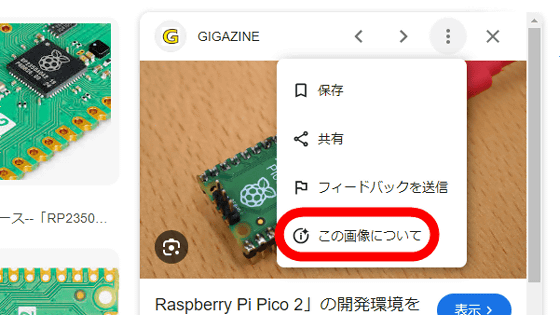
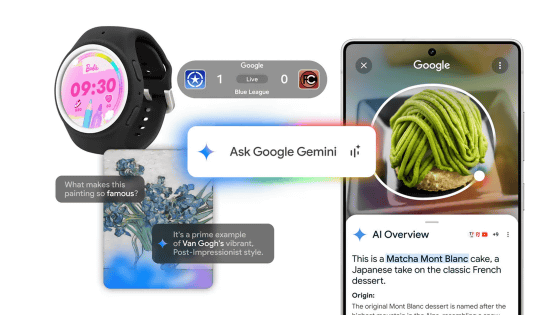
Google also offers a wide range of SynthID detection features, and recently added SynthID verification for images, videos, and audio to its Gemini app. Now, they are extending this detection feature to Google Search and plan to introduce it to Chrome within the next few weeks. You will be able to check the source of images using Google Search's Lens, AI mode, search within a range, and Gemini in Chrome.
In addition to OpenAI, SynthID is also used by companies such as NVIDIA, Kakao, and ElevenLabs.
Related Posts:



in AI, Posted by log1p_kr