Colin Angle, the creator of Roomba and founder of iRobot, has unveiled 'Familiar,' an emotionally intelligent robot that responds to its owner's emotions like a dog.

Familiar Machines & Magic | physical AI
https://www.familiarmachines.com/
Familiar Machines and Magic Brings AI to Life At Home - IEEE Spectrum
https://spectrum.ieee.org/familiar-machines-and-magic
The creator of Roomba is back with a furry robot companion | The Verge
https://www.theverge.com/ai-artificial-intelligence/922947/roomba-creator-new-robot-familiar-machines-magic-ai-launch
The Roomba Guy's Second Act: A Robot You'll Want to Snuggle - WSJ
https://www.wsj.com/tech/ai/familiar-machines-and-magic-robot-c8711e45
Familiar is a quadruped robot specially designed for human-robot interaction. Equipped with custom-designed fur with built-in touch sensors, a vision system, a microphone array , and an audio system, it can replicate the movements and expressive behaviors of a living animal. The onboard edge AI is a custom-designed, small, multimodal model optimized for social reasoning, which combines vision, hearing, language, and memory to output social responses in real time.
FM&M co-founder and CEO Angle explained that Familiar's appearance is 'designed to look like a highly abstract bear.' Following the success strategies of robots like Paro , the world's most therapeutic robot, and Pleo , the dinosaur-shaped robot, Familiar is intentionally designed not to resemble animals widely known as pets, such as dogs and cats. IEEE Spectrum explained that 'if the shape is not associated with an animal you have directly interacted with, you won't have any preconceived notions when interacting with the robot.'
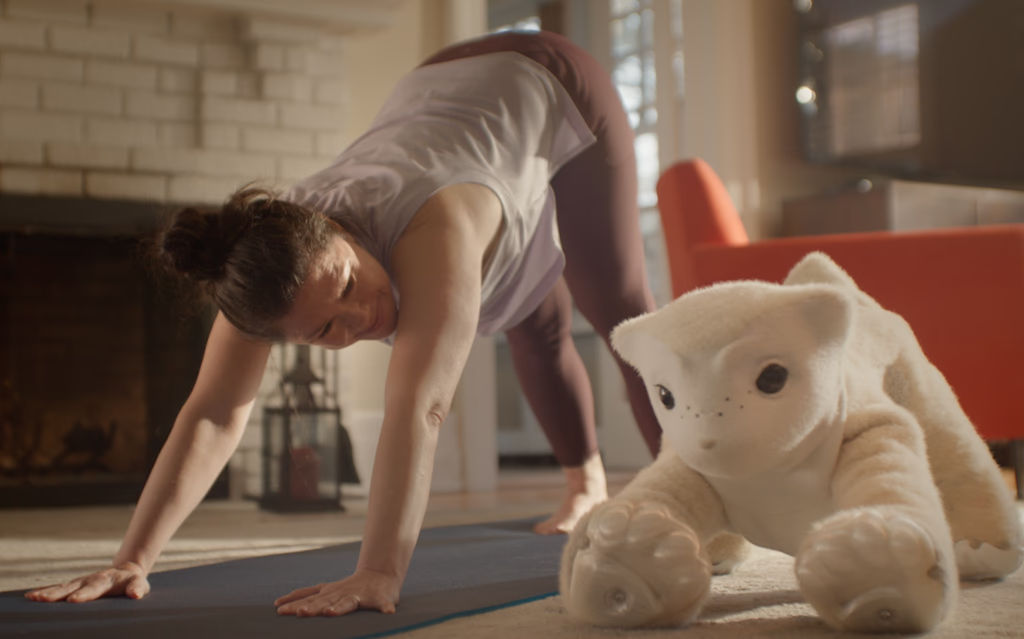
FM&M lists four features of Familiar on its official website.
The first is 'supporting the reduction of the user's burden.' Familiar is a reliable presence whenever needed, encouraging children to play without using screens like TVs or smartphones, and listening to users without prejudice when they want to vent their frustrations.
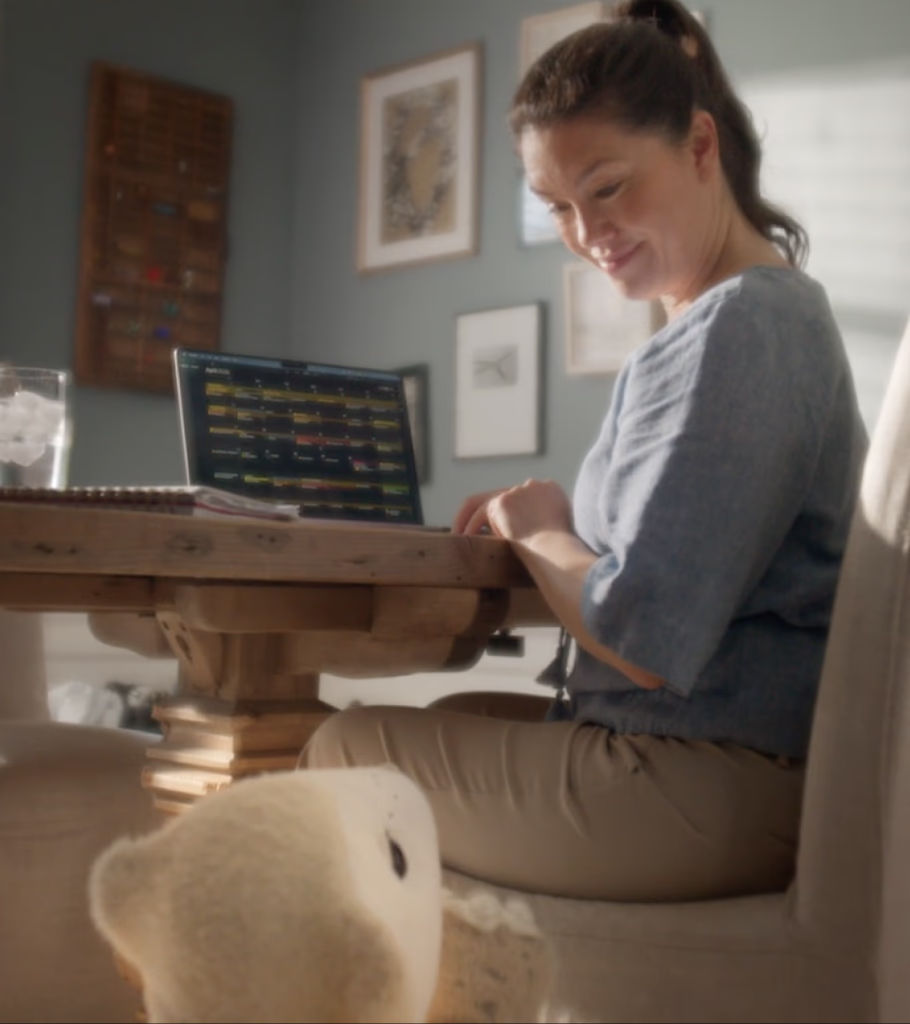
The second point is that they are 'sensitive to emotions.' They react to the user's facial expressions, tone of voice, and gestures, rubbing their noses against the user if they sense the user is stressed, tilting their heads when the user is smiling, and wagging their tails when the user is excited.
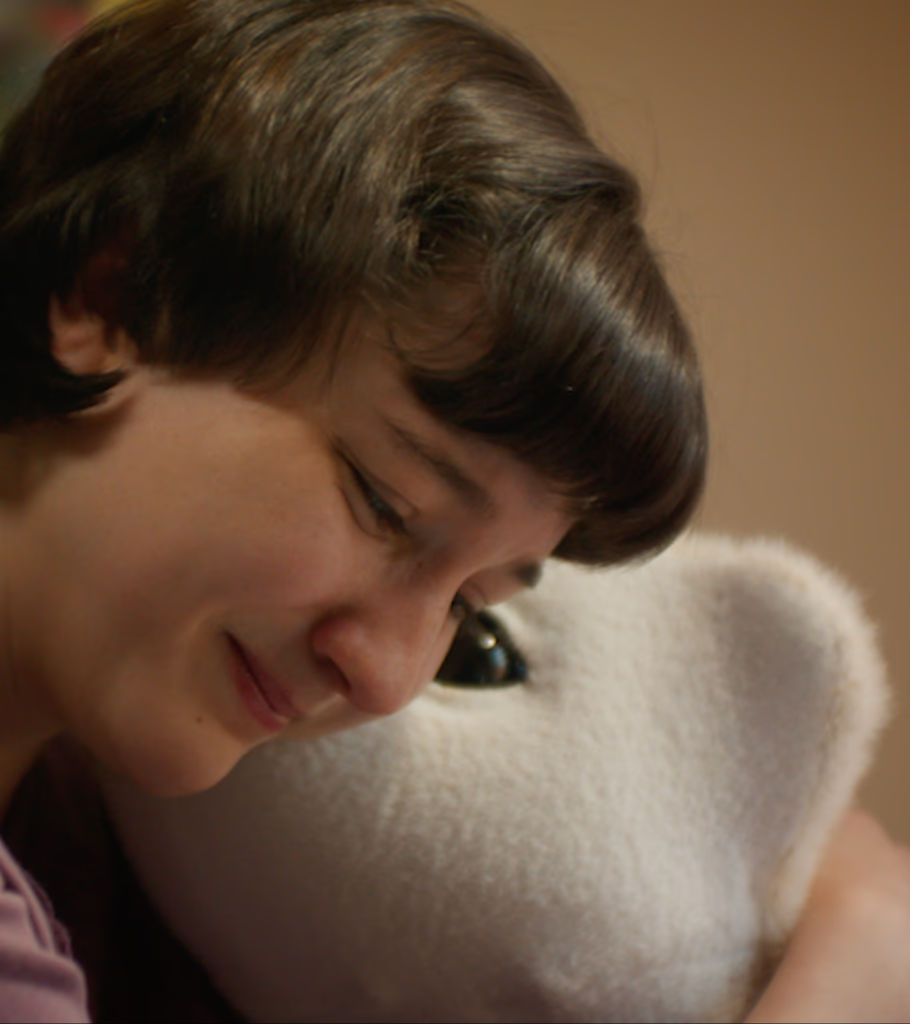
The third point is that it's 'designed to fit the user's routine.' Familiar learns the rhythm of the household and adapts over time. It will gently tap you with its paw when it's time to get moving, or gently nudge you when you're watching a lot of negative news, acting to encourage habits the user is trying to develop or interrupt patterns they are trying to break.
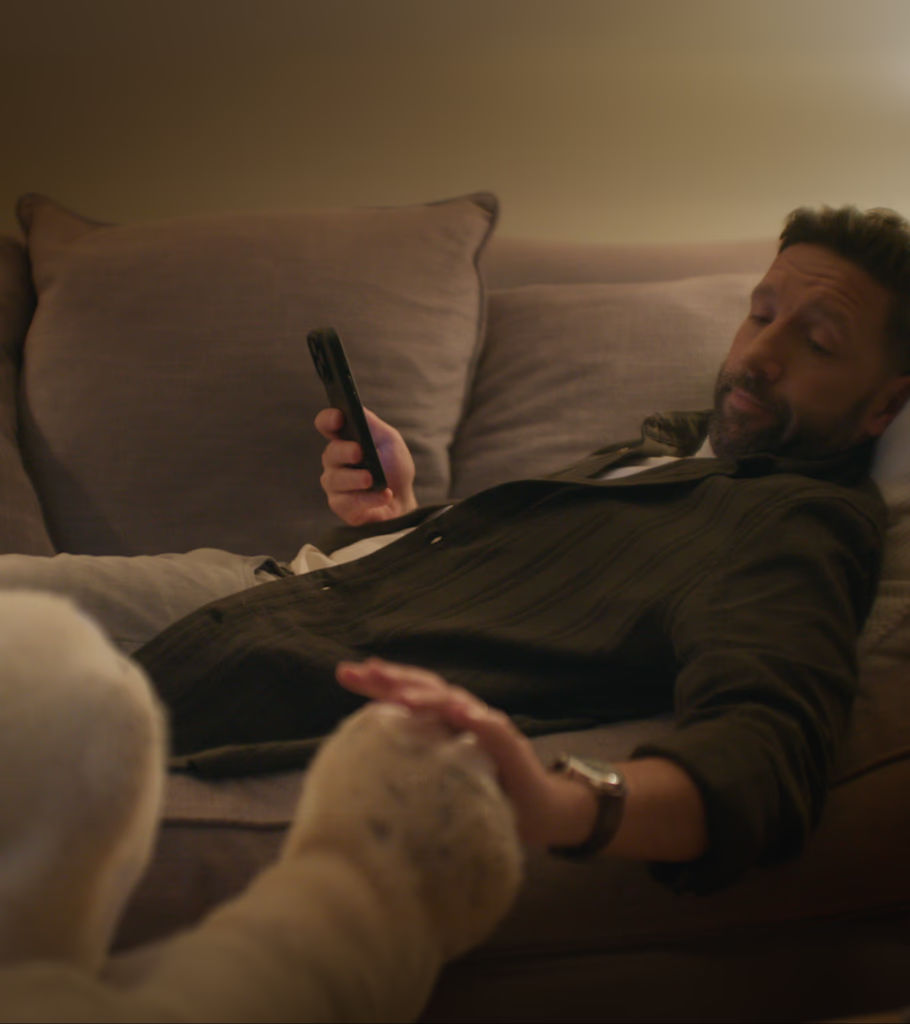
The fourth point is that it is an 'unconventional companion.' Familiar is a robot suitable for both people who cannot have pets and those who already have pets, and it is capable of understanding and supporting users in ways that biological pets cannot. It is emphasized that it is not a replacement for humans or pets, but rather a complementary presence.
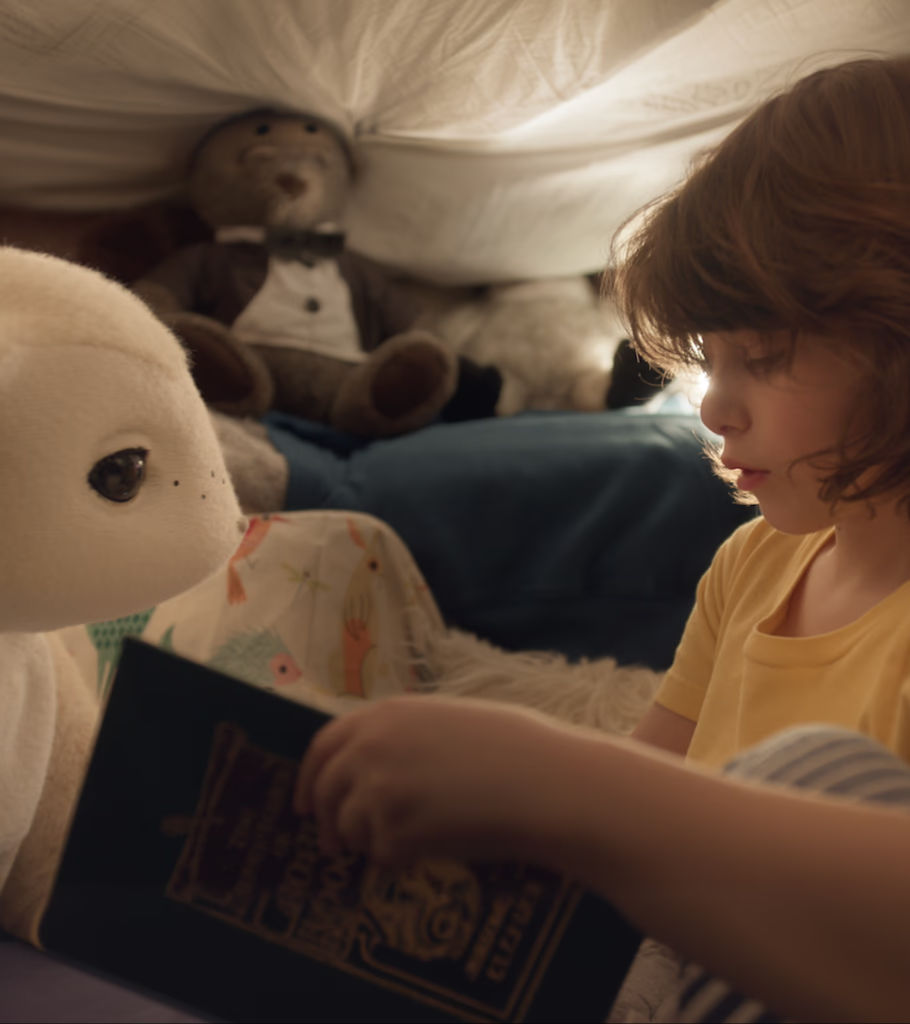
Familiar was announced at the WSJ Future of Everything conference, an AI-related conference hosted by the Wall Street Journal (WSJ). You can see Familiar in action in the video below.
This robot is wild. Familiar Machines & Magic just unveiled it at the Wall Street Journal Future of Everything conference. It's got AI, autonomy and is adorable. More to come on this.
#WSJFutureofEverything pic.twitter.com/bEo9hAcY5D — Lance Ulanoff (@LanceUlanoff) May 4, 2026
Familiar builds memories and unique personalities through all interactions, so the longer you spend together, the richer and more personal the relationship becomes. However, the collected data is stored only on the device, and users can control whether and when it is shared with the cloud, so user privacy is properly protected.
CEO Angle said of Familiar, 'Our goal is to position this robot as a robotic familiar that lives with you and helps reinforce healthy habits.' Angle explained that it is closer to a service animal than a pet, saying, 'Our idea is to have technology in your home that is very loyal, understands you, helps you find an ideal routine, and plays a positive role.'
Morgan Pope, Creative Director at FM&M, explains that there were two turning points on the road to Familiar. The first was the emergence of Disney's bipedal robot, which could walk flexibly on various terrains using reinforcement learning. Seeing this, Pope explains, 'it proved that dynamic movements could be performed without needing perfect backlash- free actuators or extremely expensive hardware.'
Disney releases video of 'a bipedal robot capable of rich character development through reinforcement learning' - GIGAZINE
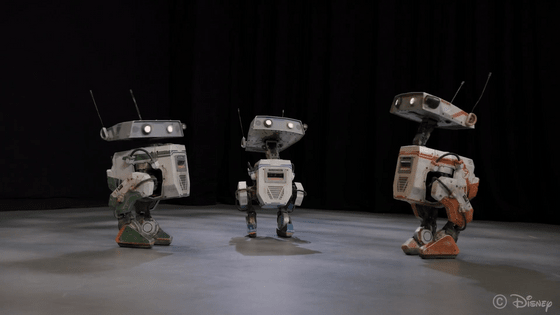
The second is generative AI. Pope said that generative AI is good at creating things that 'seem intelligent,' which can give characters consistency and a sense of life.
However, regarding the social home robotics industry that FM&M will be entering, IEEE Spectrum points out that 'Familiar will have to make considerable efforts to re-establish this category on its own, which declined between 2012 and 2019.' In fact, it notes that several well-funded startups with high profile have failed to establish a social home robotics business.
In response, CEO Angle explained, 'What's important is to create the right sense of expectation and meet that expectation. Familiar lives in your world and acts according to your rules. If you don't spend time with Familiar, pet it, or interact with it, our attempt won't be a success. Familiar is not trying to replace a real friend. Familiar is an artificial life form that lives in your world, with its own personality and goals, and we hope that users will actively interact with it through its connection with a special caregiver.'
In fact, Familiar has long-term goals to achieve in order to improve users' lives, and it tries to connect with users socially in order to achieve these goals. According to CEO Angle, once you welcome Familiar into your home, it will understand its role in your life within a few days and try to reinforce routines such as 'inviting people over for dinner,' 'snuggling while watching TV,' and 'greeting you when you come home.'
Furthermore, with the recent advancements in AI, it would have been possible to create a robot that could converse directly with humans. When asked why they chose not to have Familiar converse directly with users, CEO Angle explained, 'I believe that there is currently no technology that allows AI to converse with humans in a safe and responsible way. If carefully designed, users will surely be surprised at how powerfully emotions can be conveyed through a tail, twitching ears, blinking eyes, and eyebrows that express joy, sadness, anger, and frustration.'
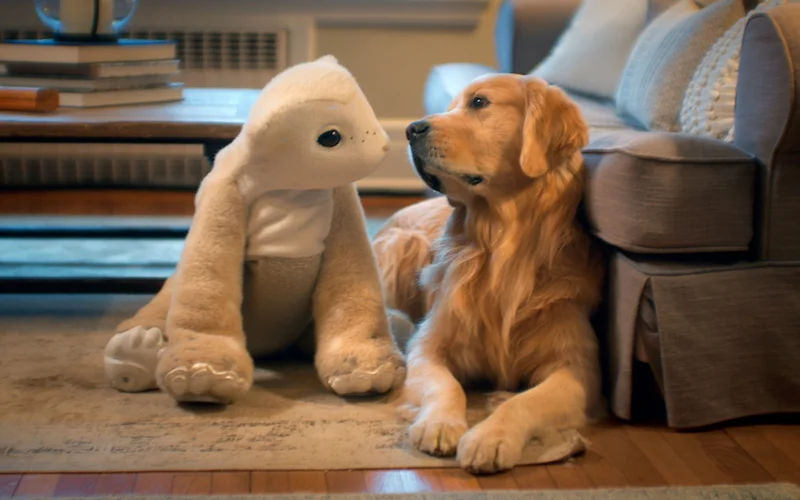
Furthermore, Familiar is designed so that, among the audio and visual inputs presented to a small, multimodal model, it only undergoes a generation process for specific inputs to roughly determine what to do. This is intended to make Familiar's behavior not entirely mechanical, but rather human and emotional.
CEO Angle cited not only general households but also elderly care as potential applications for Familiar, stating, 'Familiar is a platform that can appeal to a wide range of people, but it also has the potential to specialize in areas such as elderly care and childcare support. We designed a machine from the ground up that focuses on human connection, and the underlying technology can be applied to other forms as well.'
Please note that the release date and price of Familiar are unknown as of the time of writing this article.
Related Posts: