How did someone with no prior software release experience win the Anthropic-sponsored Opus 4.6 hackathon? What are the requirements for AI products?
In February 2026, Anthropic announced ' Claude Opus 4.6 ' and held a hackathon called ' Built with Opus 4.6 ' to compete on how to best utilize Opus 4.6. Approximately 13,000 people applied, and 500 were selected to participate. The winner of the hackathon was a lawyer from California with no prior experience releasing software, and several other non-experts also received awards. Dexter Hadley of Systems Research Institute explains the important points about AI-based software that can be gleaned from the results of this hackathon.
The Lawyer Who Won — blogs.canonic.org
https://hadleylab.org/blogs/2026-03-22-the-lawyer-who-won
'Built with Opus 4.6,' a virtual hackathon hosted by Claude Code, is an event that challenges participants to 'see what they can do in a week using Claude Code' in order to push the boundaries of new possibilities for Opus 4.6, which was Anthropic's most powerful model at the time. Co-hosted by Cerebral Valley , which organizes and mediates AI-related events, and Anthropic, the Claude team judges will select winners and award them Claude API credits worth a total of $100,000 (approximately 16 million yen) as funding for their projects.
The results for 'Built with Opus 4.6' can be viewed on the following page.
Meet the winners of our Built with Opus 4.6 Claude Code hackathon | Claude
https://claude.com/blog/meet-the-winners-of-our-built-with-opus-4-6-claude-code-hackathon
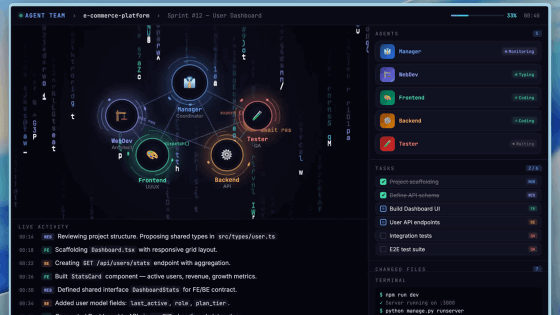
Mike Brown's 'CrossBeam,' which was selected as the number one project in Built with Opus 4.6, is an idea that uses AI to simplify the complex procedures involved in obtaining building permits for homes in California. Builders can simply drag and drop blueprints and modification instructions into CrossBeam, and parallel processing sub-agents will analyze the documents, create a spatial index, and assign the appropriate agent to each modification, so that builders can get the exact plan they need to get approval. Brown said, 'People tend to think that California is in a housing crisis, but that's not the case. The problem is obtaining building permits. If we can solve the crisis that is occurring on both the applicant and approval sides in California, we may actually be able to solve California's housing crisis.'
Crossbeam: Built with Opus 4.6 Claude Code Hackathon - YouTube
Mr. Brown works as a traffic lawyer and has only about a year of programming experience, and no experience releasing software. However, he reportedly built CrossBeam by giving instructions to Claude Code, 'without writing or reading a single line of code.'
In addition, Michał Nedsicco, who won third place, is a cardiologist who has been involved in the development of medical software, and Kieyune Kajibwe, who won the 'Keep Thinking Award,' is a road engineer. Neither of them had any prior experience releasing software, but they won awards for software that utilized their expertise. Built with Opus 4.6 had 500 participants, and although most of the participants were developers, three out of the five award winners had no prior experience releasing software.
postvisit.ai - built with opus 4.6 hackathon - YouTube
Hadley pointed out, 'The lesson everyone has learned is that expertise trumps coding. CrossBeam works because Mr. Brown understands building permit laws and knows exactly what flaws can cause delays and failures.' Highly advanced coding AI is enabling experts, rather than developers, to directly contribute their expertise as they build software. Hadley stated, 'This is not a passing fad, it's an irreversible change.'
On the other hand, according to Hadley, the demonstration presented in Built with Opus 4.6 was merely a theoretical proof, and it did not prove whether the software would still function correctly six months later or whether it could handle various real-world scenarios. Furthermore, it seems that the ability to audit the output results or understand the reasoning process was not a priority in Built with Opus 4.6. When actually deploying software, AI coding also carries the concern of becoming a black box, where it becomes impossible to explain the system's operation if the experts who built the software leave, exceptional cases occur, or regulations change.
Hadley stated, 'At the Anthropic hackathon, we concluded that the new competitive advantage in AI is expertise. That's half true, but expertise is only the raw material. True competitive advantage is accumulated expertise, expertise that survives even when the people who possess it change, domain expertise that withstands regulatory audits and is trusted by institutions. The hackathon winners proved that the era of gatekeeping by developers is over. The remaining question is whether what they develop is trustworthy, manageable, and accountable at an organizational level.' Hadley also mentioned that his company, CANONIC , promotes its ability to provide 'governance' to ensure that AI-designed apps by experts function in real-world applications.
Anthropic released 'Claude Opus 4.7,' the direct successor to Claude Opus 4.6, in April 2026. The ' Built with Opus 4.7 ' hackathon, using Opus 4.7, will be held from April 21st to 26th, 2026, and six winners are expected to be selected.
Claude Opus 4.7 Released, Improved Instruction Tracking and Image Recognition Capabilities, while Maintaining the Same Price as Opus 4.6 - GIGAZINE

Related Posts: