How did Cleopatra, the last queen of Egypt, lose everything?

The educational YouTube channel
How the Last Queen of Egypt Lost EVERYTHING - YouTube
Generally, when people refer to 'Cleopatra,' they are referring to Cleopatra VII, the last queen of the Ptolemaic dynasty of ancient Egypt. Nightshift first cited the execution of her sister , Arsinoe IV , as an episode that illustrates Cleopatra's character. Arsinoe IV, who opposed Cleopatra after she allied with Julius Caesar of Rome, was defeated, captured, and paraded through the streets as punishment. Cleopatra ordered Arsinoe IV's execution, but thanks to Caesar's wishes, Arsinoe IV was spared the death penalty. However, records show that after Caesar's assassination, Arsinoe IV was ultimately killed by those in power acting on Cleopatra's orders.
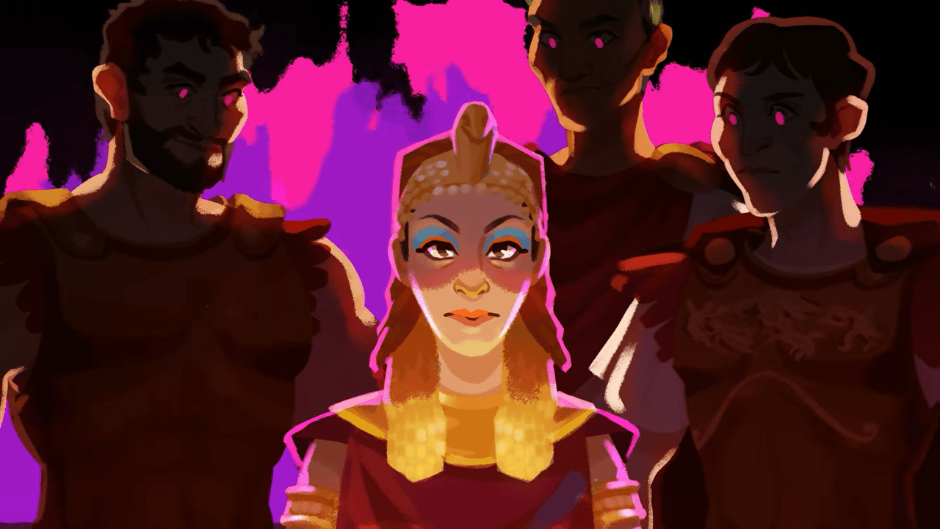
Nightshift points out that Cleopatra, who took such an extreme stance even towards her own family, was a 'traitor by nature.' In 51 BC, at the age of 18, Cleopatra began co-ruling with her brother Ptolemy XIII. Incidentally, in the Ptolemaic dynasty, inbreeding was common practice to keep power within the bloodline, and Cleopatra married both Ptolemy XIII and her brother Ptolemy XIV to co-rule.
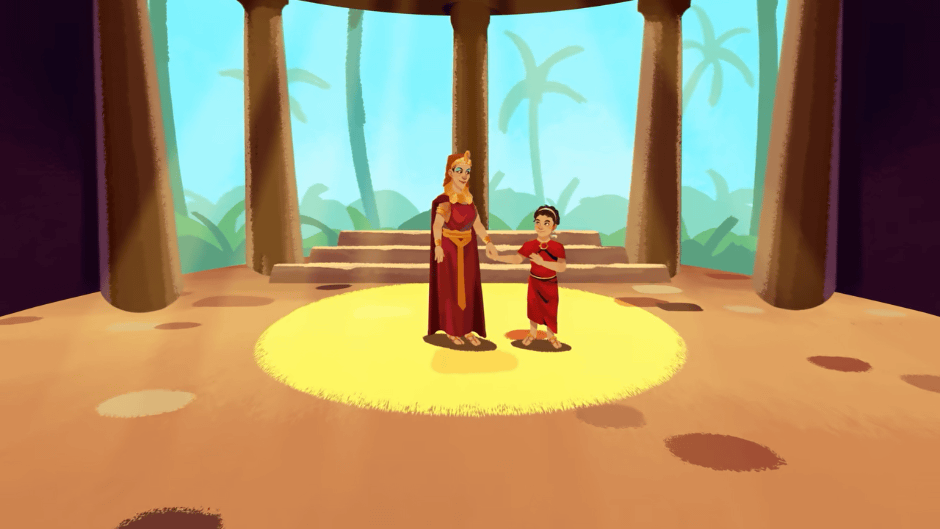
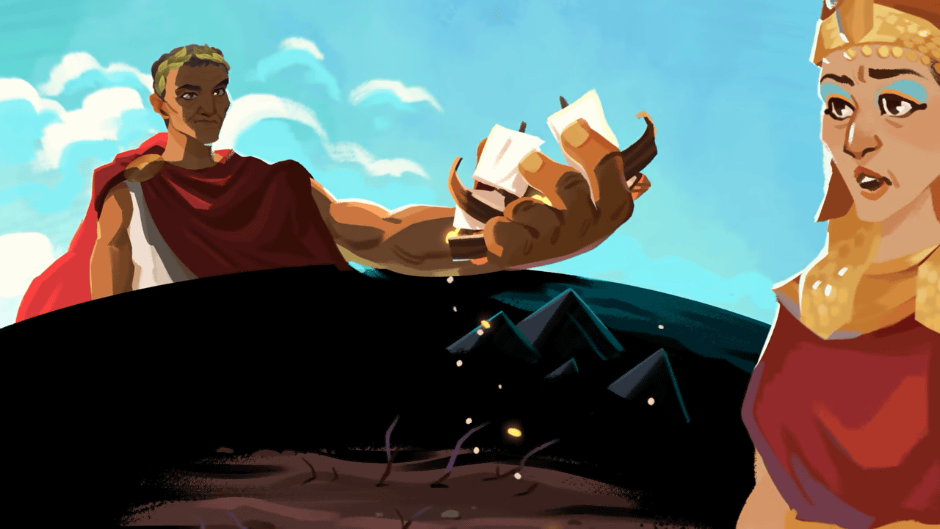
At the time, the Ptolemaic dynasty relied on Rome as its main trading partner for surplus grain, but Rome viewed Egypt as a province rather than a partner, and Cleopatra maintained her power by appeasing Rome. However, she supplied ships to Roman creditors and paid bribes that involved huge debts, and the economy suffered a major blow when poor harvests occurred due to low water levels around the Nile River, leading to strong opposition from the inhabitants.
For Cleopatra, both her sister Arsinoe IV and her 10-year-old brother Ptolemy XIII posed a potential threat in the struggle for the throne. Ptolemy XIII's advisors were dissatisfied with Cleopatra's monopolistic political actions despite their joint rule, and they worked to sow resentment in Ptolemy XIII while simultaneously directing the people's anger over the worsening economy towards the queen. As a result, in the summer of 49 BC, Cleopatra was banished from the city and her name was erased from history.

Cleopatra had once been completely overthrown, but she used her remaining funds to assemble an army of mercenaries and prepare for a counterattack. Meanwhile, Caesar, the hero of Rome, arrived in Egypt to collect unpaid debts. Cleopatra returned to the city to meet Caesar in person and gain his support to regain power, and devised a plan to hide in a bedding bag and be carried into Caesar's room.
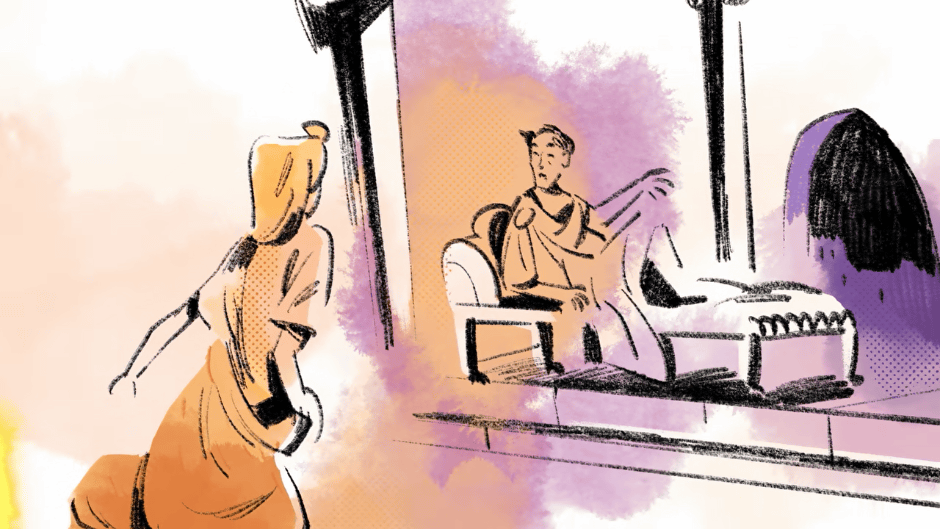
This secret meeting allowed Cleopatra to gain Caesar's support, putting her in conflict with Ptolemy XIII's side and her sister Arsinoe IV, who had gained support as a 'queen untainted by Rome.' The battle against Arsinoe IV and her rebel army lasted for about four months, but it was eventually decided by Roman reinforcements. Ptolemy XIII drowned in the Nile, and Arsinoe IV was taken prisoner. Cleopatra then married her other brother, Ptolemy XIV, and restored the throne through joint rule.
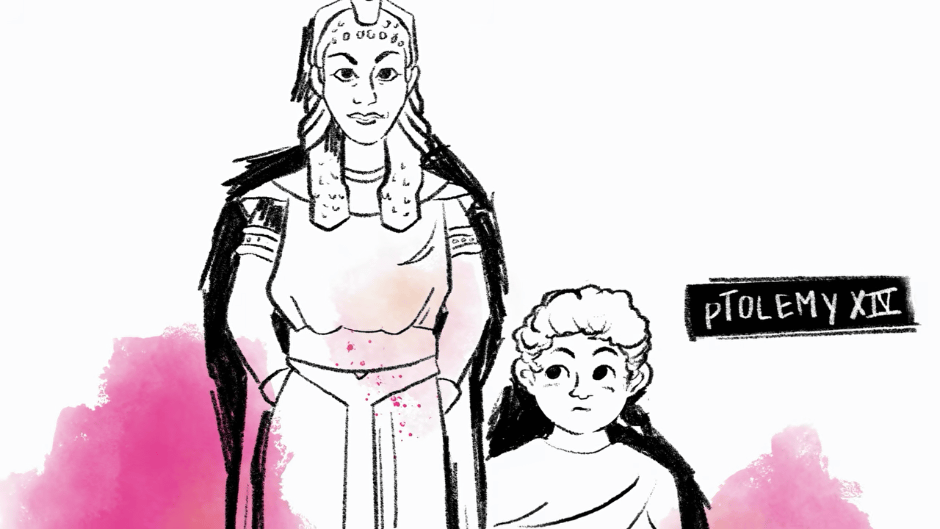
Cleopatra bore children with Caesar and seemed to reign as an absolute ruler with strong ties to Rome. However, Rome, which opposed Caesar, viewed her as an enemy, claiming that 'Cleopatra was distancing Caesar from Roman values.' Furthermore, Caesar, against Cleopatra's wishes, exiled Arsinoe IV instead of executing him at the request of the crowd, so things did not go as Cleopatra wanted. Then, in 44 BC,

Cleopatra attempted to solidify her power by executing Ptolemy XIV, with whom she had been co-ruling, and installing Caesarion, then three years old, as her successor. Meanwhile, in Rome,
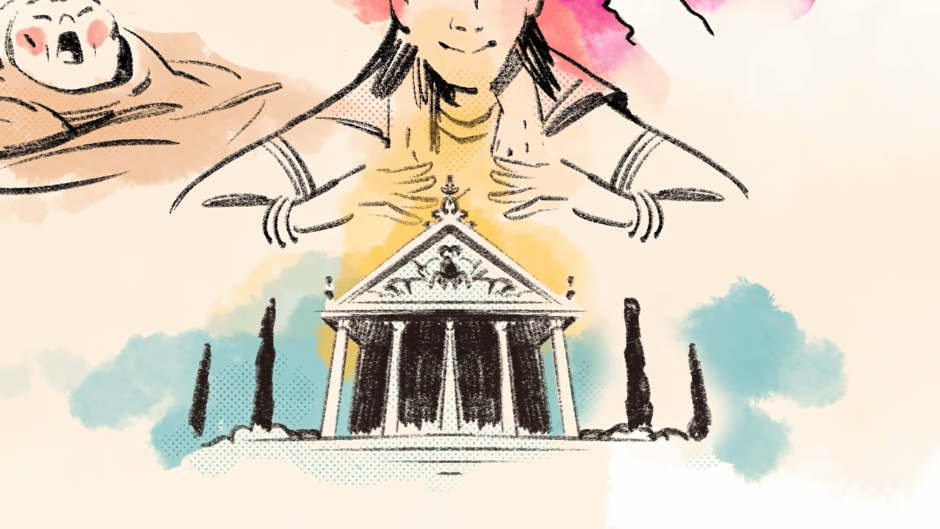
Antony, demonstrating his power and loyalty to Cleopatra, declared Caesarion to be the true son and successor of Caesar, the 'King of Kings.' Antony's first wife was Octavian's sister, and Antony's declaration that Caesarion, rather than Octavian who was related to Caesar by blood, would be the successor was a great humiliation for Octavian. Octavian then launched a campaign of slander, calling Antony a 'man manipulated by women' and Cleopatra a 'dangerous foreign queen,' and exposed Antony's will stating that he wanted to be buried with Cleopatra after his death. Furthermore, he declared to Rome, which had been avoiding civil war, that 'the enemy is Cleopatra and her allies,' effectively declaring war on Cleopatra.
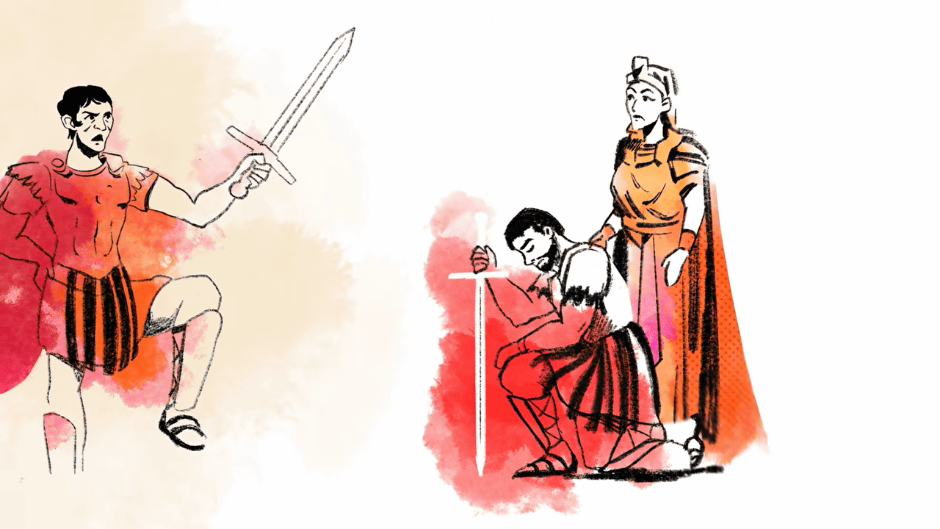
The Battle of Actium, a naval battle between Antony's and Octavian's forces, took place in 31 BC, resulting in a decisive defeat for Antony's army, including Cleopatra's fleet. As Octavian's army invaded Egypt, Cleopatra took refuge in her mausoleum, holding onto her treasures. Antony, mortally wounded after a suicide attempt, was brought in and died in Cleopatra's arms. Remembering her sister Arsinoe IV, who was paraded through the city and exposed to the crowd, Cleopatra chose to end her own life in 30 BC. Cleopatra's tomb has never been found, and no writings or wills of hers remain. Shakespeare's play 'Antony and Cleopatra' and many history books state that she 'let a venomous snake bite her,' but some historians argue that 'Cleopatra likely wanted to die beautifully and maintain her reputation as a legendary beauty even after death,' presenting evidence that she committed suicide by poisoning herself.
Cleopatra's method of suicide was not by snake, but by poisoning - GIGAZINE

Cleopatra possessed great political acumen, strong ambition, and pragmatic judgment, and was also a cold, rational strategist. Nightshift describes Octavian's strategy for defeating Cleopatra as 'a clever strategy that would still be effective today,' which involved 'justifying a civil war by portraying the enemy as a foreign threat and completely seizing control of public opinion.'
Related Posts:





in Video, Posted by log1e_dh