Research suggests that as humans have evolved, the number of people with red hair and lighter skin tones has increased, while the incidence of baldness and rheumatoid arthritis has decreased.

All life on Earth began as very
Ancient DNA reveals pervasive directional selection across West Eurasia | Nature
https://www.nature.com/articles/s41586-026-10358-1
'Human evolution didn't slow down; we were just missing the signal': Large DNA study reveals natural selection led to more redheads and less male-pattern baldness | Live Science
https://www.livescience.com/archaeology/human-evolution/human-evolution-didnt-slow-down-we-were-just-missing-the-signal-large-dna-study-reveals-natural-selection-led-to-more-redheads-and-less-male-pattern-baldness
Evolution in living organisms occurs through various mechanisms, including 'gene mutation ,' ' natural selection where advantageous traits are passed on to offspring,' ' gene flow where genes mix between populations,' and ' genetic drift , where gene frequencies in a population change by chance.'
A research team led by Harvard University geneticist Ali Akbari analyzed the genomes of a total of 16,000 ancient and modern humans living in 'Western Eurasia,' which spans Europe and West Asia, including Turkey, and used statistical methods to identify natural selection over the past 18,000 years.
Previous studies based on the genomes of modern humans have suggested that evolution through natural selection is extremely rare. However, by using a large dataset like this one and techniques to isolate signals of natural selection from other evolutionary mechanisms, it has become possible to detect small but consistent changes due to natural selection.
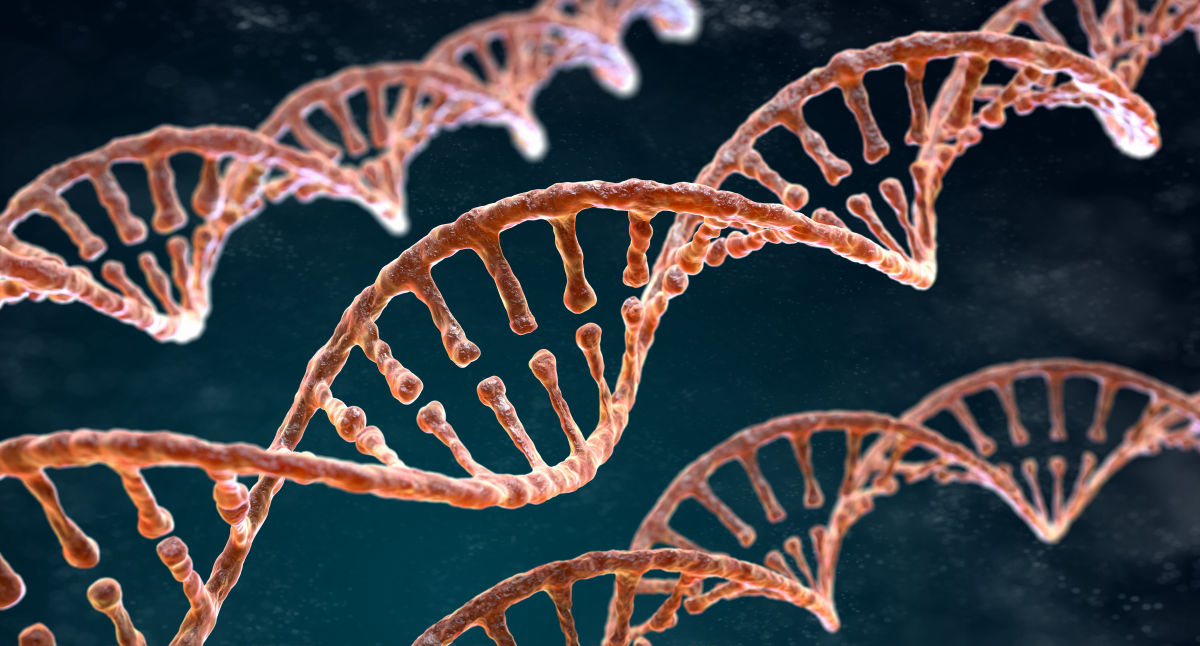
Analysis revealed traces of natural selection in 479 gene mutations within the genome of West Eurasians, with 60% of them matching traits of modern humans. Among the gene mutations that increased due to strong positive selection were those related to the expression of traits such as 'light skin color,' 'red hair,' 'resistance to HIV and leprosy,' and 'blood type B.' It has also been reported that genes that reduce the risk of developing conditions such as 'male pattern baldness' and 'rheumatoid arthritis' increased due to natural selection.
Research suggests that these traits were useful in modern West Eurasians, but we can only speculate about the specific benefits. For example, 'light skin tone' may have increased vitamin D synthesis in areas with less sunlight, but the reason for the increase in 'red hair' remains difficult to explain.
Some traits have undergone different positive or negative selection over time. For example, genes associated with tuberculosis increased over thousands of years but began to decline around 3,500 years ago, while genes related to multiple sclerosis also increased until about 2,000 years ago and have been declining since then. Akbari stated, 'This probably reflects environmental changes and selective pressures over time, such as the invasion of new pathogens.'

The research team is also investigating human evolution in regions outside of Western Eurasia, and has already published research findings on East Eurasians on the preprint server arXiv. According to this research, the same patterns of natural selection were observed in East Eurasia as in Western Eurasia.
Convergent natural selection at both ends of Eurasia during parallel radical lifestyle shifts in the last ten millennia | bioRxiv
https://www.biorxiv.org/content/10.64898/2026.04.03.716344v1.abstract
Akbari stated, 'What differs from region to region is not whether natural selection occurred, but how local environmental and cultural changes, including factors such as diet, pathogens, and climate, influenced natural selection. Applying this approach more broadly will help us understand how historical pressures in various environments have influenced human biology.'
Related Posts:







in Science, Posted by log1h_ik