First human genome sequence sequenced from 4,800-year-old ancient Egyptian tooth
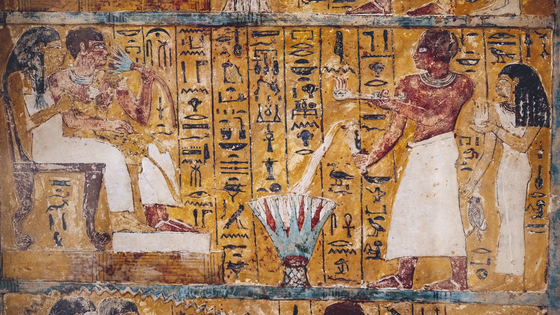
A joint research team including
Whole-genome ancestry of an Old Kingdom Egyptian | Nature
https://www.nature.com/articles/s41586-025-09195-5 href='https://www.nature.com/articles/s41586-025-09195-5'
First human genome from ancient Egypt sequenced from 4,800-year-old teeth
https://www.nature.com/articles/d41586-025-02102-y
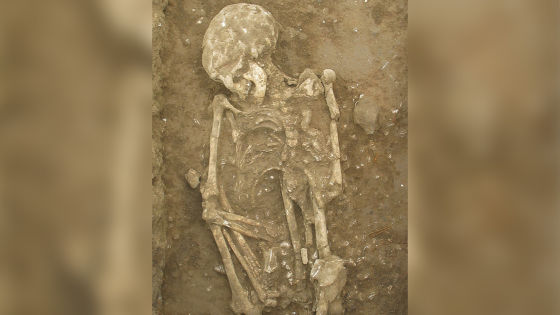
The genome belongs to an ancient Egyptian who lived between 2855 and 2570 BCE, and was discovered at an archaeological site along the Nile River, 265 km south of Cairo, Egypt. This date spans the Early Dynastic and Old Kingdom periods of Egypt, and overlaps with the time when the first pyramids began to be built. The body was not mummified, but was buried in a clay jar, a form of 'pot burial.' The researchers believe that this unique burial method may have contributed to the DNA being well preserved.
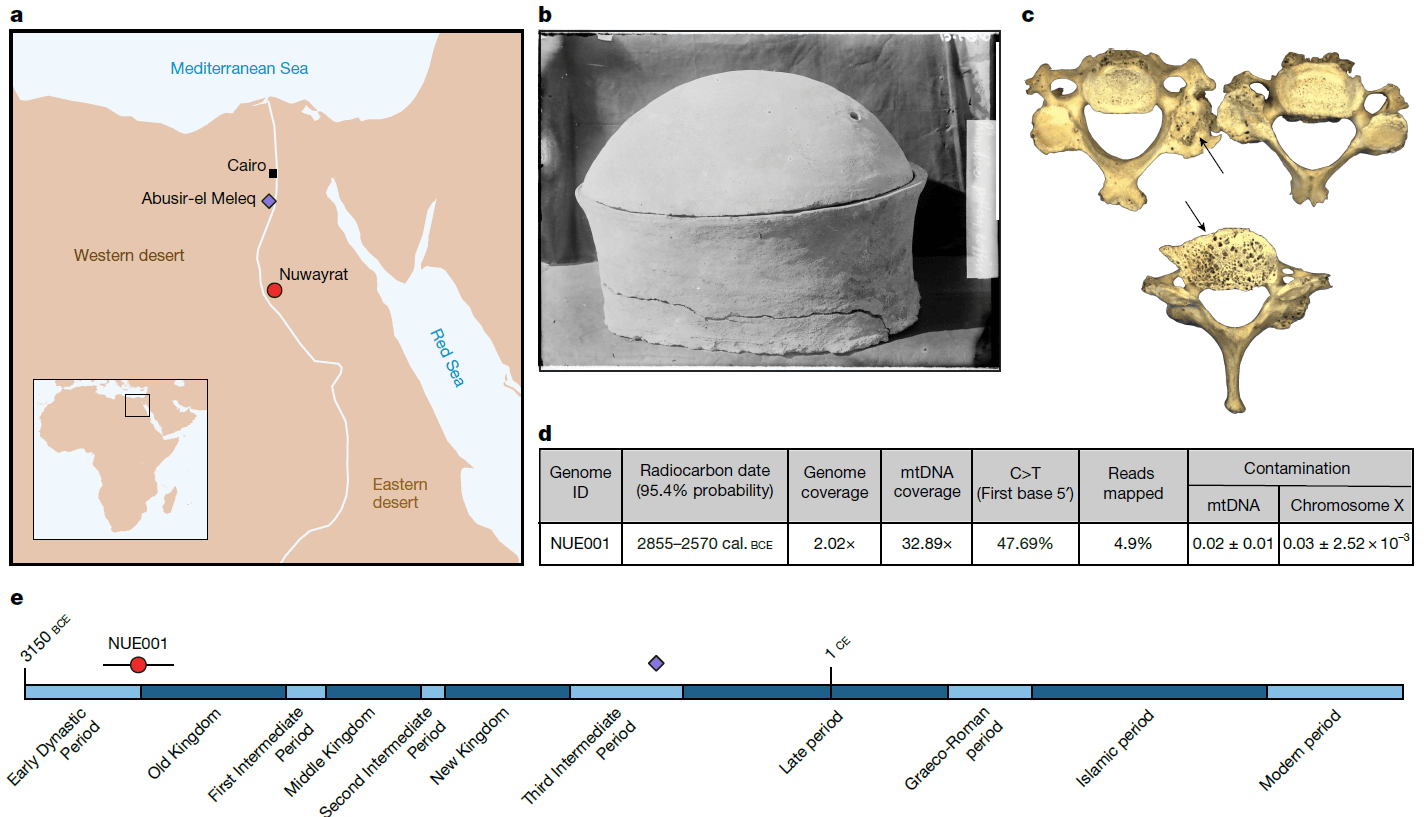
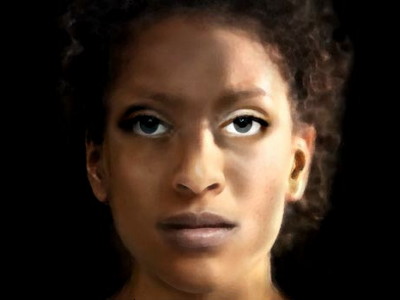
Based on skeletal and dental analysis, the remains, named 'NUE001,' are genetically male, with brown eyes and hair, and dark to black skin. They were also estimated to have been between 44 and 64 years old at the time of death, and stood between 157.4 and 160.5 cm tall. The bones show signs of arthritis and wear from long periods of manual labor, suggesting that the individual may have been engaged in a type of occupation such as pottery.
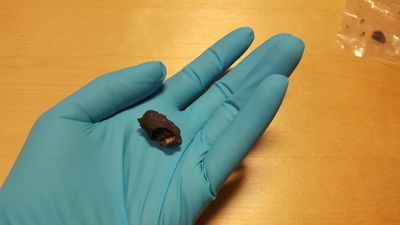
The research team extracted DNA from seven permanent teeth of NUE001, including the upper left third molar and lower left first premolar, which were in good condition and allowed the genome analysis.
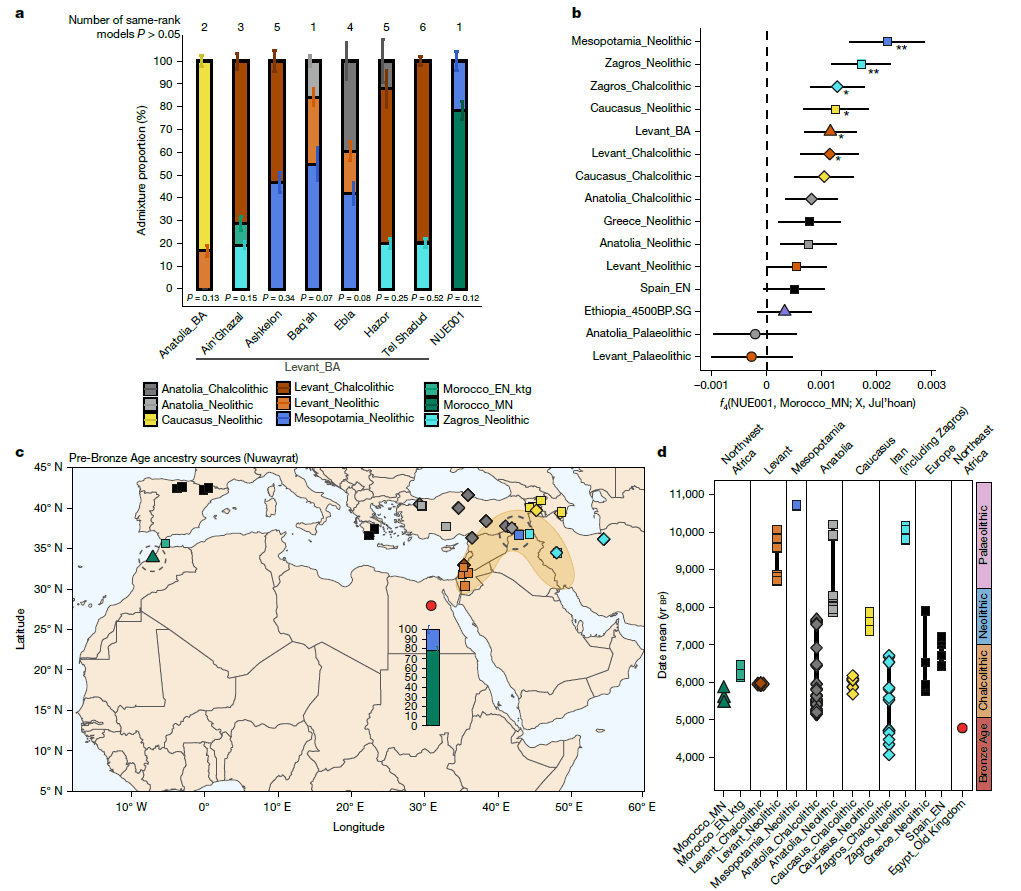
Genomic analysis revealed that about 80% of his ancestry came from Neolithic humans in North Africa about 6,000 years ago, and was most closely related to Middle Neolithic humans in Morocco. The remaining 20% of his genome came from a genome originating in the '
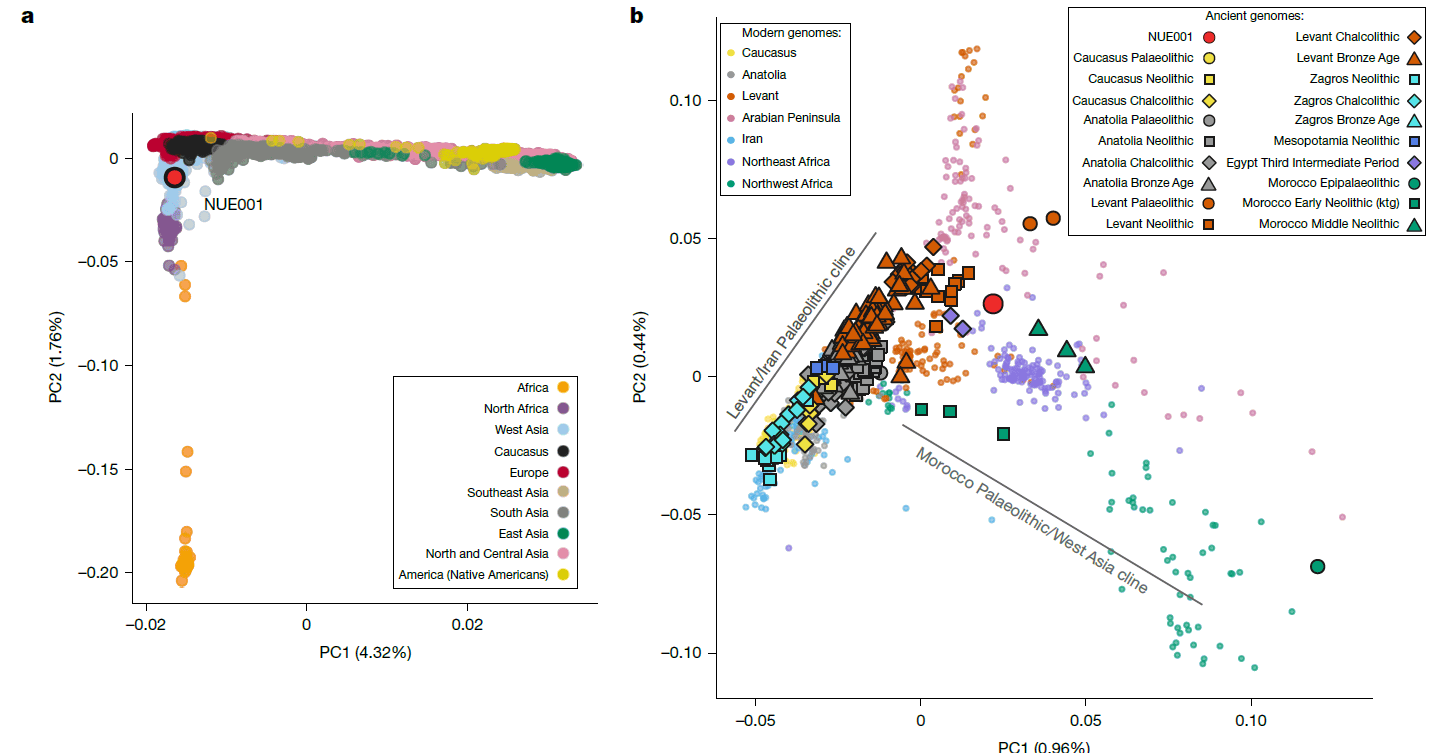
Furthermore, when the Old Kingdom genome was compared to later Egyptians,
Although the research team points out that the results of this study are based on the analysis of a single individual's sample and may not be fully representative of the diverse gene pool of ancient Egypt as a whole, they call it a groundbreaking step in ancient Egyptian genomics research and hope that further research will lead to a greater understanding of the ancient Egyptian civilization and its inhabitants.
Related Posts:


in Science, Posted by log1i_yk