Google adds 'Managed Agents' to its Gemini API, providing a complete execution environment for AI agents.
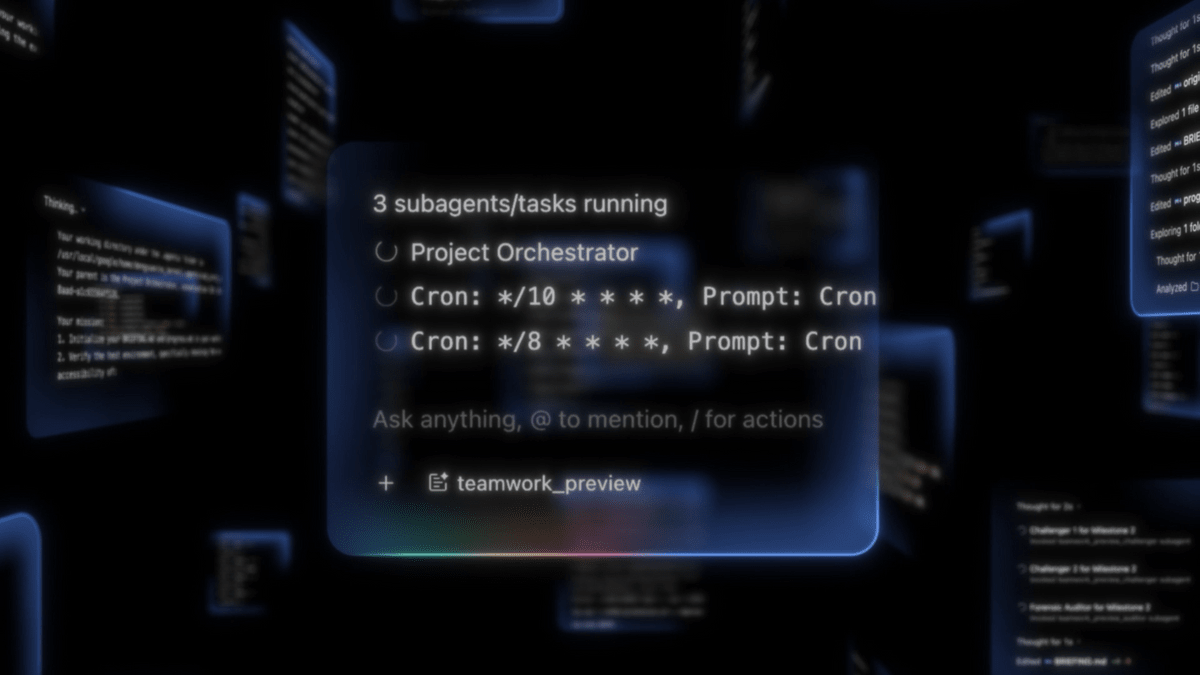
At Google I/O 2026, Google announced enhancements to its AI agent development platform, Google Antigravity, and the availability of managed agents through the Gemini API. Google explained that its aim is to shift the development process from simply prompting users to 'actions' where AI agents actually perform tasks.
I/O 2026 developer highlights: Antigravity, Gemini API, AI Studio
Build managed agents with the Gemini API
https://blog.google/innovation-and-ai/technology/developers-tools/managed-agents-gemini-api/
Antigravity Agent | Gemini API | Google AI for Developers
https://ai.google.dev/gemini-api/docs/antigravity-agent?hl=ja
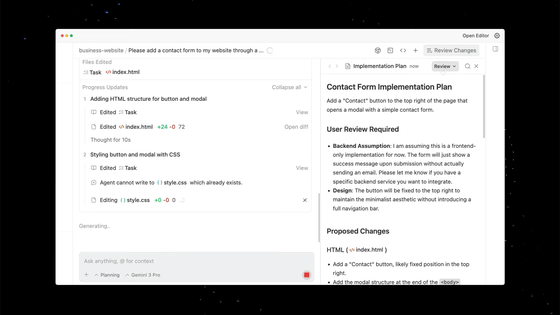
Google's Antigravity-related announcements include the desktop application 'Antigravity 2.0,' the 'Antigravity CLI' for managing AI agents from the terminal, and the 'Antigravity SDK' for creating custom agents. Antigravity 2.0 is an application for human developers to control AI agents, allowing them to run multiple agents in parallel, assign tasks to sub-agents, and execute scheduled tasks.
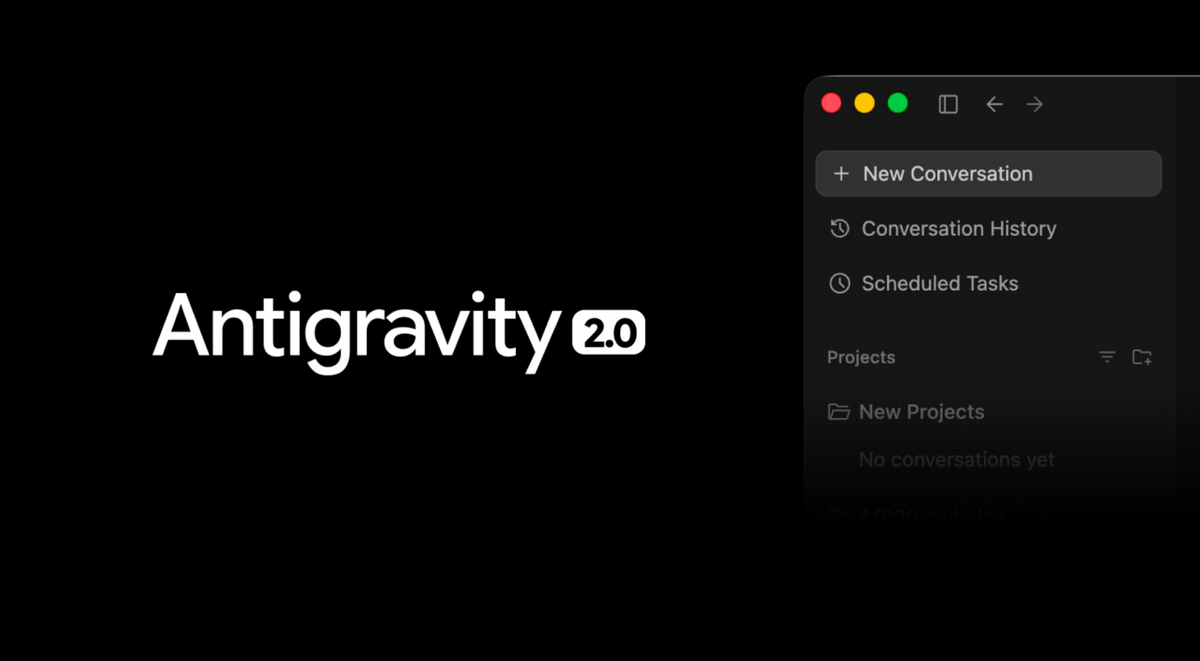
Google has added managed agents to the Gemini API, allowing developers to invoke AI agents from their own apps and services, not just apps like Antigravity 2.0. Managed agents are a system where Google provides the execution environment, tool invocation, and code execution environment necessary to run the AI agent. Developers can launch an AI agent that performs inference, uses tools, and executes code with a single API call.
Traditionally, providing AI agents in a production environment required developers to prepare code execution sandboxes, file management, external tool integration, and execution infrastructure to handle multiple processes. Google explains that Gemini API managed agents abstract away these complex infrastructure aspects, allowing developers to focus on designing the product experience and the behavior of the AI agents.
At the heart of the Gemini API's managed agents is the 'Antigravity agent.' The Antigravity agent runs within a secure Linux sandbox hosted by Google and can perform inference, code execution, file management, and web browsing.
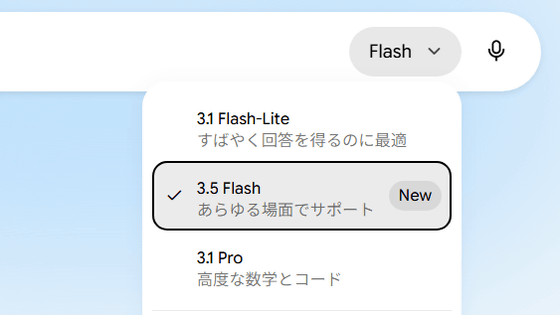
The Antigravity agent is based on 'Gemini 3.5 Flash,' which Google announced on May 19, 2026. Gemini 3.5 Flash is the first model in the Gemini 3.5 series and is said to outperform Gemini 3.1 Pro in almost all benchmarks while operating four times faster than other cutting-edge models. In managed agents, Gemini 3.5 Flash supports the operation of AI agents that repeatedly perform inference, tool calls, and code execution.
The Antigravity agent, upon receiving a task, plans its execution, calls the necessary tools, checks the results, and repeats the same process until the work is complete. By default, it can execute code, perform Google searches, and read URLs, and by specifying the execution environment, it can also read, write, edit, search, and list files. Files and state can be retained in the execution environment, so it is intended to be used to resume the same work session with subsequent API calls.
Developers can create custom agents by adding their own instructions, tools, data, and skills to Antigravity agents. For example, they can write the agent's basic policies and work procedures in 'AGENTS.md' and load it into the sandbox. The customized agent can then be saved and reused as a managed agent.
The managed agent feature is currently available as a preview in the Gemini API's Interactions API and Google AI Studio. During the preview period, there are no charges for environment computing such as CPU, memory, and sandbox execution, but usage-based charges apply to tokens for the underlying Gemini model and the tools used by the agent. Note that the number of tokens may become large as the agent autonomously repeats inference, tool execution, code execution, and file operations.

As this is a preview version, the Antigravity agent and Interactions API specifications may change. Furthermore, structured output is not supported, and tools such as file_search, computer_use, google_maps, function_calling, and mcp are unavailable at the time of writing. Additionally, input formats are limited to text and images.
In a related development, Google has also announced that it will be migrating Gemini CLI to Antigravity CLI . According to Google, a tool with a common execution platform with Antigravity 2.0 was needed for applications where multiple agents work together to share complex tasks. While Antigravity CLI will not have exactly the same functionality as Gemini CLI from the start, key features such as Agent Skills, Hooks, Subagents, and Extensions (now called Antigravity plugins) will be carried over.
Google says that the Gemini API's managed agents will allow developers to focus on designing the behavior, instructions, skills, and data usage of AI agents, rather than building infrastructure such as sandboxes and execution platforms.
Related Posts:

in AI, Software, Web Service, Posted by log1d_ts