Why is 'brain transplantation' impossible?
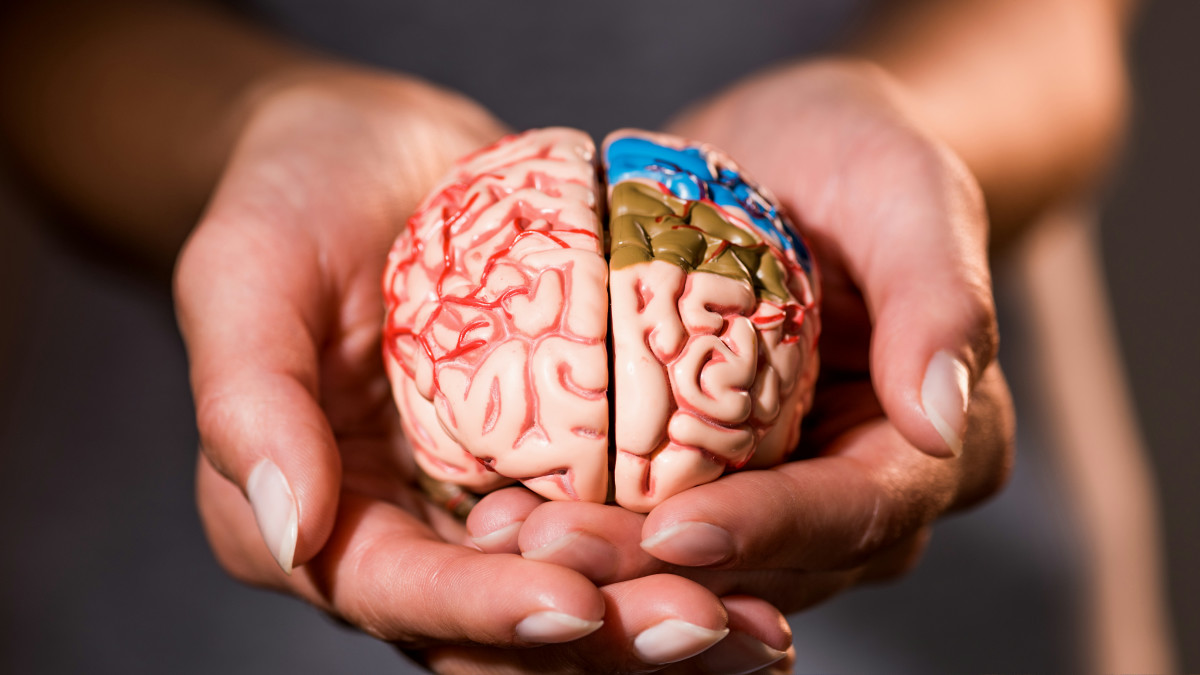
The idea of transplanting a brain into a healthy body to live indefinitely is a familiar concept in science fiction, but in fact, the American non-profit organization
Why aren't brain transplants possible? | Live Science
https://www.livescience.com/health/neuroscience/why-arent-brain-transplants-possible
Max Krukov, an assistant professor of neurosurgery at the Medical College of Wisconsin , points out that unlike transplanting a heart or liver into a patient's body, transplanting a brain changes the owner of the body. 'Your autonomy and identity reside in your brain,' he says.
According to Kurkov, brain transplantation is not possible at the time of writing because signal transmission between nerves in the central nervous system , including the brain and spinal cord , has not yet been established.
In the case of the peripheral nervous system , which extends throughout the body beyond the brain and spinal cord, nerve cells regenerate even after being transplanted into a new body, eventually enabling communication with adjacent nerve cells in the transplanted area. However, there is little evidence that the adult central nervous system generates new nerve cells, and even if it can, the extent of this generation is limited.
Even partial brain transplants, such as transplanting only the cerebellum instead of the entire brain, are impossible at the time of writing. The cerebellum is said to contain approximately 14 million Purkinje cells , and each Purkinje cell has as many as 200,000 parallel fibers that form synapses , receiving various signals. Kurkov stated, 'The number of connections between Purkinje cells and parallel fibers increases exponentially. This is far beyond our capabilities.'
Rather than transplanting the brain as a whole or a part of it, connecting the head and body via the spinal cord, which bridges the gap between the brain and peripheral nerves, is theoretically the simplest form of brain transplantation. While surgeons can connect the skin, muscles, blood vessels, and bones of the neck and align the nerves of the spinal cord, a method has yet to be found to enable the connected nerve cells to communicate with each other.
In the early 1900s, with the emergence of new vascular suturing techniques, scientists began to experiment with head transplants on animals. However, scientists at the time struggled to create a functional vascular system and suppress host rejection, so most dogs and monkeys that underwent head transplants only survived for a few days.
In the 1970s, Dr. Robert White performed surgery to transplant monkey heads onto new bodies. Some of the monkeys that underwent the surgery were able to chew and swallow food, and electroencephalograms suggested that their brains were awake, but none of them survived for more than nine days.
Inspired by Dr. White's experiments, Italian physician Sergio Canavero announced his plan for the world's first human head transplant in 2013, but it met with widespread opposition from both ethical and scientific standpoints.
In 2017, Canavero announced that he had successfully performed the world's first human head transplant using the remains of two individuals, but this announcement has been met with considerable skepticism.
Italian doctor claims to have successfully performed the world's first human head transplant in China, but doubts persist - GIGAZINE
While transplanting an entire brain is difficult, transplanting stem cells that have the ability to differentiate into other types of cells may allow for the regeneration of damaged or diseased brain tissue. Ruslan Rust , assistant professor of physiology and neuroscience at the University of Southern California Keck School of Medicine, explains that stem cells programmed to differentiate into nerve cells are more likely to integrate into existing neural circuits than mature nerve cells.
While stem cell therapy has already been validated in clinical trials for conditions such as Parkinson's disease, stroke, spinal cord injury, and epilepsy, as of the time of writing, the U.S. Food and Drug Administration (FDA) has not yet approved its commercial use for any of these conditions.
Last said that future research into stem cell therapy for the brain will need to address the potential risks of incompletely differentiated stem cells forming tumors or disrupting signaling circuits after transplantation. 'The challenge is figuring out how to make the transplanted cells the cells we want them to be, and how to ensure that these cells integrate into the local neural circuits we want them to,' he said.
In Japan, Amshepri, a Parkinson's disease treatment using induced pluripotent stem cells (iPS cells), has received conditional and time-limited approval.
[Topic] Treatment of Parkinson's disease using iPS cells - Conditions and time-limited approval for a new cell transplantation therapy - Announcement - Keio University Hospital Parkinson's Disease Center
https://pd-center.hosp.keio.ac.jp/news/news-271/
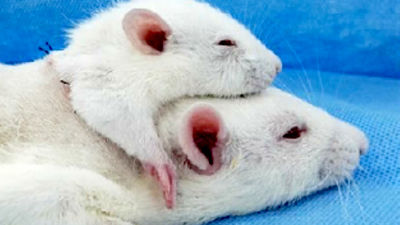
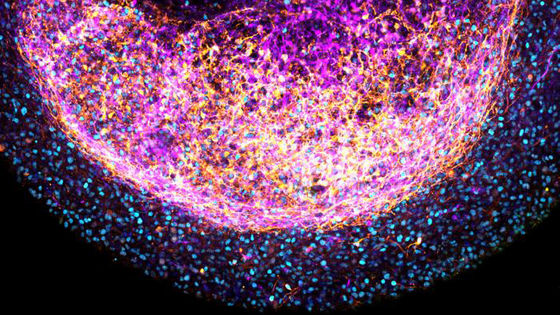
Another method being considered is the transplantation of brain organoids, which are small, brain-like tissues created using stem cells. In 2023, it was reported that human brain organoids had been successfully transplanted into rat brains to repair damaged areas.
First experiment successfully repairs brain damage in rats using a 'mini-brain' of a human - GIGAZINE
Related Posts:


in Free Member, Science, Posted by log1h_ik