The aviation industry's carbon emissions could potentially be halved through efficiency improvements such as eliminating business and first class.
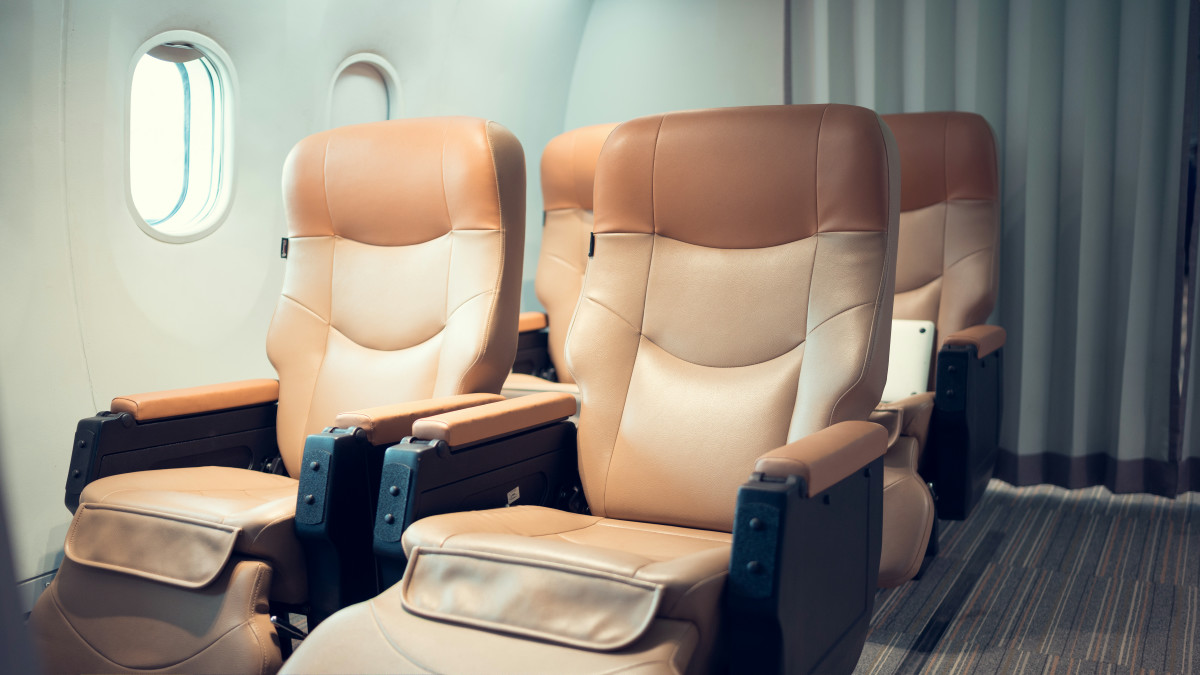
The aviation industry consumes enormous amounts of fuel per flight and is known as one of the most difficult sectors to decarbonize. However, research has shown that carbon dioxide emissions could be halved by streamlining operations such as eliminating first and business classes on many passenger planes and introducing the latest aircraft.
Large carbon dioxide emissions avoidance potential in improved commercial air transport efficiency | Communications Earth & Environment
Scrapping business class could halve aviation emissions – new study
https://theconversation.com/scrapping-business-class-could-halve-aviation-emissions-new-study-275474
The aviation industry accounts for approximately 2-3% of global carbon dioxide emissions, and when secondary factors such as the formation of heat-trapping contrails are included, its contribution to global warming reaches about 4%. Milan Crower , a climate modeling researcher at Oxford University, points out that much of this impact is due to the frequent use of business and first class by the wealthy, as well as private jets.
In many cases, efficiency in the aviation industry is viewed as an engineering challenge: 'How much thrust can an engine generate with a given amount of jet fuel?' On the other hand, operational efficiency—'How many passengers can be transported per unit of carbon dioxide emissions?'—has received little attention.
Assuming a constant total number of people using aircraft in a year, increasing the number of passengers on a single flight allows other aircraft to be kept on the ground, resulting in fewer flights. The biggest factor in carbon dioxide emissions from aircraft is the aircraft's weight and engine efficiency itself, with little impact from the weight of passengers and their luggage. Therefore, improving operational efficiency could potentially lead to a significant reduction in carbon dioxide emissions from the aviation industry.
Krower and his research team calculated the operational efficiency for each flight route, airline, aircraft, and airport in 2023. They then modeled several hypothetical scenarios that improved operational efficiency in a feasible way to investigate whether carbon dioxide emissions could be reduced.
The average carbon dioxide emissions per aircraft decreased from approximately 260g per passenger per kilometer traveled in 1980 to about 90g in 2019. While this is a significant decrease, considering that electric trains powered by low-carbon energy emit less than 5g of carbon dioxide per passenger per kilometer traveled, aircraft emissions are still considerably high.
The amount of carbon dioxide emitted per passenger per kilometer traveled varies greatly depending on the route, region, airport, airline, and type of aircraft. Some routes may have emissions exceeding 800g per passenger, while others may have emissions of less than 50g.
The least efficient flights were those originating from or arriving at US airports, followed by China, Germany, and Japan, with many also found at smaller airports, as well as in Africa and Oceania. On the other hand, efficient flights were common in Brazil, India, and Southeast Asia, and Crower says these differences can be explained by seat occupancy rates, the types of aircraft used, and the space allocated to business and first class.
Low-cost carriers tend to be highly efficient in terms of seating capacity in order to carry as many passengers as possible. Instead of spacious business or first-class seats, they often generate revenue through services such as baggage fees, meals, and booking flexibility. Furthermore, relatively new aircraft such as
Other factors that were observed included the fact that long-haul flights are generally more efficient than short-haul flights. This is attributed to factors such as the reduced number of gas emissions during takeoff for the same distance, and the use of larger aircraft with more seats on long-haul flights, resulting in a higher passenger capacity per flight.
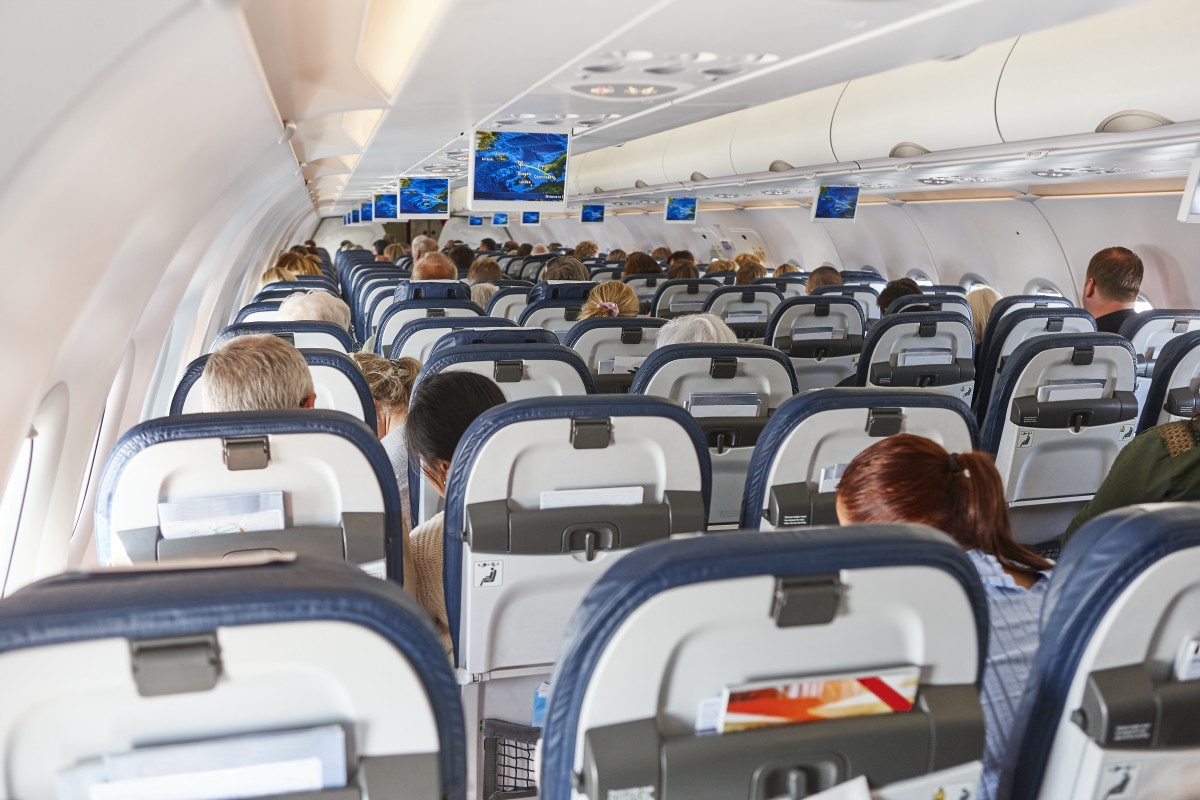
The research team modeled and examined three hypothetical scenarios to investigate the impact of improved operational efficiency on carbon dioxide emissions. The first scenario involved 'increasing the average load factor from 80% to 95%.' Even this alone reduced the number of flights required to carry the same number of passengers, resulting in a 16% reduction in carbon dioxide emissions.
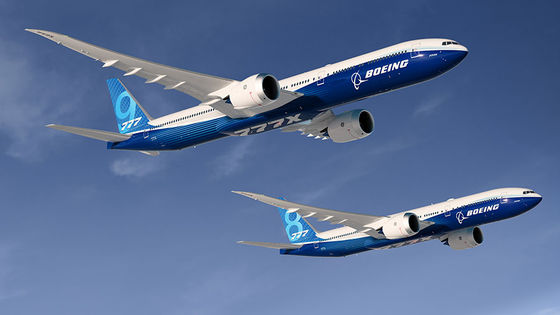
The second scenario assumes that 'only two types of aircraft, the most efficient, the Boeing 787 Dreamliner and the Airbus A320neo, are in operation.' While replacing all aircraft immediately is not realistic considering the lifespan and production numbers of aircraft, it is estimated that if this were to be implemented, carbon dioxide emissions would be reduced by 27-34%.
The third scenario is to eliminate space-consuming business and first class seats and make all seats economy class. It has been reported that if all aircraft were operated with only economy class seats, the aviation industry's carbon dioxide emissions could be reduced by 26 to 57%.
Krower stated, 'Our findings highlight how much aircraft carbon emissions are influenced by the travel disparity between 'occasional economy class passengers' and 'frequent business or first class passengers.' Many of the latter may complain about the inconveniences of economy class, but this is not necessarily a bad thing, as it provides a stronger incentive to reduce unnecessary travel.'
Related Posts: