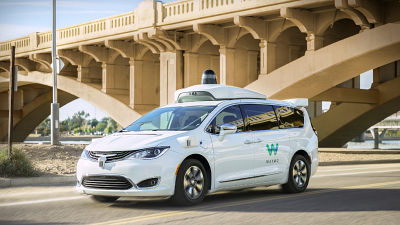
California introduces new enforcement system to determine who will be ticketed if an unmanned robotaxi commits a traffic violation.
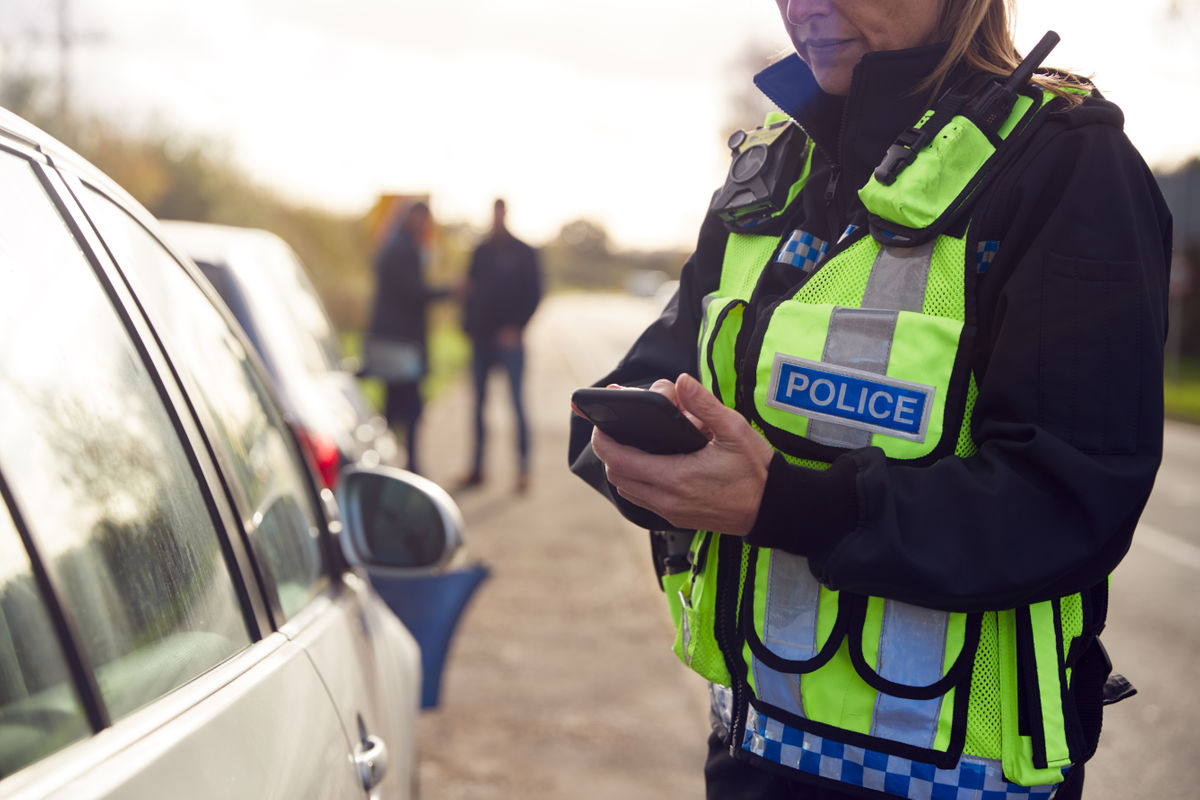
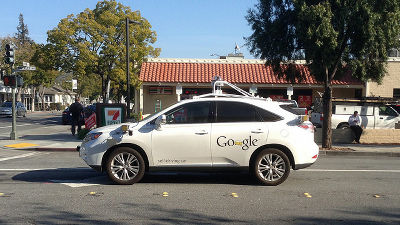
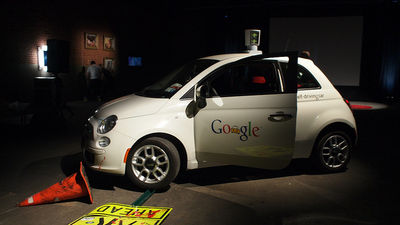
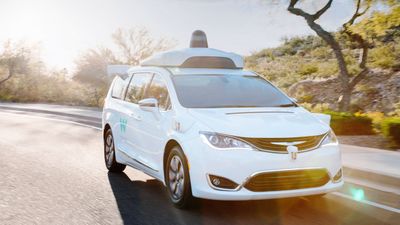
A new system for cracking down on traffic violations by unmanned, self-driving cars will be implemented in California, USA, starting July 1, 2026. The system will apply to self-driving car manufacturers and operators such as Waymo, and will allow police officers to issue 'autonomous vehicle non-compliance notices,' equivalent to traditional traffic tickets, if they find a vehicle committing a violation.
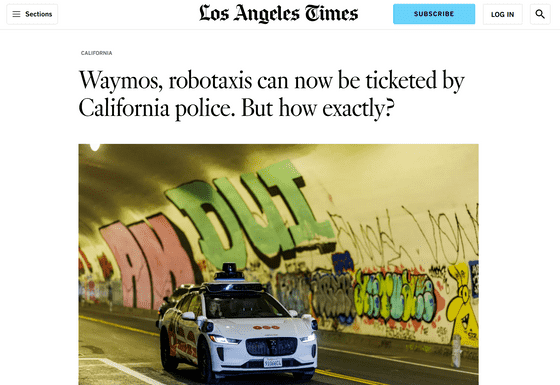
Waymos, robotaxis can now be ticketed by California police. But how? - Los Angeles Times
California to Start Citing Self-Driving Cars for Traffic Violations
https://www.roadandtrack.com/news/a71196799/california-charge-self-driving-cars-traffic-violations/
California to begin ticketing driverless cars that violate traffic laws
https://www.bbc.com/news/articles/clypjx3rg2go
Since police officers cannot issue paper traffic tickets to self-driving cars that do not have human drivers, the new system will allow police officers to record the details of minor violations that do not require the vehicle to be stopped on the spot, such as the nature of the violation, the date and time, the location, and the license plate number, and issue a notice of non-compliance with the regulations for self-driving cars. A copy of the notice will be shared with the California Department of Motor Vehicles (DMV) and the manufacturer within 72 hours.
If an autonomous vehicle commits a traffic violation that leads to a collision, the manufacturer can send a designated representative to the scene, and police officers can issue a non-compliance notice to that representative. Furthermore, if the problem cannot be corrected or if the violations are repeated, the DMV may take administrative measures, including restricting or suspending the vehicle's operating license.
Automotive media outlet Road and Track described the new system as 'allowing us to issue tickets to misbehaving Waymo vehicles.' However, strictly speaking, it differs from regular traffic tickets that impose fines on human drivers. This system will record violations as an administrative procedure against manufacturers and operators of autonomous driving systems and request corrective action as necessary.
The new system will not only address traffic violations. Self-driving car manufacturers will be required to provide a dedicated telephone hotline that emergency response agencies can contact, as well as equip their vehicles with two-way voice communication devices that allow remote operators—human personnel who can remotely monitor the self-driving cars and issue instructions to stop or move as needed—to communicate with police officers, firefighters, or other personnel nearby the self-driving cars.

In addition, a system will be introduced to issue 'emergency geofencing orders,' which allow emergency response agencies to set up virtual no-entry zones on a map. Because autonomous vehicles entering crime scenes, fire scenes, or roads where emergency services are in operation can hinder responses, manufacturers must either evacuate their vehicles from the target area or instruct their fleet to avoid the area within two minutes of receiving an emergency geofencing order.
The background to this is the spread of videos on social media showing driverless taxis passing police operations and blocking roads in San Francisco. California has been known as one of the more tolerant regions in the US when it comes to self-driving cars, but as the number and range of self-driving cars expand, there has been a growing need to put in place systems that make it easier for police and fire departments to handle them on the scene.
Similar systems already exist in Texas and Arizona, and California is following suit. The new system will also tighten the requirements for testing on public roads and obtaining operating permits, requiring test drives of 50,000 miles (approximately 80,000 km) or 500,000 miles (approximately 800,000 km) depending on the vehicle's weight category. In addition, the system will require the creation of annual plans for communication with emergency response agencies, the establishment of standards for remote operations personnel, and updates to the data reporting system.
California is not trying to ban self-driving cars; rather, the aim of the new law is to treat self-driving cars as regular participants in public road traffic, and to move closer to a state where they can be managed in the same way as cars with human drivers in traffic violations and emergency situations. For self-driving car operators such as Waymo, California will continue to be an important market, but it will also usher in an era where unmanned vehicles will be clearly held accountable for 'failure to follow traffic rules.'
Related Posts: