Nuclear fusion power startups are taking on a side business in nuclear fission power generation due to high electricity demand.
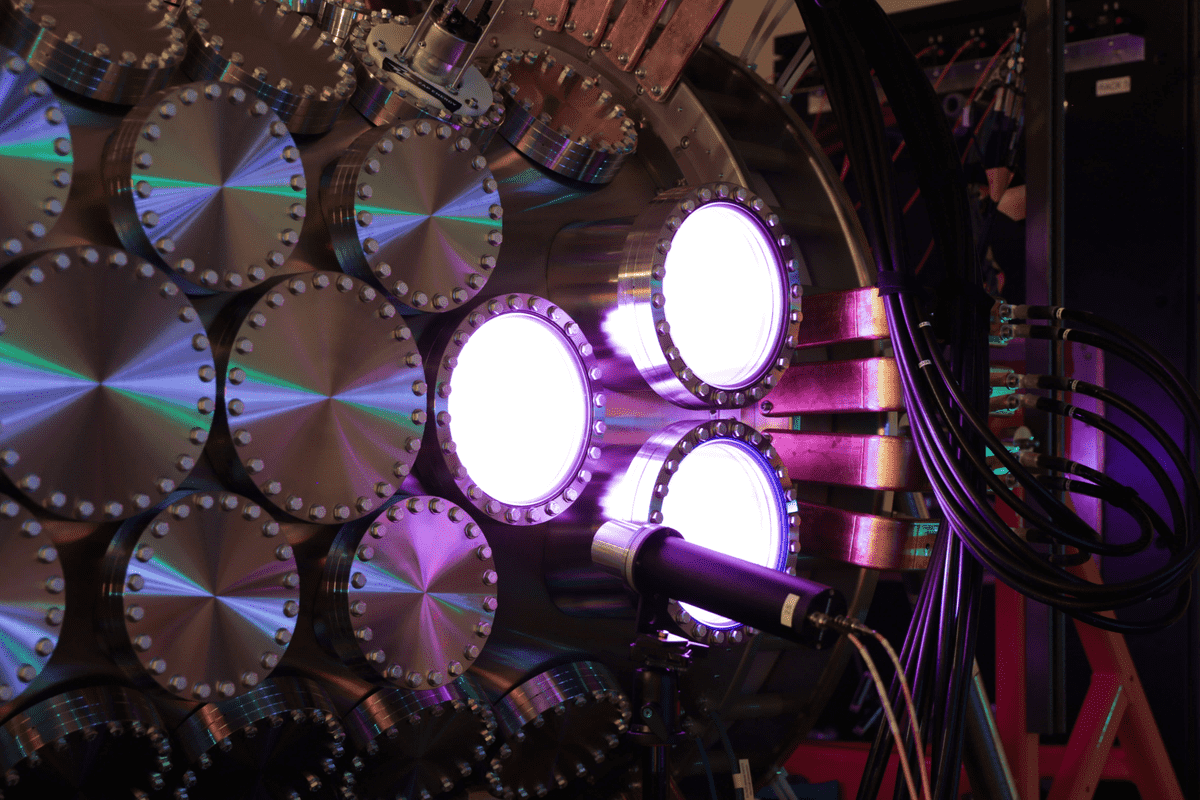
The development of nuclear fusion power technology has been difficult, and although physicists and engineers have been working towards its realization for decades, there is still no prospect of practical application. In this situation, Zap Energy, a nuclear fusion power startup that has raised $300 million (approximately 48 billion yen) so far, has announced that it will enter the business of small, modular advanced reactors that utilize the same nuclear fission reaction as existing nuclear power plants, citing 'unprecedented levels of electricity demand.'
An integrated nuclear future: fission today, fusion tomorrow. | Zap Energy
Fusion power startup Zap Energy pulls a partial pivot, adding nuclear fission to the mix | TechCrunch
https://techcrunch.com/2026/04/29/fusion-power-startup-zap-energy-pulls-a-partial-pivot-adding-nuclear-fission-to-the-mix/
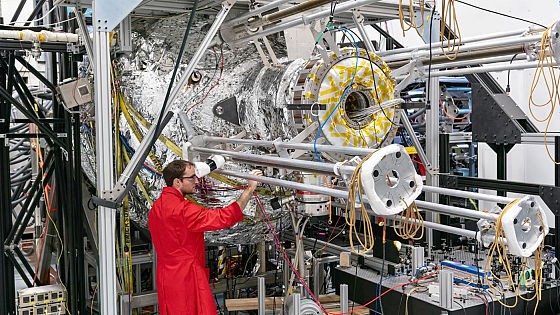
Zap Energy has been working to commercialize nuclear fusion power. Nuclear fusion is a method of generating energy using the same principle as the reactions that make stars like the sun shine, and it has attracted attention for many years as a clean and abundant energy source. The method that Zap Energy is developing is called 'shear flow stabilized Z-pinch (SFS Z-pinch),' and it is described as a relatively simple method that attempts to create nuclear fusion conditions by utilizing the flow within the plasma, without using giant superconducting magnets or high-power lasers.
However, Zap Energy states that 'the energy transition cannot, and should not, wait for nuclear fusion alone.' This is due to the surging demand for reliable, carbon-free electricity driven by AI infrastructure, electric transportation, advanced manufacturing, and national energy security. In particular, the power demand from AI data centers is projected to triple by 2030, meaning technology companies need electricity that is realistically available now, not an ideal power source for the future.
Zap Energy's new CEO, Zabrina Dzhokhar, told IT media outlet TechCrunch, 'The world doesn't have enough electricity and energy to build all the data centers that are needed.' He further explained the reason for entering the nuclear fission power market, saying, 'We needed to get something that would make sense to the current power grid, and do it faster.'
Unlike nuclear fusion power, nuclear fission power, commonly known as 'nuclear power generation,' is a technology that is already commercially viable. Nuclear fusion extracts energy by fusing light atomic nuclei such as hydrogen, but it has not yet reached the stage of continuously supplying electricity as a power plant. On the other hand, nuclear fission extracts energy by splitting heavy atomic nuclei such as uranium, and humanity has been using nuclear fission power generation since the 1950s.
However, Zap Energy's new focus is not on the large light water reactors that are the mainstream in existing nuclear power plants, but on small modular reactors (SMRs) with molten salt cooling and an output of less than 300,000 kW. SMRs are still in the development and demonstration stages, but there are several examples of them actually in operation, and they are considered to be closer to practical application than nuclear fusion power.
According to Zap Energy, there is a 'false wall' between nuclear fission and nuclear fusion power. Zap Energy views nuclear fission and nuclear fusion power not as separate industries, but as two technologies on the same technological continuum. Because nuclear fission reactors and nuclear fusion reactors share many challenges, including high-temperature materials, nuclear-grade manufacturing techniques, heat transport systems, modular construction, peripheral equipment for power plants, regulatory compliance, and supply chains, developing both simultaneously can accelerate the entire nuclear technology landscape.
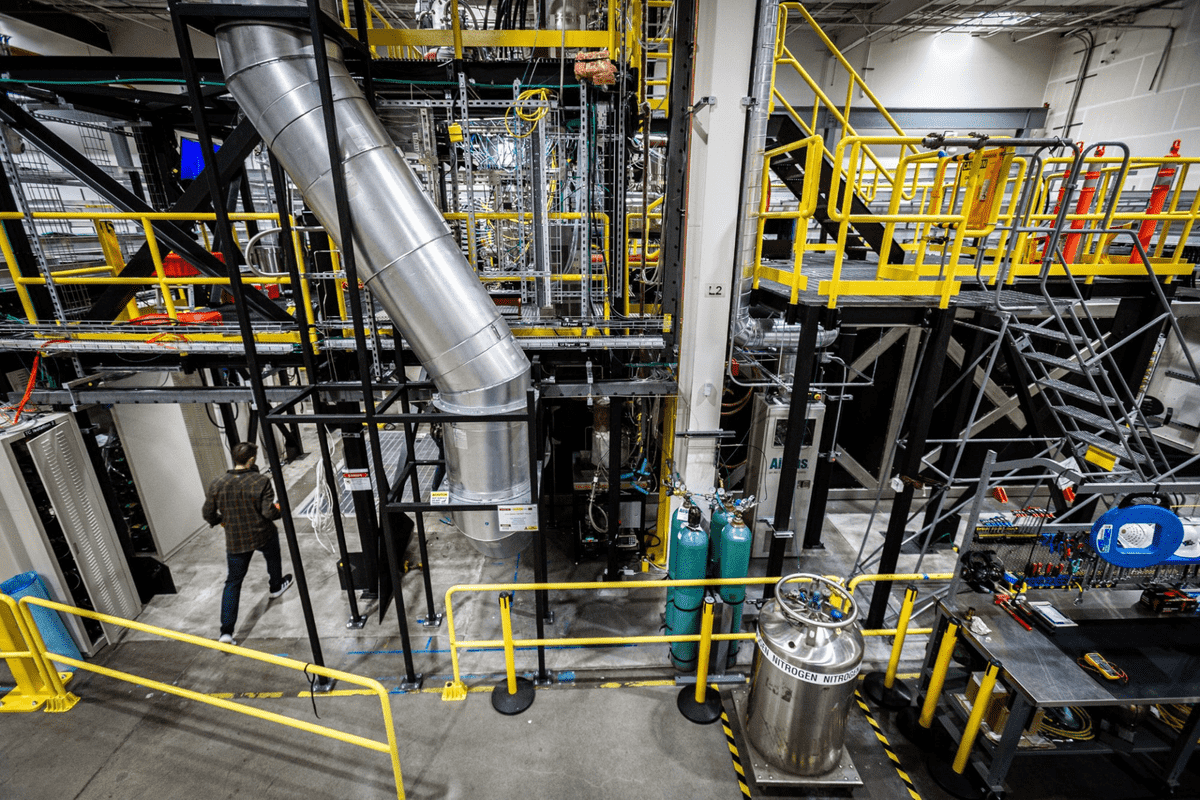
Zap Energy stated that in the short term, small, advanced fission reactors will provide a stable supply of carbon-free electricity while laying the groundwork for the industrial infrastructure needed for future fusion power plants, while in the long term, fusion power could expand the realm of nuclear energy and ultimately transform the global energy system.
One common technology that Zap Energy particularly emphasizes is 'power generation systems using liquid metals.' Liquid metals such as lithium and sodium have high thermal performance and excellent radiation resistance, making them useful for both advanced nuclear fission reactors and nuclear fusion power generation systems. Zap Energy explains that the high-temperature liquid metal circulation, material compatibility, and thermal extraction technologies it has developed for nuclear fusion can also be applied to advanced nuclear fission reactors.
Beyond liquid metals, advanced materials developed for fusion environments could potentially improve the durability of small fission reactors, and additive manufacturing technologies such as 3D printing could be useful for manufacturing complex reactor components. Furthermore, peripheral equipment for power plants, such as turbines, heat exchangers, power converters, and grid connection technologies, are largely common to both fission and fusion reactors. Zap Energy aims to build a single, integrated platform that advances both simultaneously, rather than creating separate industrial bases for fission and fusion power generation.
Zap Energy is also considering a 'hybrid nuclear system' that combines nuclear fission and nuclear fusion technologies. For example, the idea of using neutrons generated by nuclear fusion to support advanced nuclear fission fuel cycles or to help reduce radioactive waste has been studied in the scientific community for many years. Zap Energy says that by working on both nuclear fission and nuclear fusion, it is in a position to commercially consider such hybrid nuclear systems.
There are also synergistic effects in terms of regulations. While nuclear fusion power is often perceived as easier to obtain permits for than nuclear fission power, in reality, even nuclear fusion power plants handle activated materials, a radioactive environment, and large-scale industrial equipment, so they must meet strict safety standards. On the other hand, advanced nuclear fission reactors are already undergoing permitting procedures around the world, and Zap Energy sees that by developing a small nuclear fission reactor, it can build the experience and relationships with regulatory authorities necessary for large-scale deployment of future nuclear fusion power.
Nuclear fission power also faces challenges. Despite decades of experience, building reactors at low cost remains a significant hurdle. Companies developing small modular reactors (SMRs) hope that mass production will reduce costs, but the extent to which economies of scale actually lead to cost savings has yet to be demonstrated.
According to Dzhokhar, Zap Energy expects to generate revenue from its new nuclear fission power plant within a year. However, Zap Energy's business model does not rely solely on generating and selling electricity. Potential revenue sources include federal programs from the U.S. Department of Defense and the Department of Energy, development-stage payments from companies that require large amounts of electricity, and reservations for future production capacity.
Zap Energy's nuclear fission reactor is planned to be based on a design called '4S.' 4S is a molten salt-cooled reactor design jointly developed by Toshiba and research institutions within the Japanese power industry. Although 4S was ultimately never built, according to Dzhokhar, the 4S design is 'free from intellectual property entanglements.' In other words, Zap Energy sees itself as being able to proceed with the development of a small nuclear fission reactor based on 4S without being bound by existing complex rights.
For Zap Energy's nuclear fission power project to succeed, it needs to either generate revenue from its nuclear fission operations or attract new investment. Developing even one reactor concept is extremely expensive, so a plan to develop a reactor other than a fusion reactor requires significant funding.
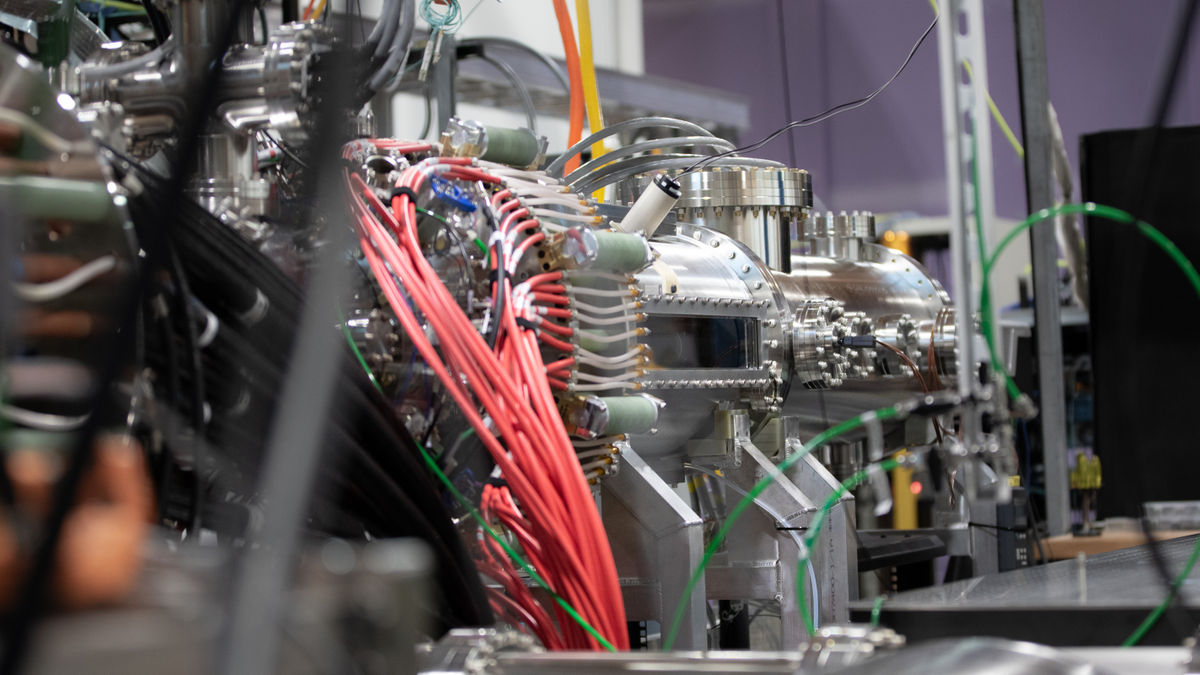
Zap Energy is not the only fusion company to seek revenue from related businesses. Commonwealth Fusion Systems and Tokamak Energy sell high-temperature superconducting magnets to other fusion companies and experimental facilities, while TAE Technologies and Shine Technologies operate in the field of nuclear medicine. Zap Energy claims that its fission power generation plans can also be useful in the development of fusion power plants in terms of materials testing, power generation systems, manufacturing, and regulatory compliance.
On the other hand, TechCrunch points out that caution is needed regarding Zap Energy's plans. Although nuclear fission and nuclear fusion have some commonalities, they are still very different technologies. Building a nuclear fission reactor presents different challenges and costs than building a nuclear fusion reactor. While Zap Energy's argument that entering the nuclear fission business will bring them closer to commercial nuclear fusion is compelling, they need to proceed cautiously to ensure that the fission business does not become a permanent detour rather than just a temporary foothold.
Zap Energy emphasizes that its ultimate goal remains nuclear fusion power. Achieving nuclear fusion power requires not only breakthroughs in plasma physics, but also factories, engineers, supply chains, regulators, operators, customers, and an industrial ecosystem capable of building and operating nuclear energy on a planetary scale.
Zap Energy states that by simultaneously developing advanced nuclear fission and nuclear fusion power, it is building the industrial ecosystem that will be needed in the future. The company aims to be not just a fusion company, but a 'new kind of nuclear company' that invents, builds, and deploys entire advanced nuclear energy systems.
Related Posts:



in Hardware, Posted by log1d_ts