OpenAI developed 'Symphony,' an automated Codex agent management tool, recognizing that 'humans are the bottleneck in AI,' and has seen a five-fold increase in pull requests within the company.
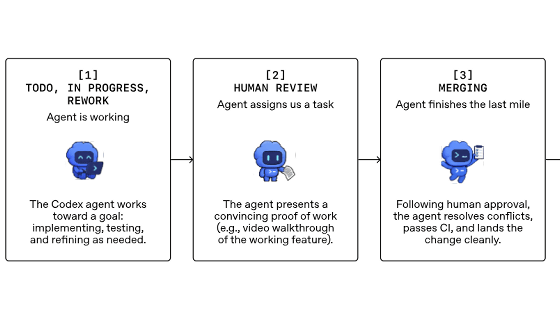
OpenAI has developed Symphony , an orchestration tool for coding agents. Symphony can automatically manage a large number of Codex agents, and some teams have reported a five-fold increase in pull requests since adopting it. The source code and AI specifications for Symphony are available on GitHub.
An open-source spec for Codex orchestration: Symphony. | OpenAI
OpenAI's internal productivity improvement team has been working on an experimental approach since the end of August 2025, aiming to 'write no code by hand and have everything generated by Codex.' The team designed a repository based on Codex and built an automated testing system to set up the environment. However, they quickly reached the limits of manual processing, which involved 'assigning tasks to multiple Codex agents and checking the output by hand.'
OpenAI engineers were able to manage 3 to 5 Codex agents simultaneously, but as the number of agents increased, it became difficult to keep track of 'which session is working on which task,' and task management broke down. OpenAI perceived this situation as 'human attention being a bottleneck in the agent system,' and this led to the development of 'Symphony,' an orchestration tool that automates agent management.
Symphony is developed with the concept that 'all incomplete tasks should be handled and completed by agents.' OpenAI uses ' Linear ' as its internal project management tool, and Symphony constantly monitors changes on Linear, immediately assigning agents as soon as new issues are registered.
Here's an example of how it works: First, a human creates the task.
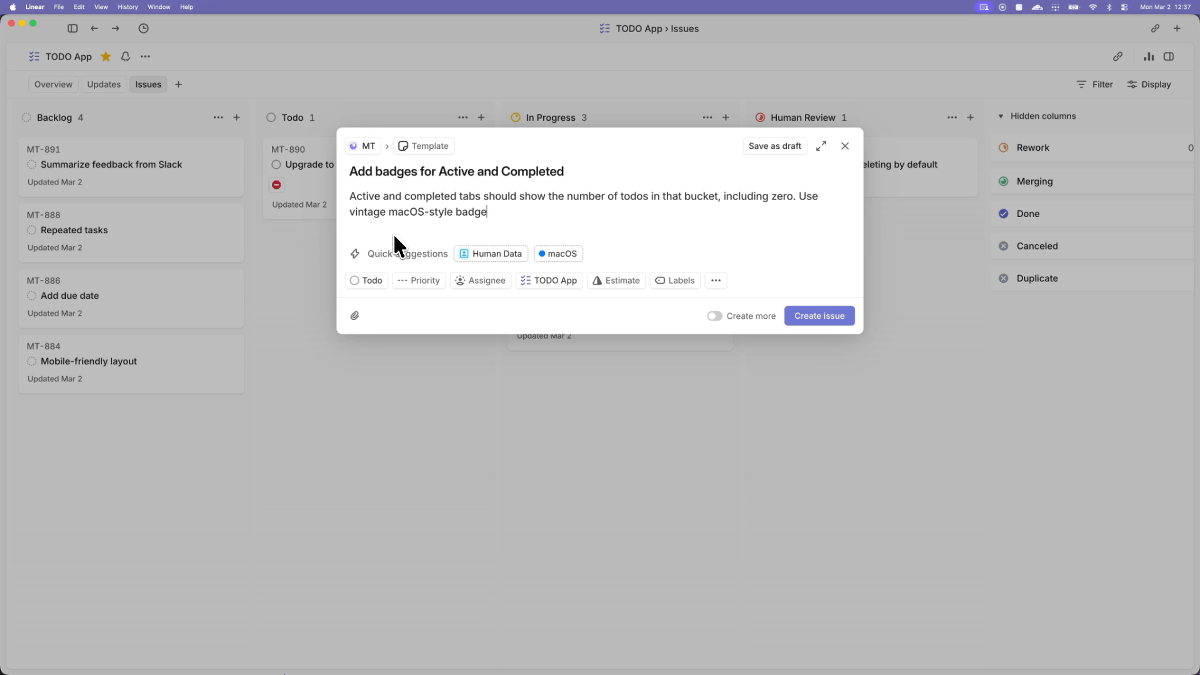
The tasks you create will be registered as 'To-Dos'.
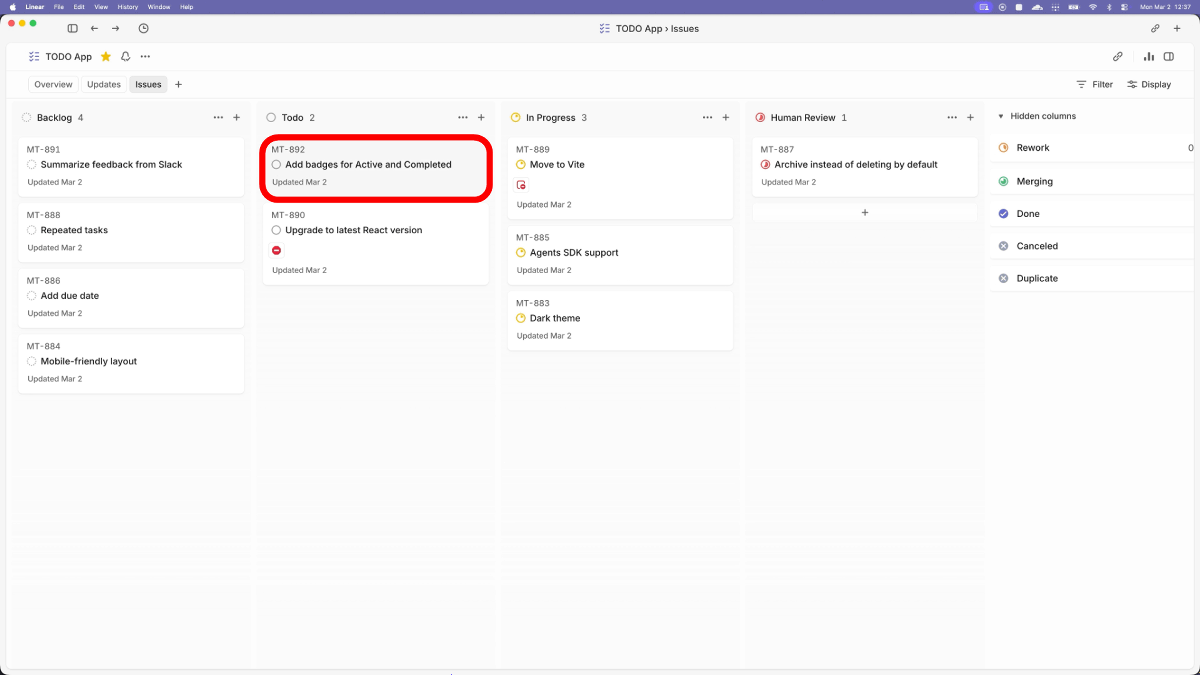
Symphony automatically detects tasks registered in To-Do, moves them to 'In Progress,' and assigns an agent to them.
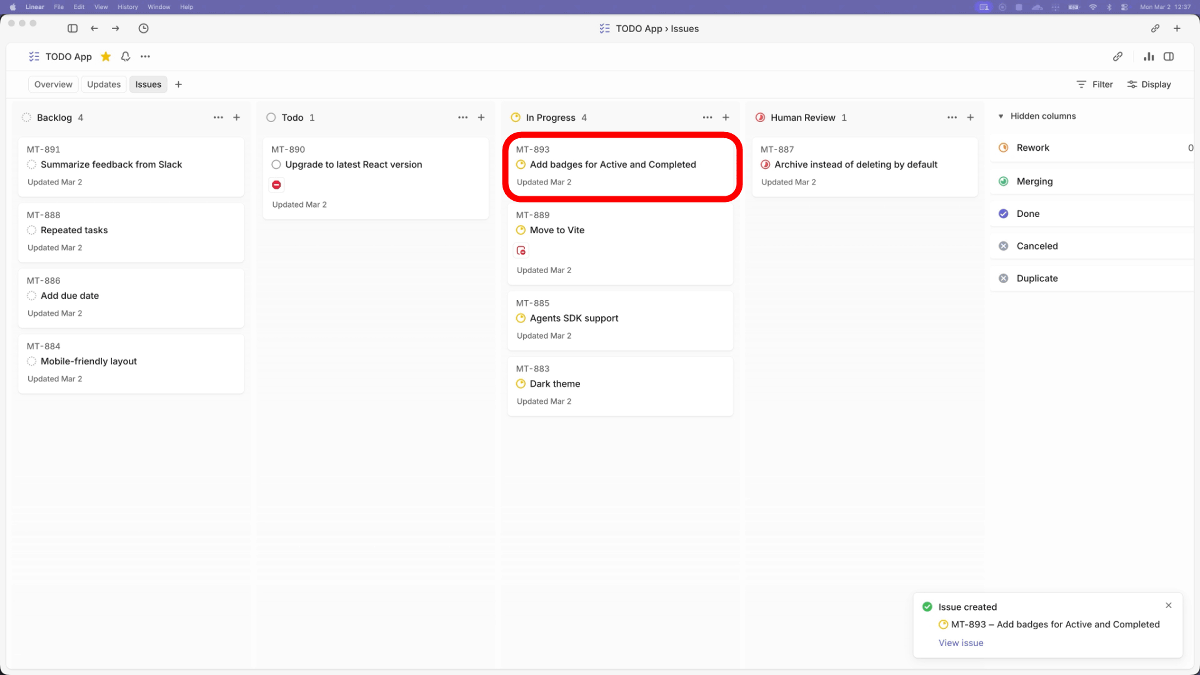
After that, the agents autonomously complete the tasks.
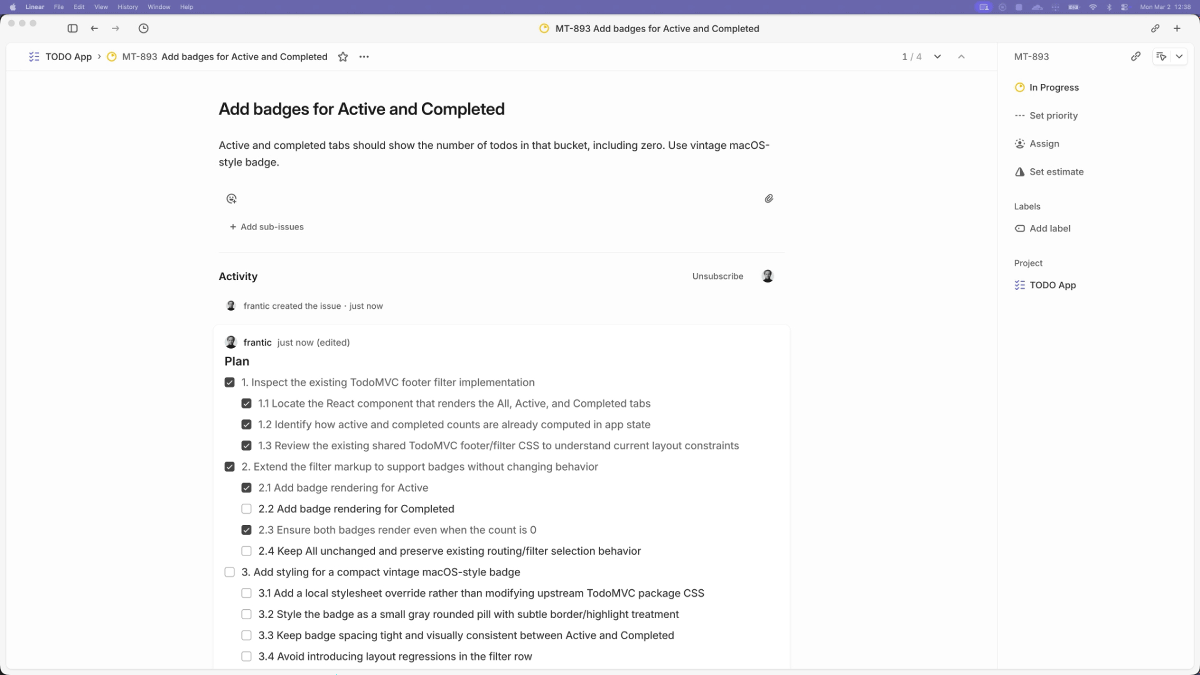
Within OpenAI, the number of pull requests from a specific team doubled within three weeks of implementing Symphony. After thorough evaluation within the company, Symphony was released as an open-source project.
You can find the Symphony specifications and reference implementation at the following link.
GitHub - openai/symphony: Symphony turns project work into isolated, autonomous implementation runs, allowing teams to manage work instead of supervising coding agents. · GitHub
https://github.com/openai/symphony
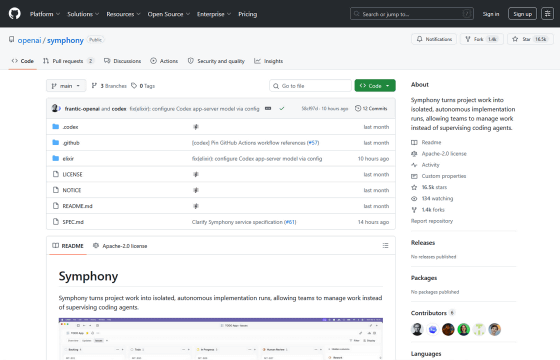
The core of Symphony is publicly available as SPEC.md , and various AI agents can be given SPEC.md to create orchestration tools tailored to your project. Examples of Symphony implementations using Claude Code have also been posted online.
OpenAI published Symphony — a spec for turning project work into autonomous implementation runs. Manage work, not agents.
— Mert Koseoglu — Context Mode (@mksglu) March 6, 2026
I took that idea and rebuilt it with Claude Code @AnthropicAI
hatice is my implementation of the Symphony spec, powered by Claude Code Agent SDK. It… pic.twitter.com/scRmtCLBOU
Related Posts:





in AI, Posted by log1o_hf