Why do we forget memories that were once so enjoyable? Is there a limit to the capacity of our brains?

When reminiscing with family and friends about childhood and school memories, you might have been surprised to find that 'another friend remembers a memorable event perfectly, while I don't remember it at all.' Michelle Spier, a professor of anatomy at the University of Bristol in the UK, explains why people forget enjoyable or memorable memories, and whether there's a limit to the brain's capacity.
Headspace: can our brains get full?
Ms. Spear recounts an experience where she and her husband were talking about past vacations, and he shared 'pleasant memories' that she had no recollection of at all, which surprised both of them. 'I know that memories can differ from person to person, but why are they so different? Why don't I have this memory? Is it simply because I'm too busy with work and my memory capacity has run out?' Ms. Spear asks.
When discussing the inaccuracies of human memory, we sometimes describe the human brain as being like a PC hard drive, saying that 'the brain's memory capacity has reached its limit.' However, according to Spear, the brain's memory capacity doesn't reach its limit; rather, it 'filters' the information it receives.
The sheer volume of information we receive in daily life is overwhelming; even processing just a day's worth of sights, sounds, and conversations is difficult. Therefore, the brain determines what to recognize based on its 'attention' at the time, selects what to remember based on 'emotions,' and ultimately, structures like the hippocampus determine which information is worth storing in long-term memory.
If there is a problem somewhere in this process, the memory of a particular event may not be formed properly. For example, in the case of Ms. Spear and her husband, her husband may have savored the event and imprinted it firmly in his memory, but Ms. Spear may have been thinking about her next objective or simply daydreaming. In that case, only a small part of the event may have been stored in Ms. Spear's brain, and she may not have been able to recall it even when her husband told her about it.

Even if an event is remembered, it is not stored as a 'fixed record' like a file or data saved on a PC. Every time a person recalls a memory, they reconstruct it based on fragmented information such as sensory details, past knowledge, and expectations.
According to Spear, memories become stronger and more consistent through repeated processes such as conversation, introspection, and retelling. He says that these memory mechanisms can help explain the phenomenon where people remember the same event but have different levels of detail.
The brain doesn't just passively record experiences; it actively prioritizes what should be remembered and discards unnecessary memories. Therefore, even if two people share the same event, they may not necessarily share the same memories.
Feeling 'overwhelmed' isn't because your memory capacity is depleted, but because you've reached the limit of the information you can process at once. Human attention and working memory, which temporarily stores information, have limits, and when these reach saturation, it becomes difficult to absorb new information. Therefore, events experienced while preoccupied with a particular subject or thought may not be remembered very well.
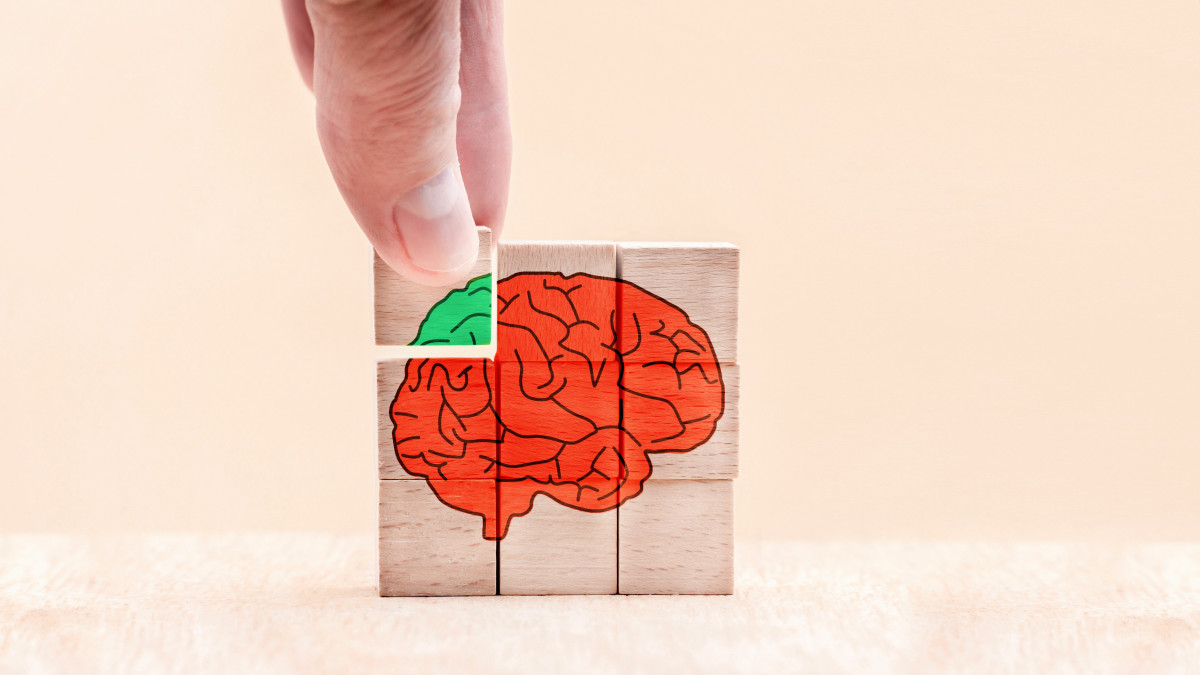
It's common to compare the brain to a computer, saying that 'the brain's working memory is equivalent to a computer's RAM, and long-term memory is equivalent to a hard drive.' However, human memories are not stored as individual files, but are distributed throughout the entire neural network, and they change shape and are reconfigured each time they are recalled, which is a major difference from a computer. When the brain stores a new memory, it doesn't simply add it to existing memories as a separate entity; rather, it interacts with existing memories, causing both the new and old memories to change.
Various estimates have been made regarding the amount of information the brain can store, but a widely cited figure is approximately 1 petabyte , which is equivalent to several hundred years' worth of video files. However, in reality, the brain is constantly reorganizing information, so there is no fixed capacity.
Some memories fade over time, but this isn't because the brain's capacity is exhausted. It's because we don't continuously recall them, tell them to others, or connect them to new experiences. If these actions don't reinforce them, even important memories can become difficult to recall.
When you feel like you can't remember something, it's usually not the memory itself that's been lost, but rather the 'ability to recall it.' Therefore, a familiar scent, music, or unexpected event that you encounter at a sudden moment can trigger a memory, vividly recalling something you thought you had completely forgotten.
Spear stated, 'Memory gaps are rarely evidence that the memory system has reached its capacity limit. Rather, they are often traces of moments that were not fully stored or simply could not be recalled.'
Related Posts:





in Free Member, Science, Posted by log1h_ik