3D printing technology has been developed that allows electronic circuits to be printed directly onto living plants and bones.
3D printers are tools that can create buildings, machine parts, electronic devices, and more with unprecedented versatility, but they have had the problem of being difficult to heat materials on temperature-sensitive objects. Now, a research team at Rice University in the United States has developed a technology that heats nanomaterials and polymers 3D printed as ink by adjusting microwaves in real time.
Three-dimensional printing of nanomaterials-based electronics with a metamaterial-inspired near-field electromagnetic structure | Science Advances
Rice researchers redefine what we can build by 3D printing electronics with focused microwaves | Rice News | News and Media Relations | Rice University
https://news.rice.edu/news/2026/rice-researchers-redefine-what-we-can-build-3d-printing-electronics-focused-microwaves
Microwaves allow 3D printing of circuits on surfaces without damage
https://newatlas.com/electronics/meta-nfc-focused-microwaves-circuits/
While the technology to print electronic circuits with 3D printers has existed for some time, the process of applying heat to conductive nanoparticles layered as ink material to sinter them and make them conductive had been a bottleneck for over 10 years.
The sintering process, which involves using furnaces or lasers, applies enormous amounts of heat to the materials that form the substrates of electronic circuits. Therefore, it could not be used for heat-sensitive substrates such as living plants or surgical implants.
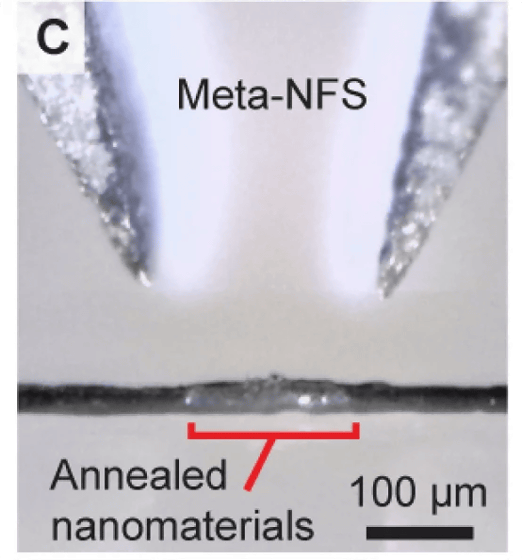
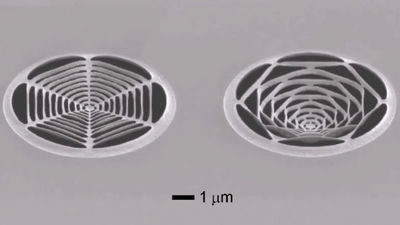
Therefore, a research team led by Associate Professor Yong-Lin Kong, a mechanical engineer at Rice University, developed a device called 'Meta-NFS' inspired by metamaterials. Meta-NFS concentrates microwave energy into a region of less than 200 micrometers, about the diameter of a human hair, and can heat only the newly layered material created by the 3D printer to 160°C, while keeping the surrounding substrate material at a low temperature.
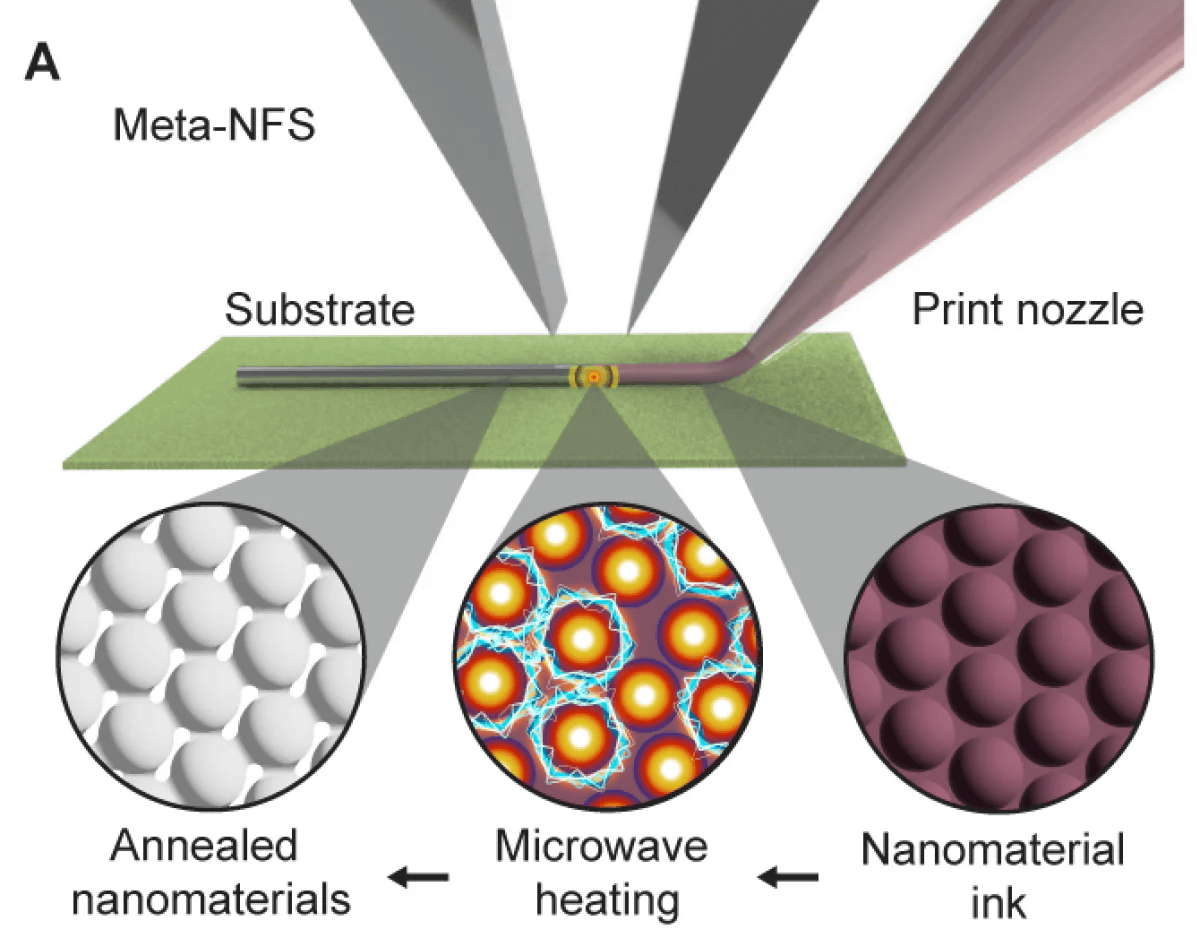
The following diagram illustrates the process by which material extruded from a 'Print nozzle' (3D printer nozzle) is sintered using 'Meta-NFS'. Meta-NFS works by heating from within the layered material, and by adjusting microwaves in real time, it is possible to change the crystalline structure of nanoparticles during the continuous 3D printing process and program different electrical and mechanical properties.
Meta-NFS allows heating only regions smaller than 200 micrometers, as shown below.
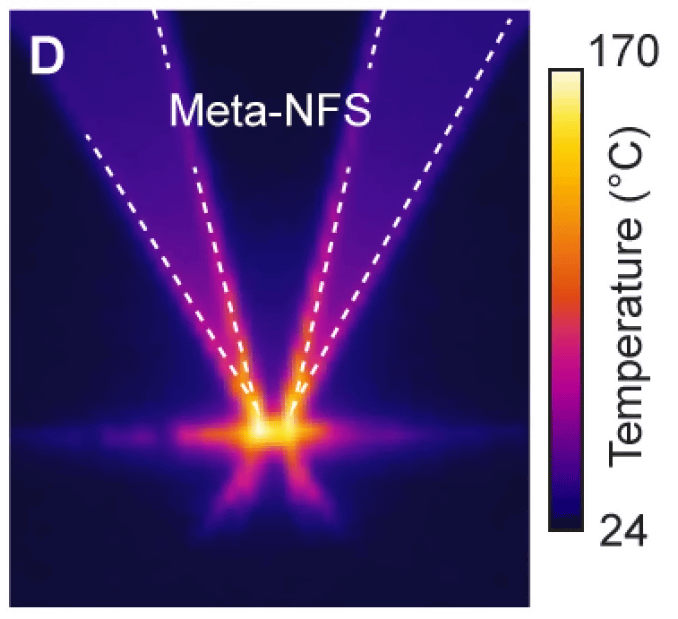
The following image, showing the temperature changes due to Meta-NFS, reveals that only the ink material is heated precisely, with almost no effect on the substrate below.
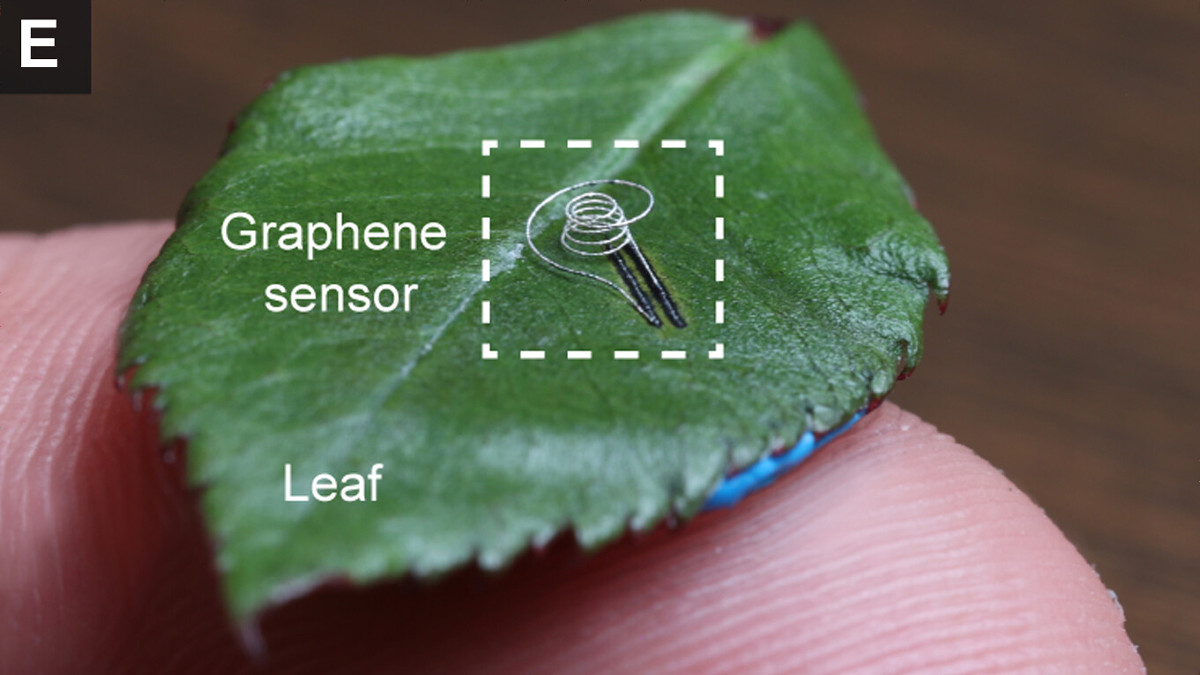
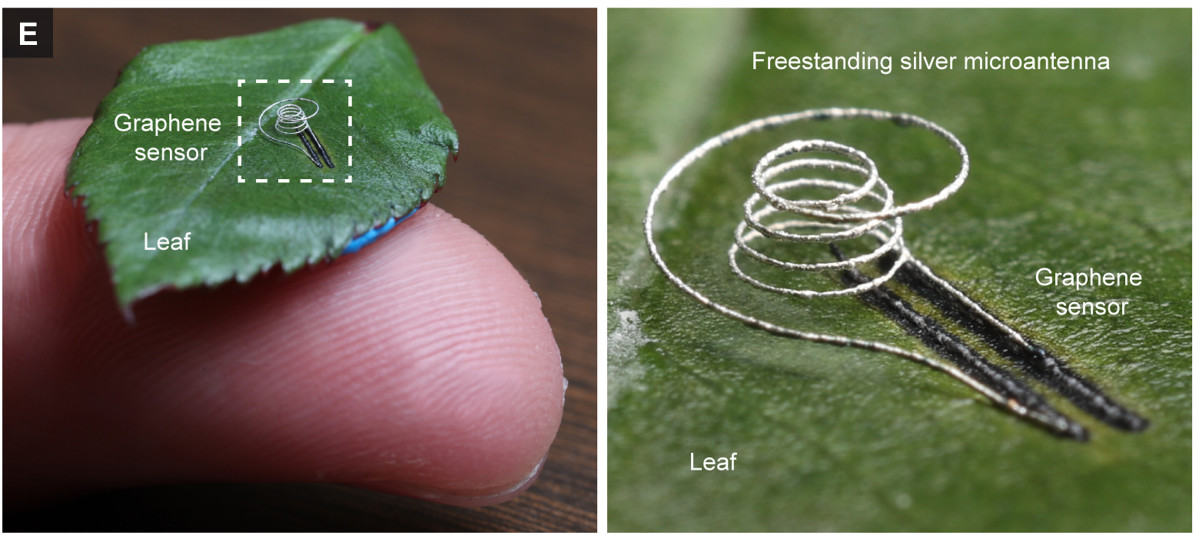
The research team has actually used Meta-NFS to 3D print conductive microstructures onto the leaves of living plants.
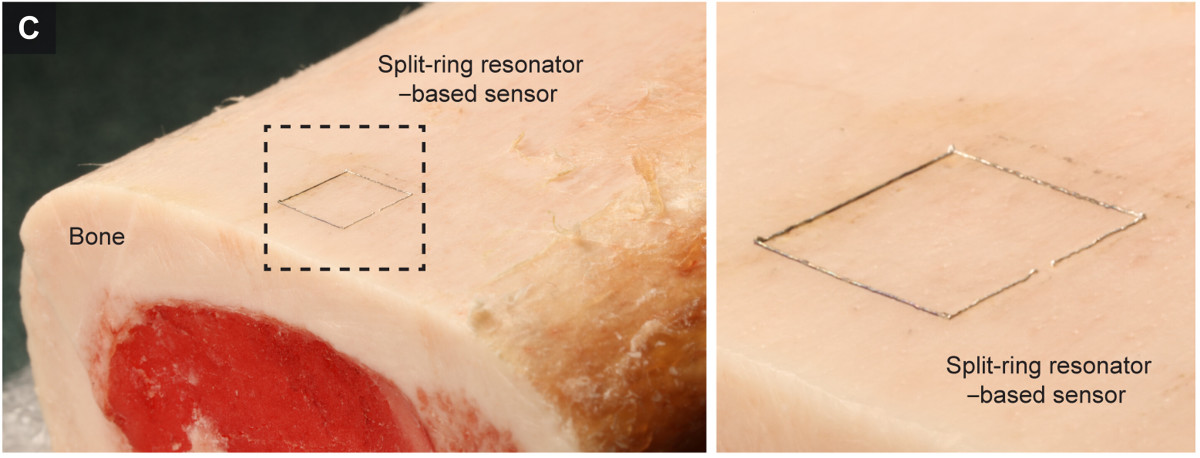
They also reported being able to 3D print a wireless sensor onto a cow's femur that detects very small distortions and transmits data.
Mr. Cong stated, 'The ability to selectively heat the printing material makes it possible to spatially program the functional properties of the ink, even when surrounded by temperature-sensitive materials. This allows for the integration of free-form electronic devices on a wide range of substrates, including biopolymers and biological tissues, within a desktop-sized 3D printer, without the need for complex equipment or laborious manual work.'
Related Posts:




in Science, Posted by log1h_ik