A review of 'Gang Poker,' a cooperative poker game that offers a tense and engaging experience of reading the atmosphere. Try to read the strength of other players' hands based on their actions and aim for the perfect ranking!
Gang Poker
https://www.gp-inc.jp/cardgame_gangpoker.html
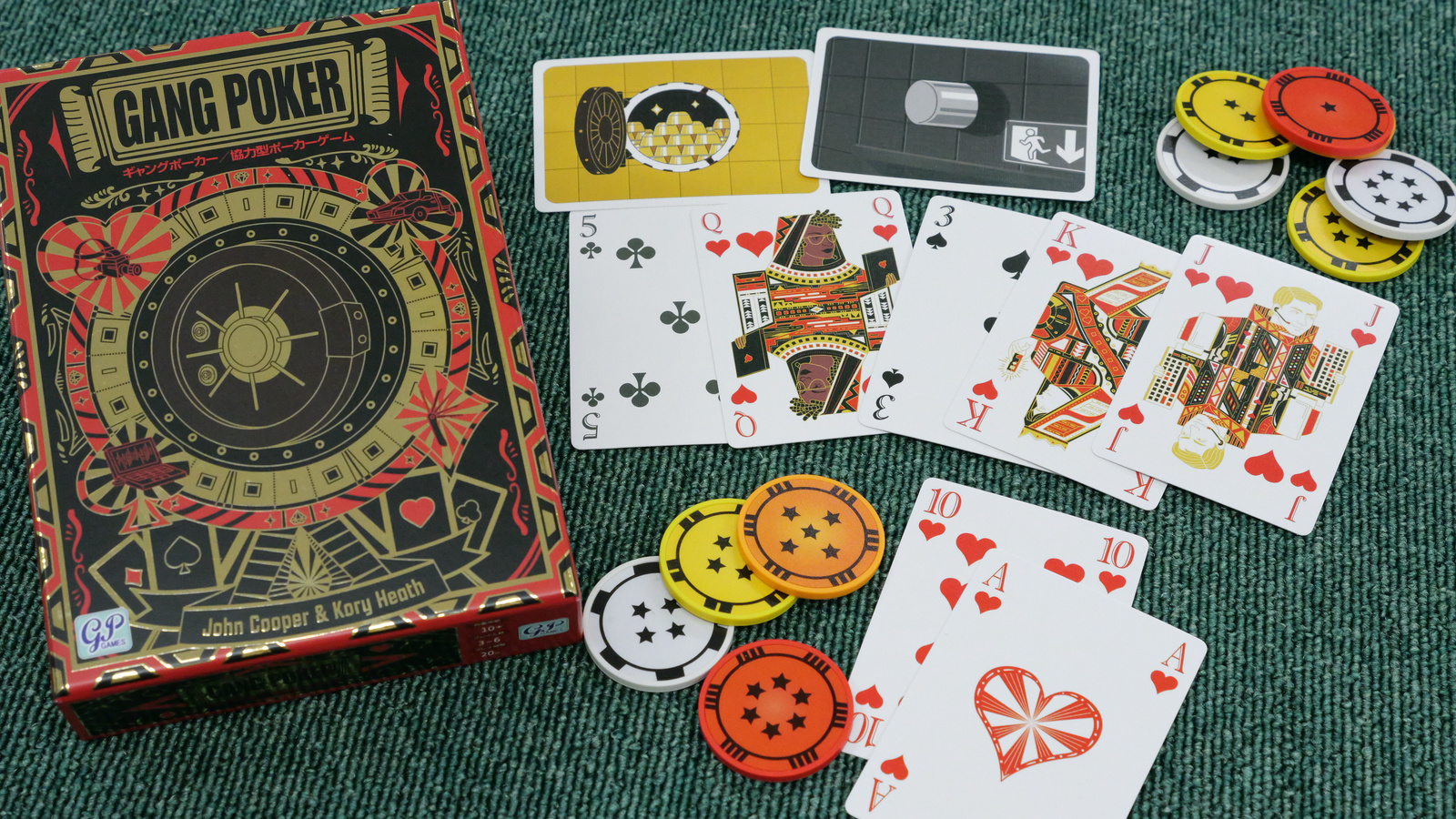
The Gang Poker box features a flashy, embossed design reminiscent of a casino, depicting chips, cards, and a safe door.
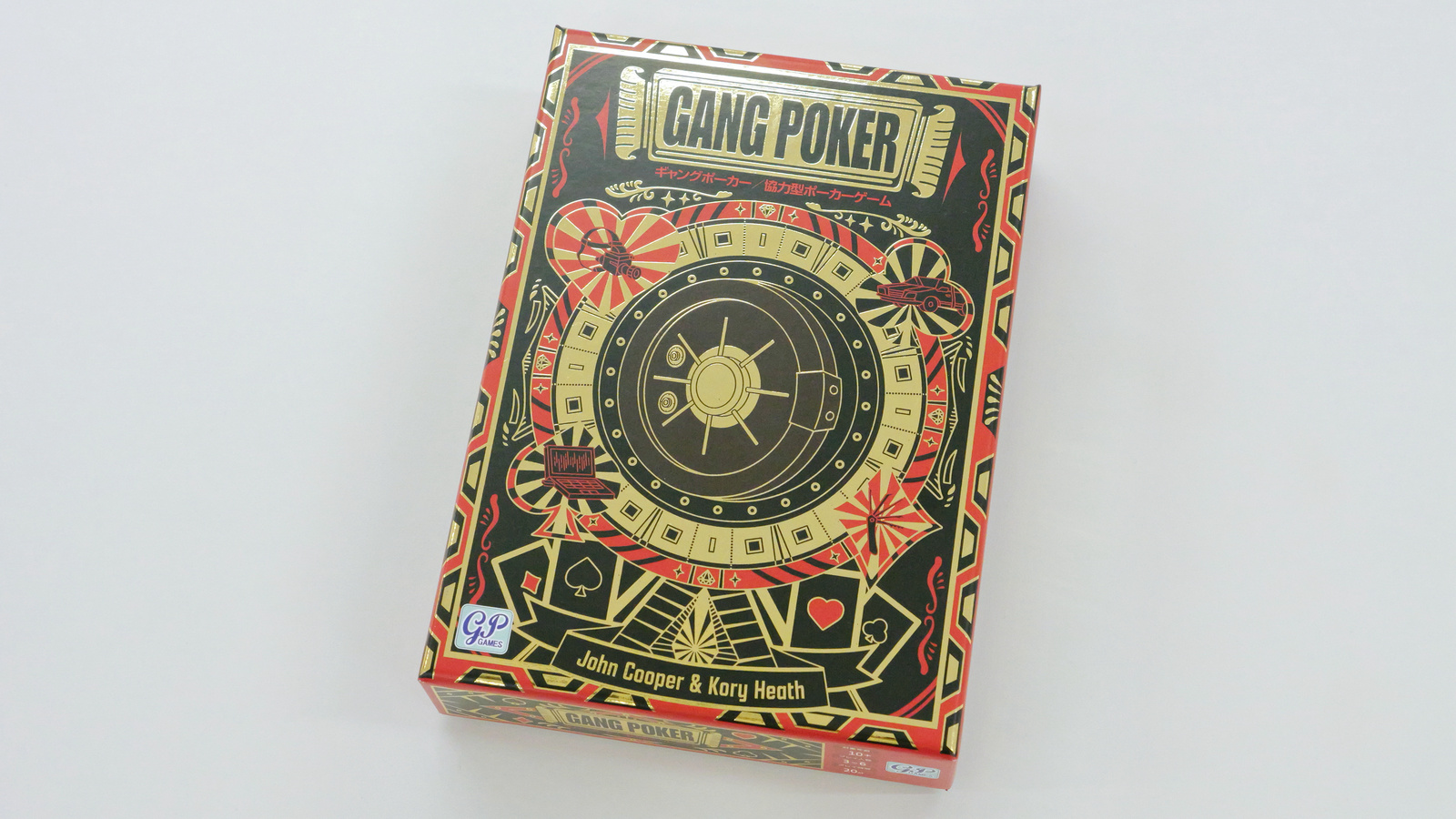
The game is intended for ages 10 and up, with 3-6 players and an estimated play time of 20 minutes. This time, five members of the editorial team will be playing.
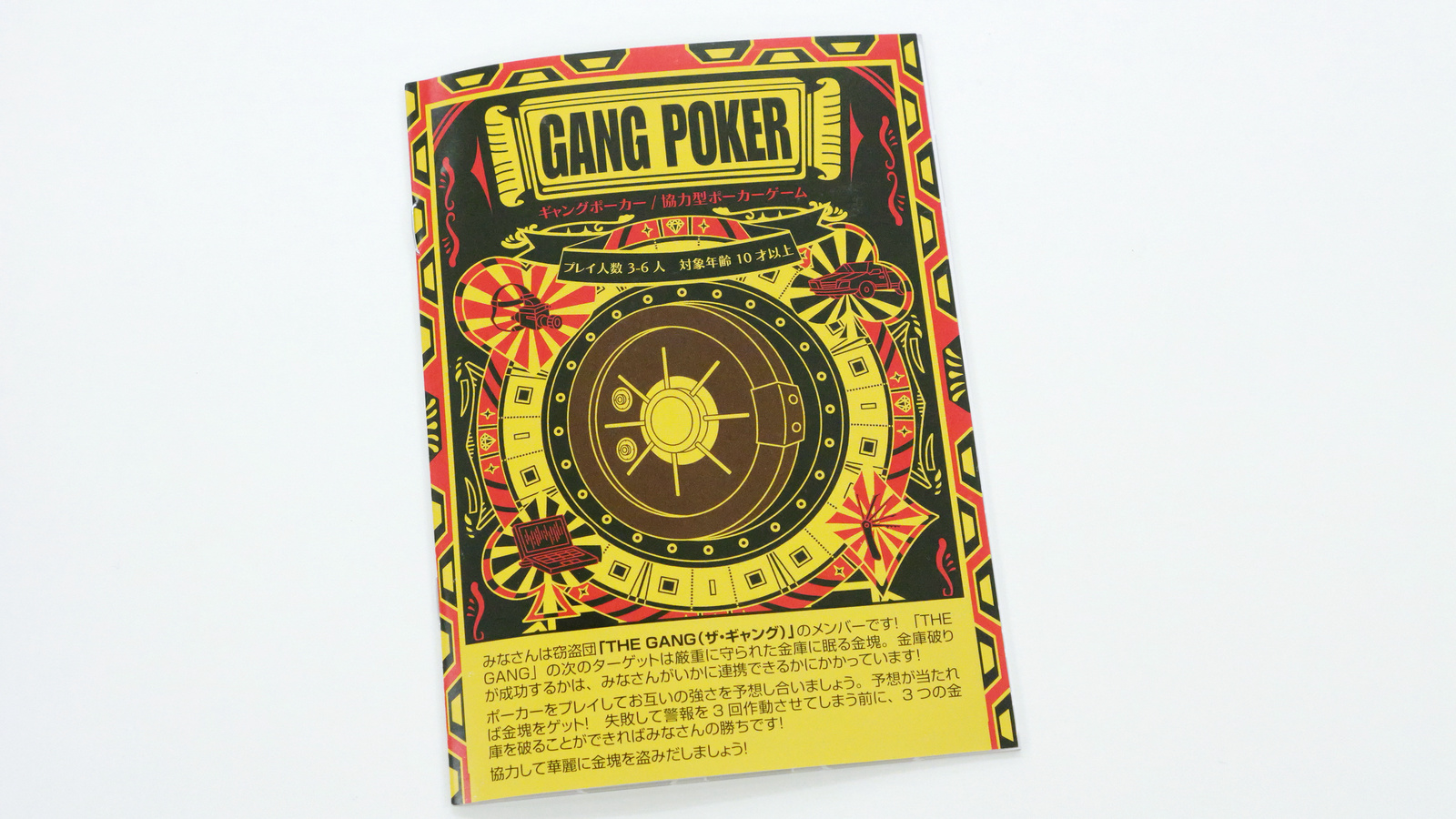
The contents include, first, the rulebook. Note that GP officially
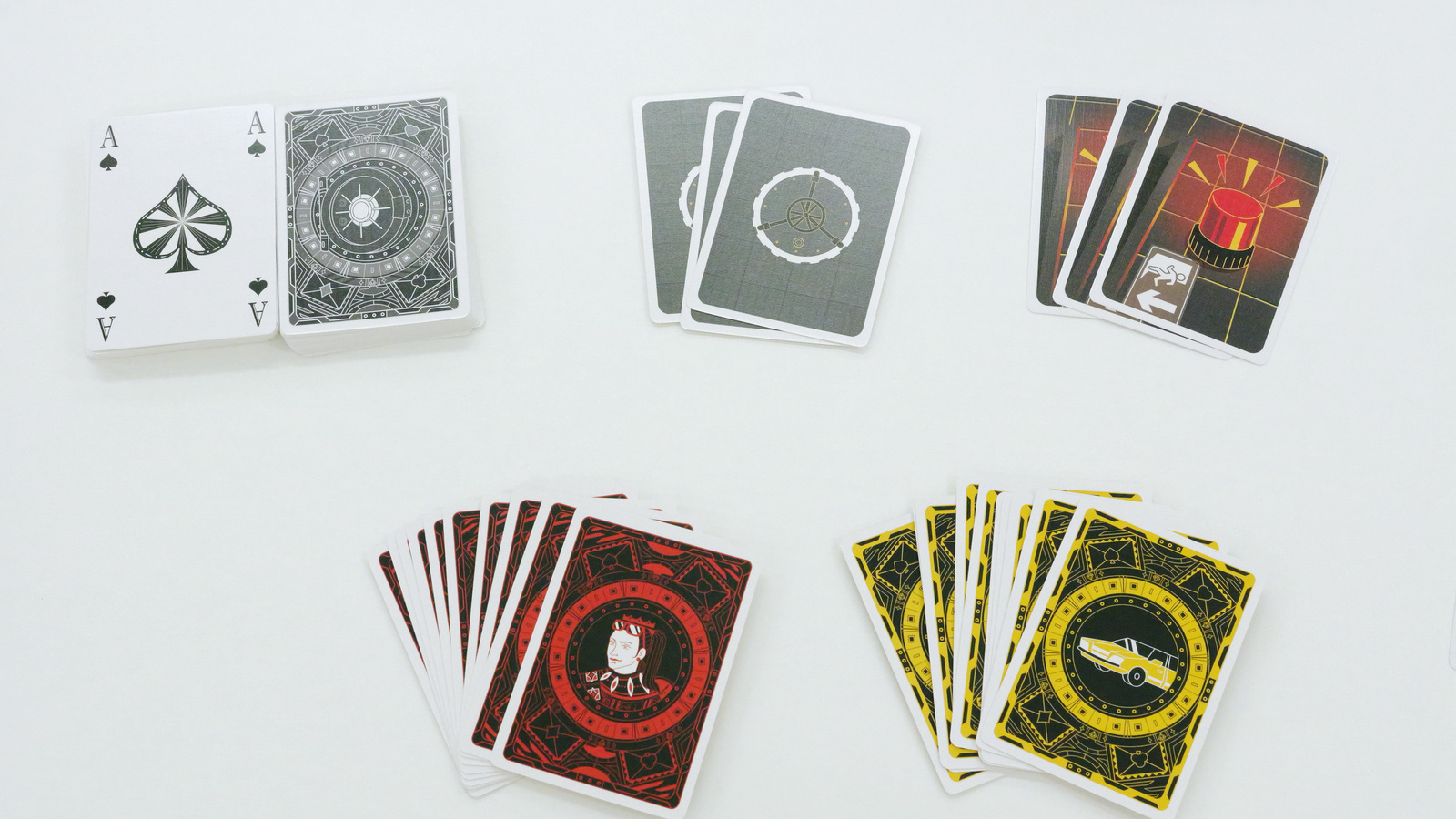
The deck consists of 52 playing cards, 3 safe cards, 3 alarm cards, 10 specialist cards, and 10 challenge cards.
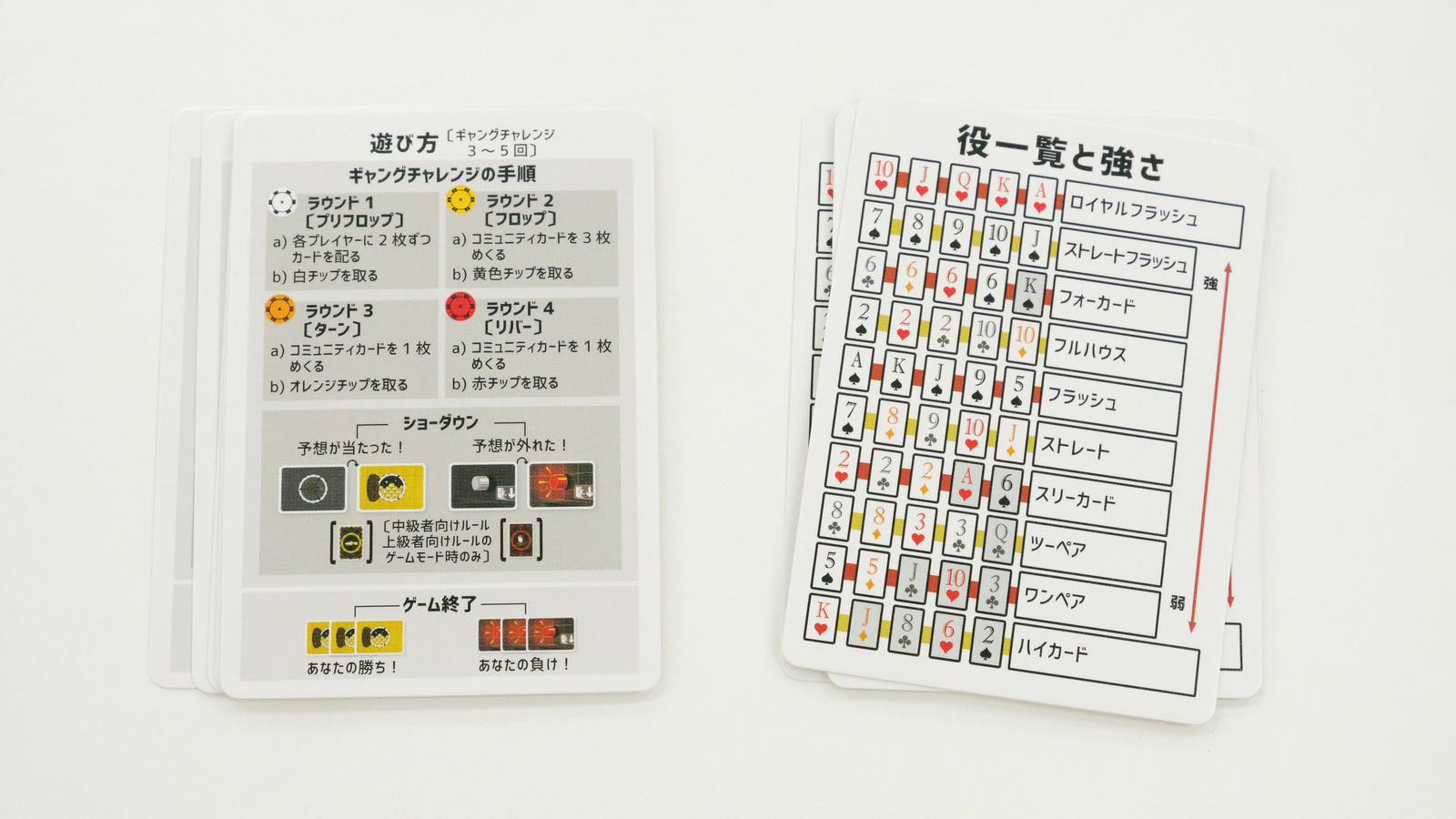
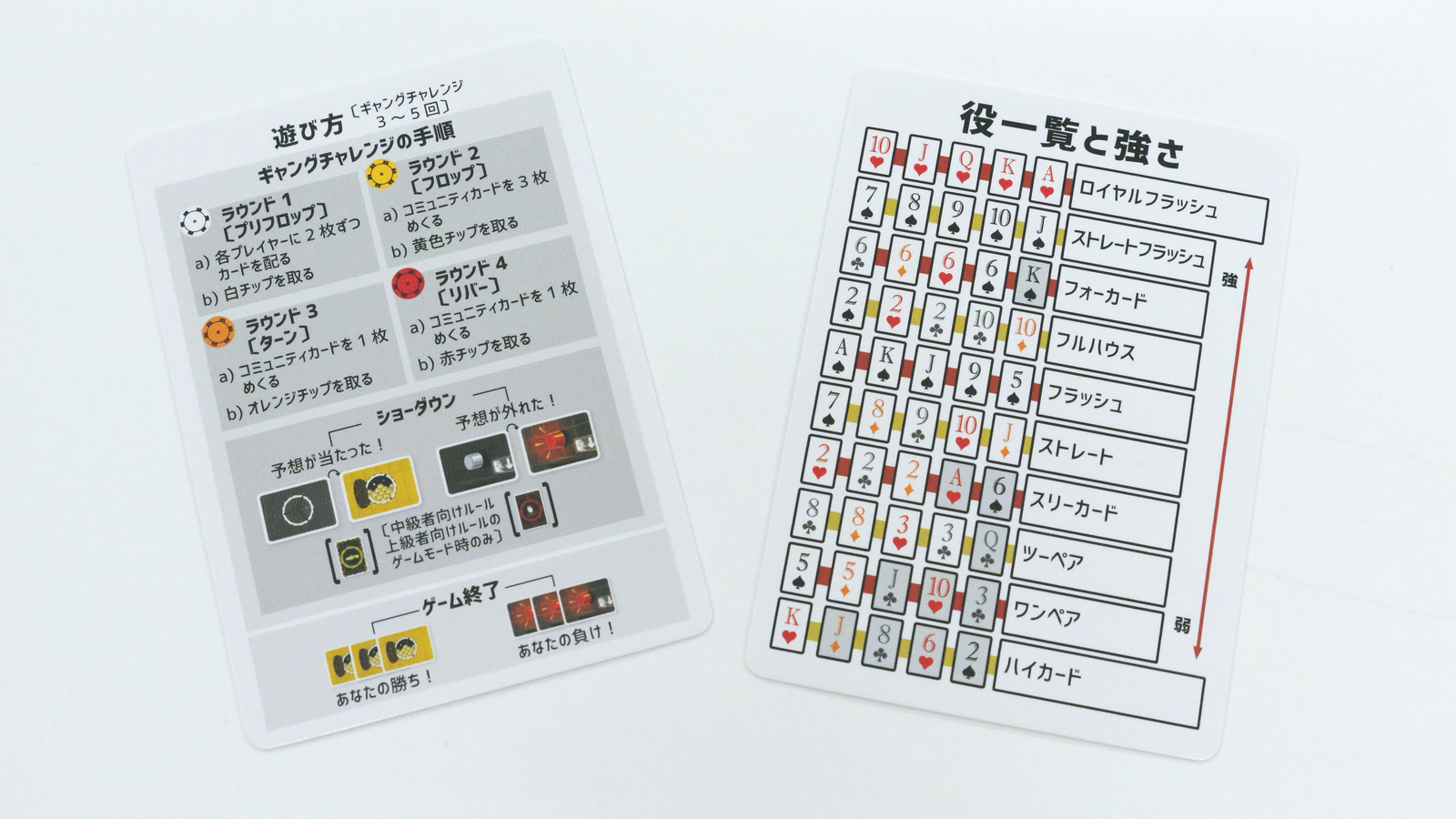
The players receive 'How to Play' cards and 'List of Hands and Their Strengths' cards as their handouts. In poker, the strength of your hands is important, so having the hand list and strength cards will ensure that even poker beginners won't have any trouble.
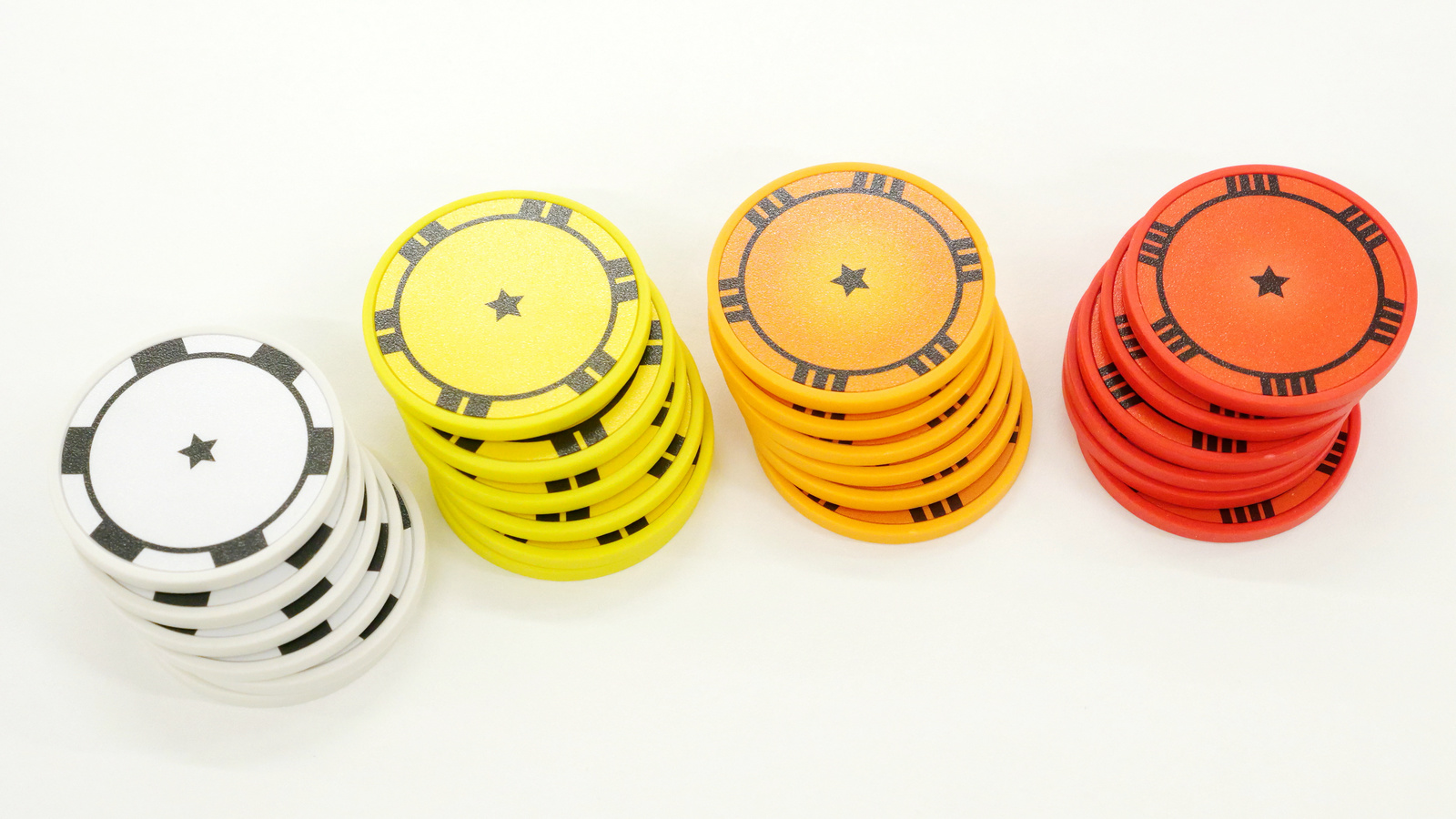
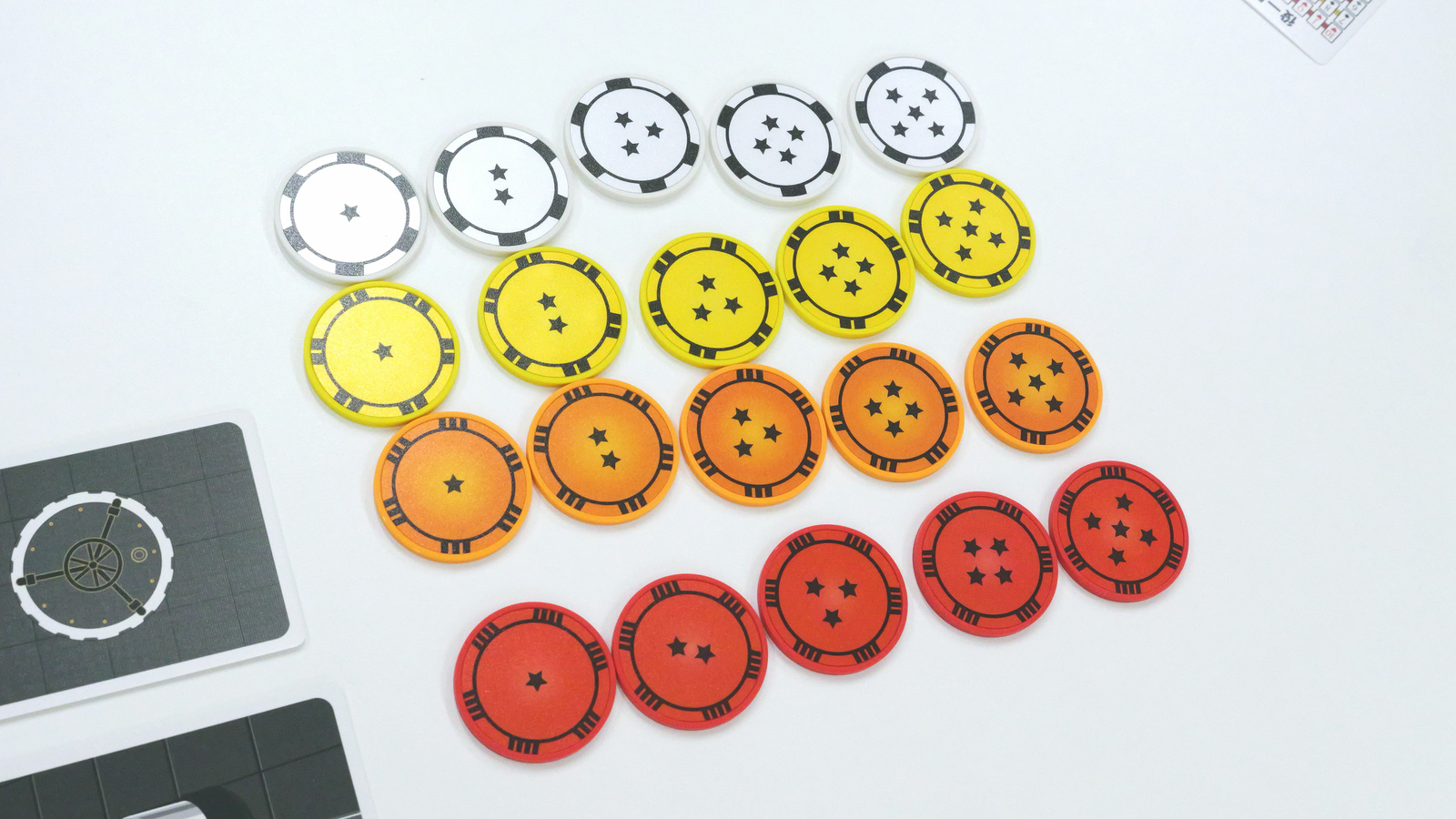
There are 24 chips in total: 6 chips each of four colors: white, yellow, orange, and red. Each chip has 1 to 6 stars drawn on it.
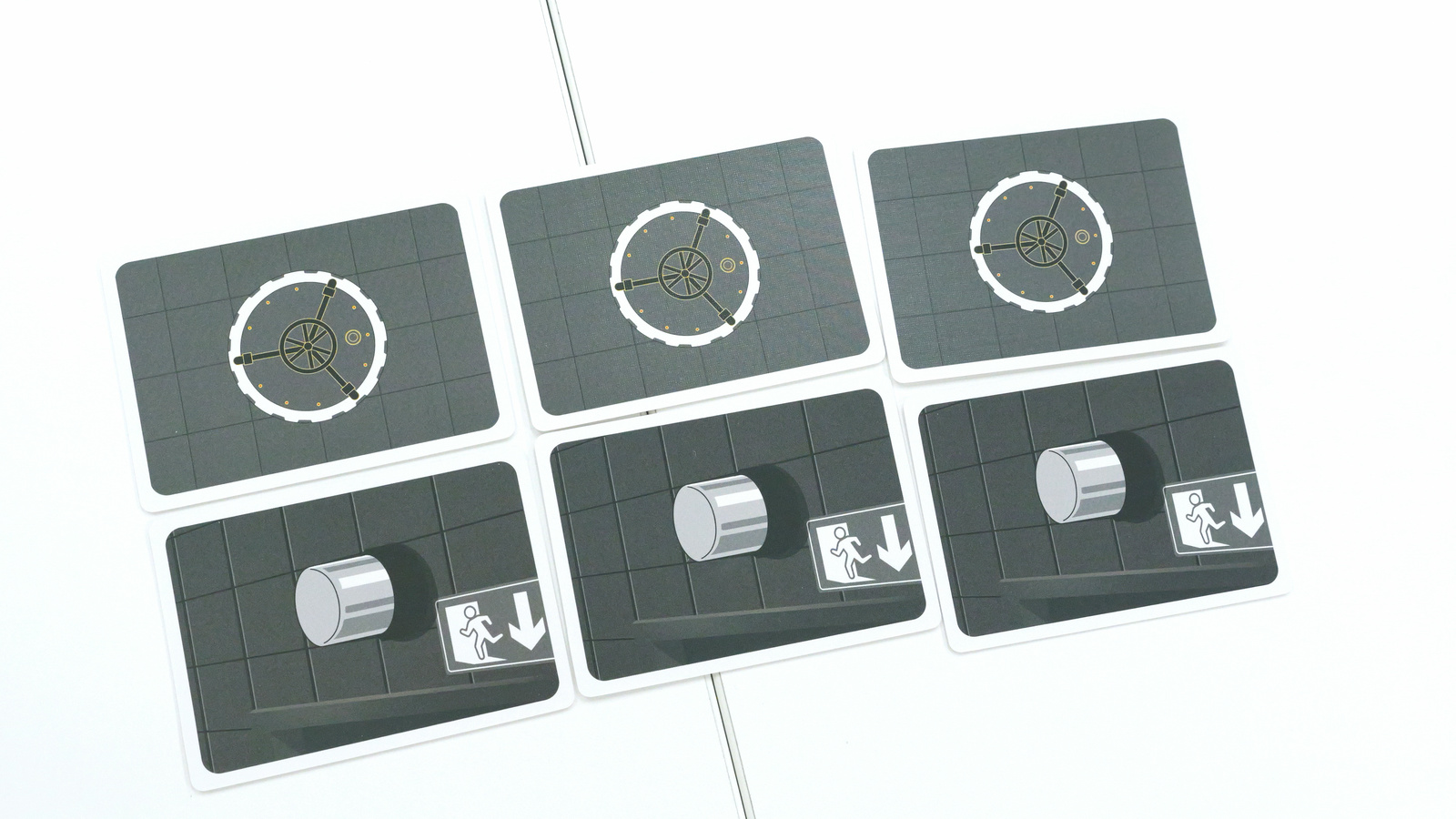
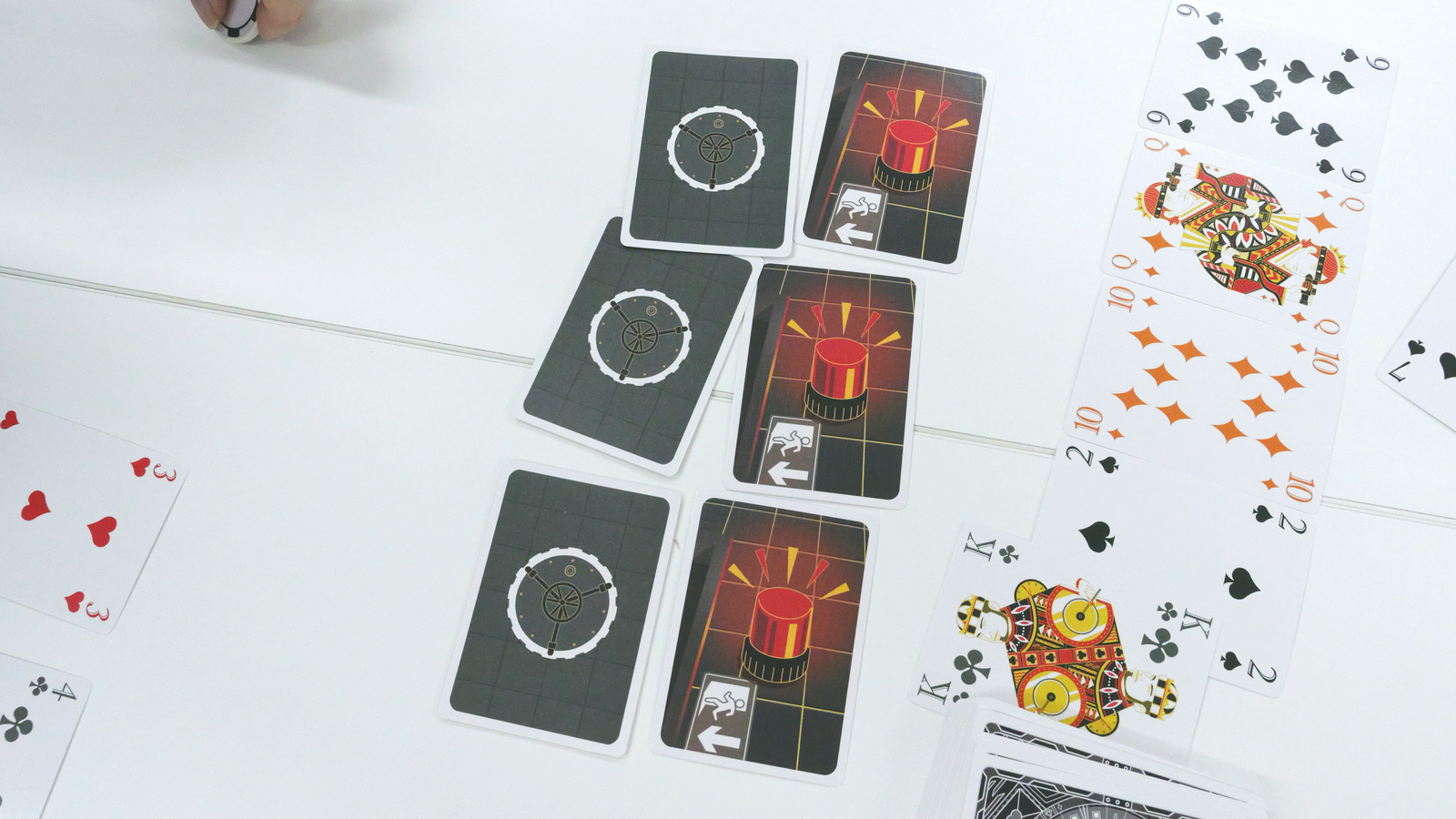
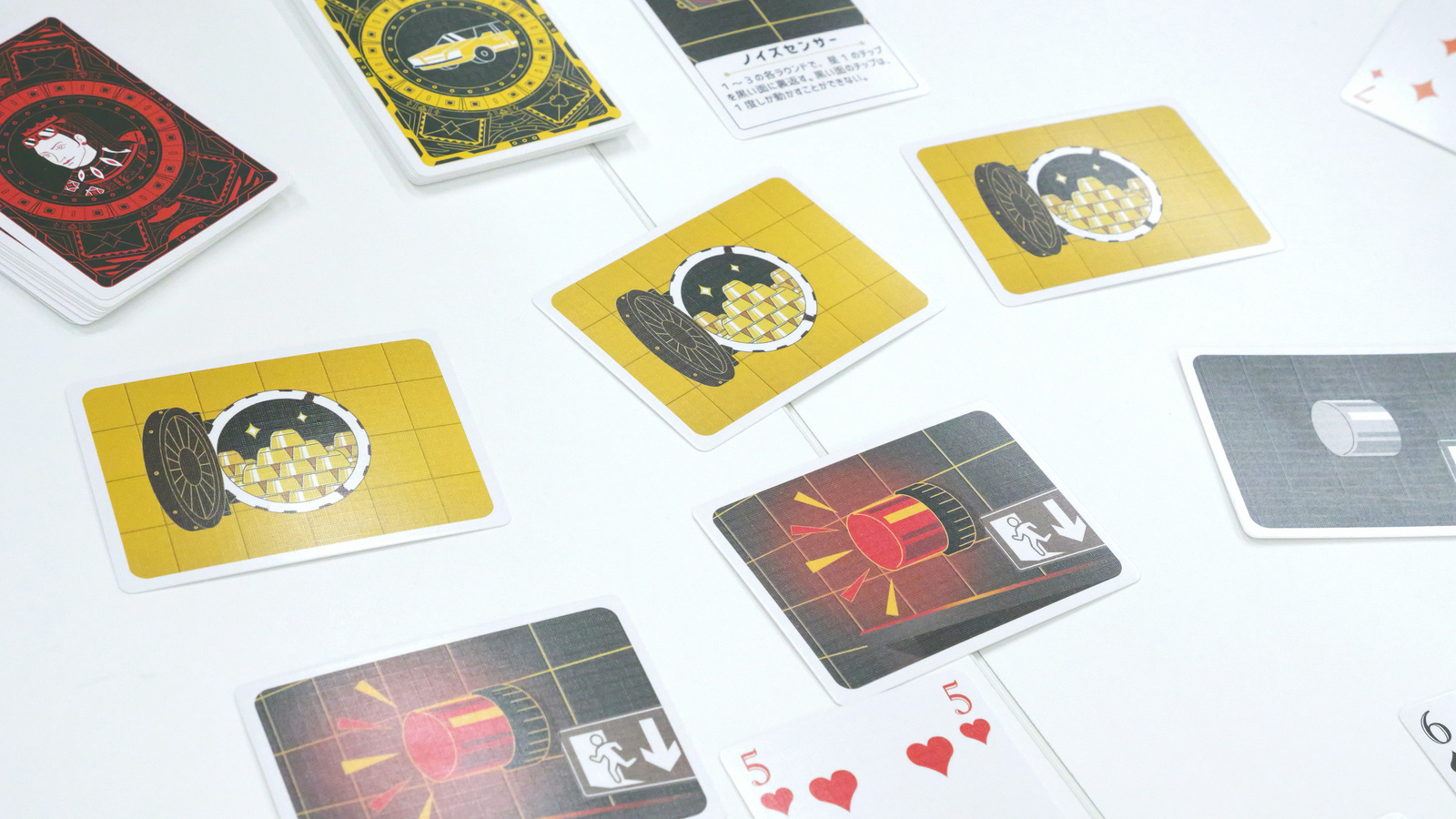
First, place the safe card and alarm card face down.
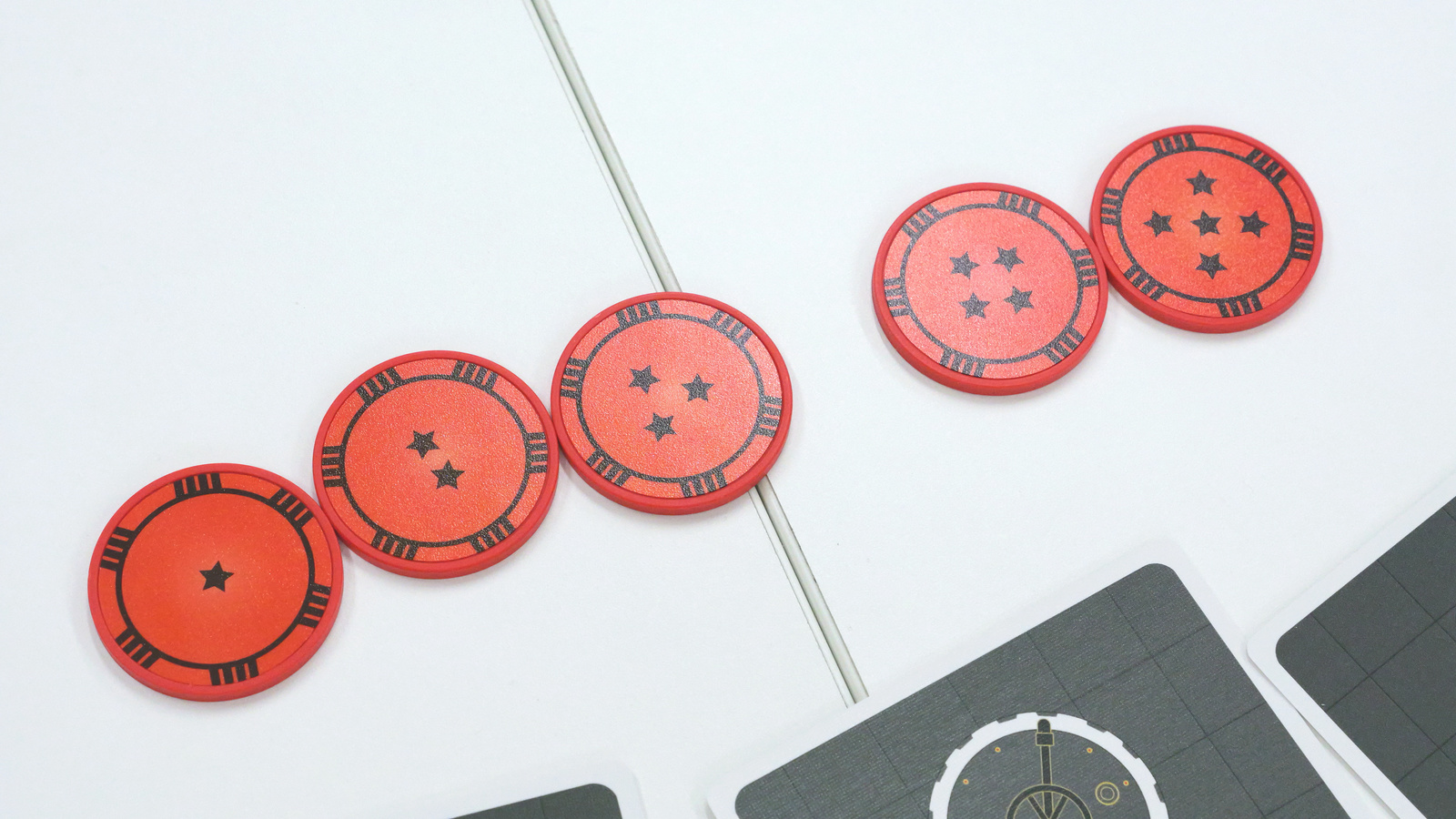
Next, arrange the chips in the order of white, yellow, orange, and red. The number of chips of each color should be equal to the number of players. Since this is a 5-player game, we arranged the chips of four colors, from one star to five stars, as follows.
Each player is given one 'How to Play' card and one 'List of Hands and Their Strengths' card.
Then, shuffle the 52-card deck and deal two hole cards (hand cards) to each player.
In a standard poker game, the dealer (the parent player) deals the cards and reveals up to five community cards to help players make better hands. Each time the dealer reveals a community card, players make decisions such as 'I'll go for it' or 'It's too tough, I'll fold,' and then they call, bet, or fold.
However, this 'Gang Poker' is a cooperative game. The goal is not to judge the outcome by looking at the opponent's hand, but for all players, including yourself, to correctly rank the strength of the hands.
A gang poker challenge consists of four rounds. In the first round, the white chips are placed in the center.
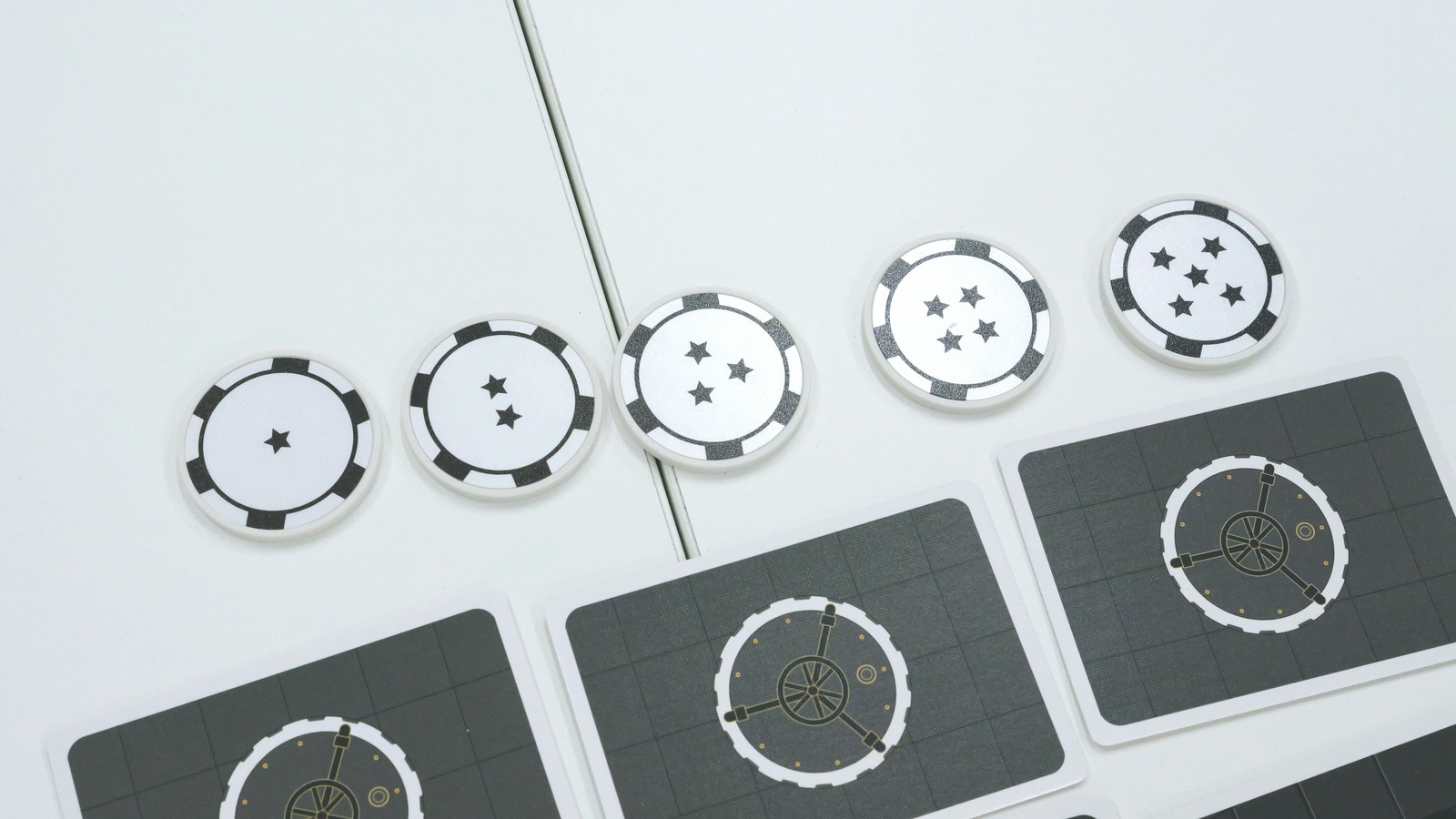
The chips are marked with stars ranging from one to five, and players choose chips with more stars the stronger the hand they think they can make. Players who look at their initial hole cards and expect a very strong hand will confidently choose four-star or five-star chips, while those with less promising hands will choose one-star chips.
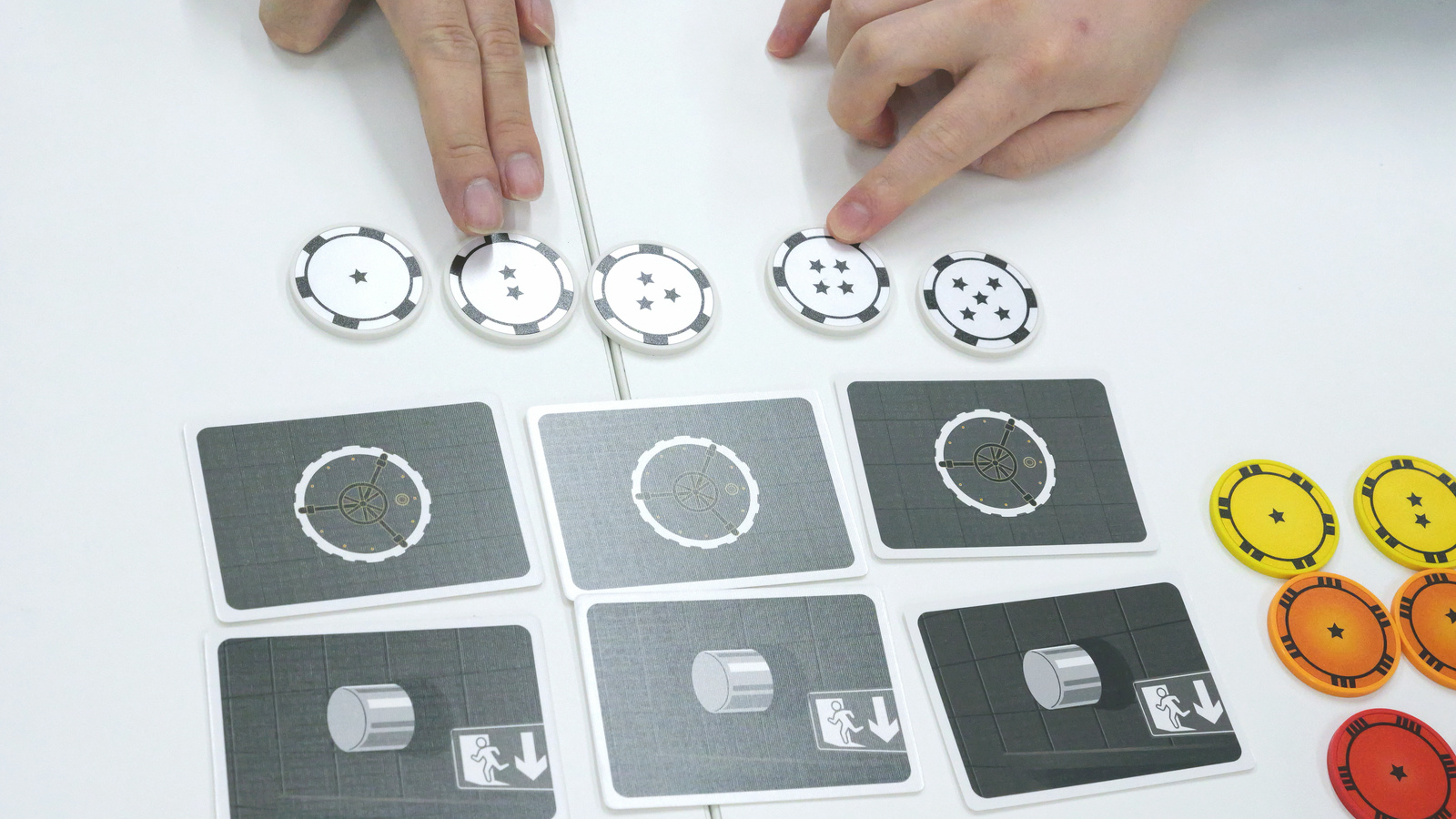
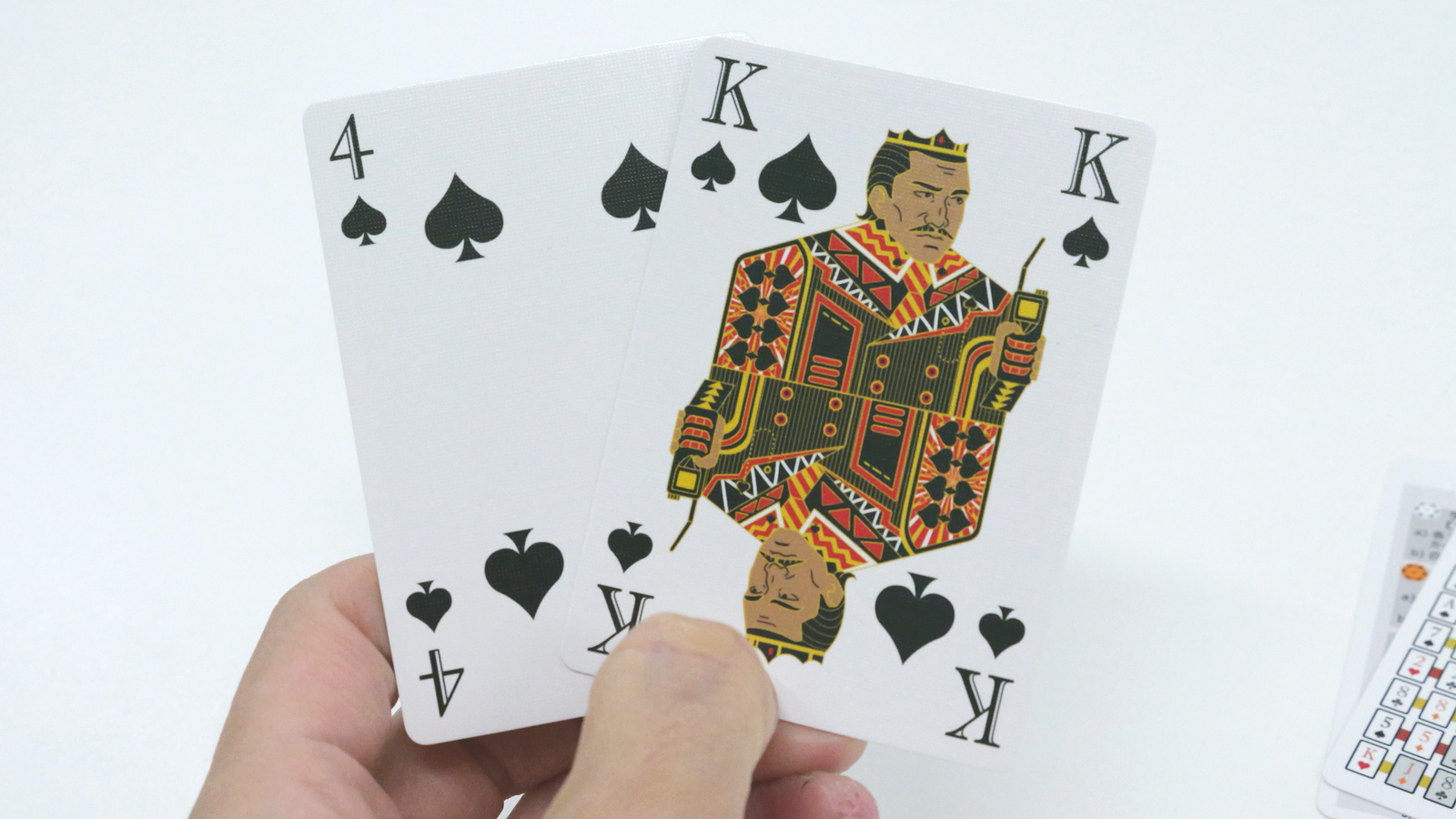
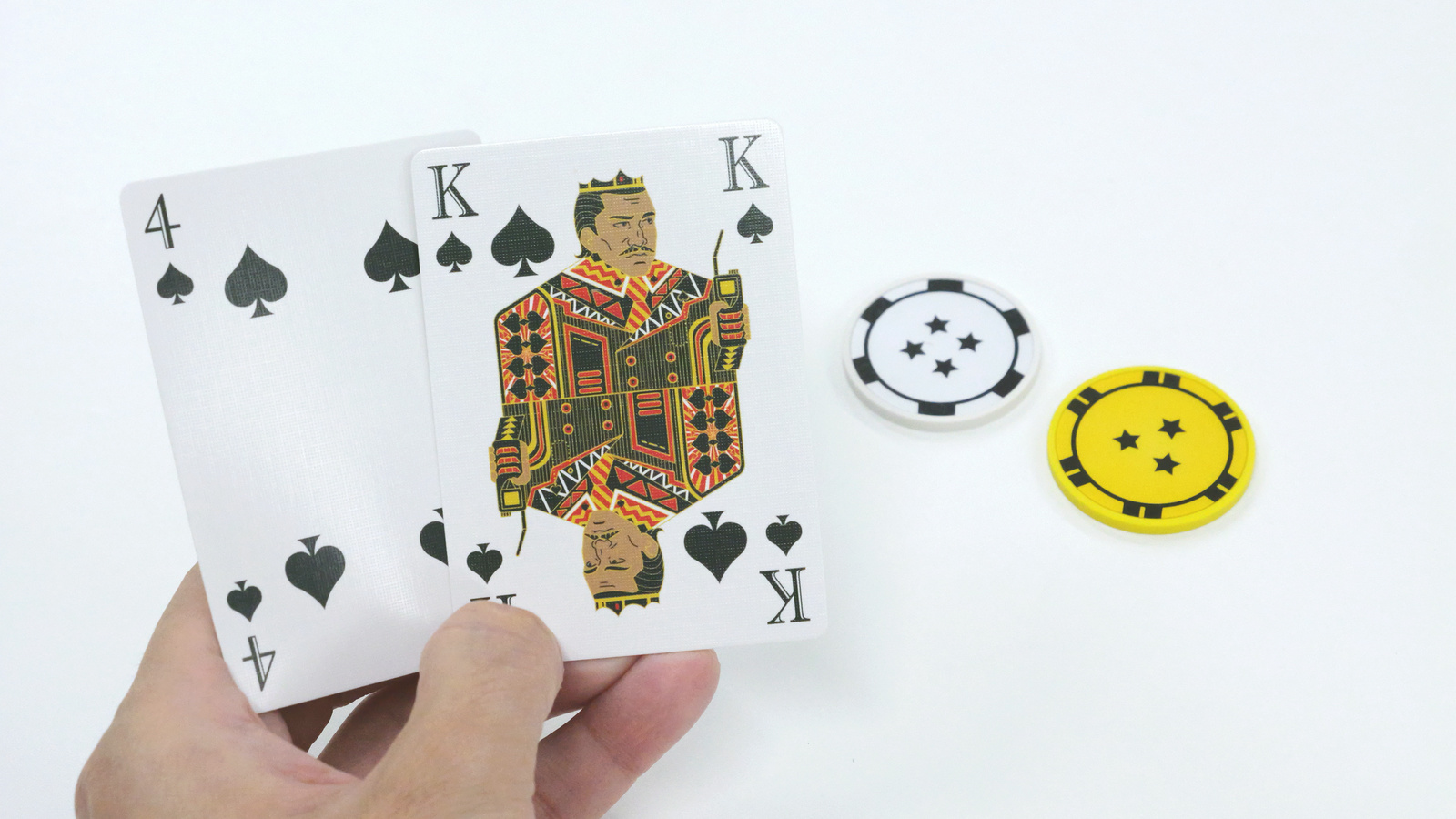
These chips don't have to be taken from the center; you can take chips that other players have already taken. For example, a player who drew a hand of '4 of Spades and King' has a high-value King card and the possibility of a flush, so they judge it to be quite advantageous. However, they don't think it's strong enough to take a 5-star chip, so they take a 4-star chip from another player. Of course, you can't tell other players what your hand is. Therefore, you need to carefully observe which star chip each player chooses, and how quickly and how much thought they put into it.
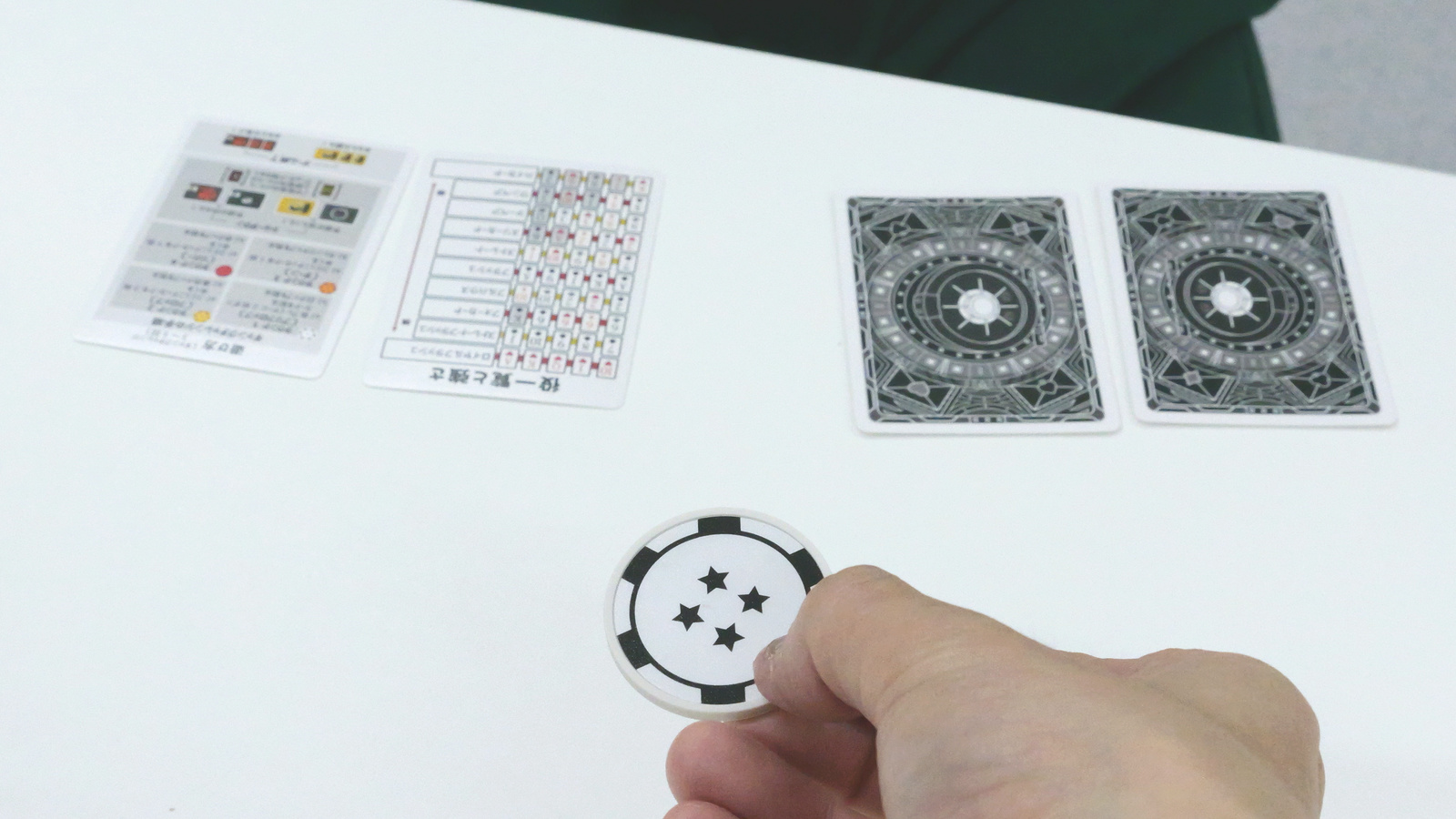
Once everyone has acquired one chip, we move on to the next round. Round 2 uses yellow chips.
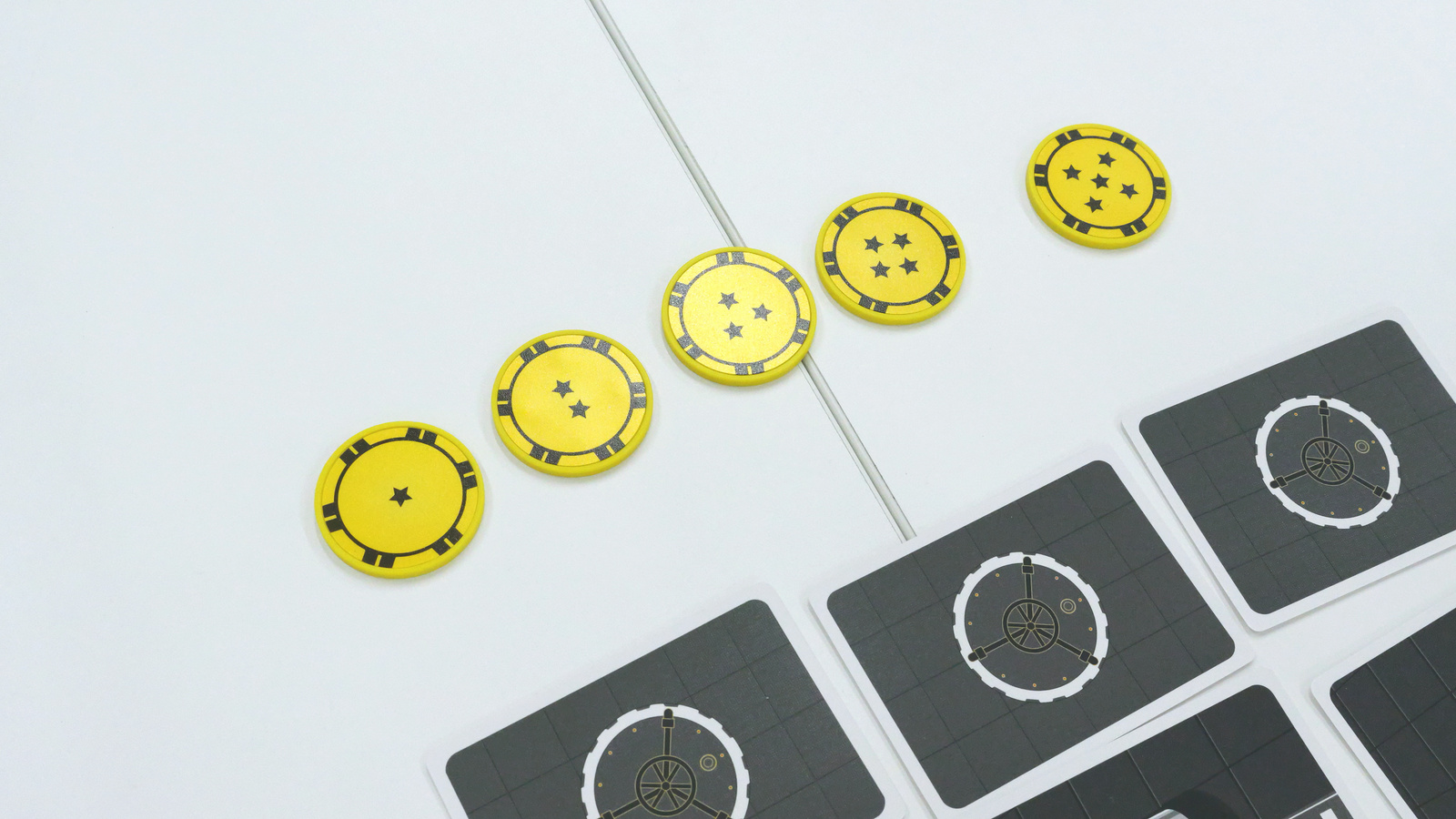
At the same time, three community cards were turned over.
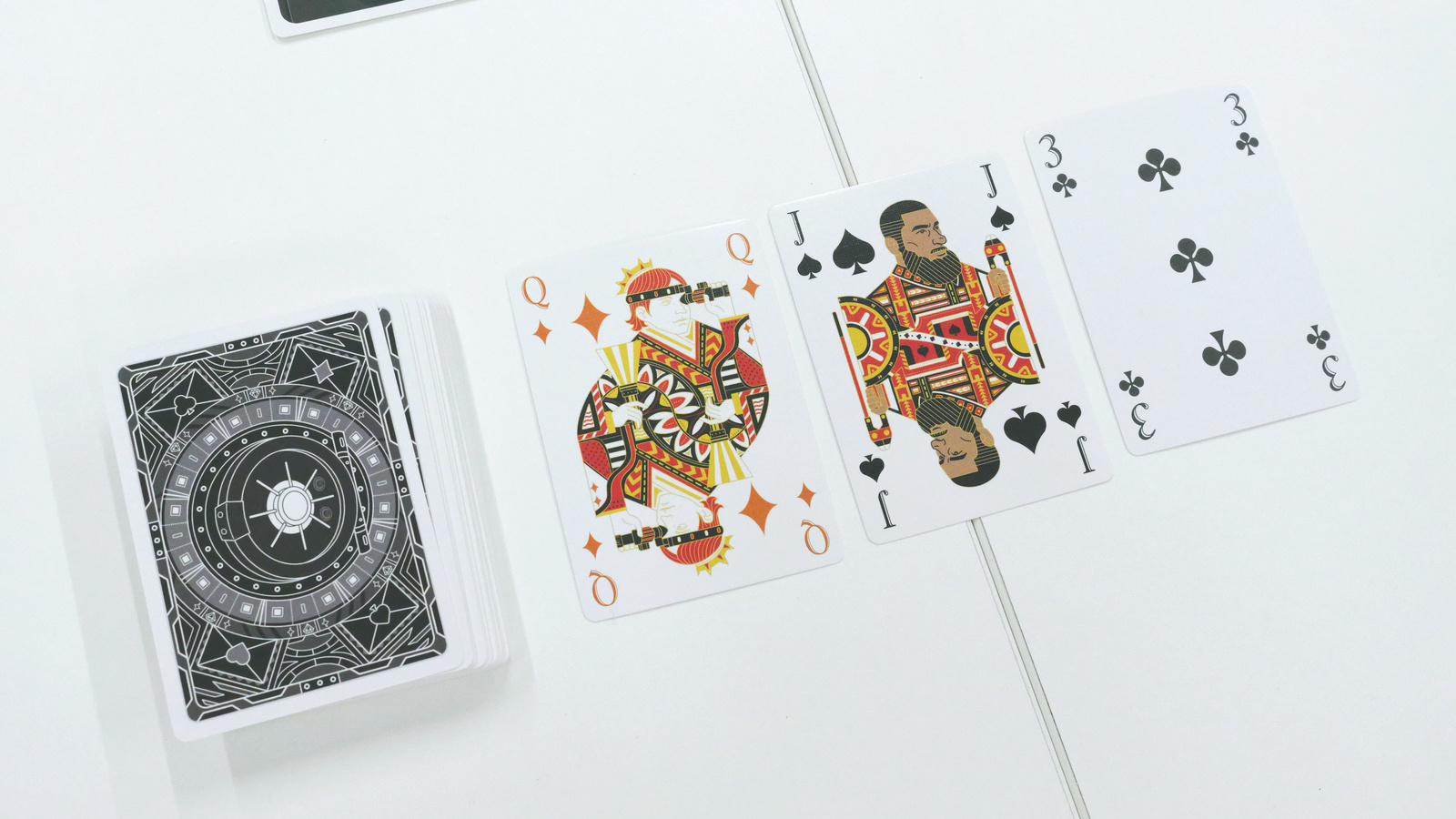
I didn't get a pair, but there was still a possibility of a flush and a straight, so I chose the 3-star chip.
Round 3 is the orange chip.
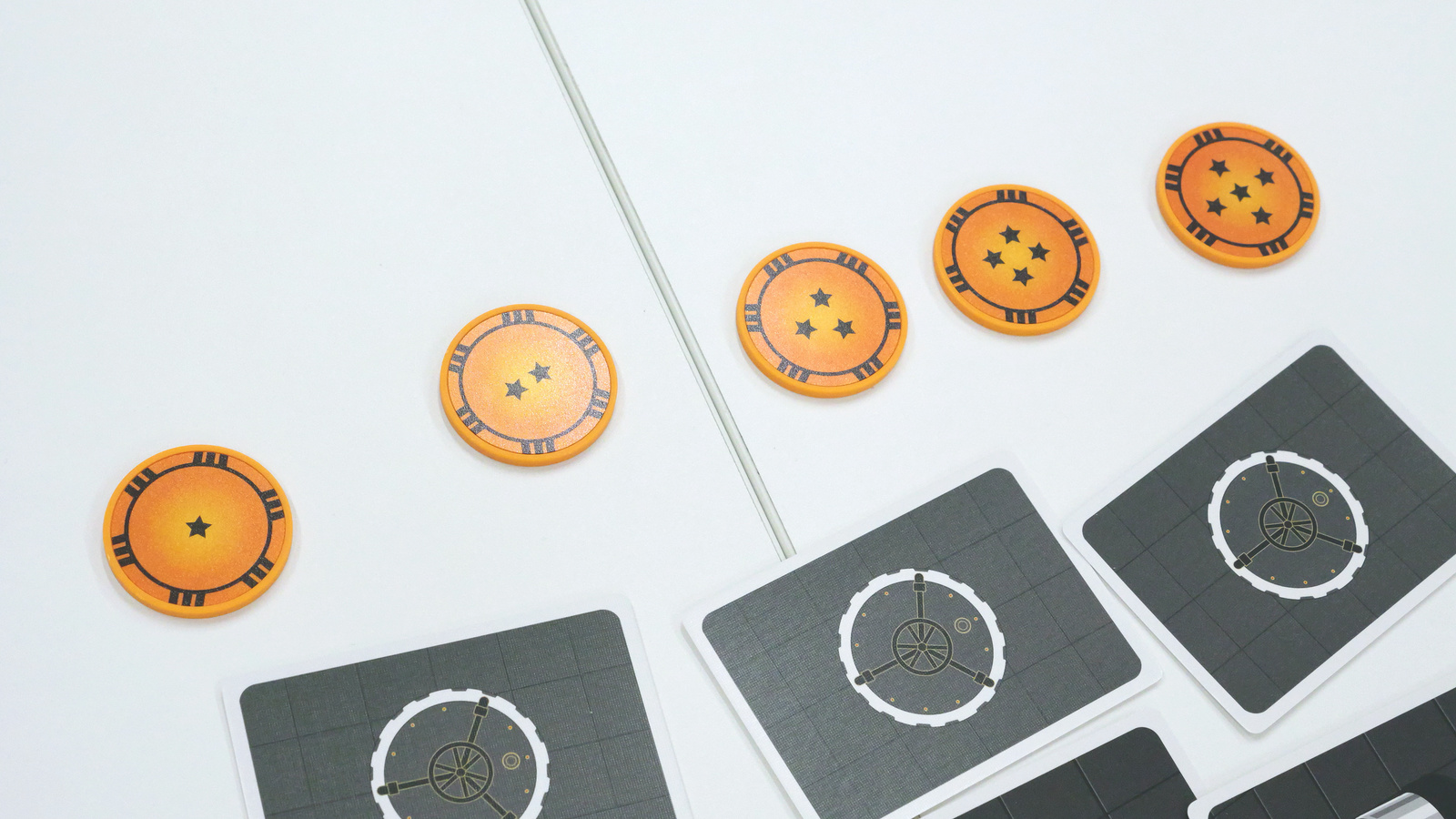
Another community card will be revealed.
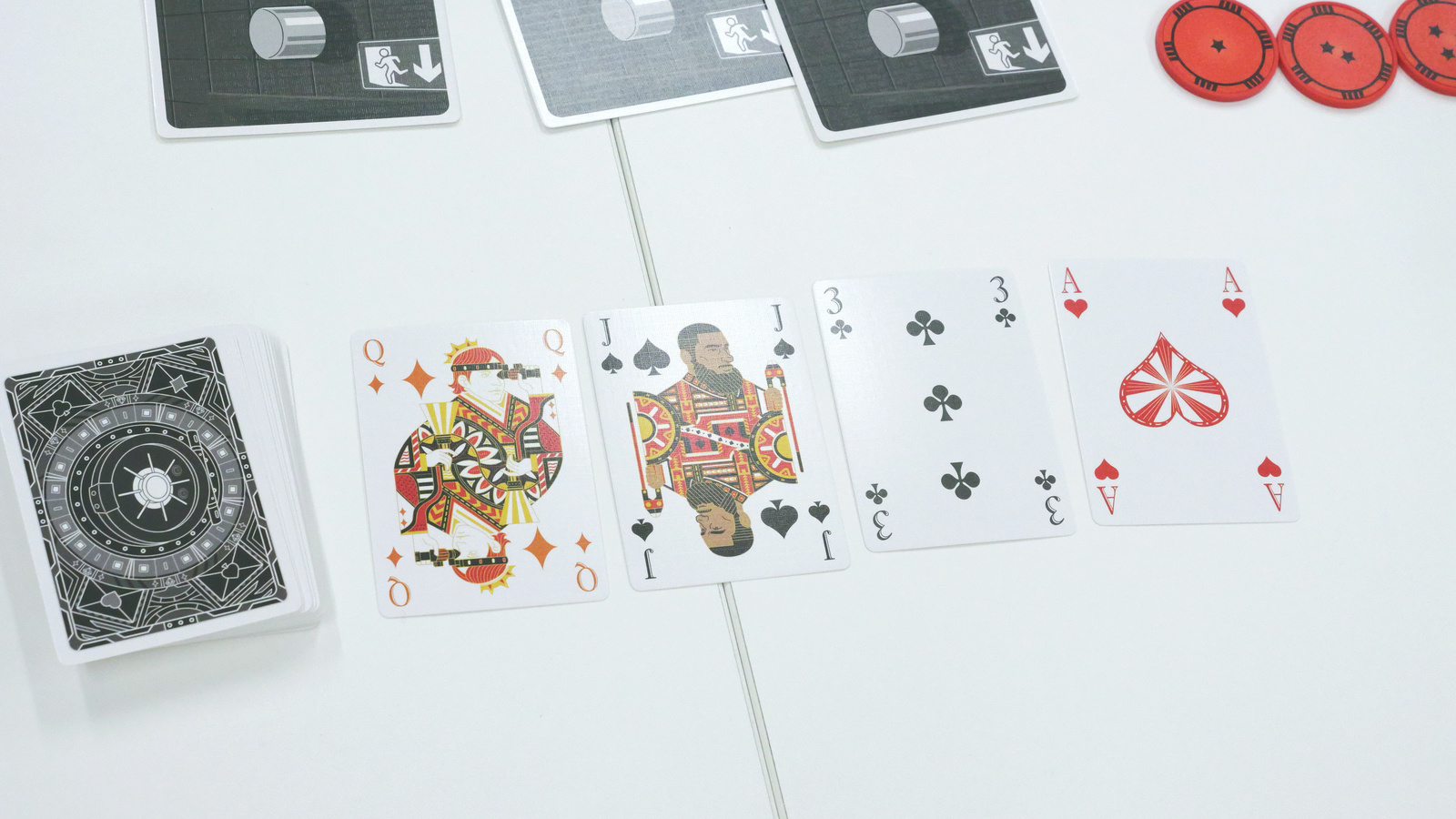
I have K, Q, J, and A on my hole card and community cards, so I could go for a straight. However, I only have one more community card left, and the possibility of a flush is gone, so I'm not very optimistic about this. Therefore, I'll aim for the 3-star chips.
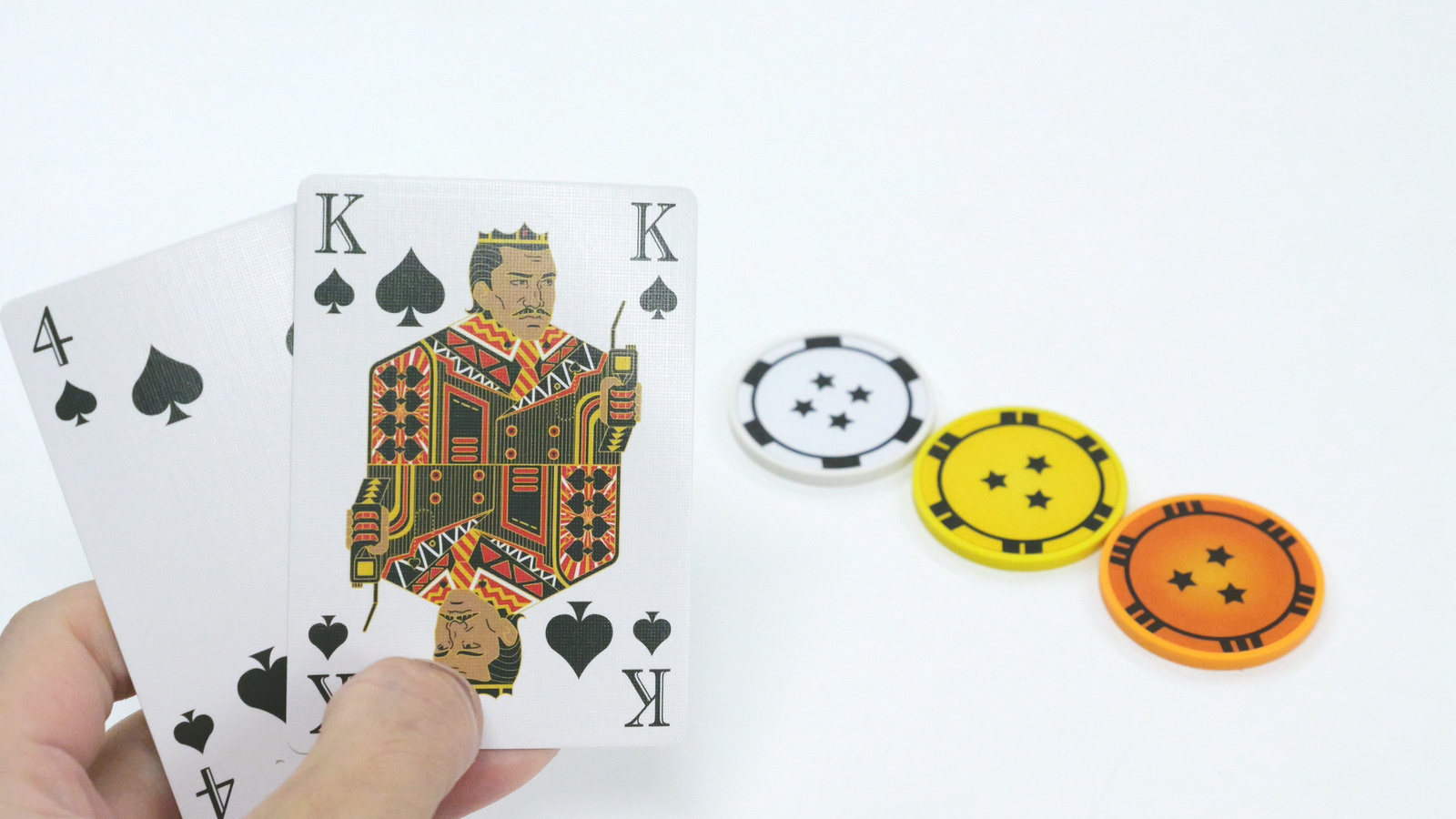
Round 4 involves red chips. The key is whether the order of these red chips matches the actual strength of the hands. You need to carefully consider your choices based on the tactics and your opponent's reactions up to this point.
Then, the fifth community card is revealed. Although I didn't get the straight I was aiming for, I did manage to complete a pair of Kings.
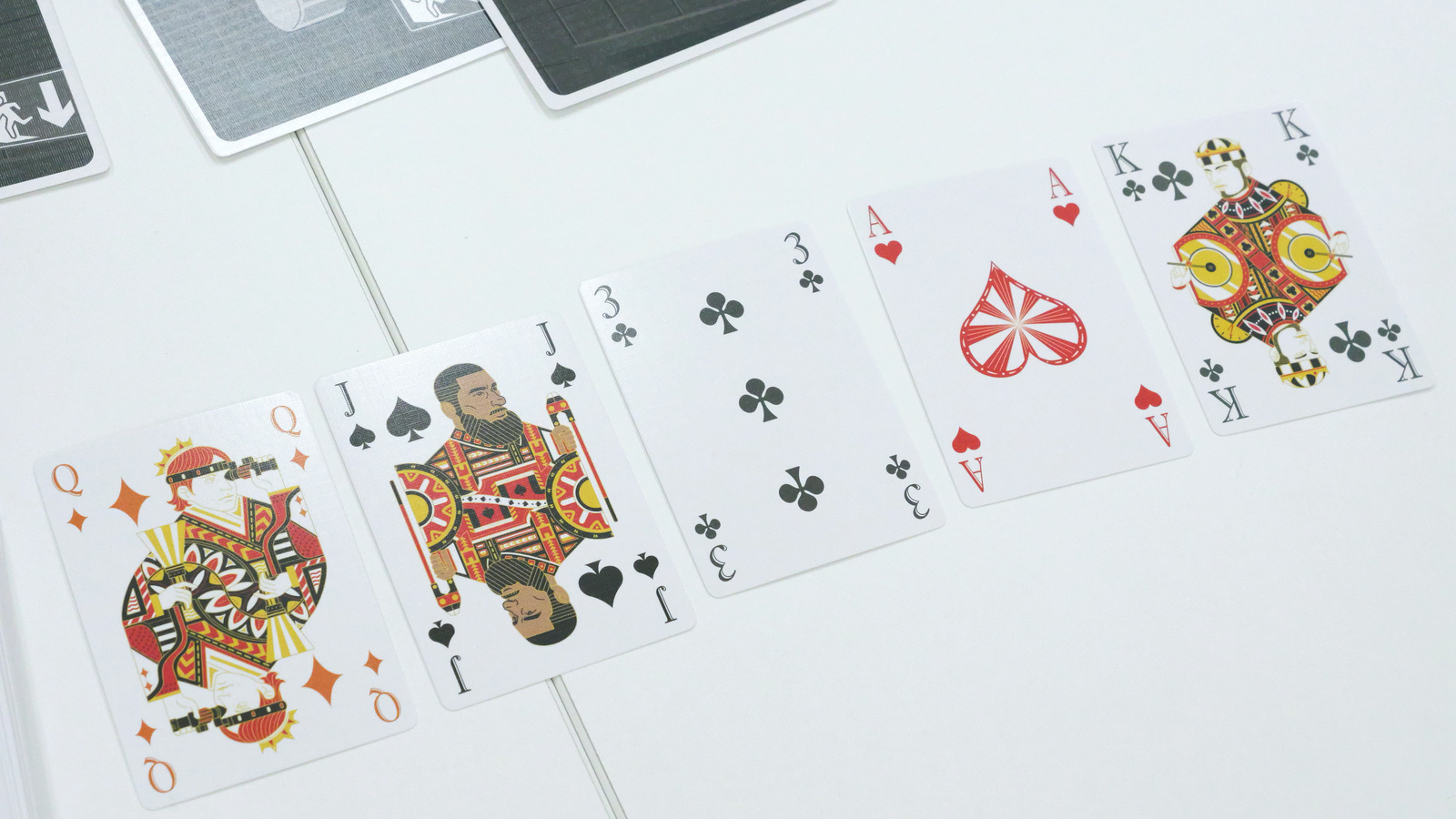
However, since a straight can be completed if there is a 10 in the hole card, it is not at all surprising that there are players with stronger hands than a pair of Kings. As the 4-star and 5-star chips quickly disappeared, I predicted that there might be multiple players with straights and cautiously acquired a 2-star chip.
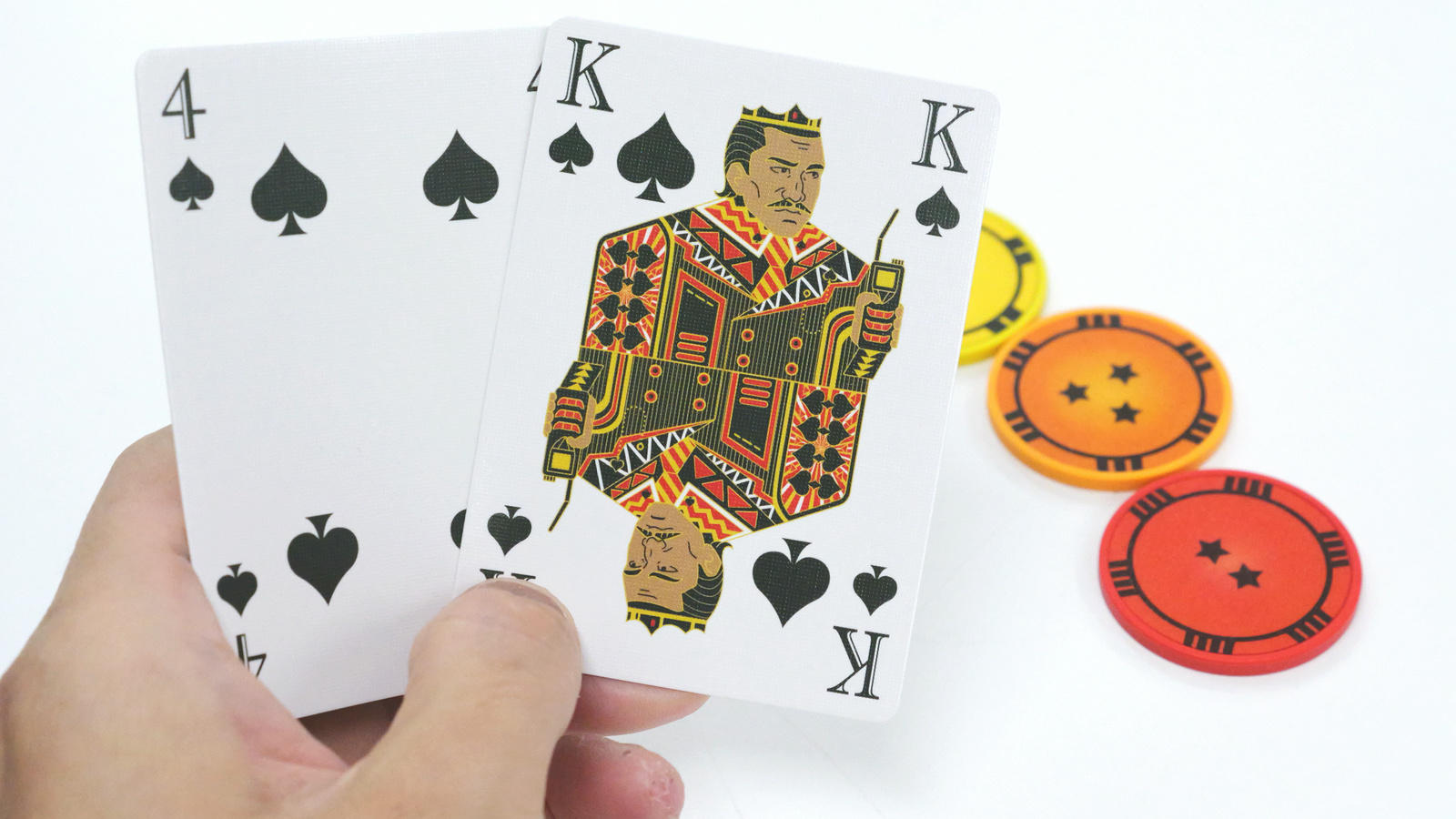
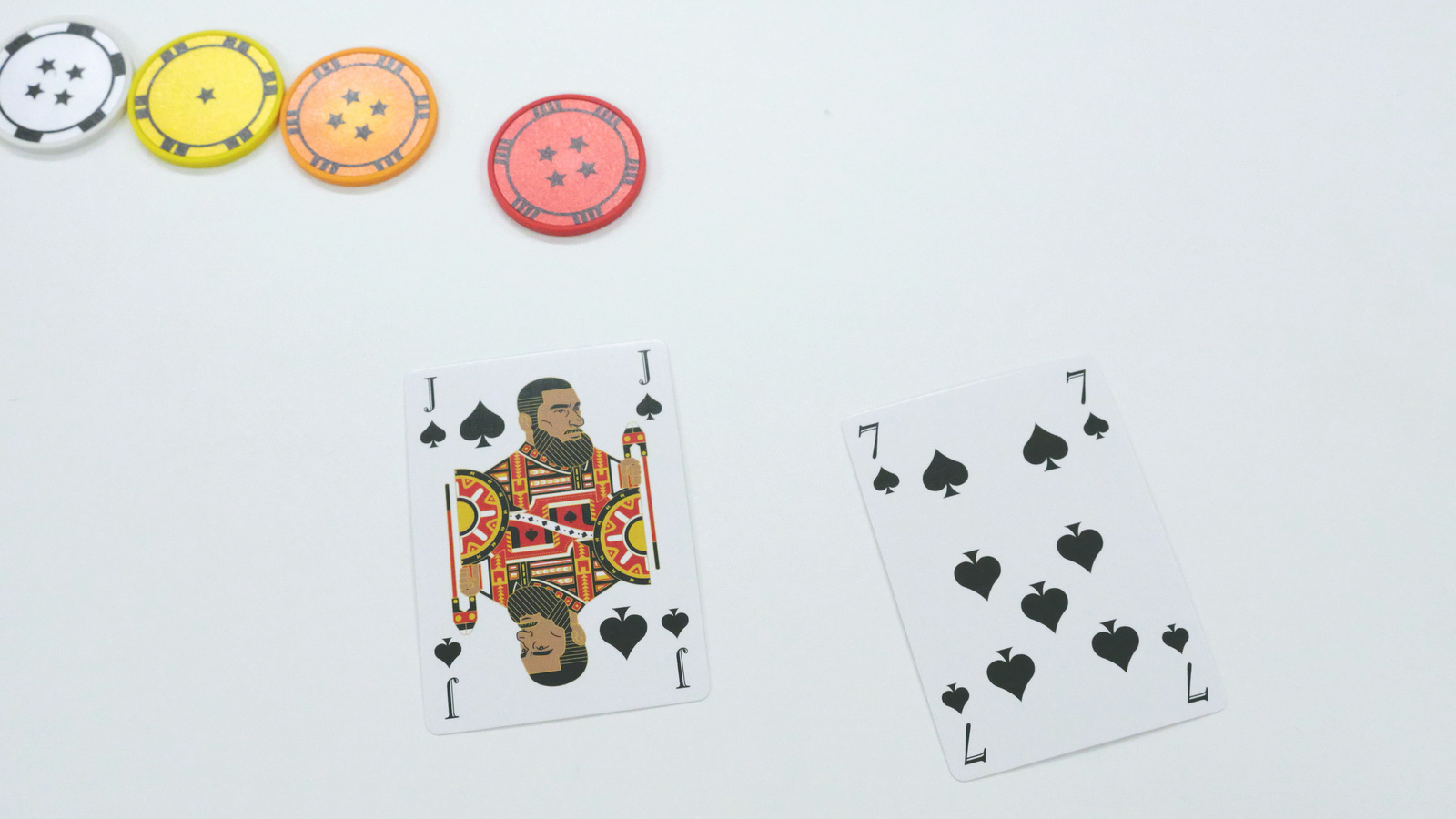
Now that everyone has received chips, the players will reveal their hole cards in order from 1 star to 1 star to determine their hands. The player with the 1-star chip has a pair of Jacks.
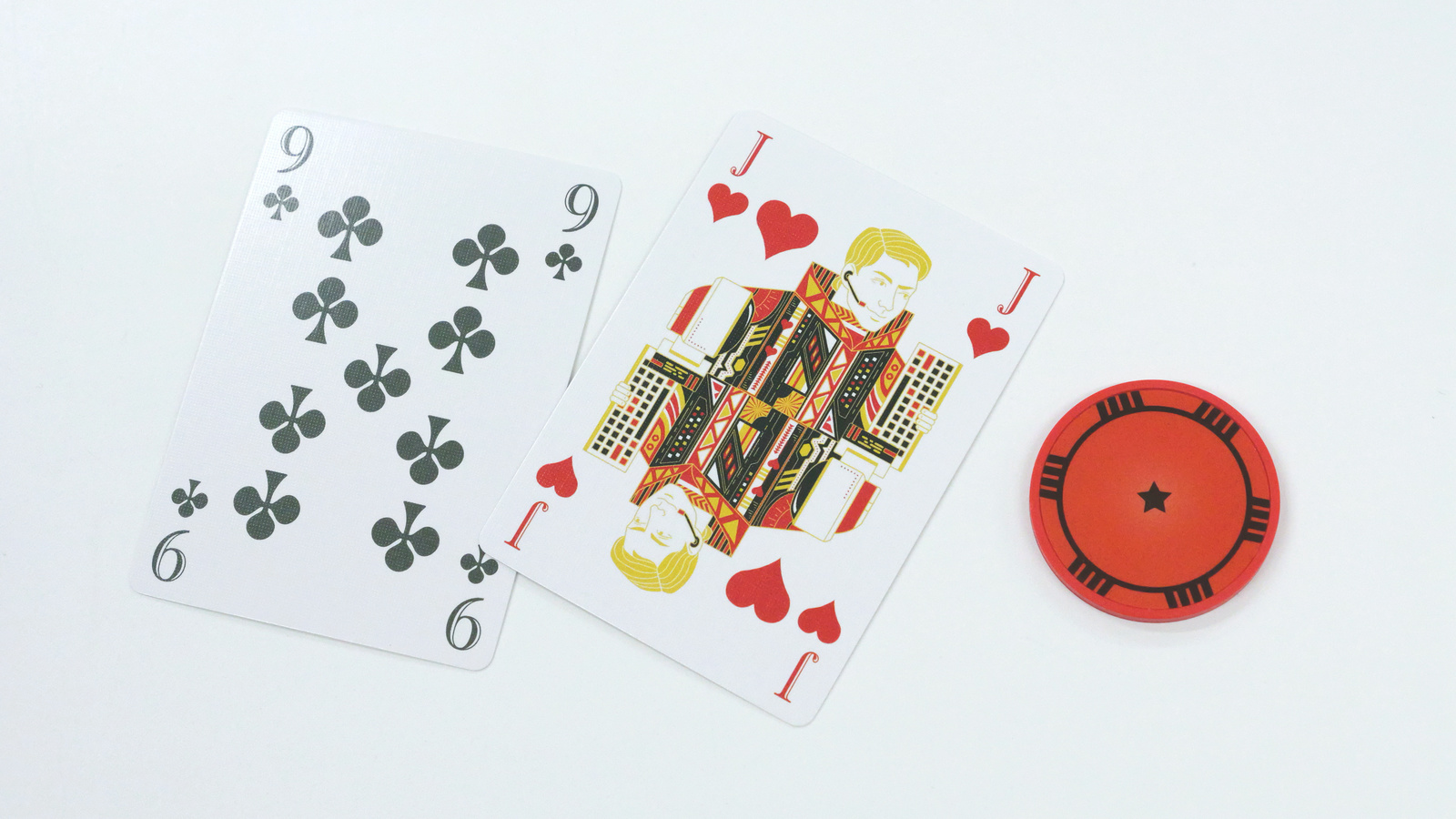
The player with the two-star chip has a pair of Kings.
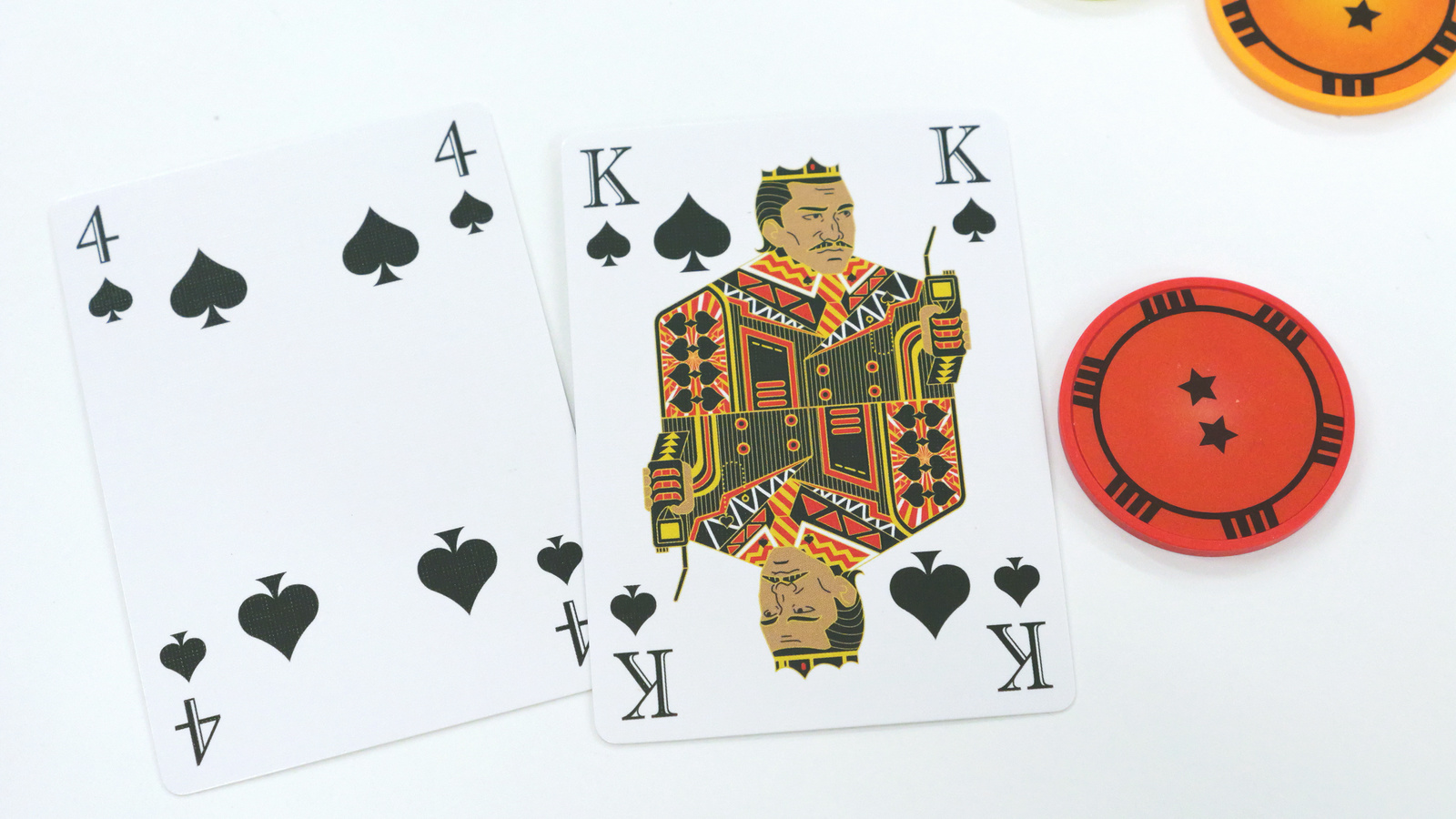
The player who earned three stars had a high card that didn't form a pair. Therefore, at this point, the challenge was a failure. He was bombarded with questions like, 'Why would you try to get three stars with a high card?', but it turns out this player was playing Texas Hold'em style poker for almost the very first time, and his inexperience was evident.
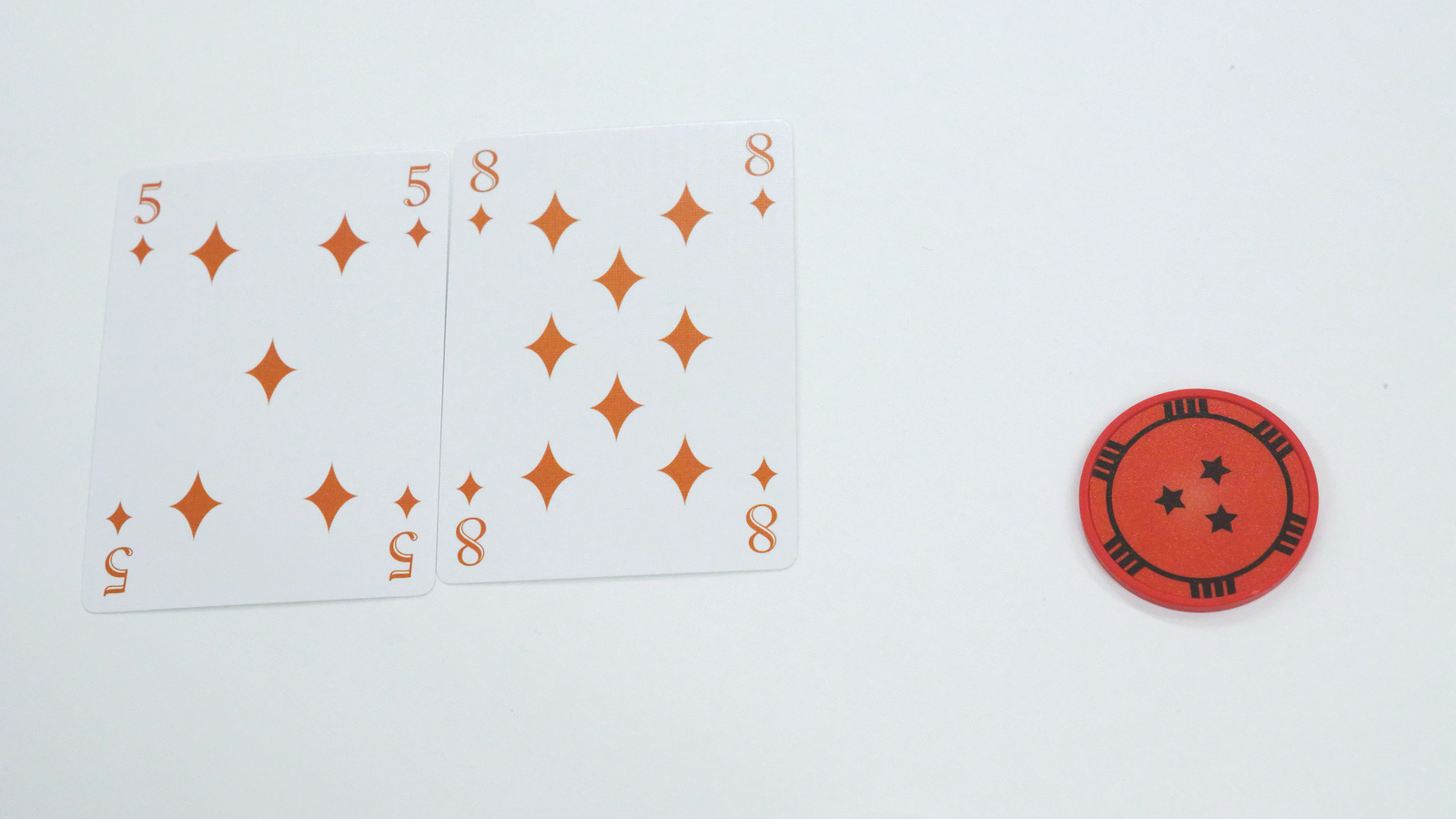
The 4-star player had a pair of Kings. However, the other card was a 7, so it was stronger than the 2-star player's hand, making it the correct answer.
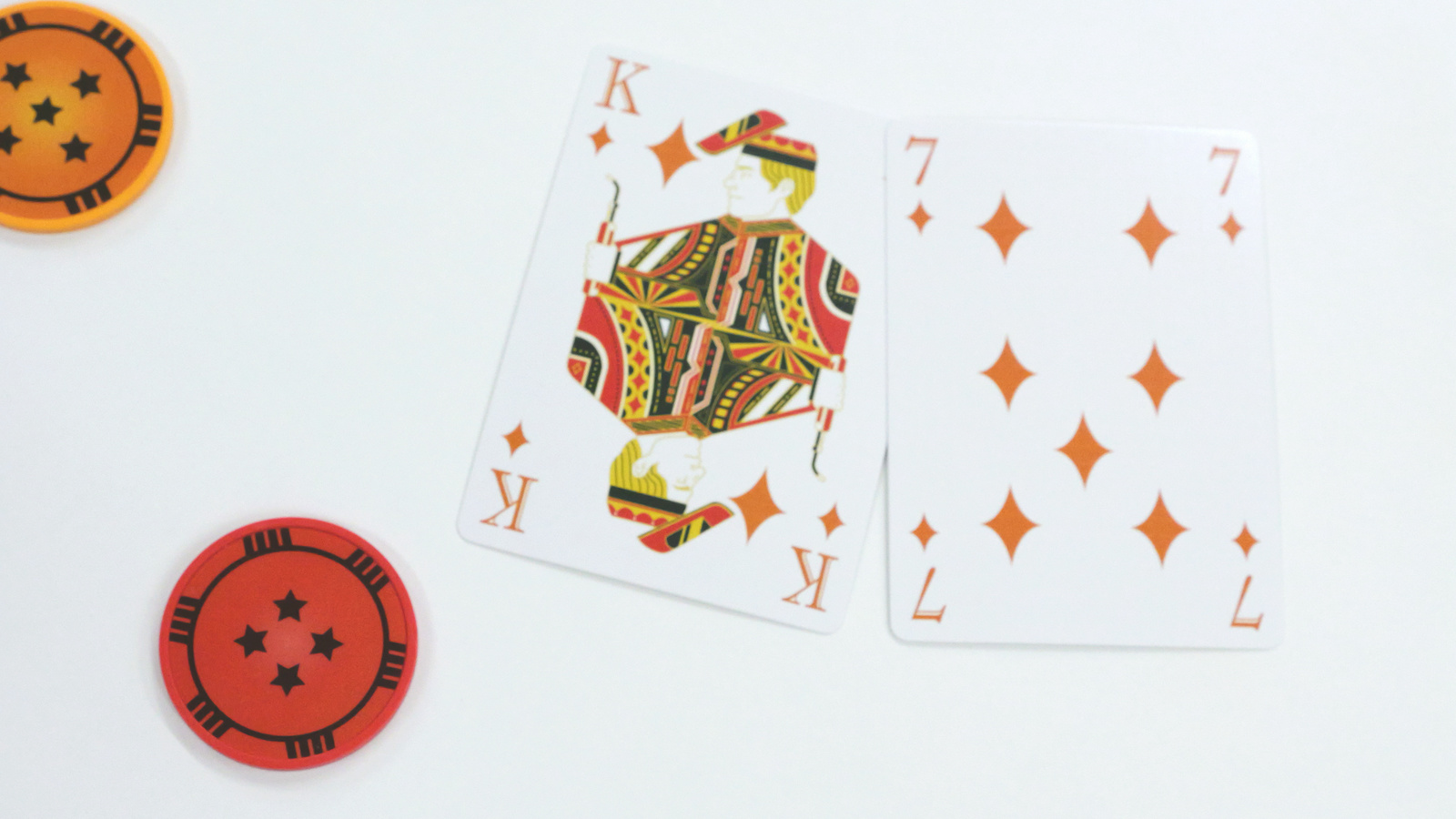
And the five-star player had a pair of Queens. He said, 'Considering that they quickly took a four-star hand instead of a five-star hand, and given what had happened up to that point, I suspected that there were no straights, and that at best, they only had a pair.' It's quite difficult because you can only gauge your opponents' hands and confidence levels from the atmosphere when they pick and choose their chips.
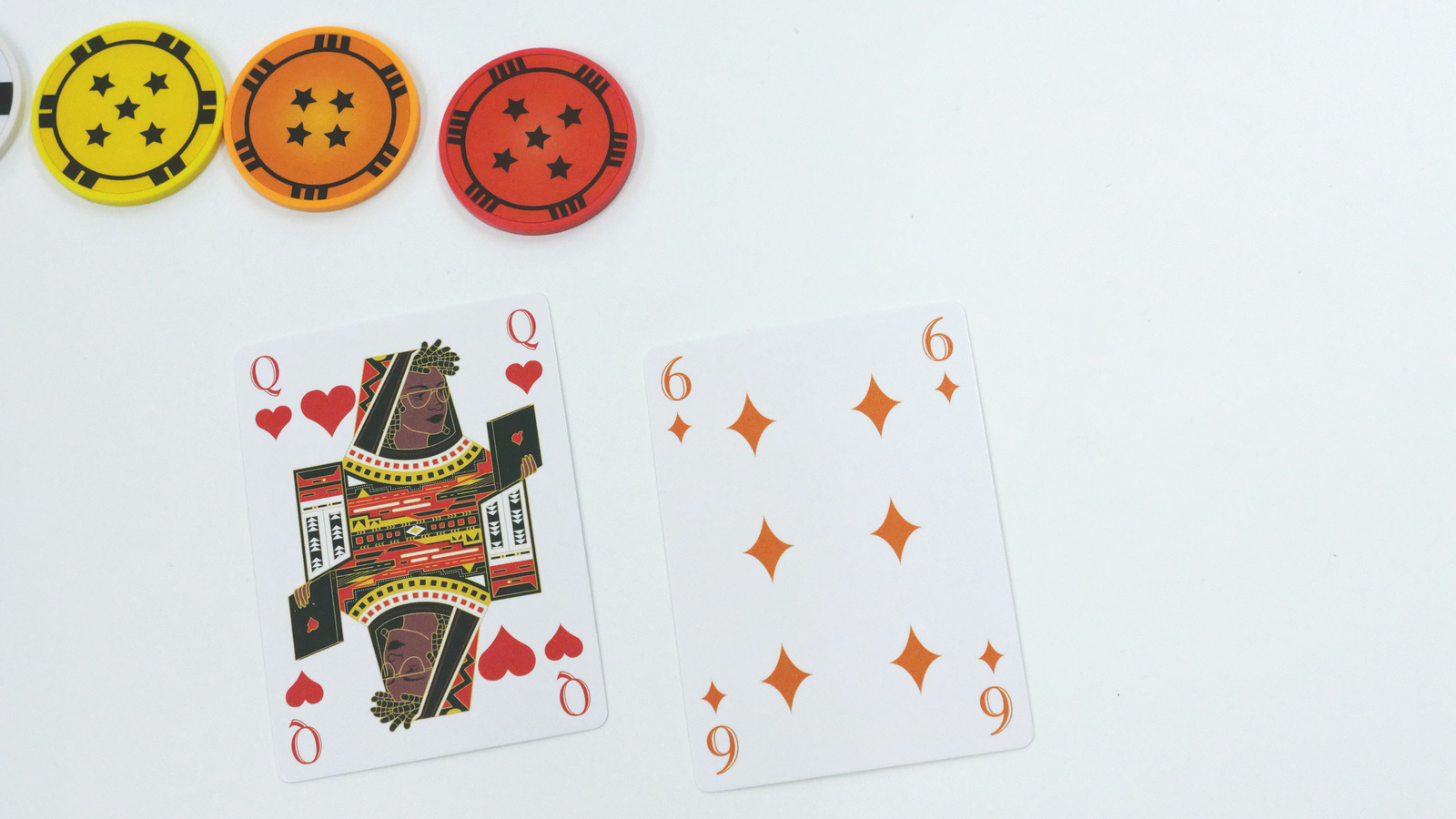
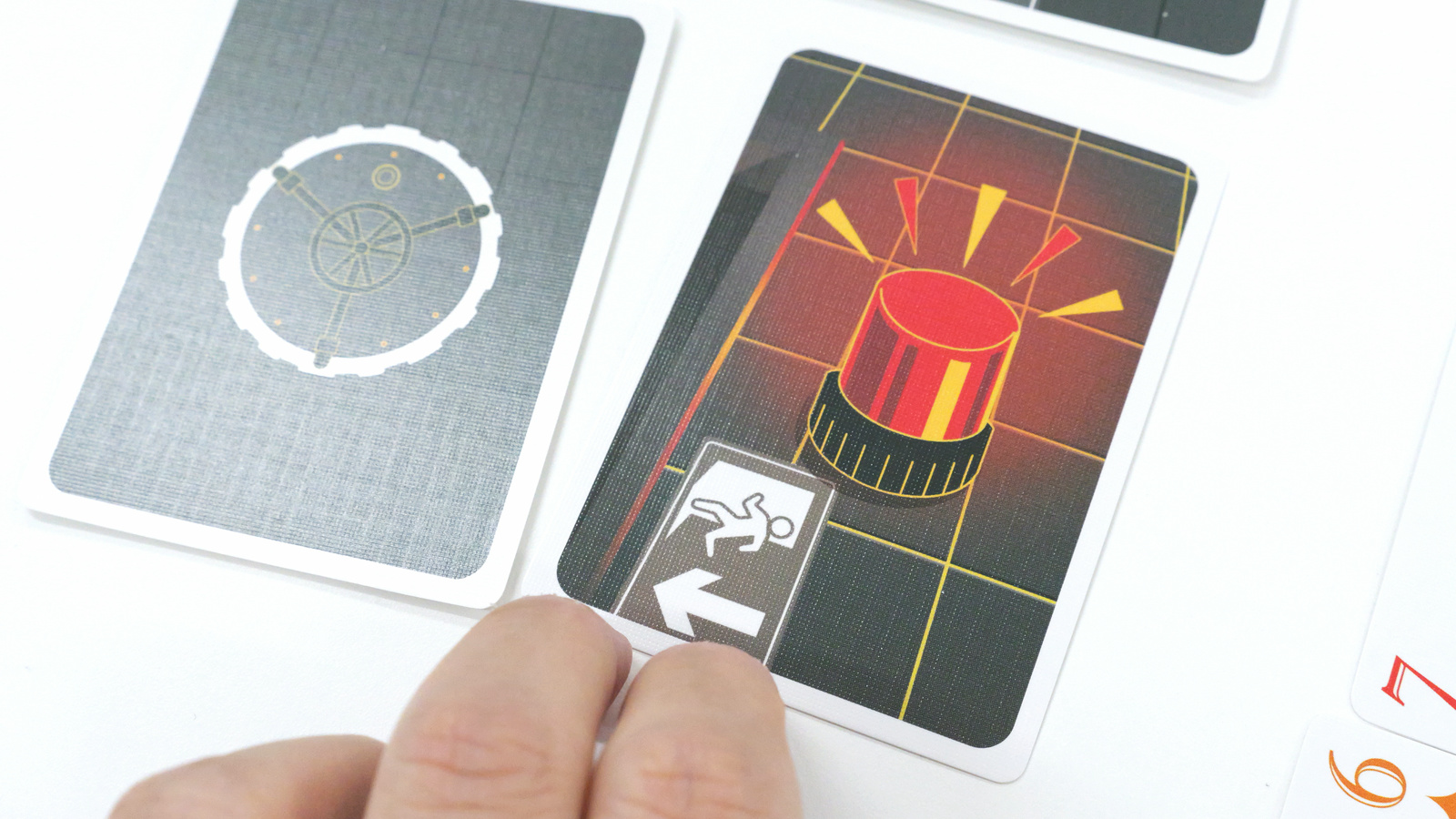
If you fail the challenge, you flip over an alarm card. Then, you shuffle the cards again, deal new hole cards, and try again.
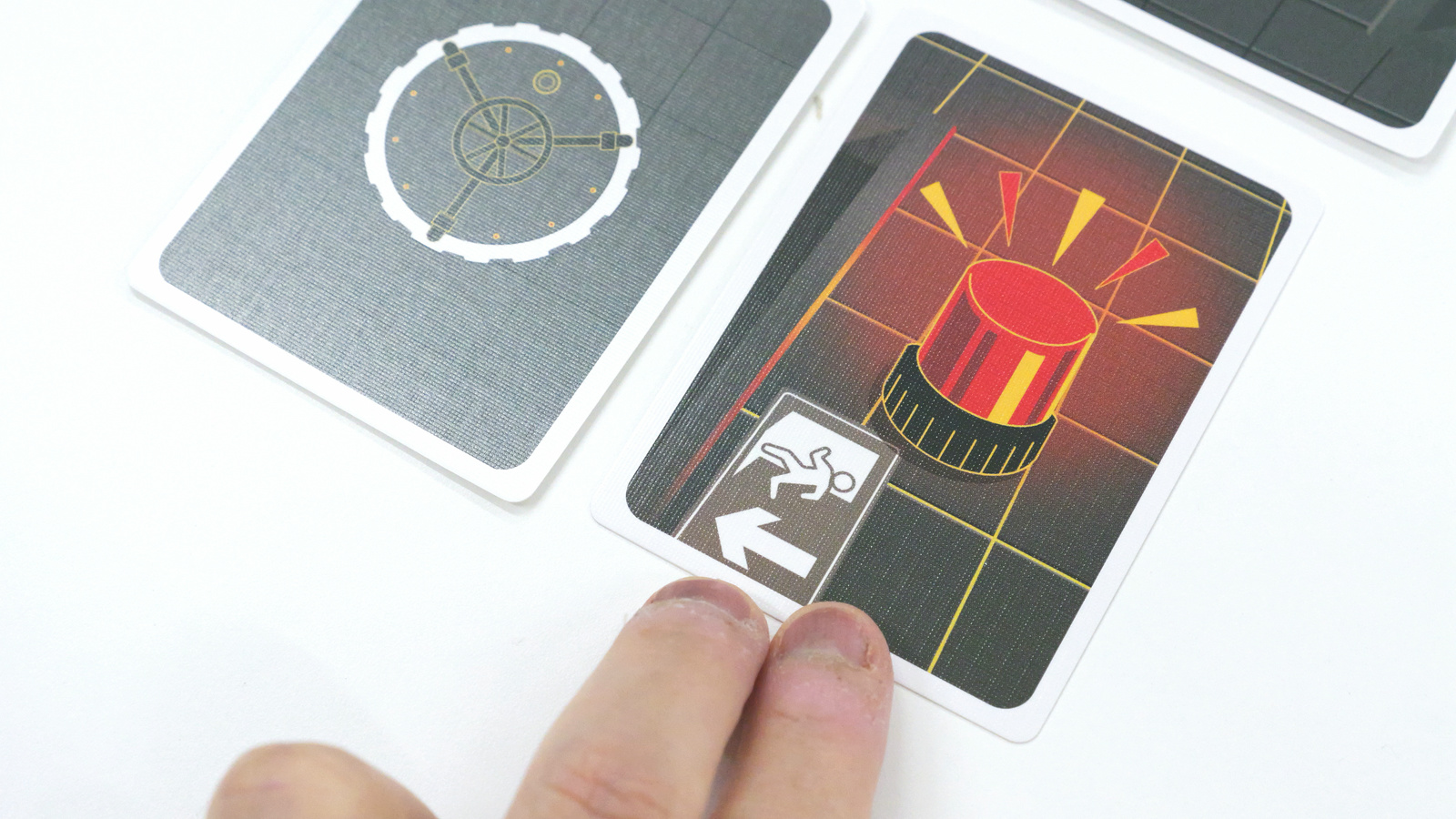
The safe cards and alarm cards act as meters indicating the success or failure of the challenge. The game ends when all three safe cards and all three alarm cards are revealed.
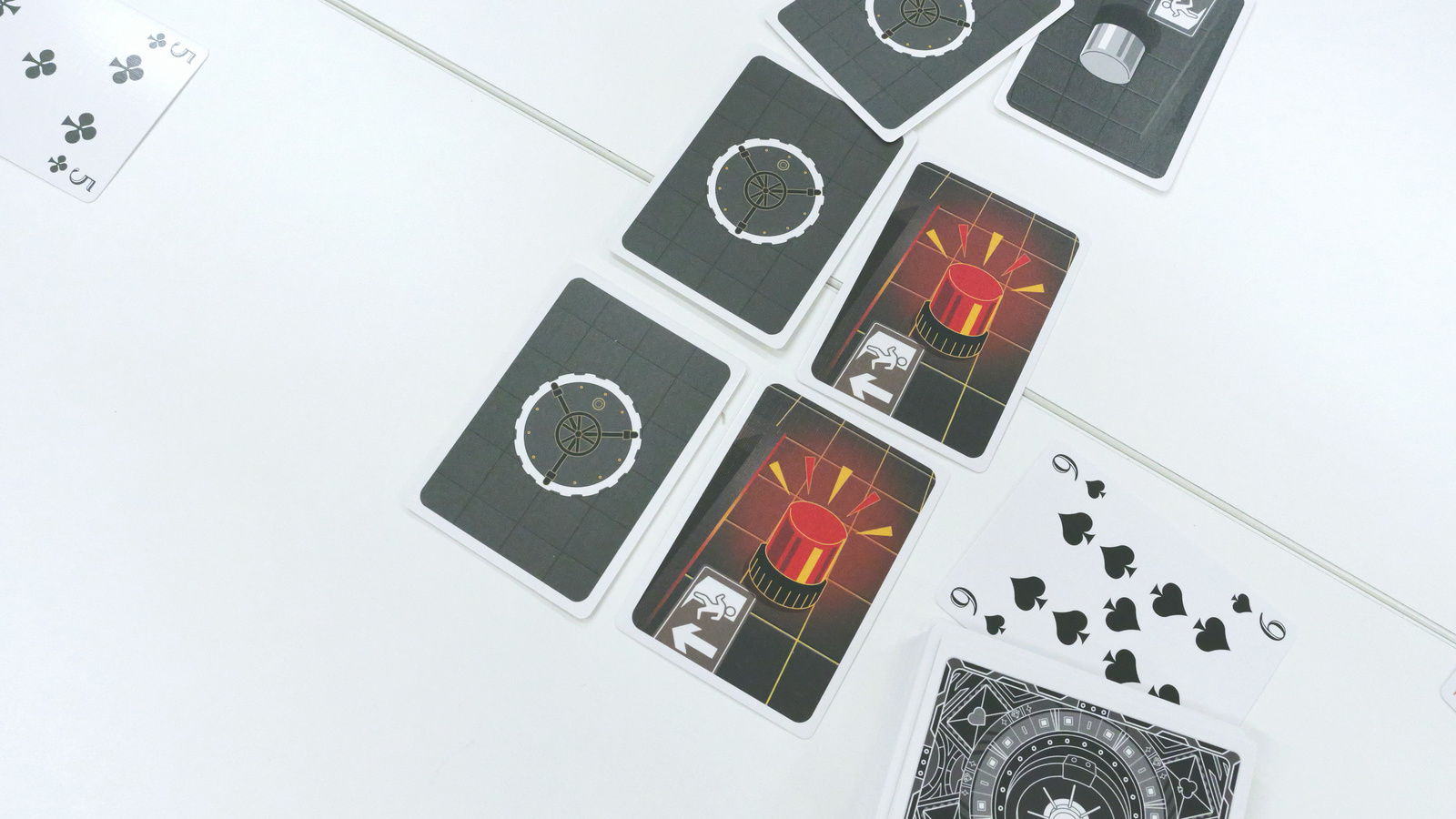
We continue to take on challenges in this manner, but the line at which one feels confident in their hand in poker varies from person to person, and it's necessary to try and figure out where each other's line is, so it's difficult to succeed in the first challenge.
And so, with no safe cards indicating success being revealed, and three alarm cards being flipped over, the game ends. The player loses. Each challenge takes about 5 minutes, so a game takes a maximum of about 25 minutes.
The rules we've played so far are for beginners. Gang Poker also has intermediate and advanced rules that use specialist cards and challenge cards.
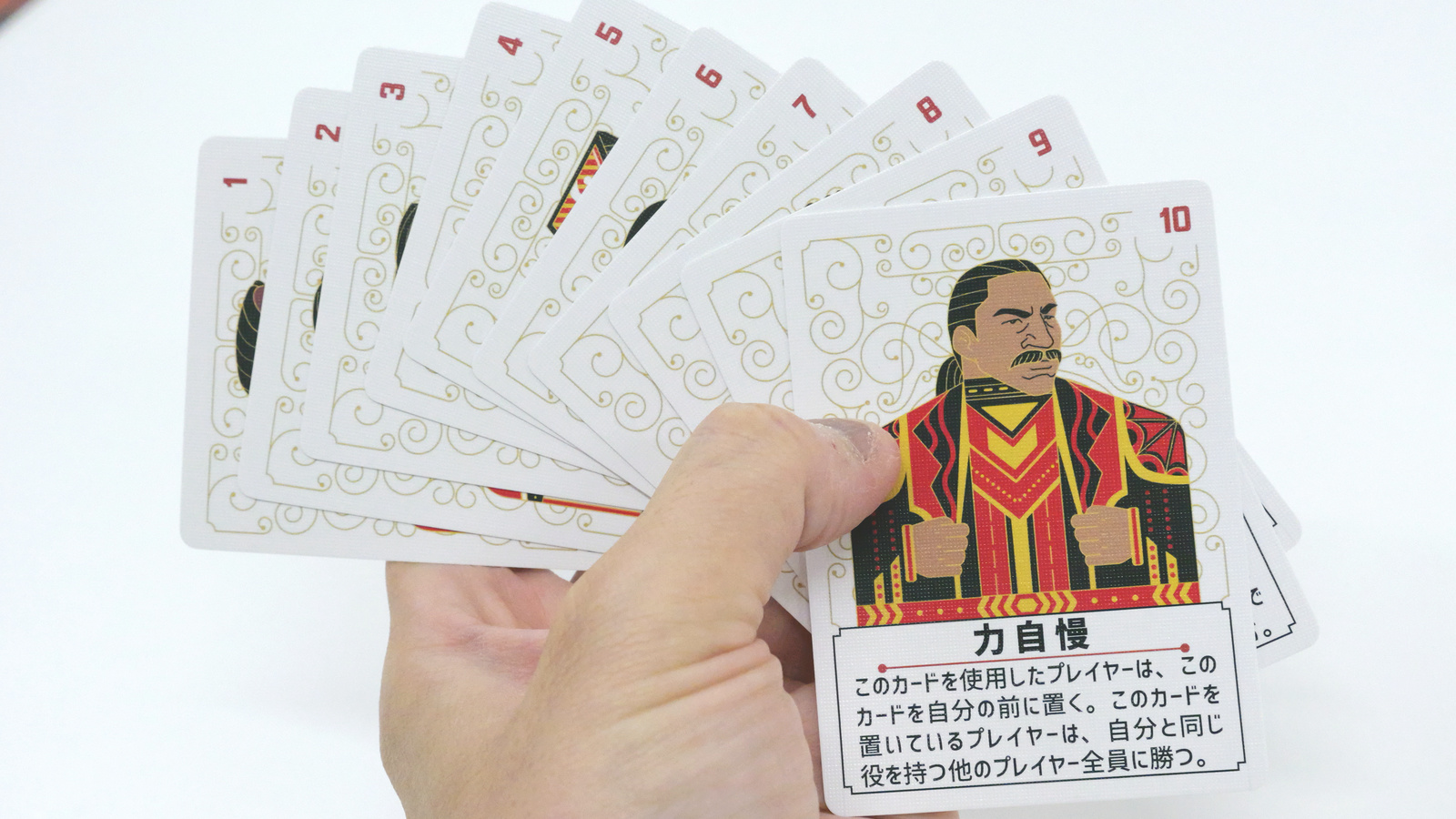
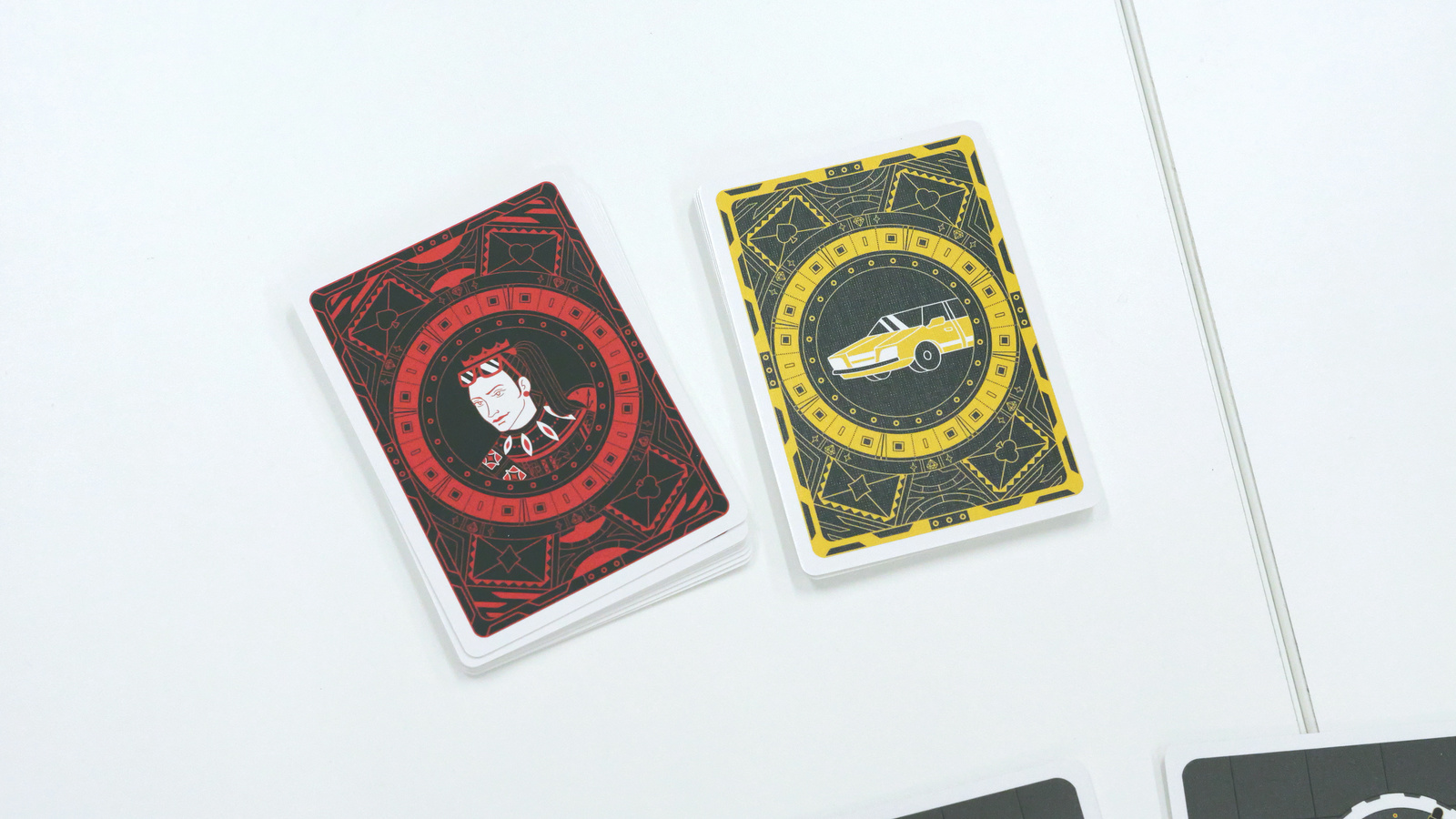
In the intermediate rules, the Specialist Cards and Challenge Cards are placed on the table.
I failed my first attempt.
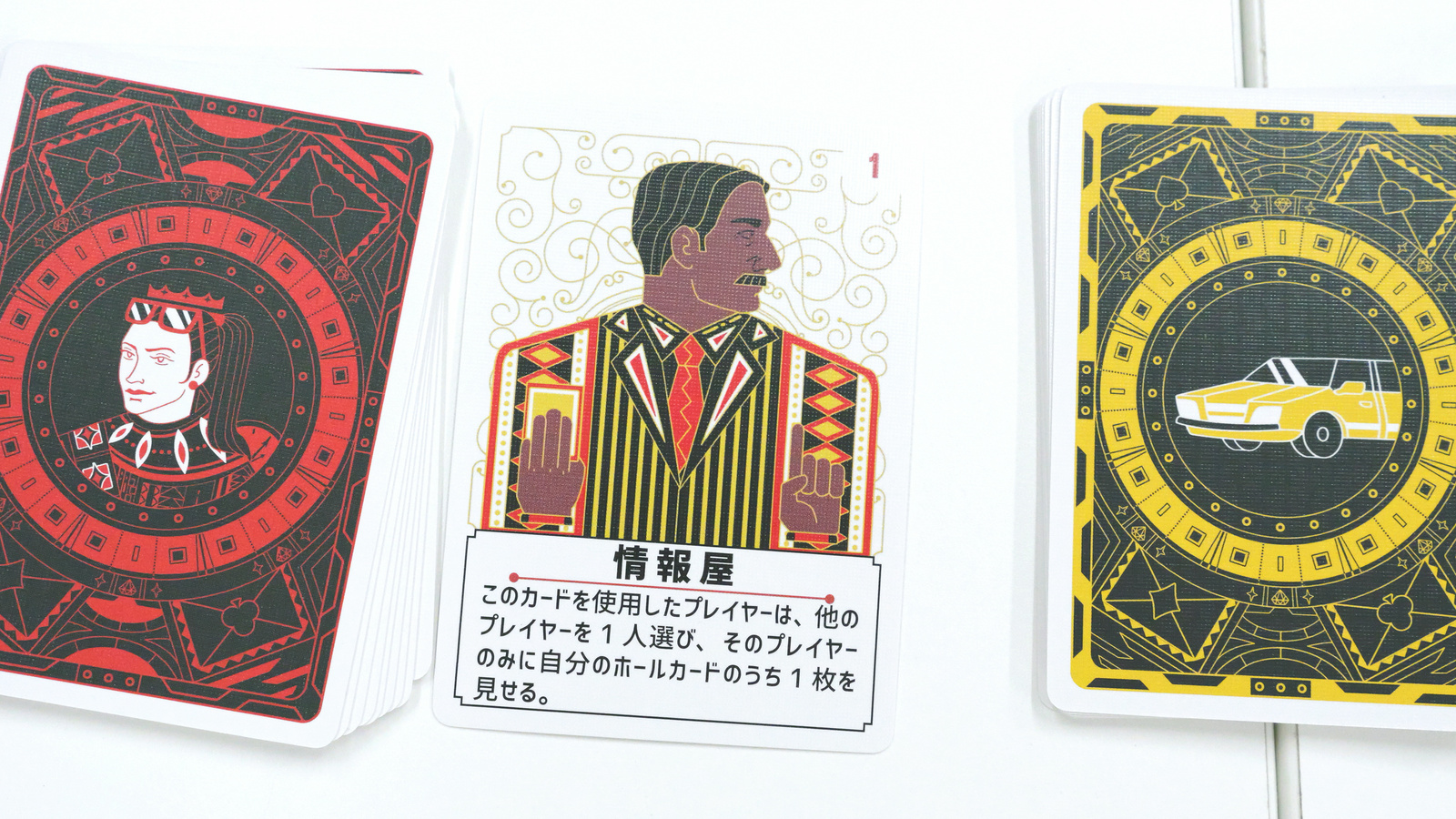
Then, you draw one specialist card from the top. These specialist cards have special effects and can be used in the next round. The 'Informant' card drawn this time allows one player to show one of their hole cards to any other player. Of course, it can only be used once, so 'who uses it and when' is extremely important.
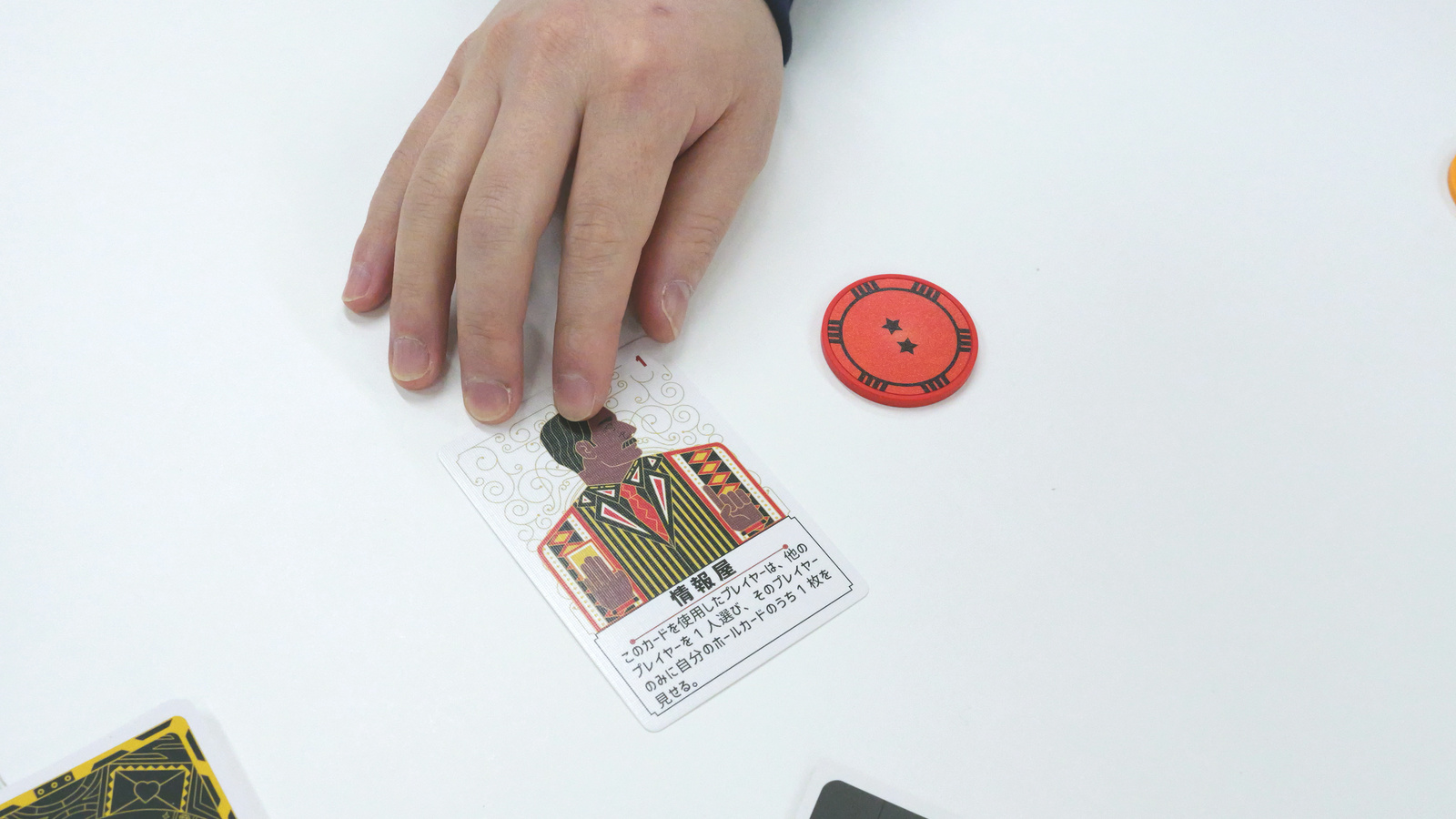
The player who was competing for the two-star chips in the final round used this 'Informant' card.
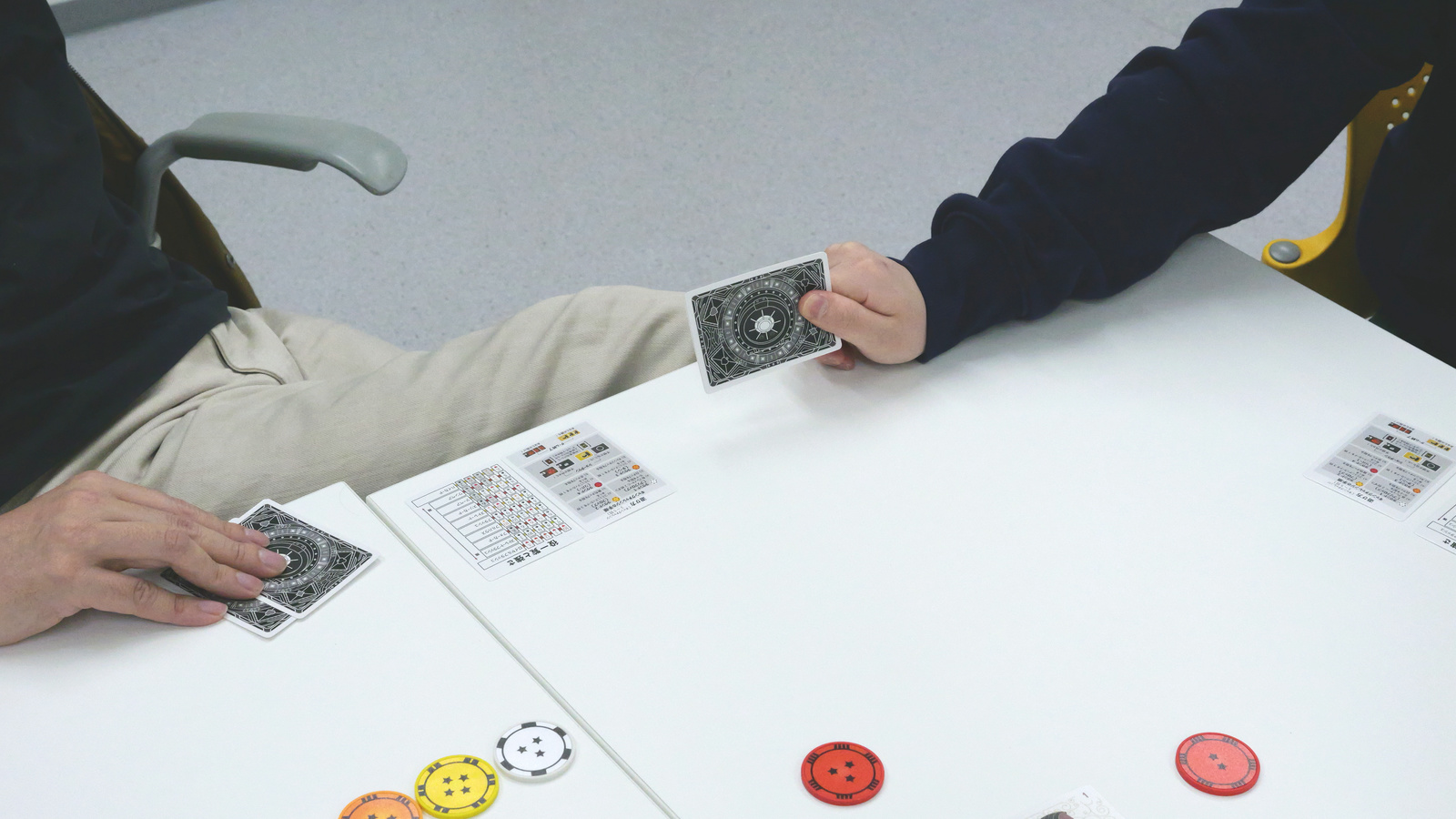
Without saying anything, I showed one of my cards to my opponent. He then muttered, 'Oh! I see...' and the chip-grabbing contest ended.
As a result, I successfully completed the challenge and was able to flip over the safe card for the first time.
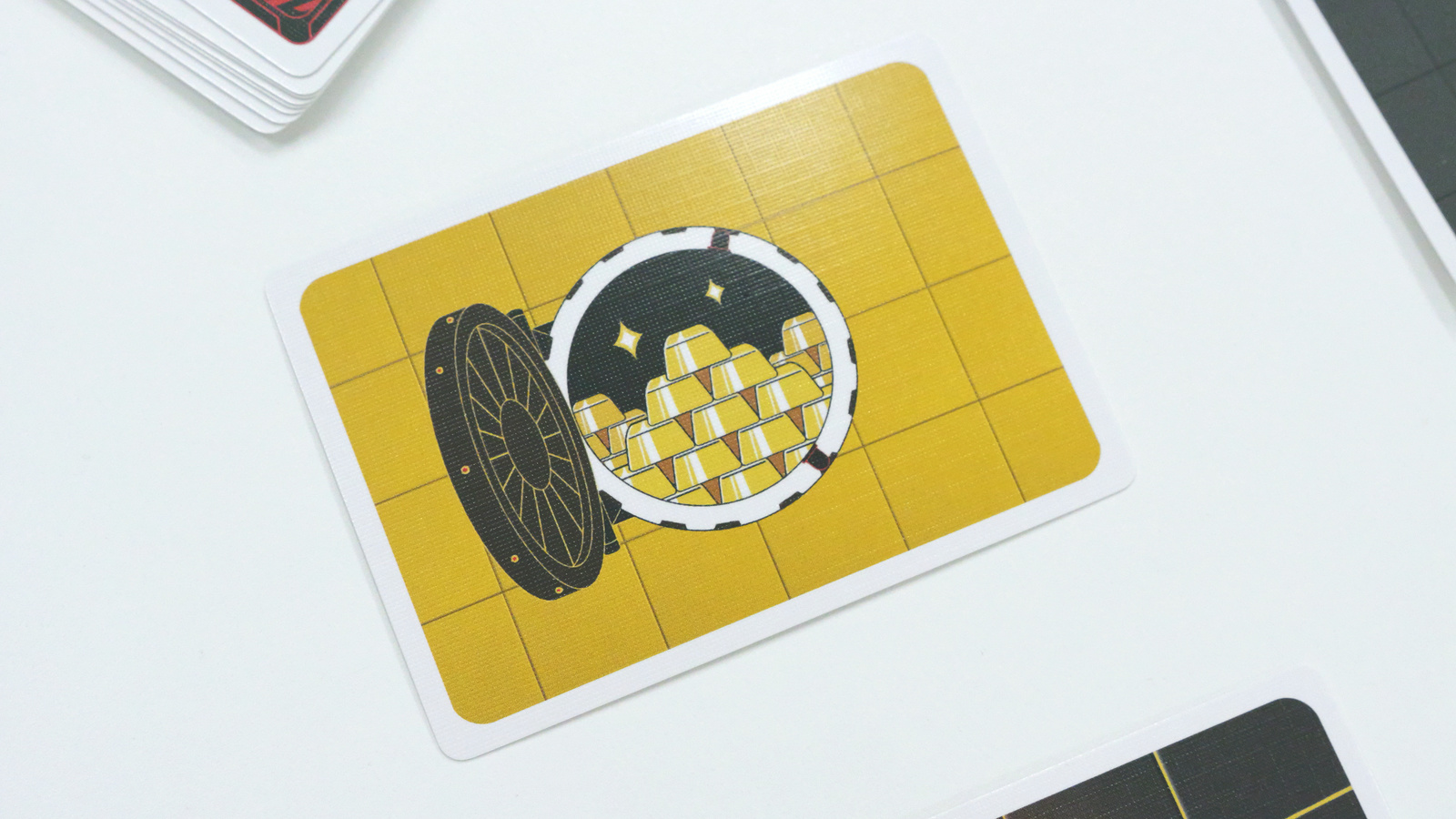
However, after flipping over a safe card, you will then need to flip over a challenge card. While specialist cards are powerful helper cards, challenge cards are designed to increase the difficulty of the challenge for the player by adding restrictions.
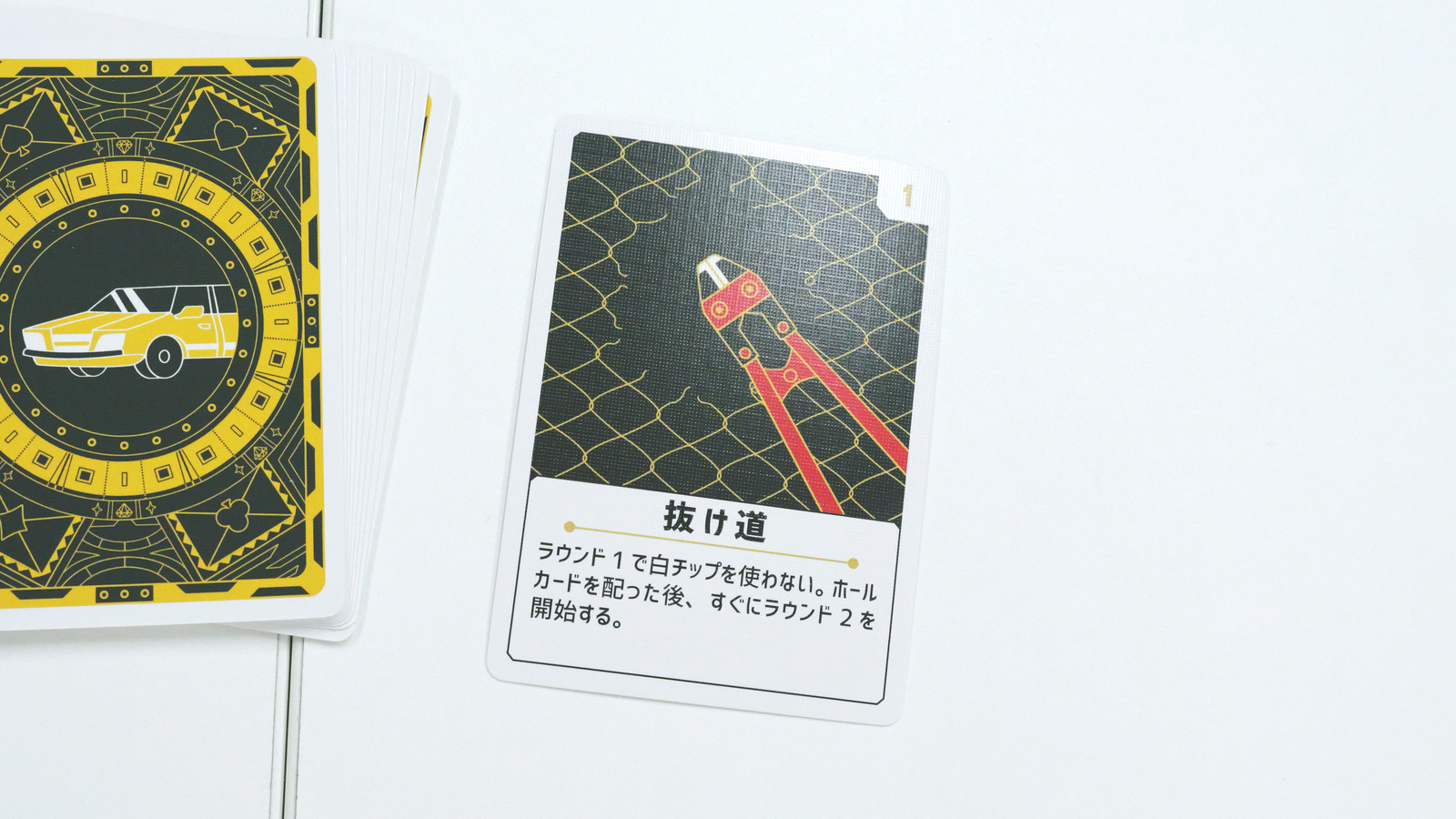
However, in the second game, I started to get a sense of the other players' personalities and values, and with the help of the specialist cards, I managed to flip over three safe cards and won the game.
Standard poker involves 'reading whether your hand is stronger or weaker than your opponent's, folding if you think you can't win, and calling or betting if you think you can win.' The amount of the bet greatly influences the psychological aspect, and sometimes bluffing is necessary. There's also the issue that 'if you fold, you can't participate in the game,' which makes it a bit difficult for beginners.
Gang Poker isn't about beating your opponents' hands, but rather about considering the relative strengths and weaknesses of your own hand. The thrill of wondering 'Can I make a hand with my hole cards and community cards?' is key, and it frees you from the psychological pressure of betting amounts, allowing you to focus on other players' moves, probabilities, and strategies. The 'cooperative' aspect is also interesting; sharing your poker strengths through your opponents' perspectives and reactions to chips is crucial, making the post-round 4 debriefing session particularly lively.
Of course, familiarity with Texas Hold'em style poker greatly influences gameplay, but conversely, I felt this game allows you to experience what Texas Hold'em style poker is like before playing regular poker. You can naturally learn about the strength of hands and how to combine them, so even beginners who don't know poker can learn what kind of game it is while playing.
Gang Poker costs 2700 yen (tax included), but at the time of writing, it can be purchased on Amazon.co.jp for 1845 yen (tax included).
GP Gang Poker Complete Japanese Edition
Additionally, two people will win a copy of Gang Poker in the following GIGAZINE Spring Giveaway. You can enter by clicking on the article below.
GIGAZINE's Spring Giveaway Project: 'Answer the survey and take everything!' - GIGAZINE
Related Posts: