A play review of 'Matchy Match: Compatibility Check Game,' a game that's fun to play while exclaiming, 'Why that?!'
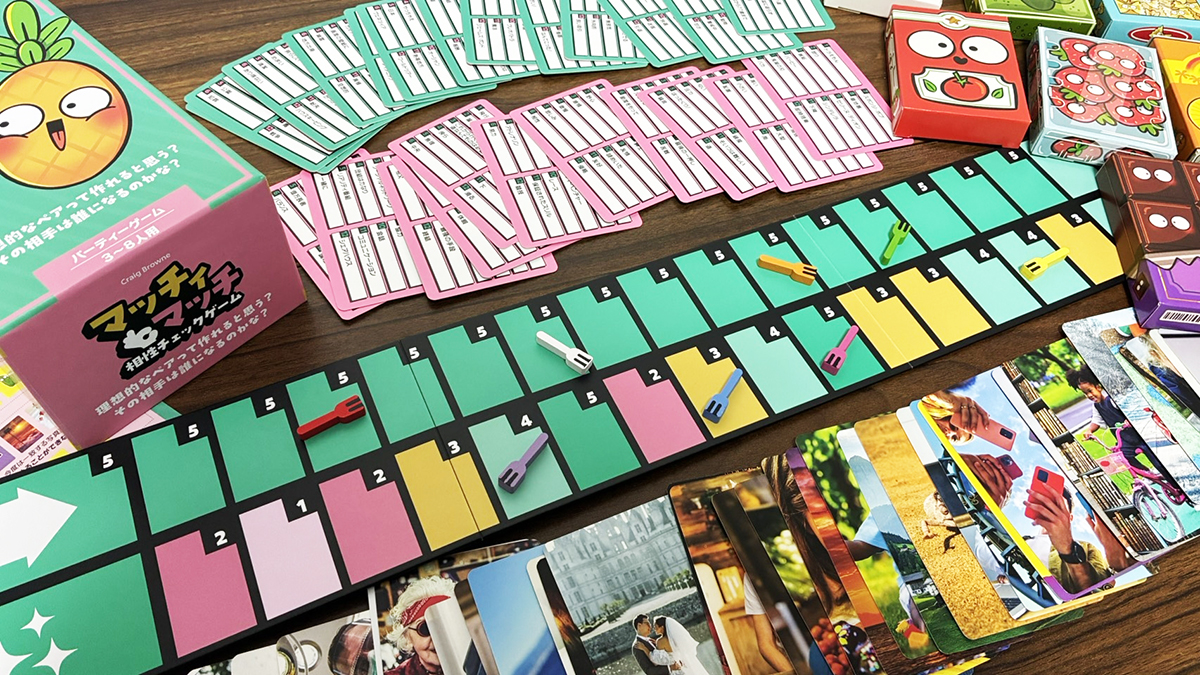
Hobby Japan has released 'Matchy Match: Compatibility Check Game,' a game where you choose photo cards that match a given theme to test how well you and your opponent's sense of style align. We received it as a
Matchy Match: Compatibility Check Game | ANALOG GAME INDEX
https://hobbyjapan.games/matchy-matchy/
·table of contents
◆ Open
◆ Preparing to play
◆ How to play the game
◆Open
This is what the outer box for 'Matchy Match: Compatibility Check Game' looks like.
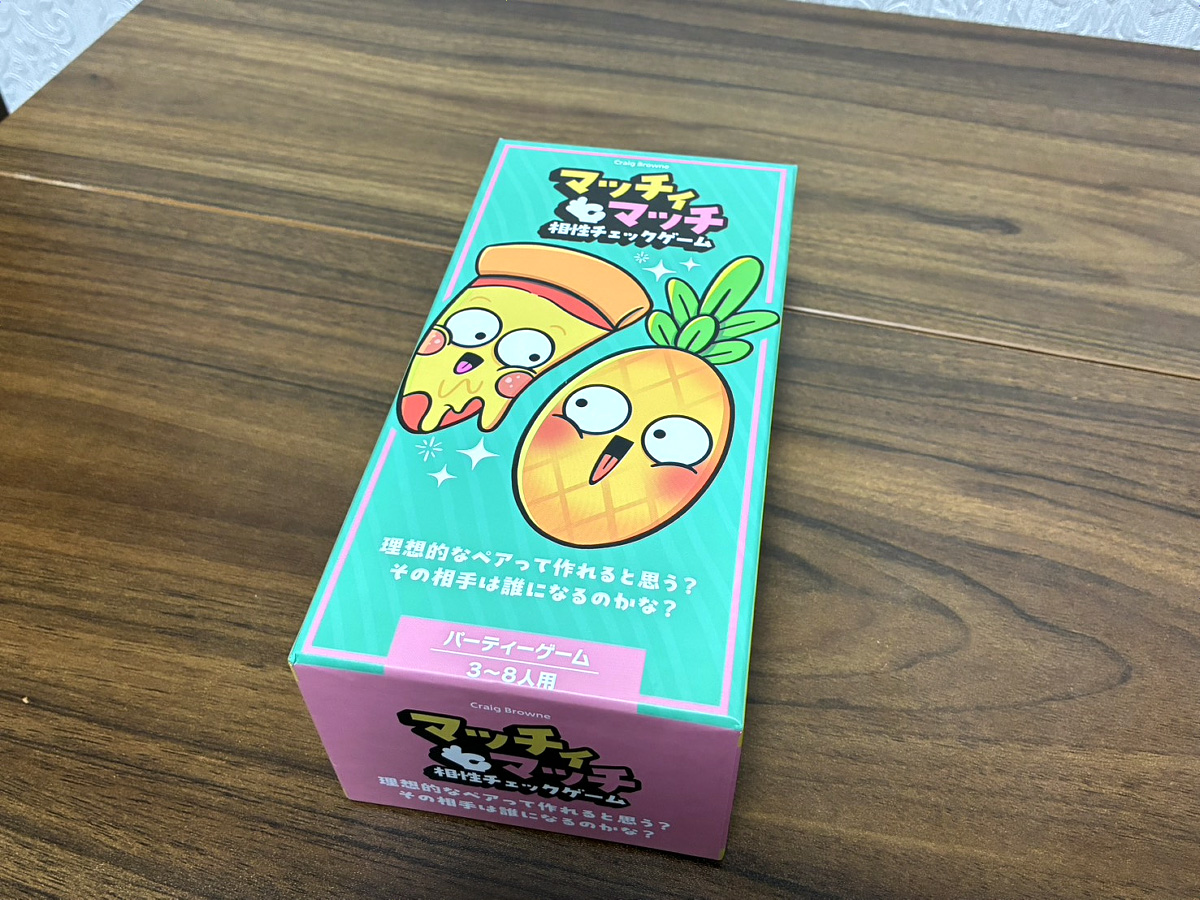
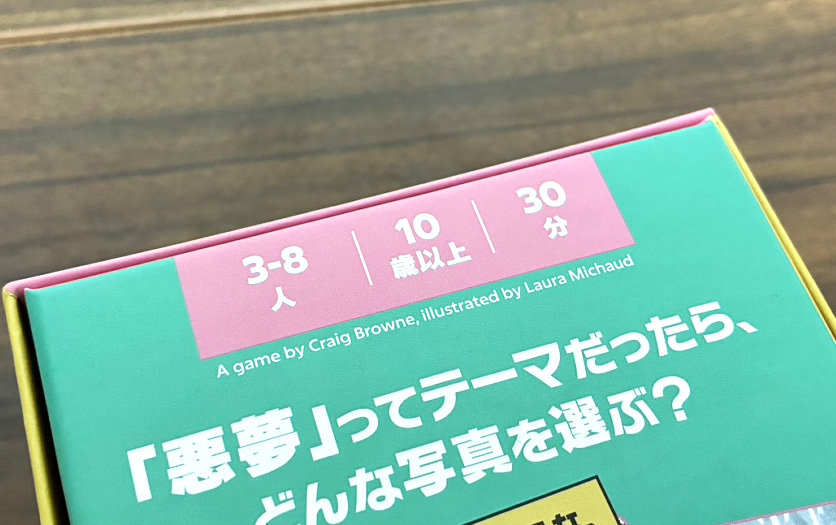
The game is designed for 3 to 8 players, is suitable for ages 10 and up, and is expected to take 30 minutes to play.
The first thing you'll find inside the box is the rulebook.
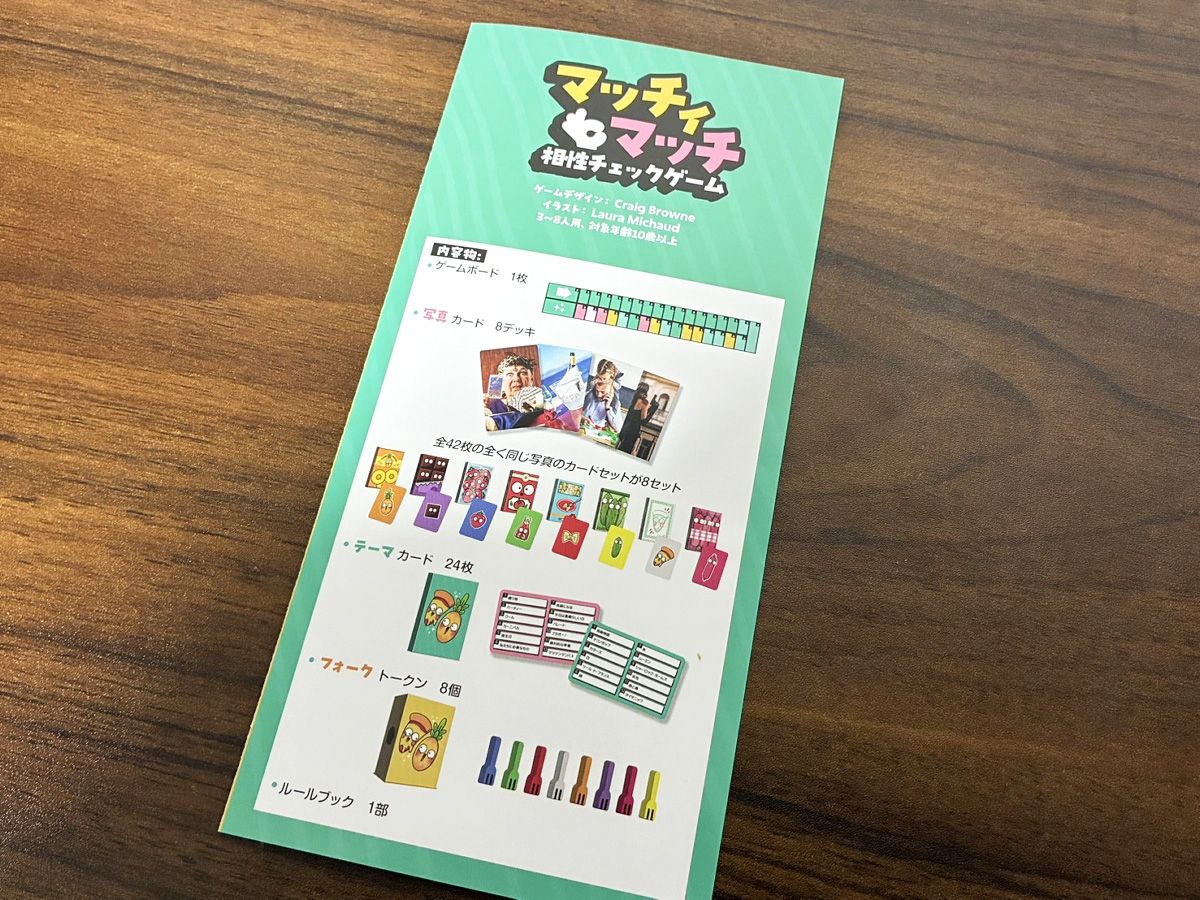
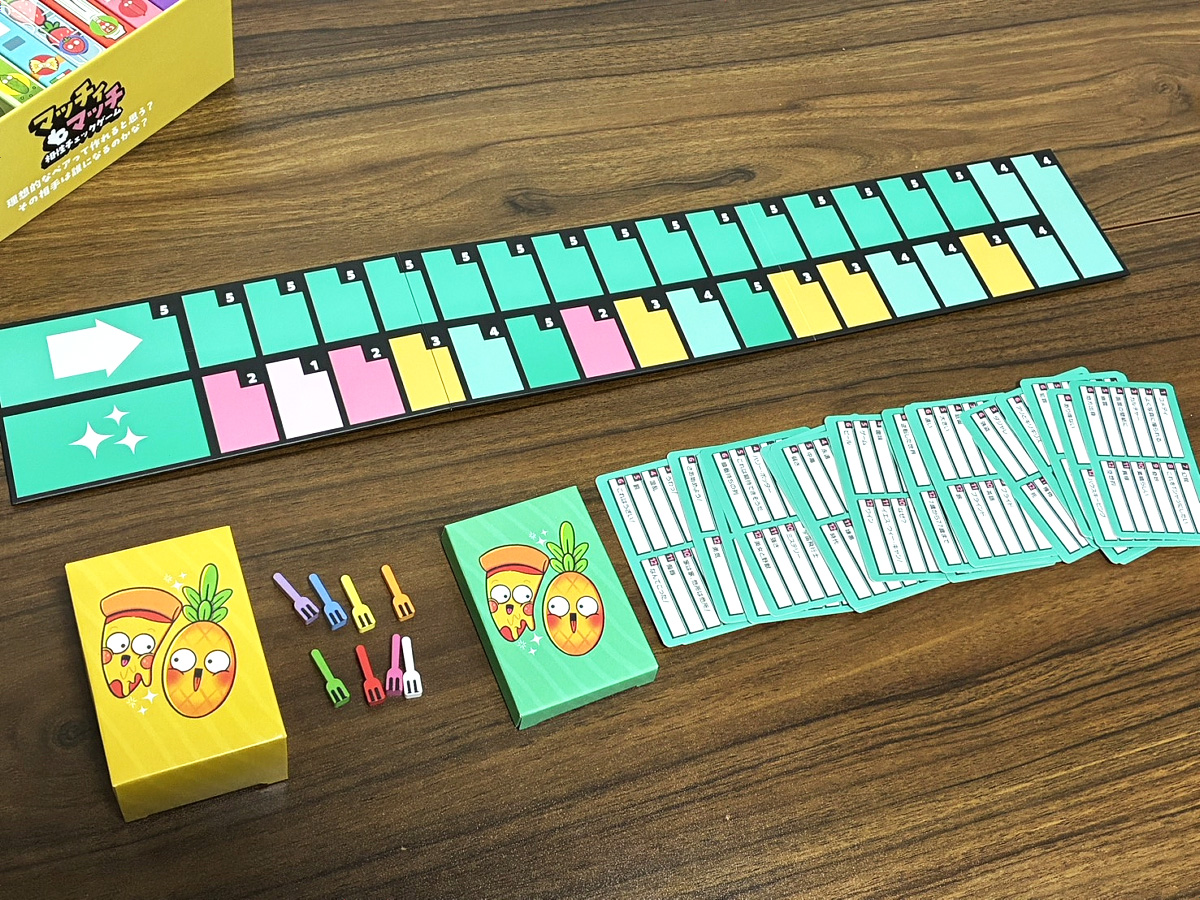
The game board is at the top, the fork tokens are in the bottom left, and the theme cards are in the bottom right.
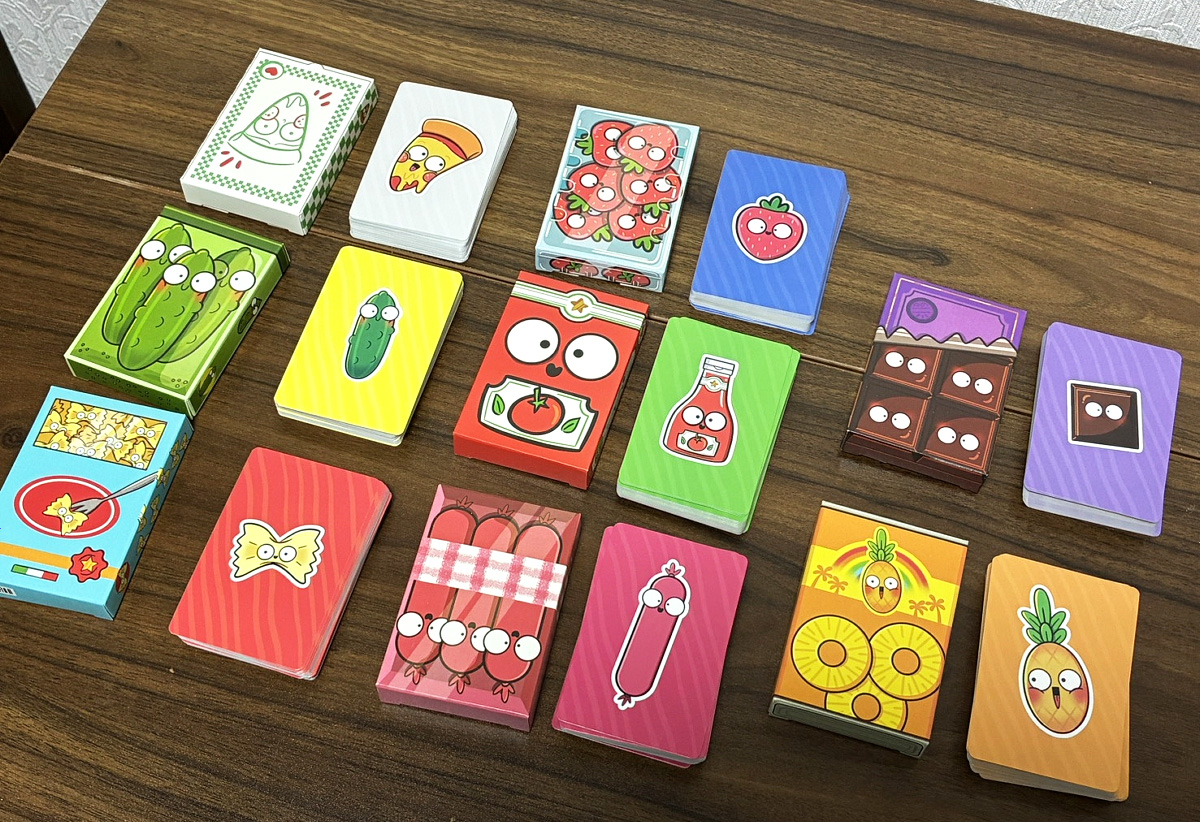
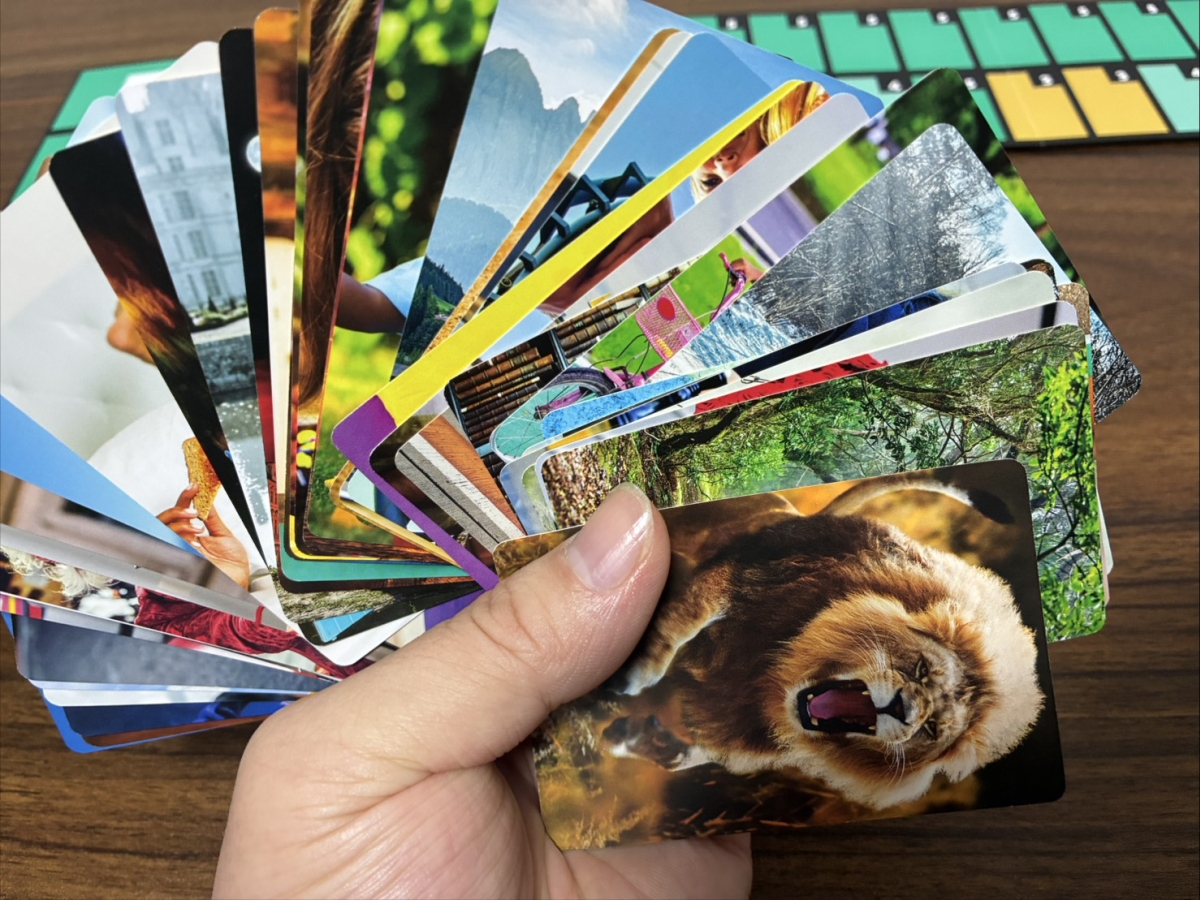
And it includes eight sets of photo cards, each consisting of 42 identical photos.
◆Preparing to play
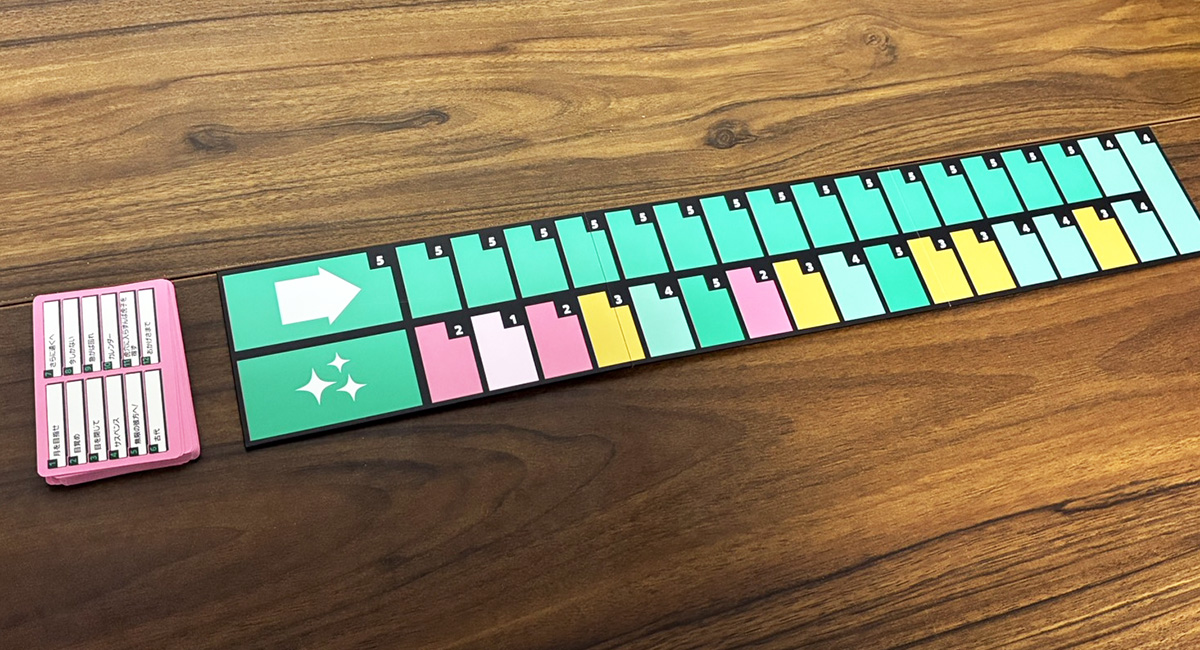
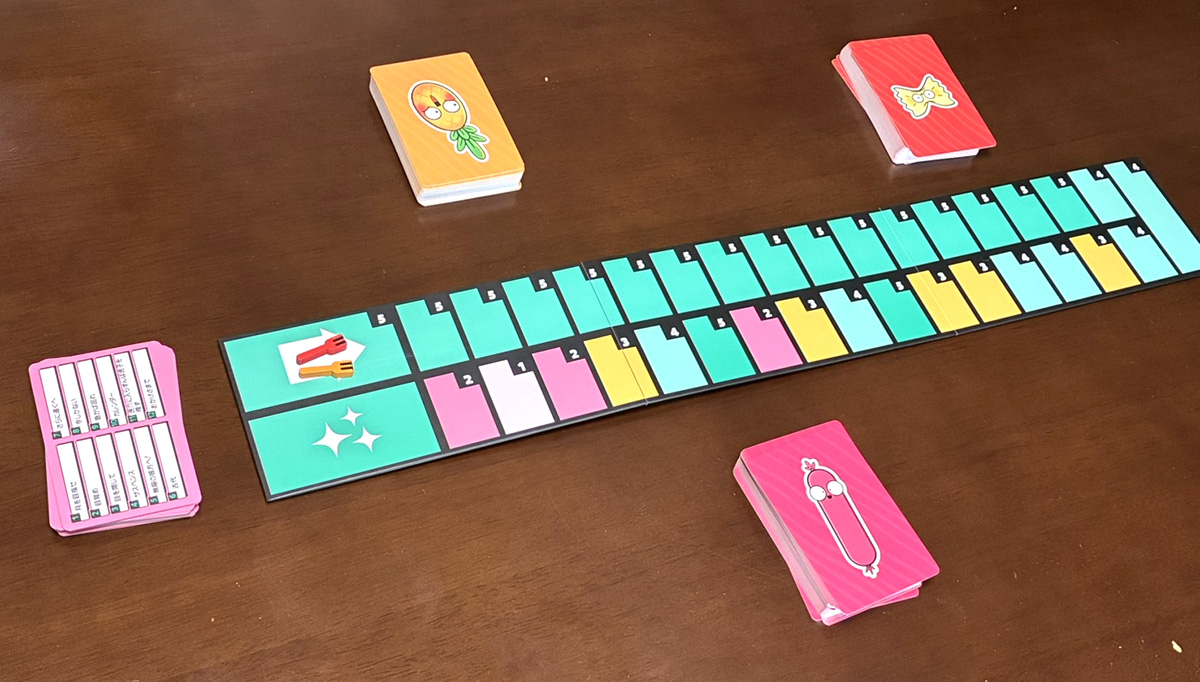
We'll be playing with three people this time. First, place the game board and the theme card deck on the table.
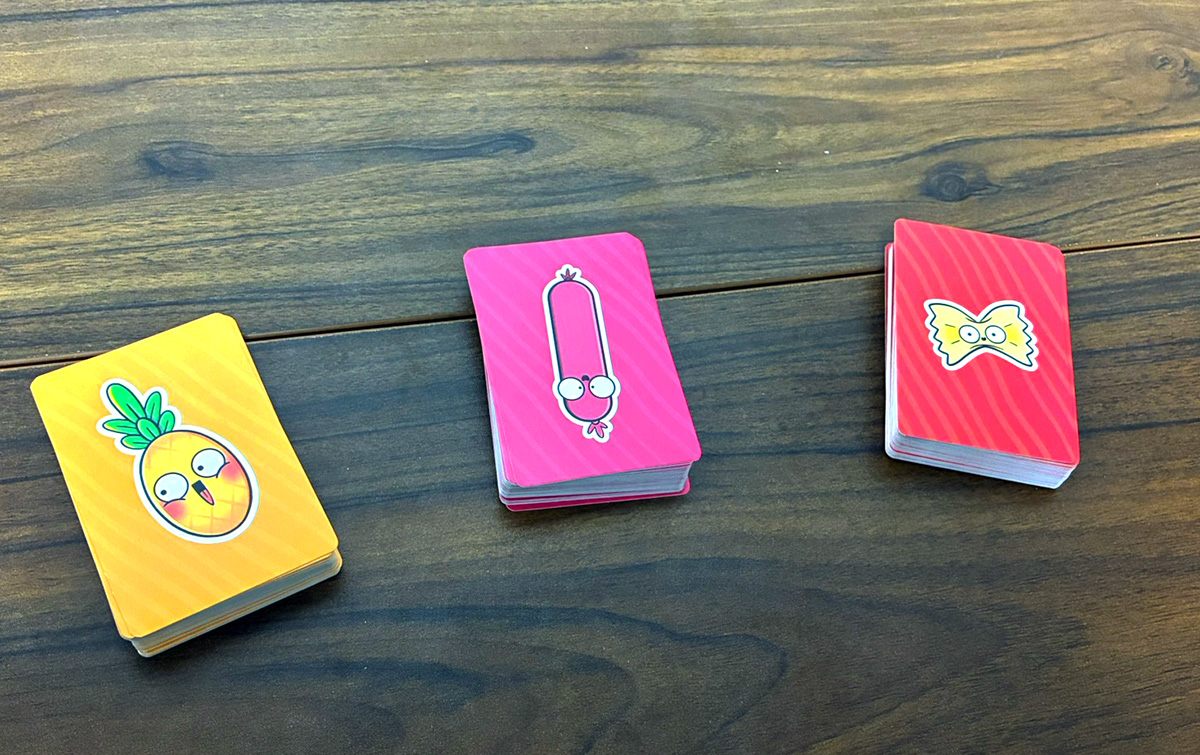
Next, each player is dealt one deck of photo cards. The color on the back of each photo card deck will be the player's color.
Next, place the fork tokens of the same color as the player's color at the starting position on the game board. As will be explained in more detail later, when playing with an odd number of players, one player is designated as the 'reference player,' so you only need to place fork tokens for the players who are not the reference player. In this case, pink is the reference player, so we have placed red and orange fork tokens at the starting position.
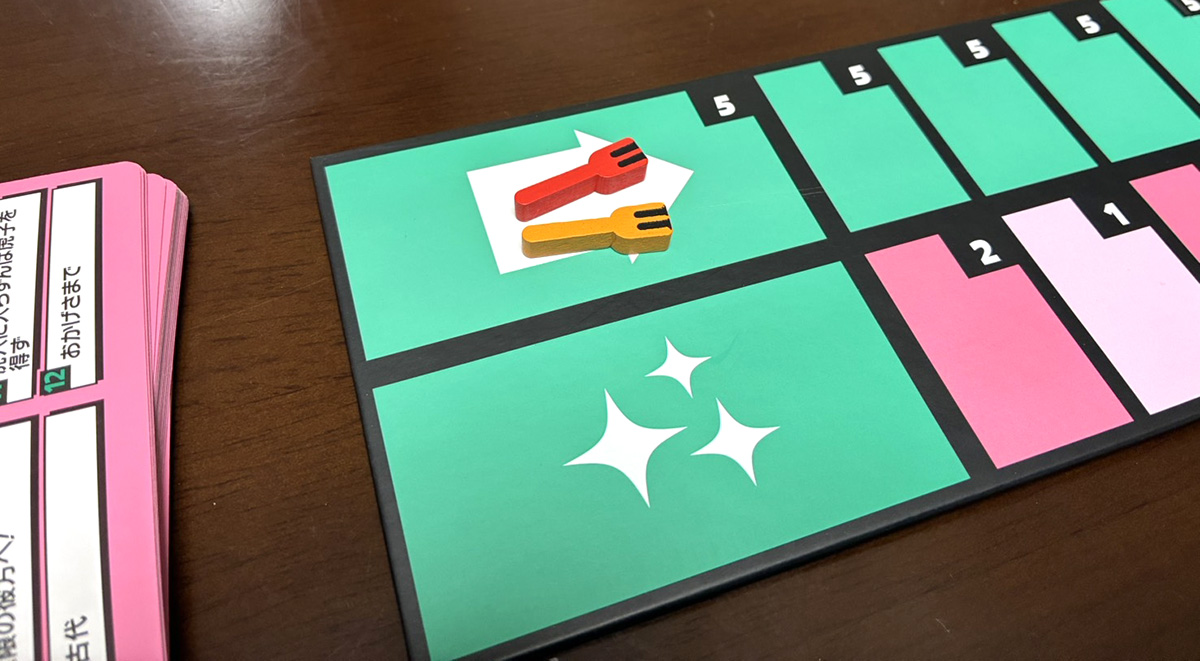
This is what it looks like when everything is ready.
◆How to play the game
The objective of 'MatchyMatch: Compatibility Check Game' is, when played by an even number of people, to form pairs of two and 'become the most compatible pair,' and when played by an odd number of people, the referee player 'finds the person they are most compatible with.'
Each player other than the reference player imagines and chooses a card that the reference player will likely choose in each round. If they choose the same card as the reference player, they can advance their fork tokens by a certain number of spaces according to the conditions. The first player to reach the goal space on the game board wins. Winning proves that you have excellent compatibility with the reference player.
The game is very simple to play. First, any player declares a number from 1 to 12 and flips over one theme card.
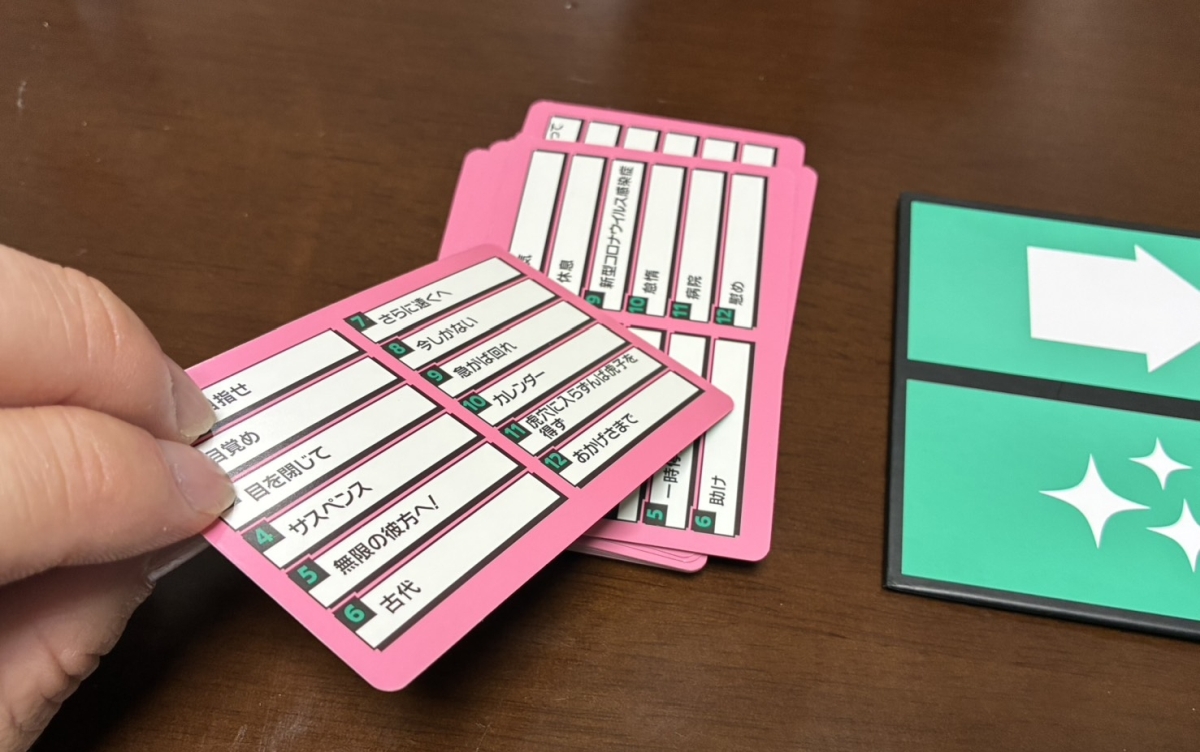
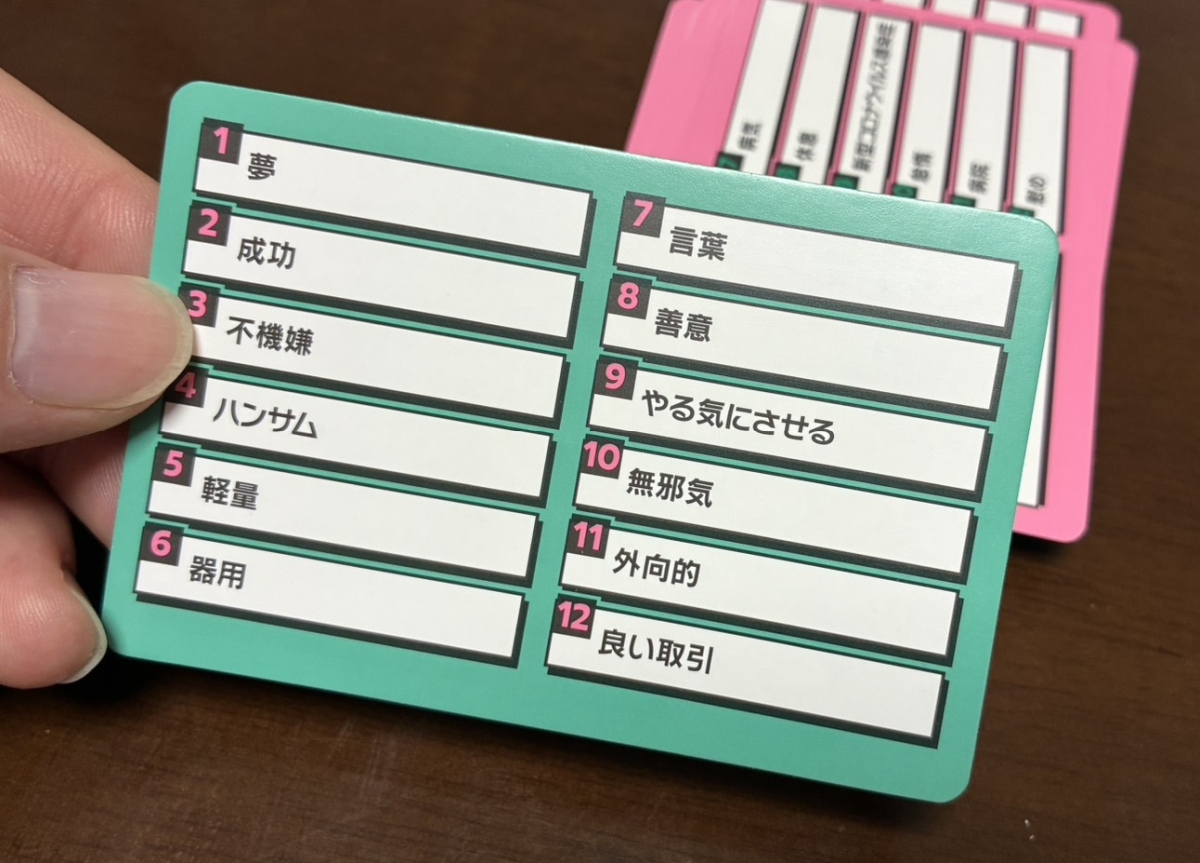
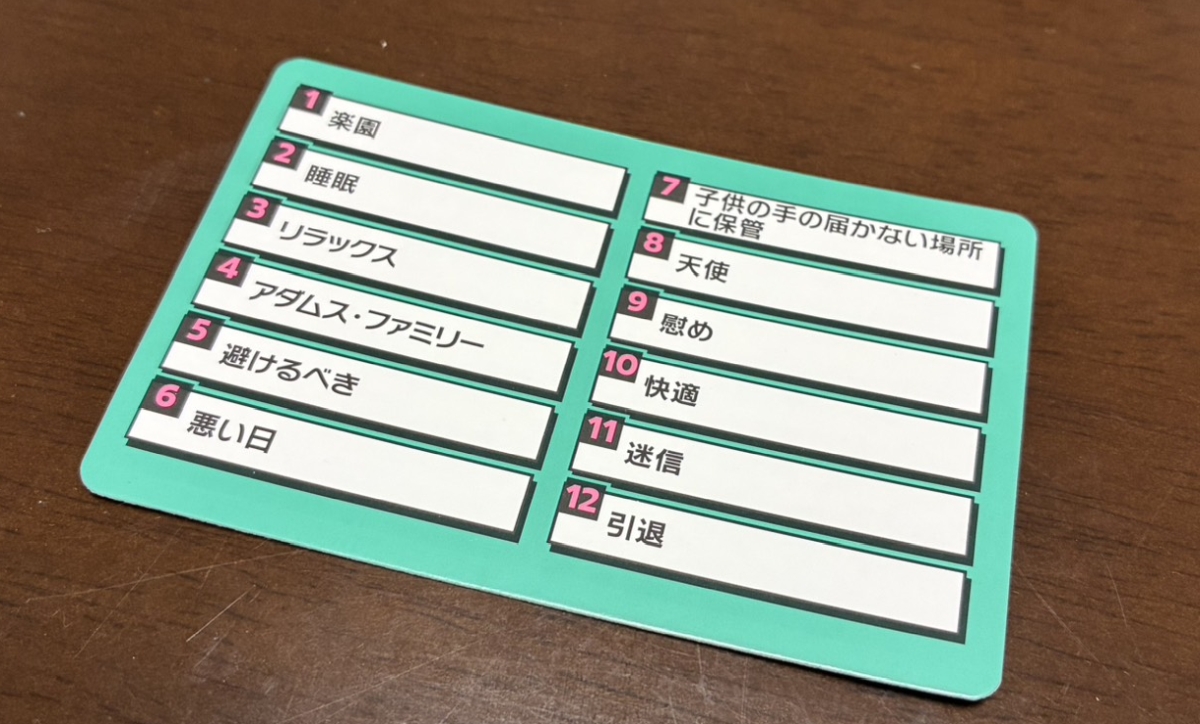
The theme cards have 12 themes written on both the green and pink sides, but you can use either side when playing. Although it's not mentioned in the rulebook, I got the impression that the pink side has more difficult themes. This time, we're using the green side. The number declared in the first round is '5,' so we read aloud theme number 5 written on the theme card. This time the theme is 'lightweight.'
All players, including the reference player, choose a photo card from their 42-photo card deck that they feel best represents 'lightweight.'
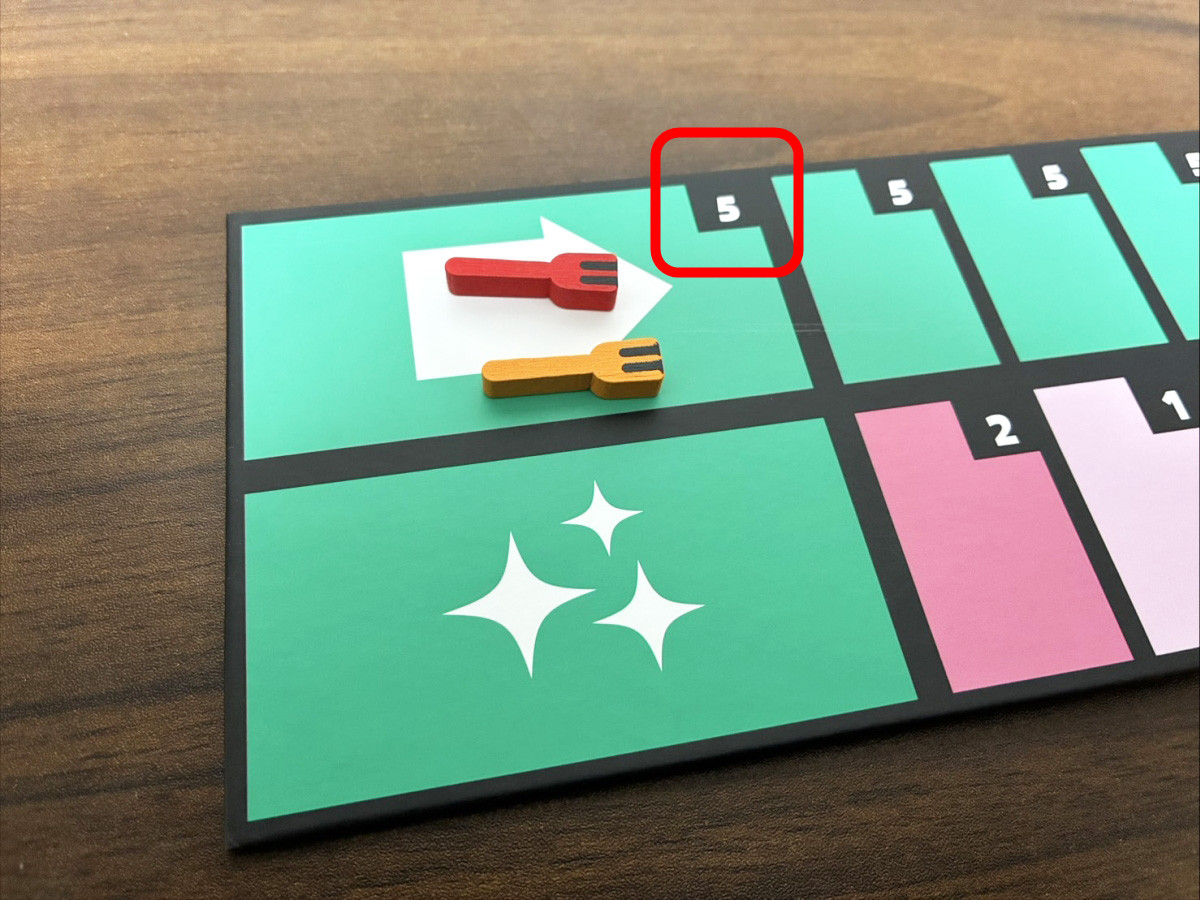
The number of photo cards you choose depends on the number written in the upper right corner of the space where your fork token is placed, so be sure to keep an eye on the space you are currently on. Also, the cards chosen by the reference player will be the basis for each player's score, so the reference player will choose 5 photo cards each time.
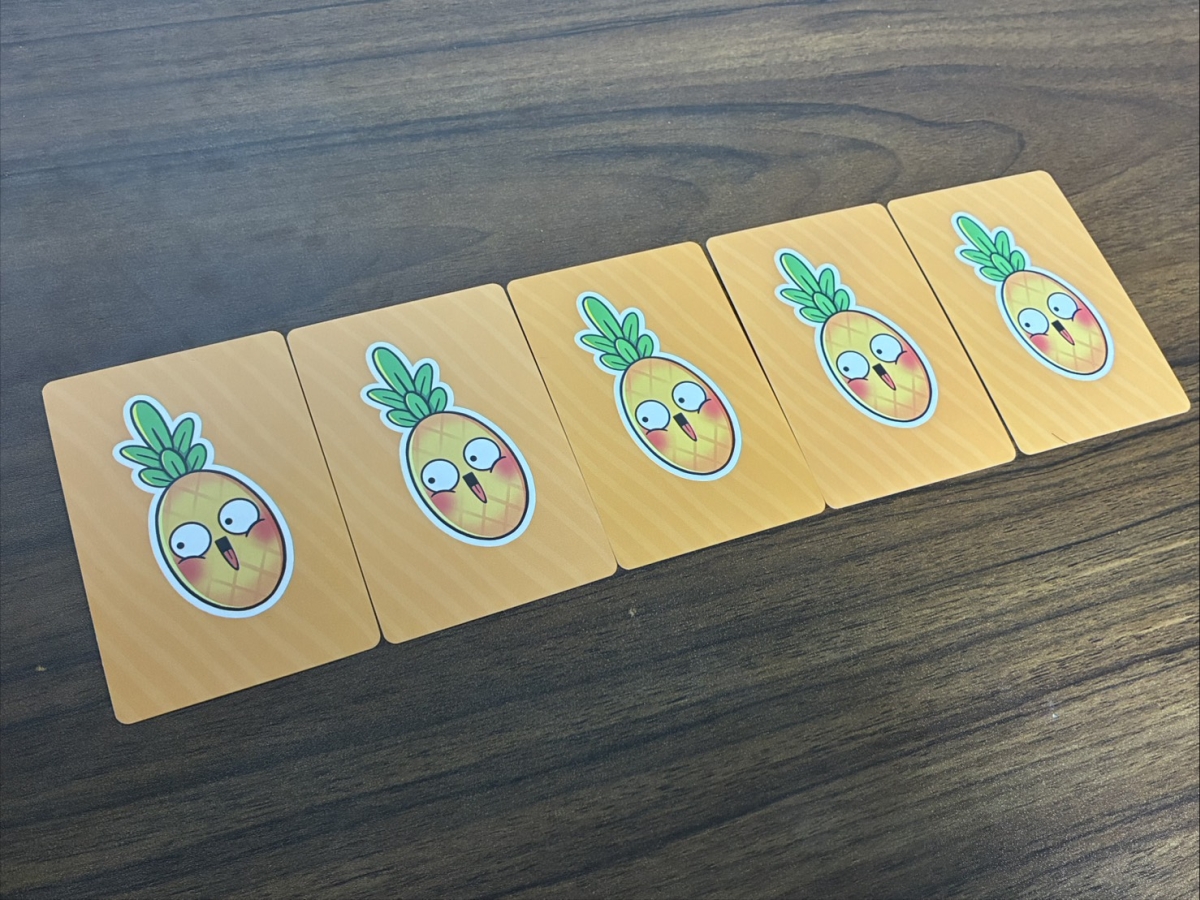
Once you've selected the specified number of photo cards, arrange them face down in front of you, from left to right, in order of their relevance to the theme.
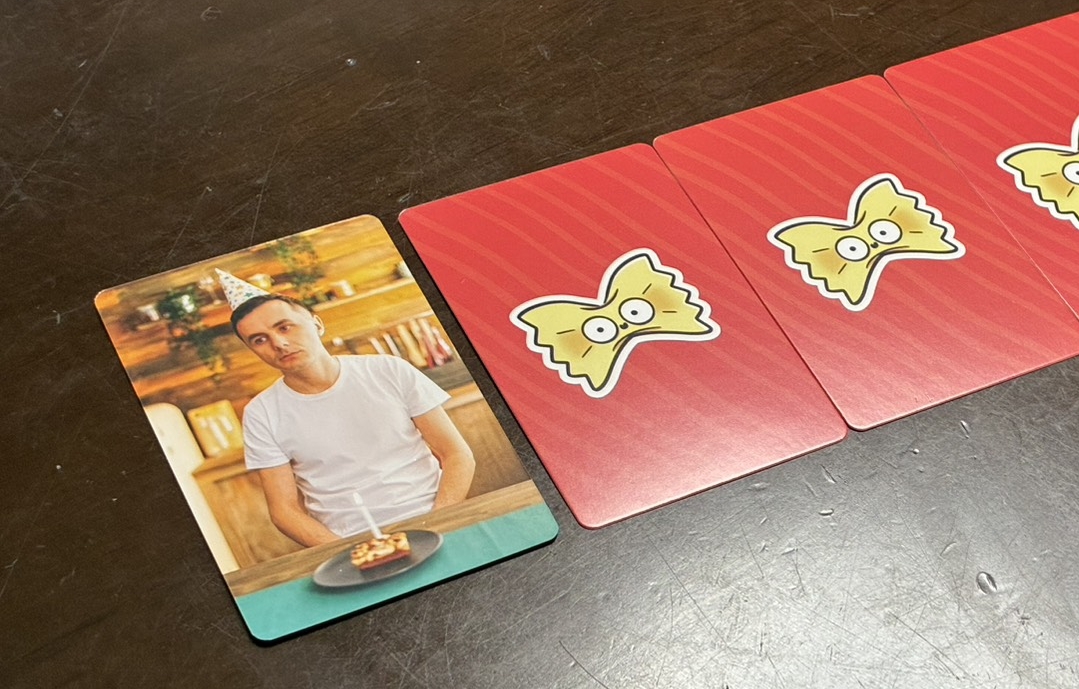
Once everyone has finished arranging their photo cards, they are revealed one by one from left to right. The first card chosen by the red player was a photo of a lightly dressed man wearing a party hat looking bored in front of a single serving of cake. It seems the hat perched on his head made him think of 'lightweight.'
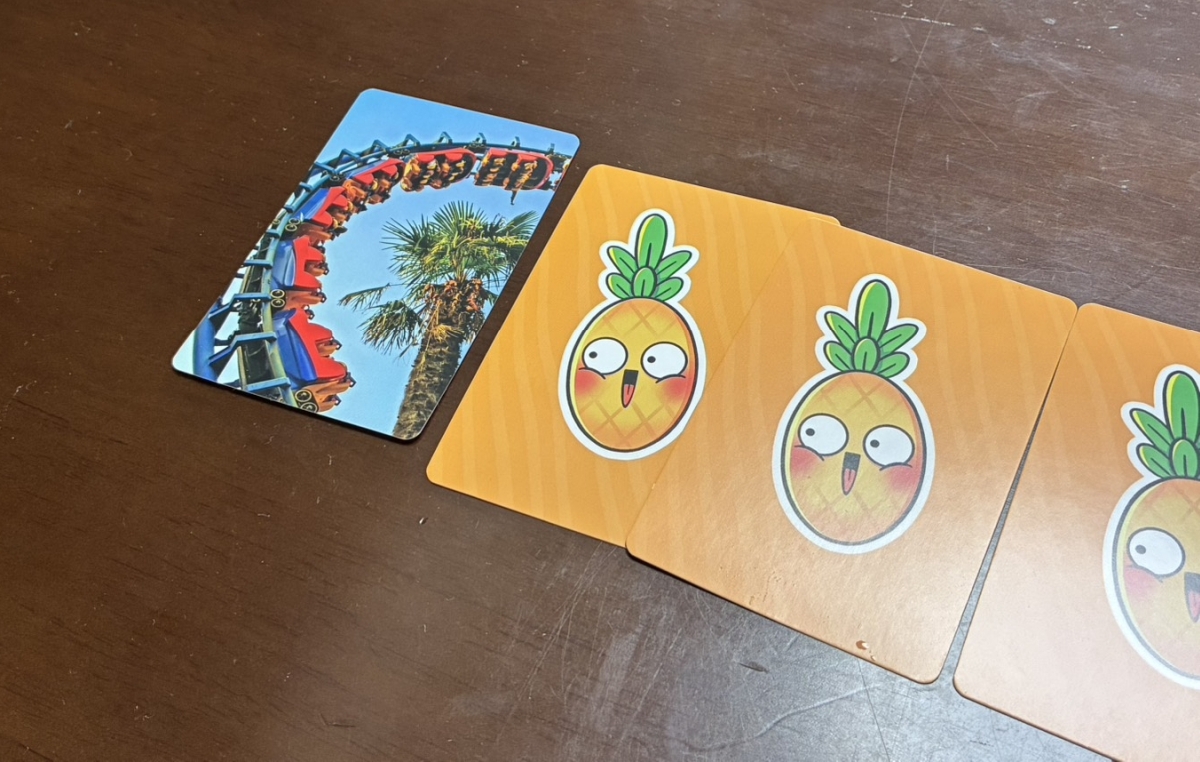
Meanwhile, the orange player chose a photo card of a roller coaster. They said they associated the feeling of weightlessness from the roller coaster with 'lightweight.'
And the player who made the crucial choice selected 'a teddy bear lying listlessly in a garbage dump.' Apparently, the theme of 'lightweight' led to the outlandish idea of 'being treated lightly.'
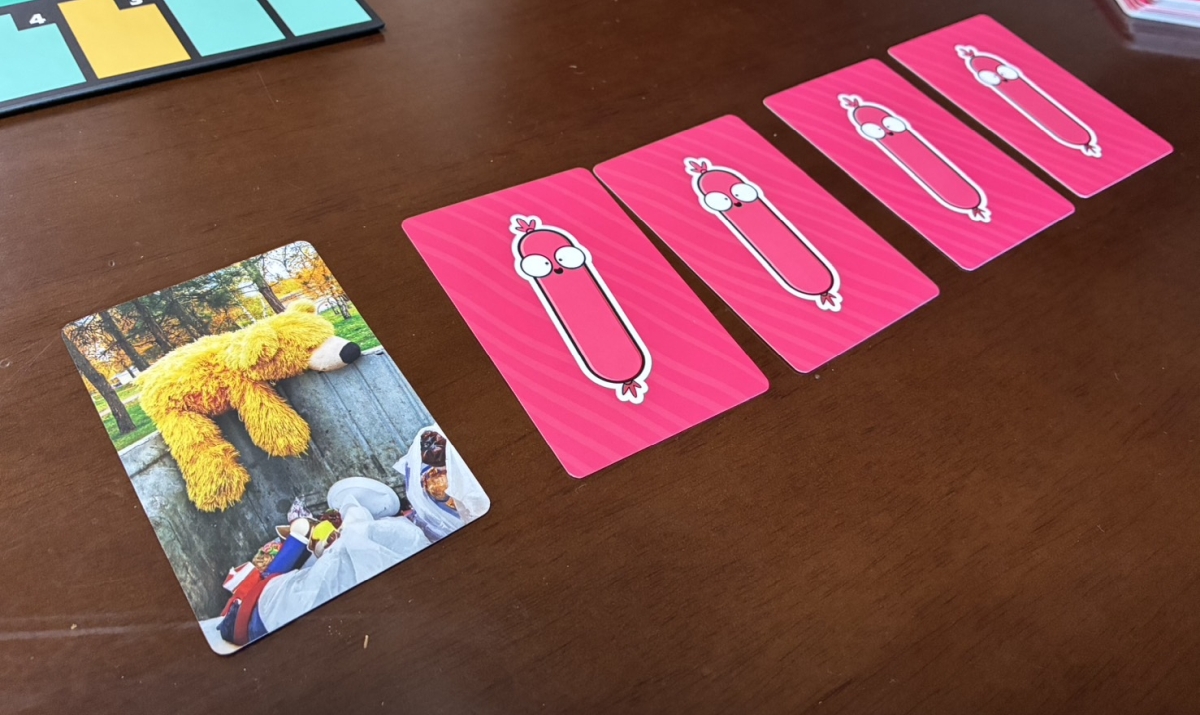
Unfortunately, the first photo card didn't match, so the fork token didn't advance. The same process continued, revealing the second, third, fourth, fifth cards in order. However, perhaps due to the unique sensibilities of the referencing player, there wasn't a single match up to the fourth card. Finally, with the fifth card, the photo card chosen by the red player as the fifth card matched the photo card chosen by the referencing player as the second card.
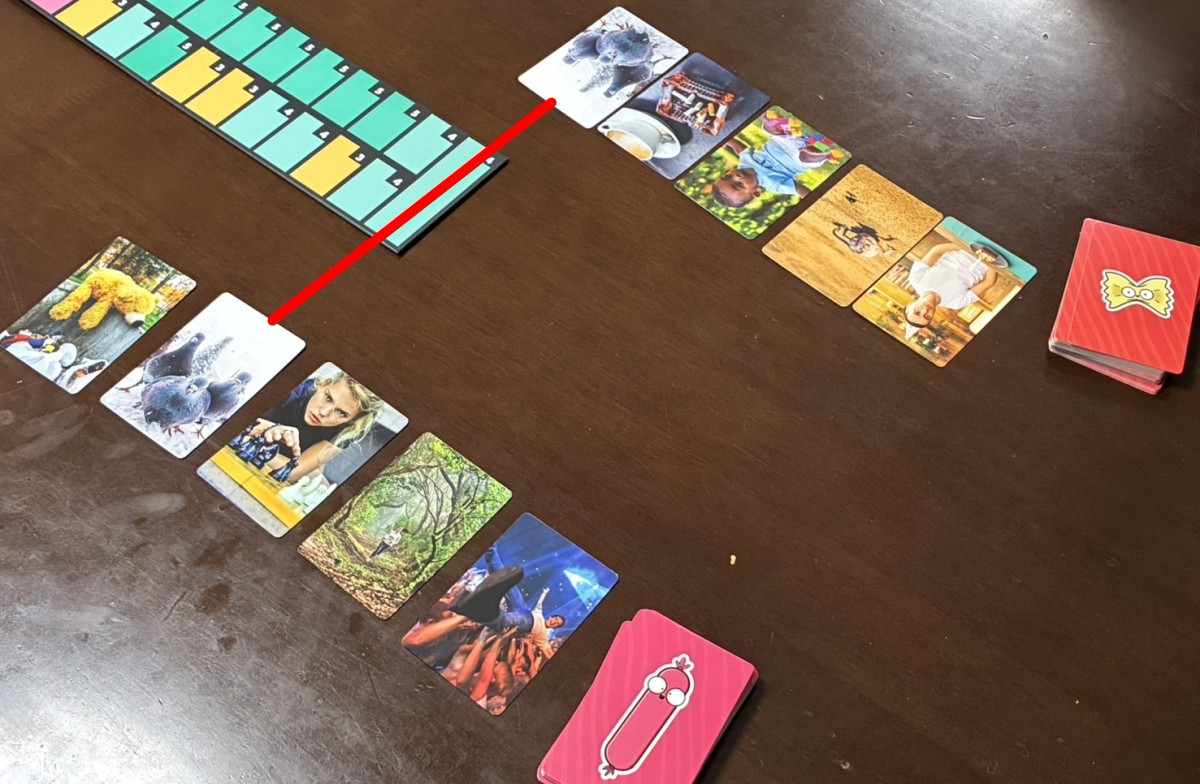
If the reference player and the selected photo card match, the matching player can move their fork token '3 spaces if they selected them in the same order' or '2 spaces if they selected them in a different order.' In this case, the order of the 5th and 2nd cards was different, so the red player's fork token moves '2 spaces.'
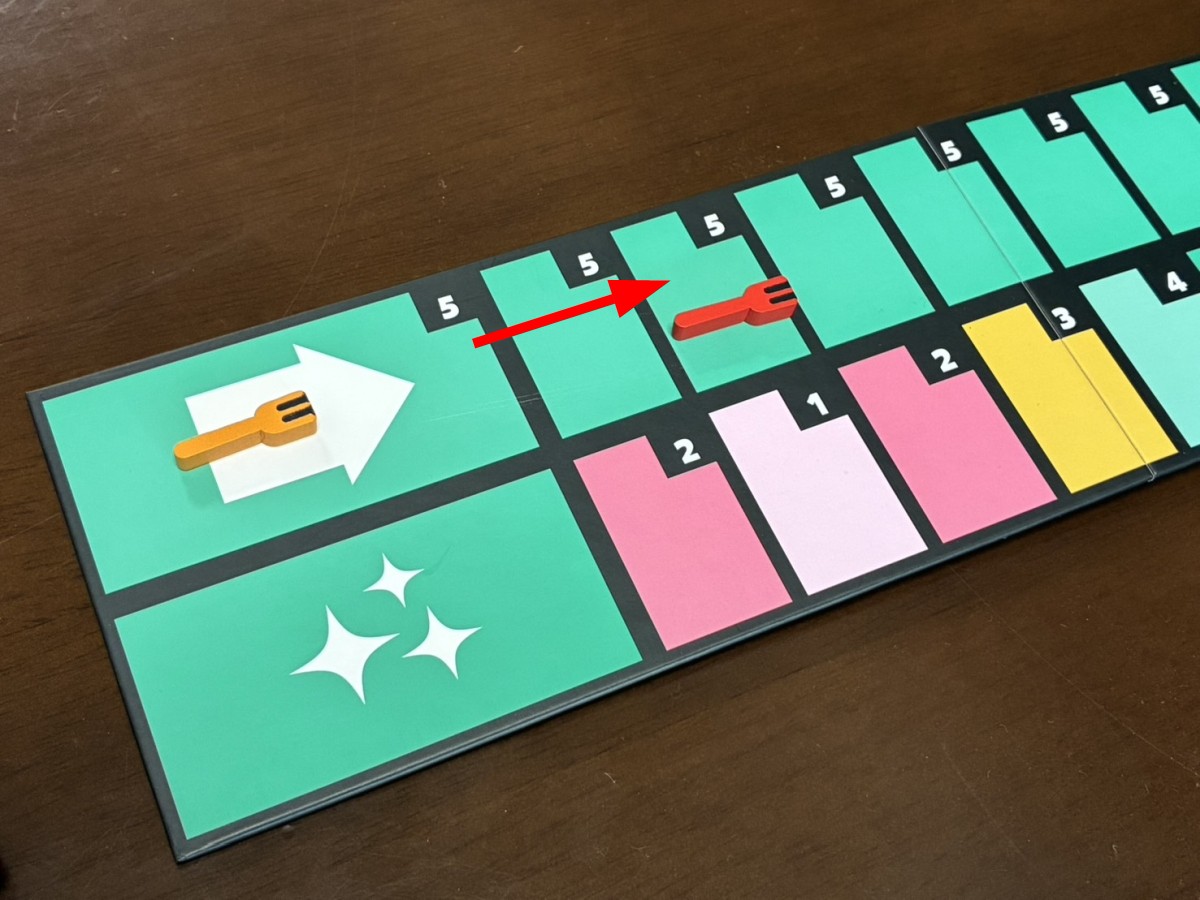
Furthermore, at the same time, the photo card that the orange player had chosen as their fifth card matched the photo card that the reference player had chosen as their fifth card.
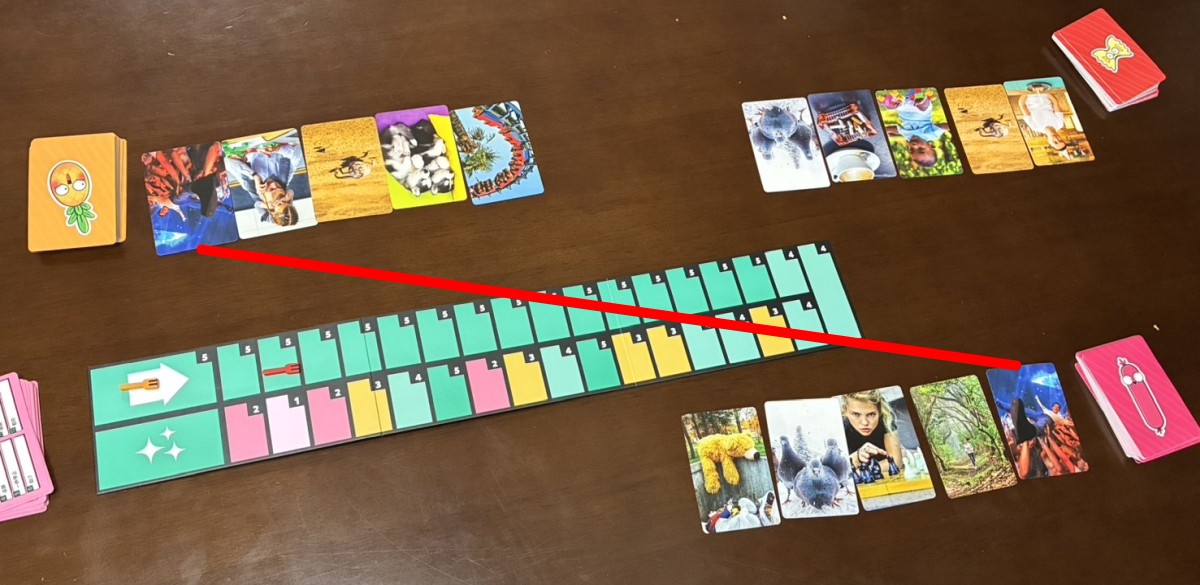
In this case, not only are the photo cards the same, but the order is also the 'fifth card,' so the orange player can move their fork token three spaces forward.
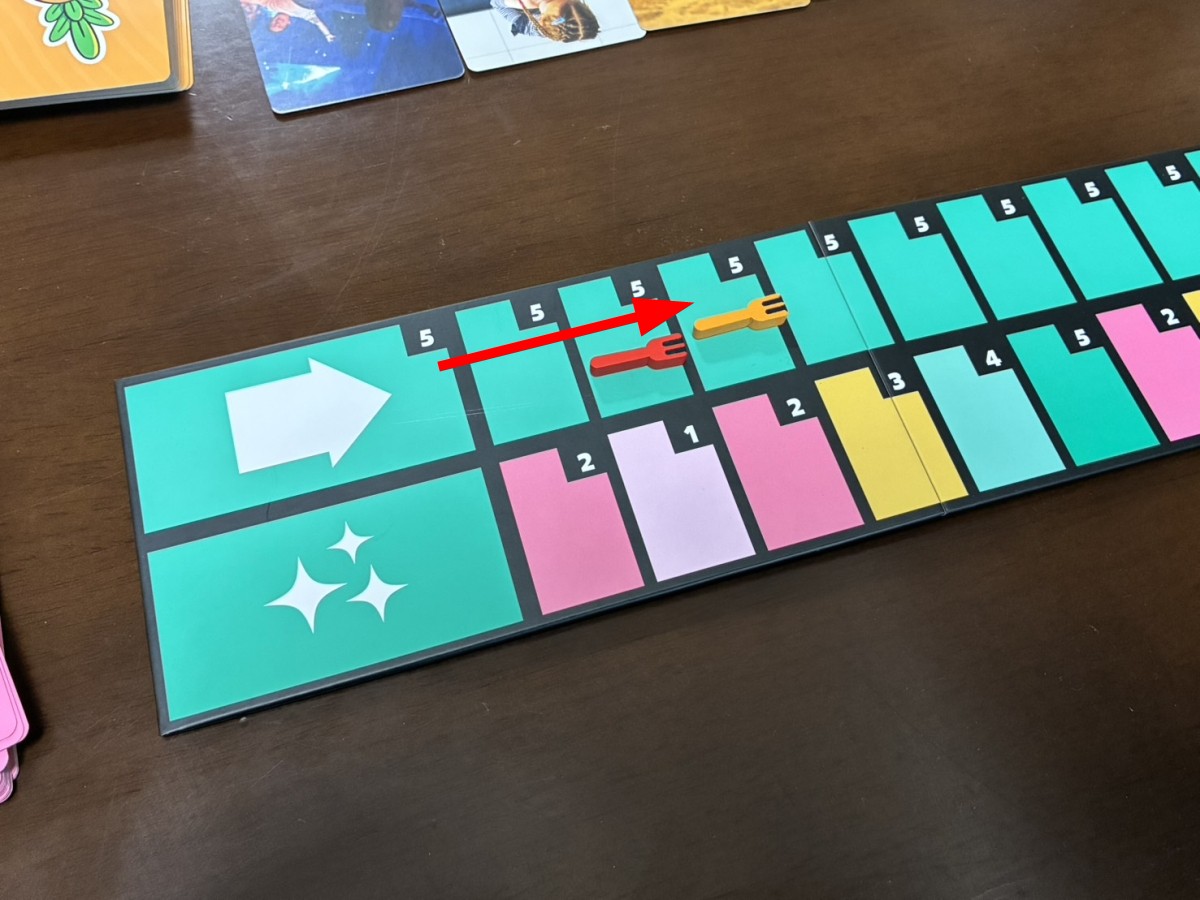
Once five cards have been revealed face up, the players collect their revealed photo cards and the round ends. The next round begins. The process is the same in the next round: first, one player declares a number from 1 to 12 and flips over a theme card. The theme for the second round is number 11, 'Superstition'.
This time, everyone chose the same photo card of a 'fortune-telling-like old woman' as their first card. Perhaps the association between 'fortune-telling' and 'superstition' is relatively easy to make.
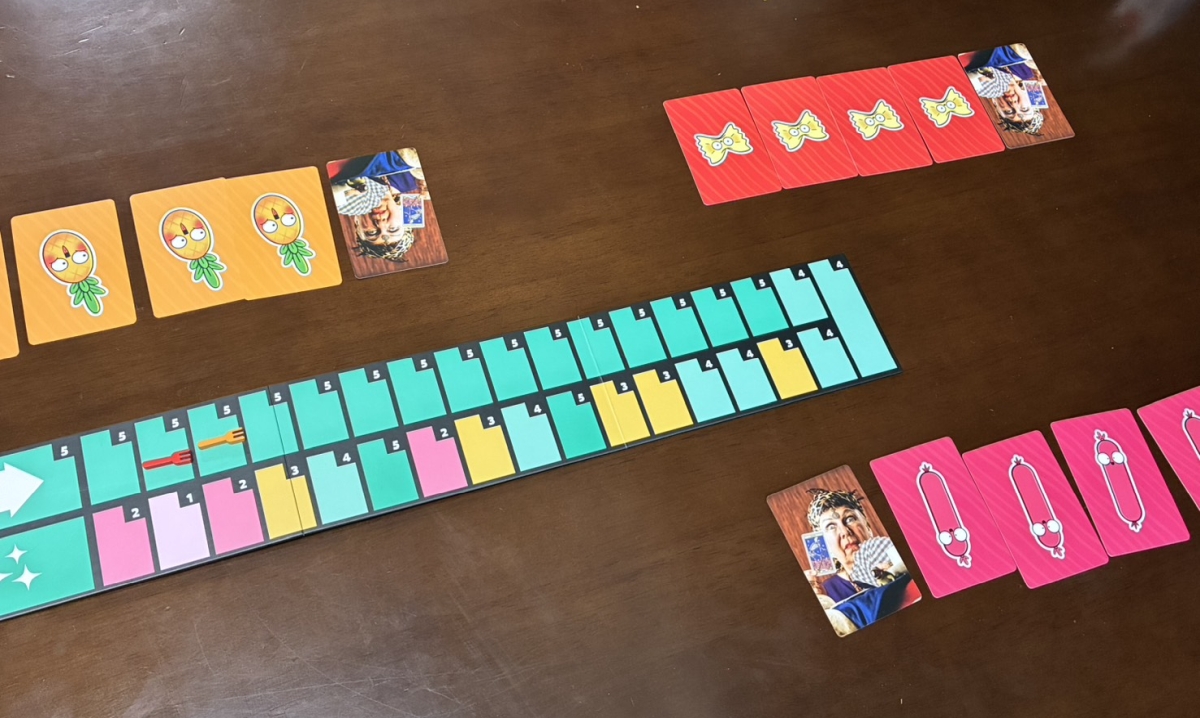
Since the photo cards and their order matched, both the red and orange players were able to move three spaces forward.
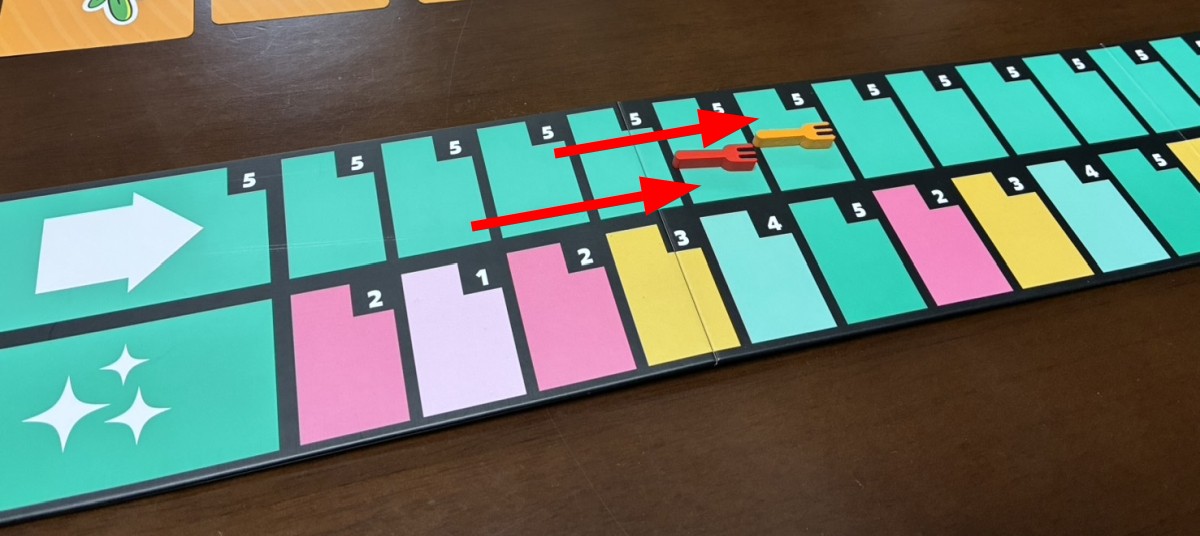
In this way, players flip over theme cards, choose photo cards that match the theme, and if they match the referenced player, they move their fork token forward. The first player to reach the goal space wins.
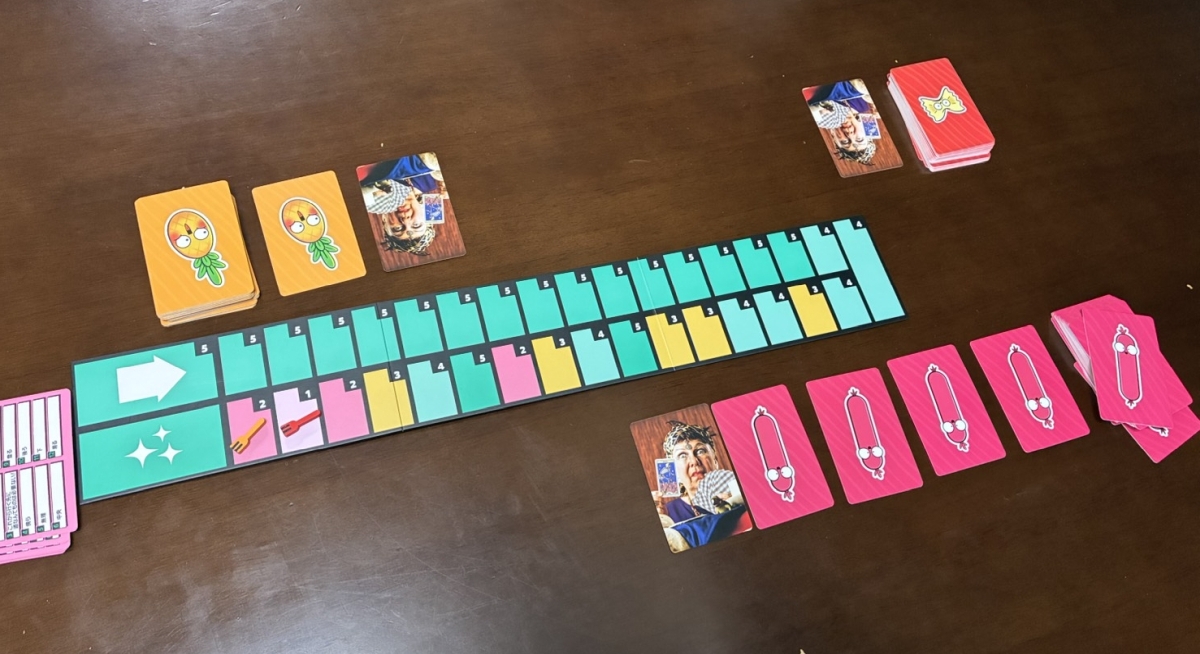
'Matchy Match: Compatibility Check Game' is a game where the difficulty and fun change greatly depending on the theme that comes up. Furthermore, simply playing according to the rules isn't very exciting, so it's recommended to play by asking your opponent why they chose a particular card, such as, 'Why did you choose that card for this theme...?' or 'No way, there's no way that card fits this theme!', or by making witty comments about the themes that come up.
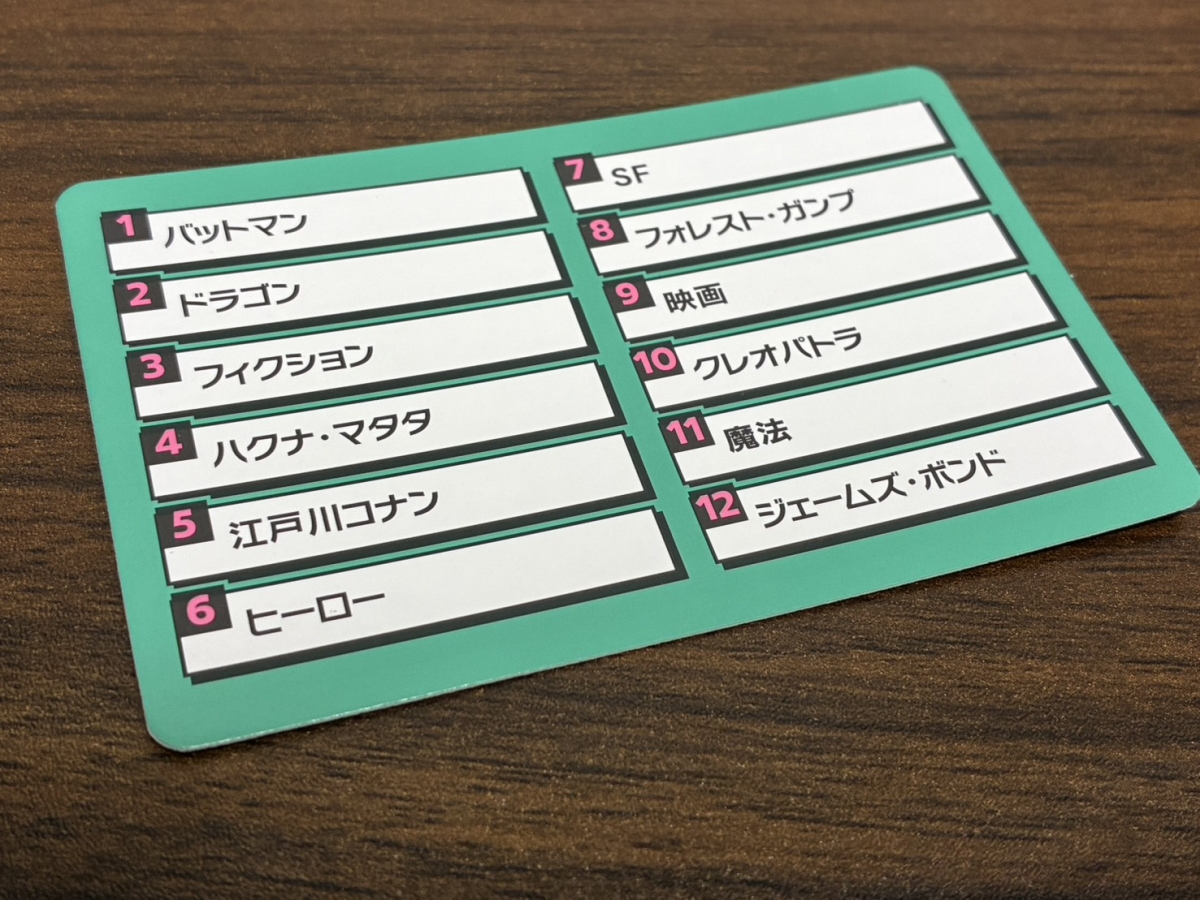
Of all the themes that came up during this play session, the one that made the most of me want to comment was 'sardines,' which led to the reaction, 'S-sardines...!? There aren't any photos that represent sardines!'
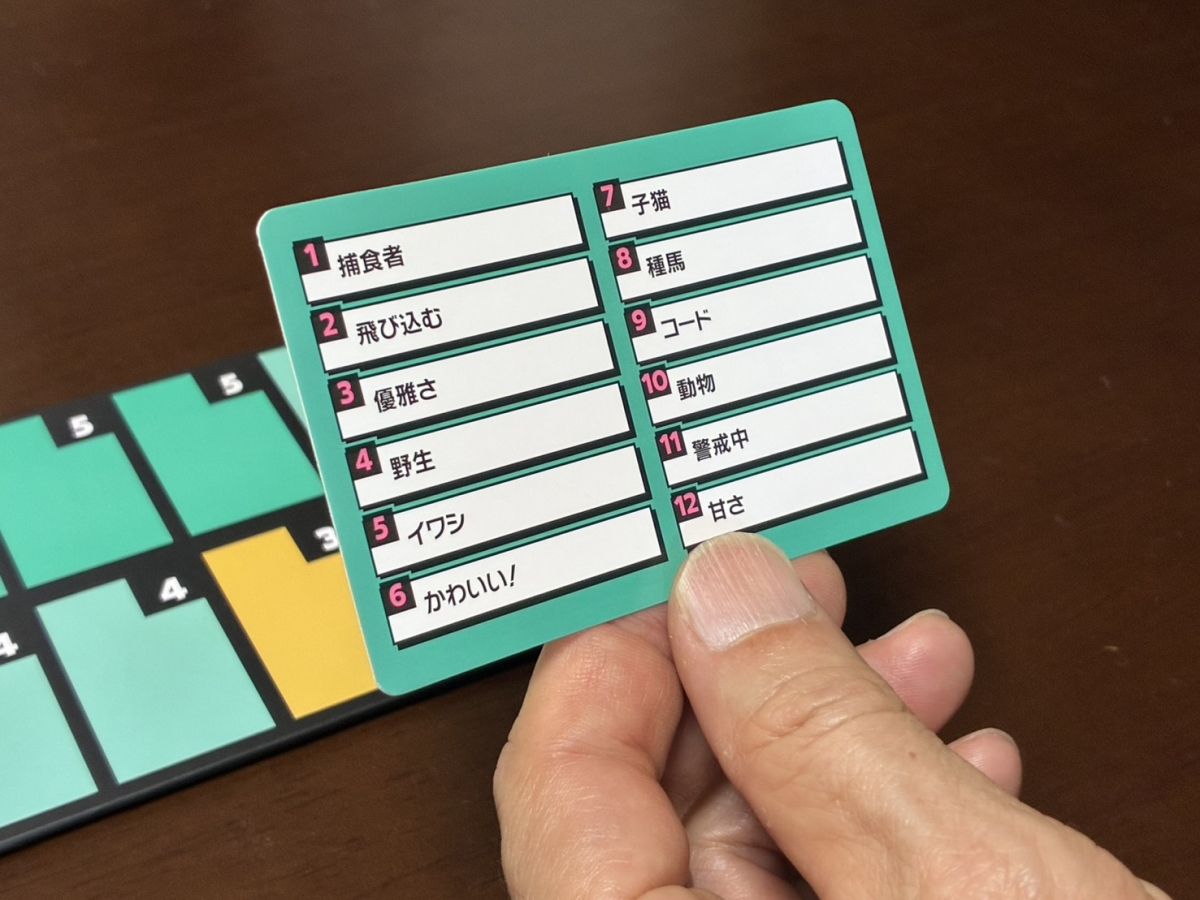
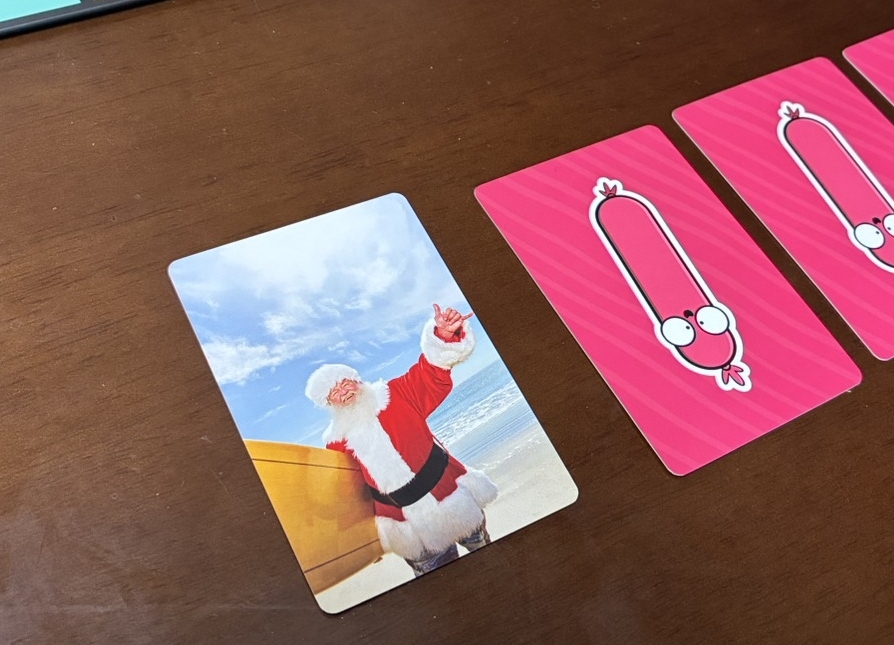
And when the theme is difficult, the criteria for selecting cards also become quite unconventional. This Santa was chosen as the card representing 'sardines' simply because 'it looks like it's saying, 'It's me!''
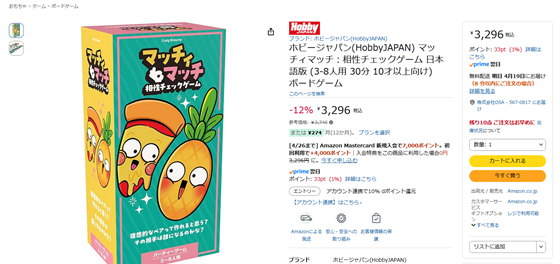
The suggested retail price for 'Matchy Match: Compatibility Check Game' is 3,740 yen (tax included). At the time of writing, it was available on Amazon.co.jp for 3,296 yen (tax included).
Amazon | HobbyJAPAN Matchy Match: Compatibility Check Game (Japanese Version) (3-8 players, 30 minutes, ages 10+) Board Game | Board Games | Toys
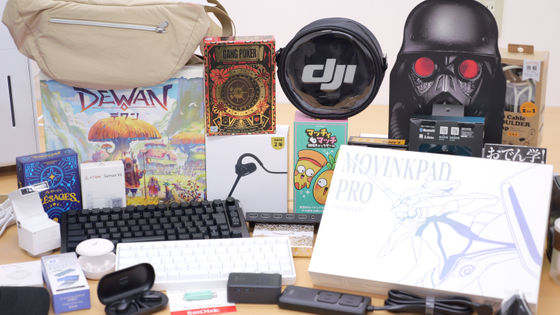
You can also get 'MatchyMatch: Compatibility Check Game' in the following giveaway article.
GIGAZINE's Spring Giveaway Project: 'Answer the survey and take everything!' - GIGAZINE
Related Posts: