Anthropic has unveiled a system that combines inexpensive and expensive Claude models to create a 'cheap yet high-performance AI.'

The AI 'Claude' offers multiple models, but the usage fee varies depending on performance. As a way to reduce costs, Anthropic, the provider, shared the method of 'combining cheaper models with more expensive ones' and introduced an 'advisor tool' for combining multiple AIs.
The advisor strategy: Give Sonnet an intelligence boost with Opus | Claude
Advisor tool - Claude API Docs
https://platform.claude.com/docs/en/agents-and-tools/tool-use/advisor-tool
According to Anthropic, many developers are using a strategy they call the 'advisor strategy' to balance AI performance and cost. This method combines a model with high inference performance as an advisor with a model that is fast and has a low cost per operation as the executor.
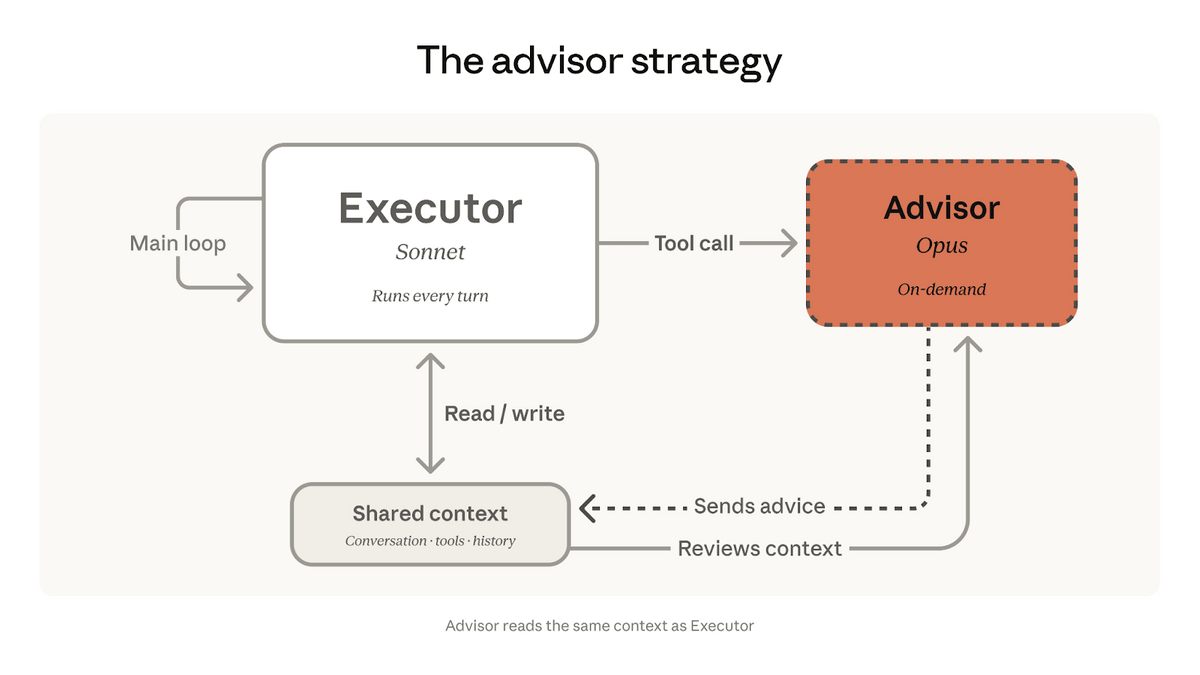
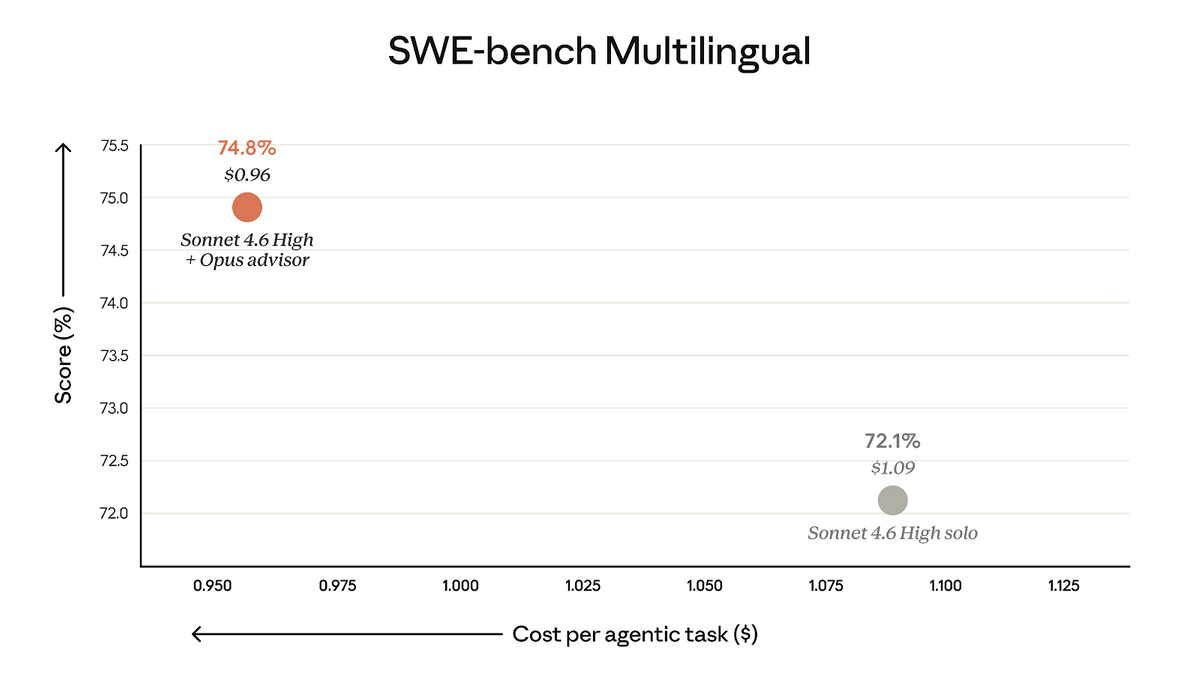
With Claude, either Sonnet or Haiku acts as the executor, and if it encounters a decision that cannot be reasonably resolved, it seeks advice from Opus as an advisor. In benchmark tests conducted by Anthropic, combining Sonnet with Opus as an advisor showed a 2.7 percentage point improvement in score compared to Sonnet alone, while reducing the cost per task by 11.9%.
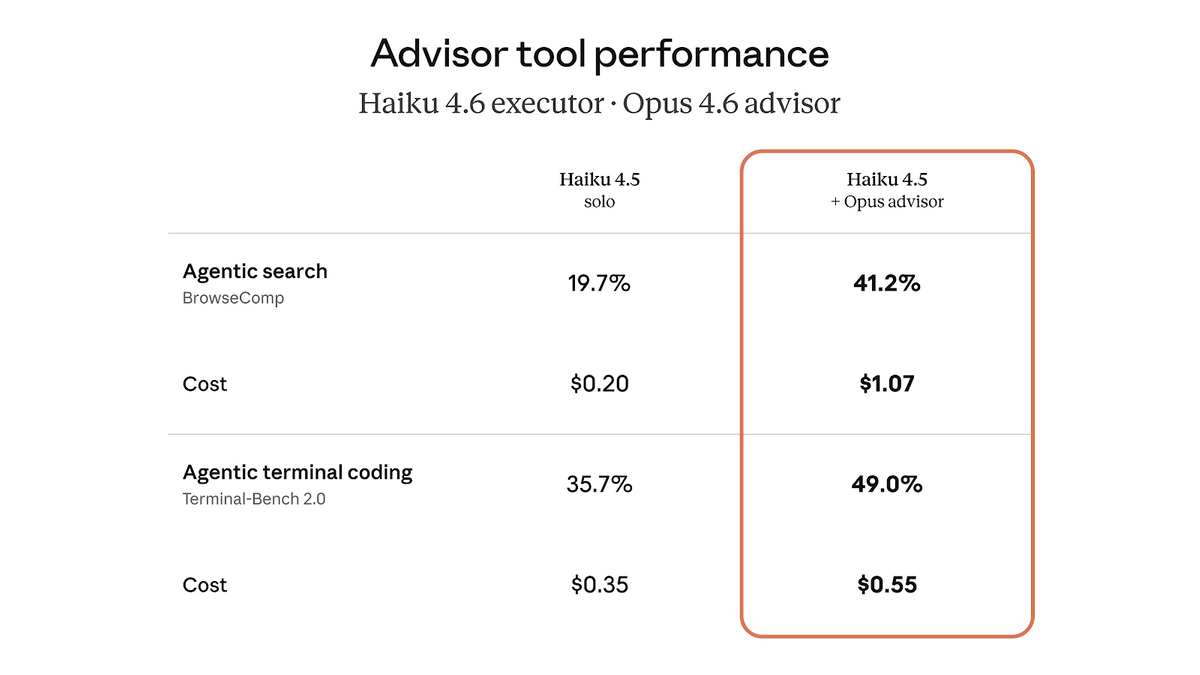
When using Haiku, which has inferior performance compared to Sonnet, as the execution model, Haiku with Opus as an advisor scored 41.2% in a benchmark measuring web search capability, more than double the score of 19.7% achieved by Sonnet alone. Although Haiku with Opus as an advisor was 29% worse than Sonnet alone, the cost per task was 85% lower. Since using Opus as an advisor in Haiku is cheaper than using Sonnet alone, Anthropic states that 'the advisor strategy is a viable option for high-volume tasks where a balance between performance and cost is required.'
To easily implement this advisory strategy, Anthropic has introduced a new ' advisor tool .'
The advisor tool is available via API, allowing the execution model to invoke the advisor model when it determines that it needs advice or assistance with a particular task. As of the time of writing, Claude Opus 4.6 can be invoked as the advisor model.
Advisor tokens are charged at the advisor model rate, and executor tokens are charged at the executor model rate. Anthropic explains that because advisors typically only generate short plans of around 400-700 tokens, and executors handle the overall output at a lower cost, the overall cost is significantly lower than if the advisor model were used from start to finish.
Related Posts:





in AI, Posted by log1p_kr