Music rights organizations have requested that X dismiss its lawsuit alleging 'abuse of the DMCA,' claiming it is 'mere retaliation,' following a copyright infringement lawsuit filed against X.

In January 2026, X filed an antitrust lawsuit against a major music publisher and
Music Publishers Ask Court to Dismiss X's 'Weaponized DMCA' Antitrust Suit * TorrentFreak
https://torrentfreak.com/music-publishers-ask-court-to-dismiss-xs-weaponized-dmca-antitrust-suit/
The MPA has been sending a large number of DMCA takedown notices to X (then Twitter) since 2021 regarding copyright infringement on its content, which escalated into a lawsuit in 2023.
Subsequently, MPA and X engaged in settlement negotiations, and as of November 25, 2025, it was reported that they had made significant progress toward a settlement and were working on drafting a written settlement agreement, and that they were seeking to halt the legal proceedings. However, on January 9, 2026, X filed a lawsuit against MPA, alleging that 'more than 12 music publishers and the MPA, their industry association, conspired to get the platform to purchase industry-wide licenses.'
X sues music labels such as Sony and Universal, claiming they 'excessively weaponized DMCA takedown requests' - GIGAZINE

According to X's claims, in 2021, the MPA threatened Twitter at the time, saying it would 'launch a program to send out takedown notices on a larger scale than any effort to date,' and then actually sent thousands of DMCA takedown notices every week, resulting in the suspension of approximately 50,000 user accounts due to more than 200,000 'unfounded' DMCA notices in total. X described this as 'an act of intimidation to force the entire music industry to sign licensing agreements,' and called it 'the weaponization of the DMCA' to enforce licensing agreements rather than protecting copyright.
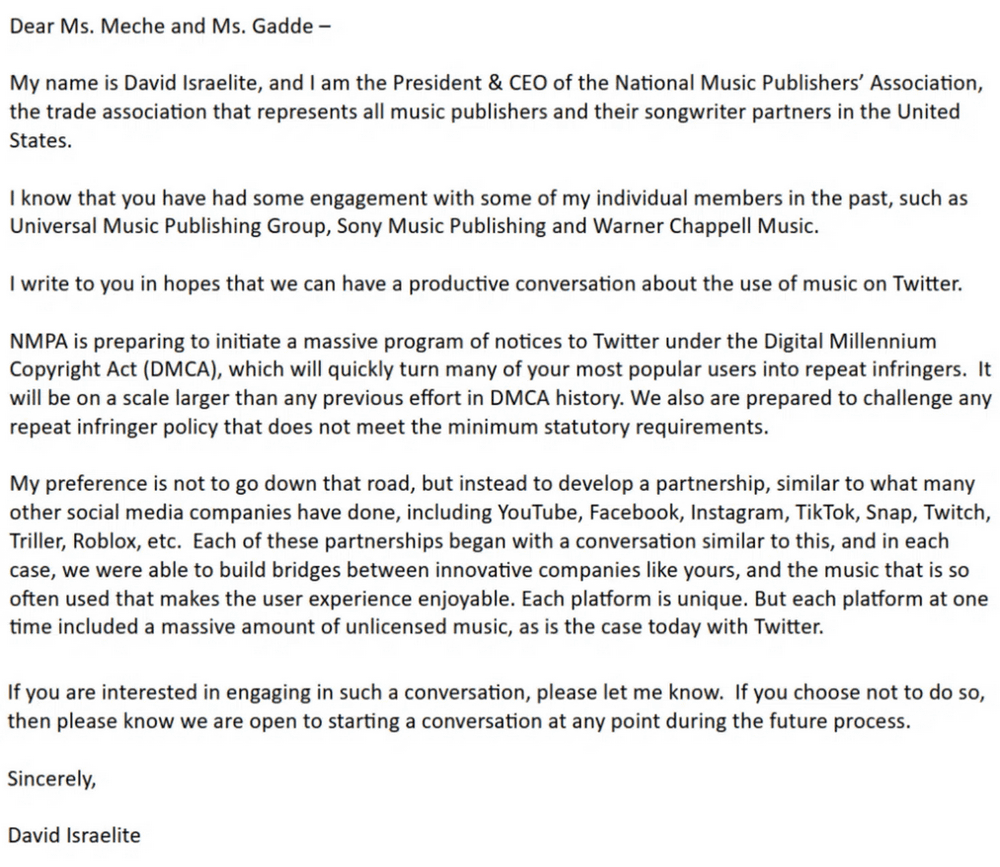
On April 2, 2026, the music company filed a motion to dismiss the lawsuit in the U.S. District Court for the Northern District of Texas. The motion included 'the full text of emails sent by MPA in 2021,' and the music company argued that 'X's complaint selectively quotes, paraphrases, and misrepresents parts of the emails, and that the entire exchange reveals a more complex situation.'
In the released email, X warned on Twitter at the time that the MPA was preparing a 'large program' of DMCA notices, adding that they 'would rather build a partnership than go down that path.' Finally, they wrote, 'If you are interested in such discussions, please let us know. If not, please understand that we are always ready to start discussions at any time in the future process.' The music companies say that X took only this part out of context and mistakenly believed that they could only negotiate with the entire music company, and that there was no factual basis for this, so they cannot file an antitrust lawsuit.
Furthermore, X has filed a request for dismissal of a lawsuit that has been ongoing since the 2024 ruling that held X responsible for intentionally turning a blind eye to copyright infringing users, following the US Supreme Court's March 2026 ruling that an ISP cannot be held liable for aiding and abetting copyright infringement simply because it continued to provide services to subscribers suspected of copyright infringement.
Following the Supreme Court ruling against an ISP that 'simply providing a service does not constitute aiding and abetting copyright infringement,' X has also applied to the court to dismiss the lawsuit - GIGAZINE

The music company argues that X's antitrust lawsuit was a 'bargaining tactic in copyright infringement litigation,' similar to the request for dismissal following the Supreme Court ruling against the ISP. The petition states that 'the lack of factual evidence to support the claim of antitrust violation is because X's motivation for filing the lawsuit was not due to a violation, but rather to 'retaliation and strengthen negotiating power' against the copyright lawsuit filed against X by the music company.'
In summary, X sued the music company on eight grounds, but the music company is requesting that all eight grounds be dismissed, as they are all unfounded.
Related Posts:






in Web Service, Posted by log1e_dh