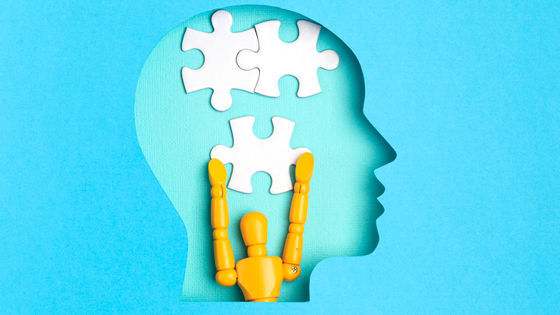
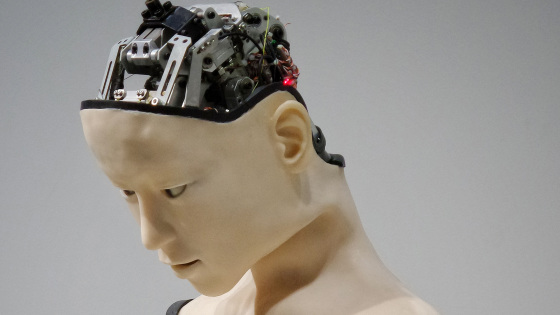
A study suggests that contemplating God may increase the acceptance of AI in decision-making.

As AI is increasingly integrated into everything from entertainment like movies and games to the medical field, the extent to which people are willing to accept AI varies greatly. Researchers at
Thinking about God increases acceptance of artificial intelligence in decision-making
https://pmc.ncbi.nlm.nih.gov/articles/PMC10438833/
The study involved eight experiments with a total of 2,462 participants to examine the psychological factors influencing the acceptance of AI in decision-making. In each of the eight experiments, participants were asked to survey their attitudes towards AI after manipulating 'the significance of God,' which is their perception of God.
In Experiment 1, we compared a group that had previously described God or religious concepts with a group that simply described the events of the day, and examined their relative preference for relying on human recommendations versus AI recommendations. It was confirmed that there was no significant difference in the strength of the participants' faith. The results showed that the group whose prominence of God increased after being asked to describe God reported spending more time thinking about God during the experiment and tended to accept AI recommendations more readily than human recommendations.

In Experiment 2, we investigated the possibility that 'the prominentness of God increases the willingness to rely on AI when performing tasks' through four sub-experiments (2a-2d). In Experiments 2a and 2b, we compared a group that was made aware of God by having them describe God with a group that was not, and each group answered whether they would listen to advice from an AI or a human regarding a hypothetical investment and music they wanted to listen to. Experiments 2c and 2d were pre-registered studies conducted in Turkey, where the prominentness of God was manipulated by the presence or absence of environmental cues, such as recruiting participants in a location where a mosque was visible or making them aware of God through music played in a waiting room. After that, participants decided whether they would listen to advice from a human nutritionist or an AI specializing in nutrition through a questionnaire about food. In all experiments, it was reported that the group that was made aware of God was more than 10% more likely to accept AI than the group that was not.
Experiment 3 also applied the underlying psychological process hypothesis from a pre-registered experiment investigating the role of divine spleness in medical decision-making. Here too, we found that divine spleness strongly influenced judgment, with 33.5% of participants preferring the AI's recommendation under conditions of low divine spleness, and 44.3% of participants preferring the AI's recommendation under conditions of high divine spleness.
In Experiment 4, participants were divided into three groups and received pre-interventions: 'low divine significance,' 'high divine significance emphasizing God's perfection,' and 'high divine significance emphasizing human perfection.' They then asked whether they would prefer a cryptocurrency selected by a human trader or one selected by an AI algorithm. The results showed that the latter two groups with high divine significance were 14% more likely to prioritize the AI, indicating that emphasizing God's perfection increased acceptance of AI. The researchers hypothesize that the increased acceptance of AI due to divine significance stems from the perception of humanity's imperfections, leading to a greater reliance on AI.

Another theory regarding why a higher perceived divine presence makes it easier to choose AI is that the AI's 'black box operation, a system whose mechanisms are difficult to understand' is perceived as similar to divine decision-making. In Experiment 5, researchers experimented with how choices changed when participants were pre-trained to perceive AI as either a black box or an explainable system. The results showed that whether or not the AI's mechanisms were unknown had little effect on the choice, and the group whose perceived divine presence was enhanced consistently showed a stronger tendency to choose AI advice over human advice, regardless of the AI's explanation.
The researchers explained that throughout all the experiments, 'the effect of God's prominentness on AI acceptance was not limited to specific fields, but was consistently observed in various contexts. It also suggests that it was not significantly affected by participants' religious beliefs, experimental methods, or nationality. Thinking about God makes one feel relatively small and more aware of human imperfection, thus reducing the need to rely on humans in decision-making and making people more receptive to AI-based recommendations.' Furthermore, since acceptance levels changed even without altering the accuracy or capabilities of the AI in the experiments, it is thought that whether people accept AI is greatly influenced not only by its technical superiority but also by psychological factors.
The paper concludes by stating the significance of the research: 'The leap forward in machine 'intelligence' has the potential to change, for better or worse, how people make decisions in almost every aspect of their lives, from choosing a romantic partner to selecting medical treatments. Understanding the 'relationship between man and God,' which is the foundation of religion, one of the world's oldest institutions, may help us understand ourselves more deeply in order to understand why people embrace the world's latest technologies.'
Related Posts: