The AI models 'GPT-5.1' and 'Opus 4.5,' released in November 2025, represent a turning point in coding and will forever change software engineering.
Simon Willison, a software engineer known for developing the Python web framework 'Django,' discussed in a podcast how AI is changing the development environment.
Highlights from my conversation about agentic engineering on Lenny's Podcast
An AI state of the union: We've passed the inflection point & dark factories are coming - YouTube
Wilson highly praises GPT-5.1 and Claude Opus 4.5, which will be released in November 2025, stating, 'Previously, they would roughly output code, but you had to monitor it very carefully. With the arrival of these two models in November 2025, they now always work as instructed.' He says, 'It's a huge difference that when you instruct a coding agent, it generates a proper app instead of a buggy, non-functional piece of garbage,' and Wilson calls November 2025 a 'turning point.'
Using the power of AI, Mr. Wilson is now able to write 10,000 lines of code per day. Not all of the code works perfectly, but unlike other tasks that AI can handle, the advantage of code is that you can clearly see whether it 'works' or 'doesn't work' when you run it.
For example, if you were to have an AI write an essay or prepare a lawsuit, it would be far more difficult to determine whether the AI's work was truly good or bad. In fact, lawyers often fail to detect when AI lies, and there are as many as 1,228 cases registered in
Due to the differences described above, software engineers are at the forefront of leveraging AI. Before the turning point, AI had to generate code, and humans had to execute and test it. After the turning point, agents can now take over the execution and testing tasks.
Wilson said, 'Previously, we would create specifications and hand them over to the engineering team, and if we were lucky, it would often take three weeks to get the implementation back, but now it can come back in three hours.' He added, 'The next bottleneck is product testing.'
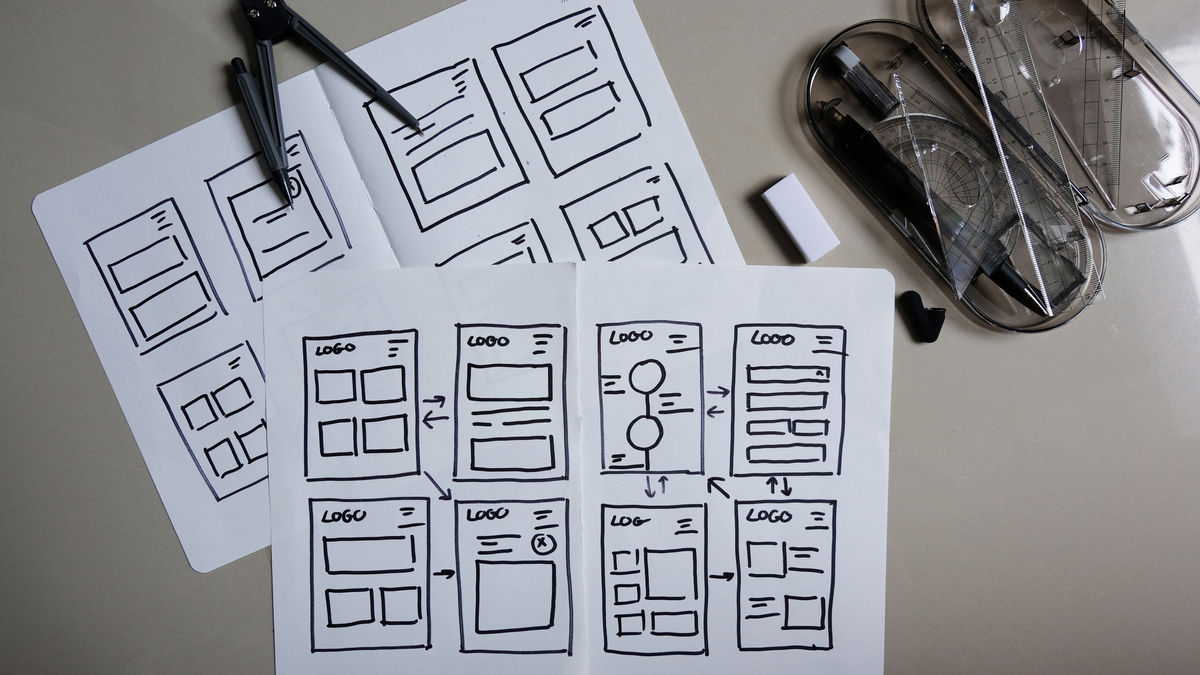
In product development, the first idea is almost always wrong. That's why testing ideas is so important. With the power of AI, it's now possible to quickly create practical prototypes, so Mr. Wilson says he often creates three different ways of working as prototypes for each feature he wants to design.
UI prototyping, in particular, is an area where AI excels, and both ChatGPT and Claude build highly compelling UIs by following human instructions. After creating three prototypes, Wilson said he 'couldn't confidently say which one was best' when asked how to choose one, adding that 'traditional usability testing would be helpful.'
Wilson also stated that while using coding agents allows for efficient work, it is extremely tiring. He said that running four agents in parallel and having them work on four different problems leaves him exhausted by around 11 a.m.
On the other hand, Wilson said that the old adage, 'You can't interrupt a programmer's work,' is now a thing of the past. In the past, coding required building a model in your head and then writing the code, and several hours of uninterrupted work were needed to avoid losing that mental model. With AI agents, however, once you've instructed the AI agent on what to do next, it's okay to interrupt your work.
After sharing his impressions of using these AI tools for his daily tasks, Mr. Wilson addressed the opinion that 'AI tools must be easy, they're just chatbots,' stating, 'One of the biggest misconceptions about AI is that it's easy to use AI tools effectively. In reality, it requires a lot of practice, and you have to try many times even if it doesn't work.'
Given this situation, Wilson stated his view that 'those in the middle of their careers are in the most difficult position.' Experienced engineers can amplify their skills with AI, and new engineers can be assisted by AI. Some engineers in the middle of their careers are likely to fear that their skills will decline as AI takes over their work.
Wilson stated, 'One quality that humans possess but agents lack is 'proactiveness',' and encouraged people to 'invest in your own organizational strength, leverage new technologies such as AI to improve the quality of your work, and take on new challenges.'
Related Posts: