President Trump announces 'Project Vault' to reduce rare earth reliance on China
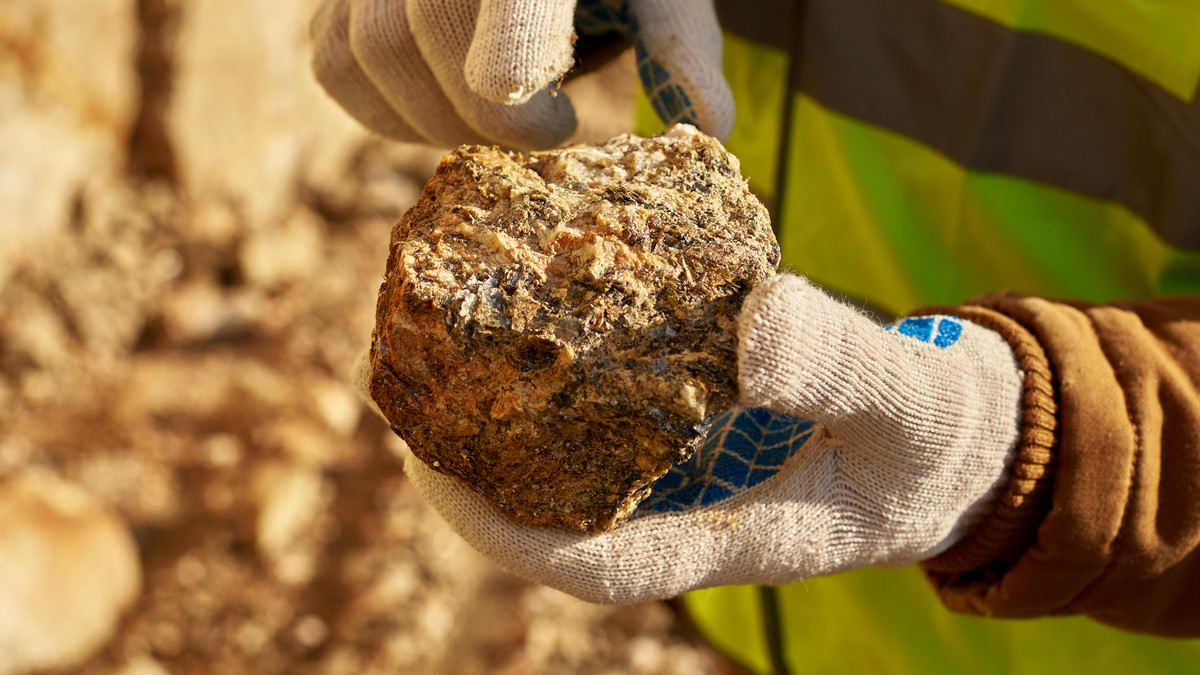
US President Donald Trump has announced a plan called ' Project Vault ' to reduce the US's dependence on China for rare earths. The government-affiliated Export-Import Bank of Japan will provide a $10 billion loan, and the private sector will contribute $1.67 billion to build a stockpile of strategically important rare earths.
Trump Unveils $12 Billion Mineral Reserve With Record Ex-Im Loan - Bloomberg
Rare earth miners jump as Trump is eyeing mineral stockpile
https://www.cnbc.com/2026/02/02/rare-earth-miners-jump-as-trump-is-reportedly-eyeing-mineral-stockpile-.html
What is the US strategic minerals stockpile? | Business and Economy News | Al Jazeera
https://www.aljazeera.com/economy/2026/2/2/what-is-the-us-strategic-minerals-stockpile
In a speech at the White House, President Trump said Project Vault was designed to 'ensure that American businesses and workers are never harmed by any rare earth shortages.'
Rare earths are essential for cutting-edge technologies such as semiconductor chips, electric vehicles, and defense systems, but because China is the world's largest supplier, they have often been used as a bargaining chip. After exports were temporarily halted due to Trump's tariffs, exports resumed, but strict export restrictions have been imposed again since 2025.
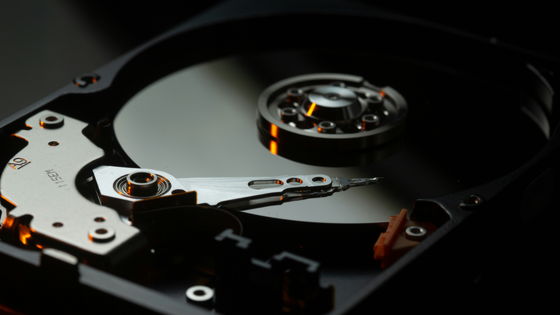
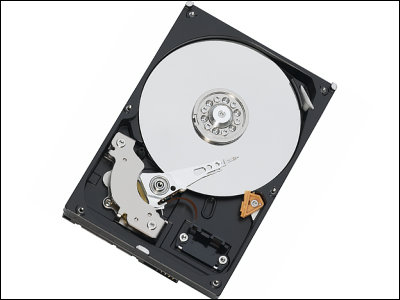
China expands rare earth export restrictions, tightening restrictions on materials such as hard drives for national security reasons, posing a risk to PC parts supplies - GIGAZINE
Project Vault is an effort to reduce Japan's dependence on China for rare earths and build a system that can withstand China's export restrictions. More than a dozen companies, including Google's parent company Alphabet, major automaker GM, aircraft manufacturer Boeing, and Corning, known for its smartphone glass, have already announced their participation in the project.
In addition to promoting domestic rare earth production and processing in the United States, the United States is also working to procure rare earths through alternative routes, and has reached agreements with Japan, Australia, and Malaysia.
Babak Hafezi, a professor of international economics at American University, told Middle Eastern news agency Al Jazeera, 'Without domestic control and supply capacity in both rare earth mining and production, we have no choice but to rely on China. China mines 60% of the world's rare earths and produces 90% of them, creating a global bottleneck. China can use this bottleneck to influence U.S. foreign policy by restricting supply chains. Ensuring a free and open market for U.S. demand is crucial to eliminating any dependency.' He praised Project Vault.
Japan is also making progress in developing domestic rare earth resources. Experiments are underway on a system for mining mud containing rare earths from the seabed at Minamitorishima, and on February 1, 2026, the deep-sea drilling vessel Chikyu successfully collected mud containing rare earths.
Status of rare earth mud mining system connection test in Minamitorishima EEZ (breaking news) | JAMSTEC | Japan Agency for Marine-Earth Science and Technology | JAMSTEC
https://www.jamstec.go.jp/j/about/press_release/20260202/
Developing Minamitorishima's rare earth mud and manganese nodules to open up Japan's future | University of Tokyo Foundation
https://utf.u-tokyo.ac.jp/project/pjt124
Related Posts:



in Note, Posted by logc_nt