A Chinese hospital used Alibaba's AI tool 'PANDA' to re-examine 180,000 CT scans and found approximately 24 cases of pancreatic cancer that doctors had overlooked.
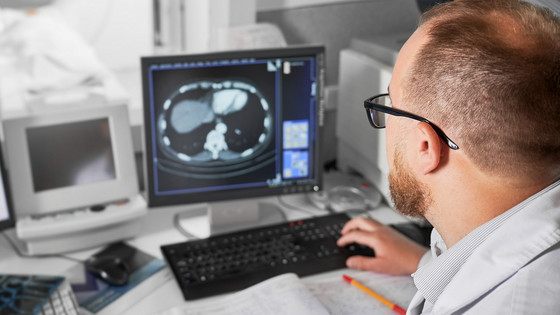
In China, efforts are underway to identify deadly tumors that doctors might miss using an AI tool called PANDA (PANcreatic cancer Detection with Artificial intelligence), developed by Alibaba's research and development arm, Damo Academy. The tool is trained to detect pancreatic cancer from standard CT scans without contrast, and has shown promising results for a disease that is extremely difficult to detect early and has a five-year survival rate of around 10%.
In China, AI Finds Pancreatic Cancer That Doctors May Miss - The New York Times
https://www.nytimes.com/2026/01/02/world/asia/china-ai-cancer-pancreatic.html
Hospitals Are a Proving Ground for What AI Can Do, and What It Can't - WSJ
https://www.wsj.com/tech/ai/hospitals-are-a-proving-ground-for-what-ai-can-do-and-what-it-cant-60e4020c
PANDA's greatest feature is its ability to detect pancreatic cancer from non-contrast CT scans, which are typically difficult to identify. During the development process, the algorithm mapped lesions identified in contrast CT scans of over 2,000 patients onto non-contrast CT scans of the same patients, allowing it to learn to read signs of cancer even from images with low detail.
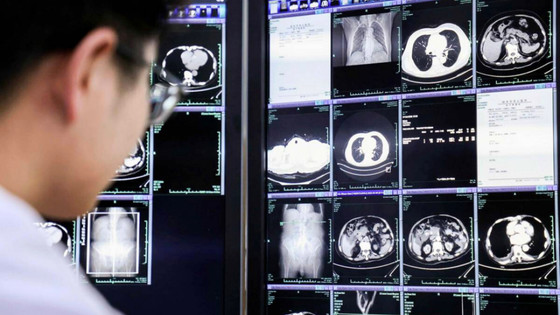
PANDA has been in operation at Ningbo University People's Hospital as part of clinical trials since November 2024. Non-contrast CT scans are often included in annual medical checkups in China, and at Ningbo University People's Hospital, non-contrast CT scans are particularly popular because they cost about $25 (about 3,750 yen) per scan even without insurance.
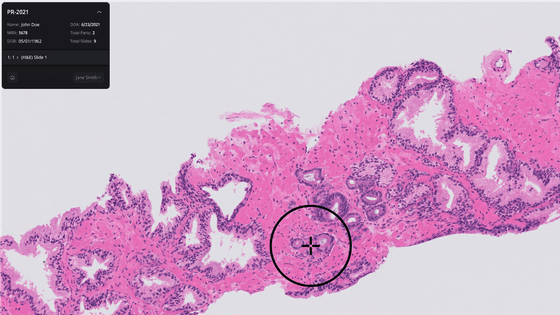
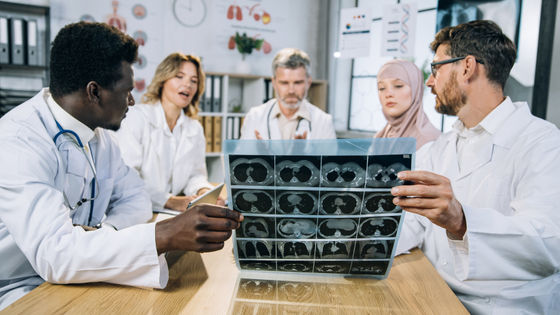
PANDA has analyzed over 180,000 images to date, and has successfully detected approximately 24 cancers, including 14 early-stage cases, even in images originally taken for a different purpose where abnormalities had been overlooked. For example, a 57-year-old former bricklayer had a non-contrast CT scan he underwent for a regular diabetes checkup, and after PANDA analysis, a tumor was discovered at an asymptomatic stage, which was successfully removed by surgery.
However, there are some aspects that are beyond the judgment of specialists, and of the approximately 1,400 alerts issued by hospitals, only about 300 actually required additional testing. Other issues that have been pointed out include hardware limitations, such as hospitals' outdated computers freezing up when processing large amounts of data, and social issues, such as patients refusing detailed testing due to distrust of cancer being discovered when the patient is asymptomatic.
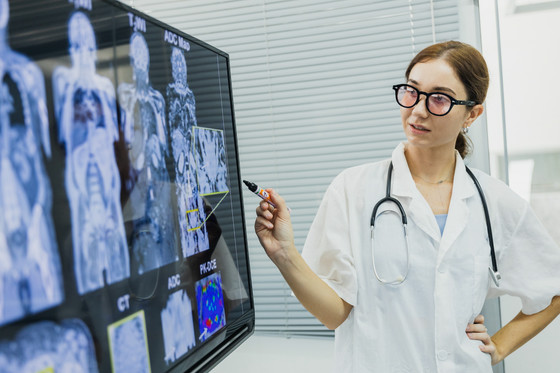
PANDA has also received 'breakthrough device' designation from the U.S. Food and Drug Administration (FDA), and its review process for market launch is being accelerated. Similar AI adoption is also accelerating in the U.S. medical field, with 27% of healthcare systems using commercial AI licenses, three times the number of systems used in non-medical settings.
For example, at one hospital, generative AI was used to create drafts of radiology interpretations, reducing the time it took doctors to review the reports from 75 seconds to 45 seconds, helping to efficiently manage the increasing number of imaging diagnostics. In addition, improving the efficiency of administrative work is also an important issue for utilizing AI, and one AI tool can even automatically create appeal documents for insurance claim denials.
Mount Sinai Hospital in New York has implemented AI tools to improve appeal approval rates by 3%, resulting in an estimated $12 million in additional revenue annually. Kaiser Permanente also reports that its system, which analyzes patients' vital signs every hour to predict risk, is saving more than 500 lives annually.
However, there have been cases where ChatGPT cited non-existent medical papers, and Mount Sinai Hospital's patient message response tool suggested that patients complaining of headaches might have brain tumors, raising anxiety. It's important to note, however, that AI is still not a panacea. While medical institutions acknowledge the convenience of AI, they emphasize the importance of careful operation and human oversight due to concerns about declining skills and inaccurate information.
Related Posts:


in AI, Posted by log1i_yk