Anthropic releases results of experiment comparing speed of 'robot dog development' with and without AI
To test the real-world utility of its AI model,
Project Fetch: Can Claude train a robot dog? \ Anthropic
https://www.anthropic.com/research/project-fetch-robot-dog
Who let the robot dogs out? - YouTube
There are cases where the development of AI is greatly accelerating real-world experiments and research, such as `` AlphaFold, '' an AI developed by Google DeepMind that predicts the three-dimensional structure of proteins from amino acid sequence information, accelerating research in important fields, and AI becoming a powerful tool in the field of physics.
AI has become a powerful tool in the field of physics, proving useful for 'devising new experimental devices' and 'finding patterns in data' - GIGAZINE

While AI excels at software code generation and information processing, controlling real-world objects like robots is a more difficult task due to the physical elements involved. Anthropic sees this as a step toward bridging the digital-physical divide. To explore how AI models might influence the physical world in the future, Anthropic undertook the challenge of using a language model to execute actions using a robot.
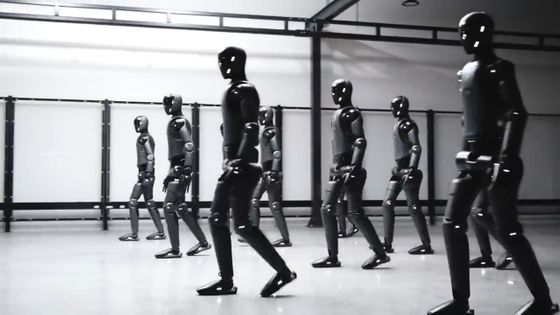
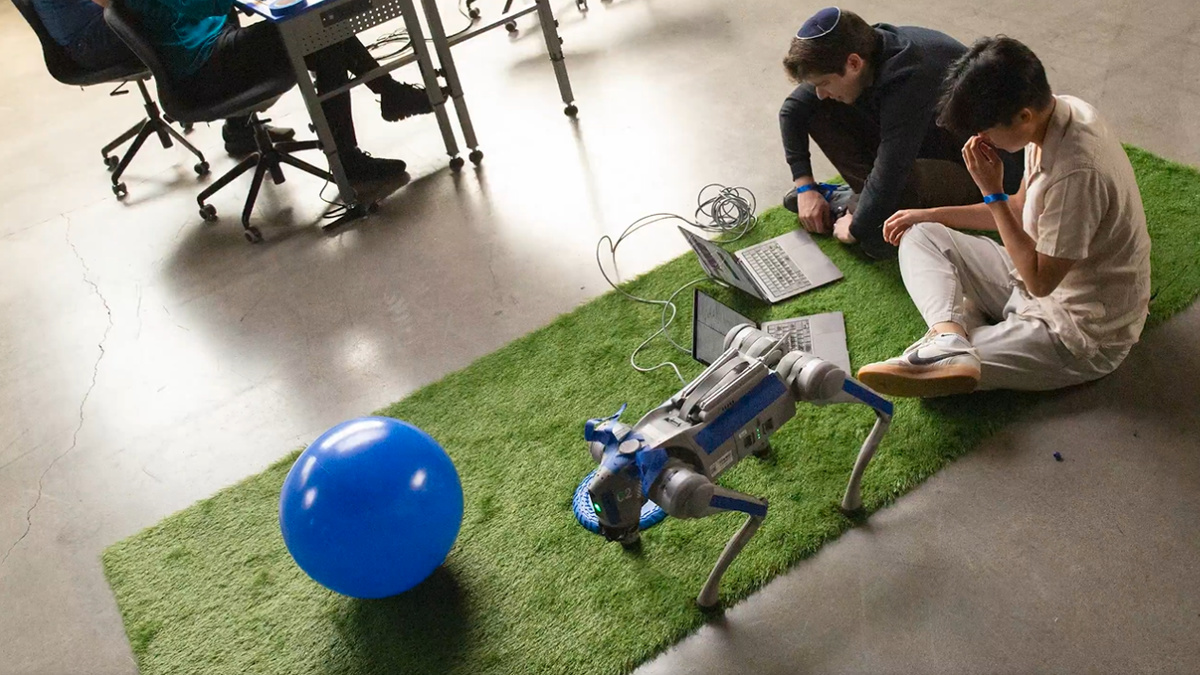
In the experiment, eight non-robot researchers and engineers were randomly divided into two teams and given the task of adding a beach ball fetching function to a quadrupedal dog-like robot. The experiment consisted of three stages of tasks: manual control, sensor control, and autonomous control, designed to increase in difficulty. One team had access to Claude for assistance in controlling the robotic dog, while the other team did not have access to Claude.
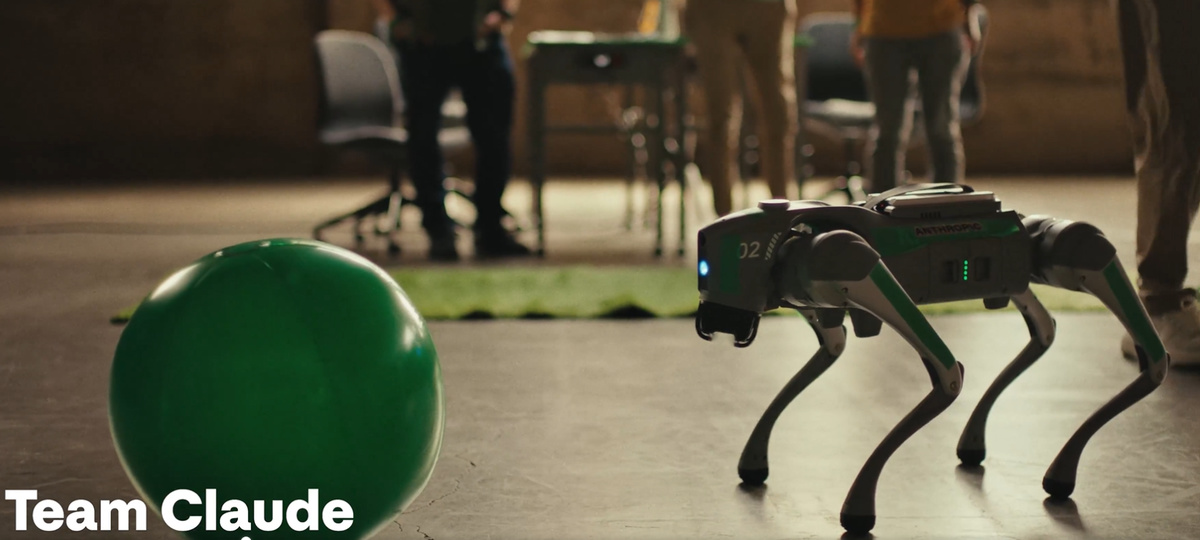
As a result, the team with access to Claude completed the same task in about half the time compared to the team without access to Claude. In particular, the task of 'connecting to the sensors on the robot and sending commands from the computer' was significantly reduced by using Claude.
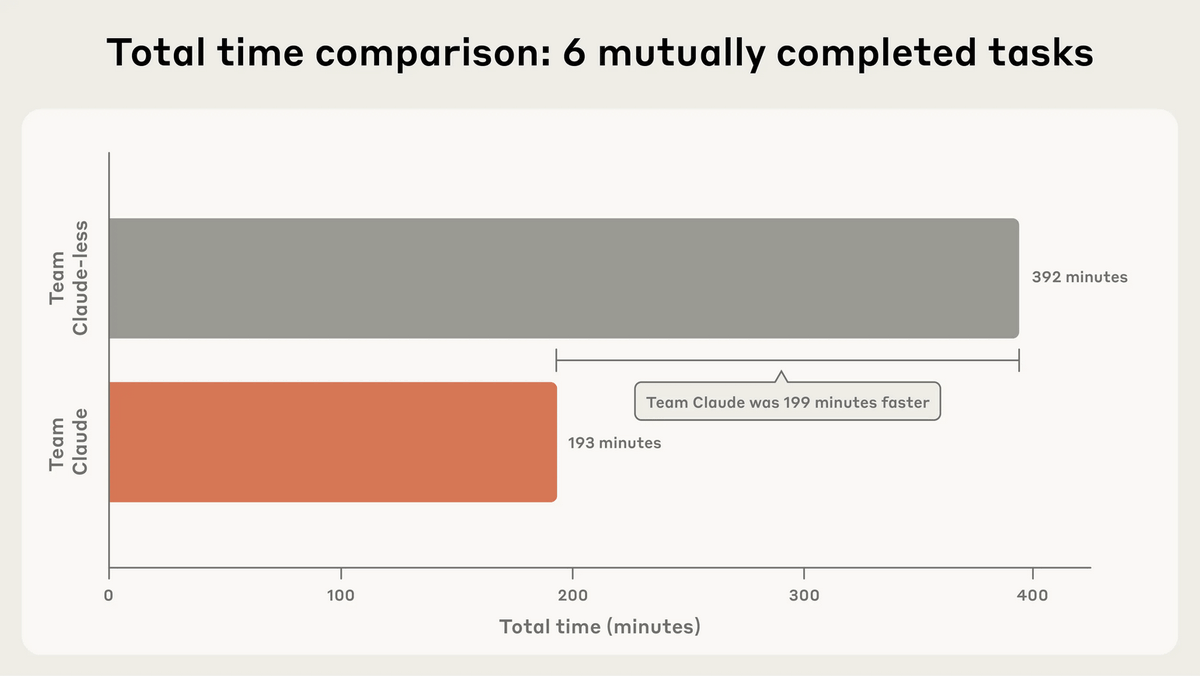
'This suggests that the basic task of connecting to and understanding hardware is becoming surprisingly difficult for people trying to influence the physical world with code. Claude's dominance in this regard is an important metric we should continue to track,' Anthropic said.
On the other hand, in tasks such as writing a program to control a robot dog and figuring out how to identify its location for automatic control, the team without Claude completed the tasks 10 to 20 minutes faster. According to Anthropic, the team using Claude wrote about nine times as much code as the team without Claude, but some of that code got in the way of smoothly completing the task at hand, making it take longer.
As the tasks became more difficult, the team also identified areas that AI systems would likely have to overcome in the real world. For example, to detect beach balls, the team using Claude trained an algorithm to recognize and identify the color of the ball, 'green.' However, when the ball was placed on green artificial turf, the robot malfunctioned. This highlights the challenge of how robots and AI systems can take suboptimal approaches depending on the level of goal setting humans provide.
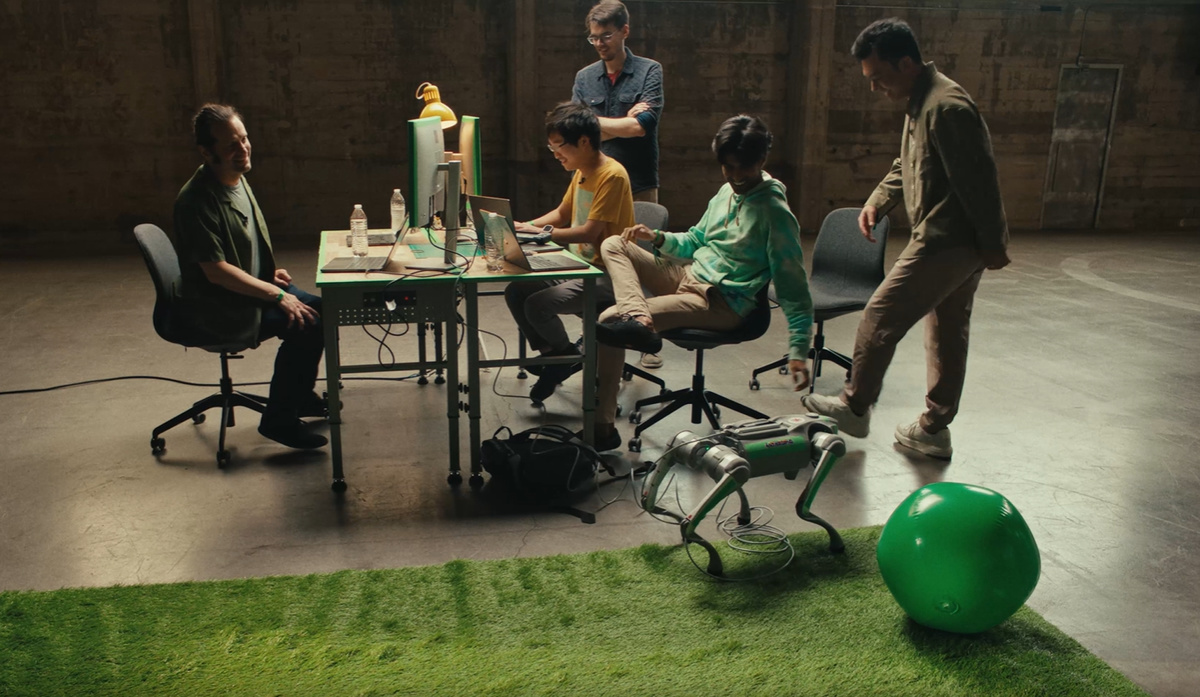
In addition, the team without Claude reportedly expressed more negative emotions and confusion while struggling with the task, while the team using Claude progressed more smoothly.
The number of participants in this experiment was small, and the experiment time was limited to one day, so the experimental environment was limited. Furthermore, the team using Claude were people who used Claude on a daily basis, so the results may differ from those obtained when beginners receive AI support. Nevertheless, Anthropic says this is an important step in confirming that 'AI can operate in the real world through robots.'
Related Posts: