Debate in South Korea over the introduction of digital textbooks on AI-enabled tablets

South Korea has announced that it will introduce tablet-based digital textbooks equipped with AI from 2025, sparking controversy.
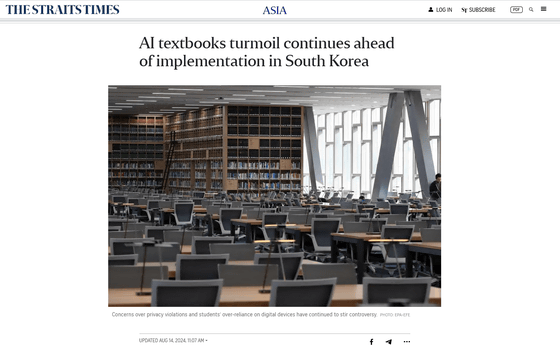
AI textbooks turmoil continues ahead of implementation in South Korea | The Straits Times
South Korea's plan for AI textbooks hit by backlash from parents
https://www.ft.com/content/1f5c5377-5e85-4174-a54f-adc8f19fa5cb
South Korea's AI textbook program faces skepticism from parents | TechCrunch
https://techcrunch.com/2024/08/18/south-koreas-ai-textbook-program-faces-skepticism-from-parents/
Digital textbooks are expected to be available for all subjects except music, art, physical education, and ethics by 2028. They will be customizable to students' learning speed, and teachers will be able to check their students' progress via a dashboard.
Lee Ju-ho, Deputy Prime Minister and Minister of Education, held a press conference and said, 'Digital textbooks do more than just incorporate digital devices into lessons; they change lessons themselves and help bring about change. We all agree that lessons need to move from a one-way, memorization-centered environment to one where students take the initiative in their own learning. 2025 is a crucial year for that change, and we need to utilize AI textbooks to help teachers transform their lessons.'
The promotion of digital textbooks has sometimes been referred to as the 'Lee Ju-ho policy,' and there are concerns that it may be abolished if the administration changes. However, Lee emphasized that 'improving education using digital technology is something that the entire government is promoting,' and explained, 'Even in discussions on the 2022 curriculum revision under the previous administration, emphasis was placed on digital literacy and the use of educational technology, and efforts to introduce AI into public education were on the agenda.'

However, parents with children attending school have sent petitions saying, 'We want them to be able to concentrate on lessons, not introduce new technology.' Some have expressed concern, saying, 'We are worried that increased use of digital devices could have a negative impact on brain development. We think children are already using smartphones and tablets too much.'
If all goes according to plan, digital textbooks will first be introduced to third, fourth, and seventh graders, followed by fifth, sixth, and eighth graders from 2026 and ninth graders from 2027. During the transition period, digital and paper textbooks will be used side by side to avoid confusion for both teachers and students.
Related Posts: