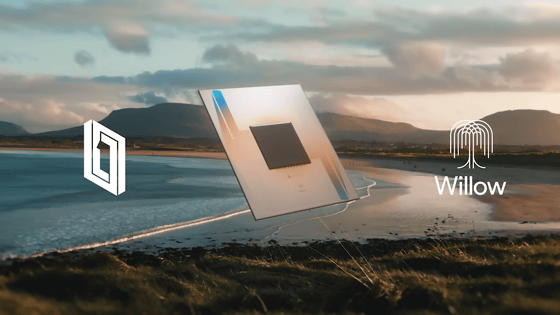
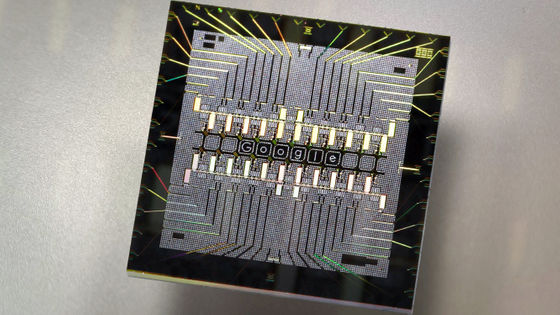
A British university has gained early access to Google's quantum chip 'Willow,' which can compute 13,000 times faster than a supercomputer.
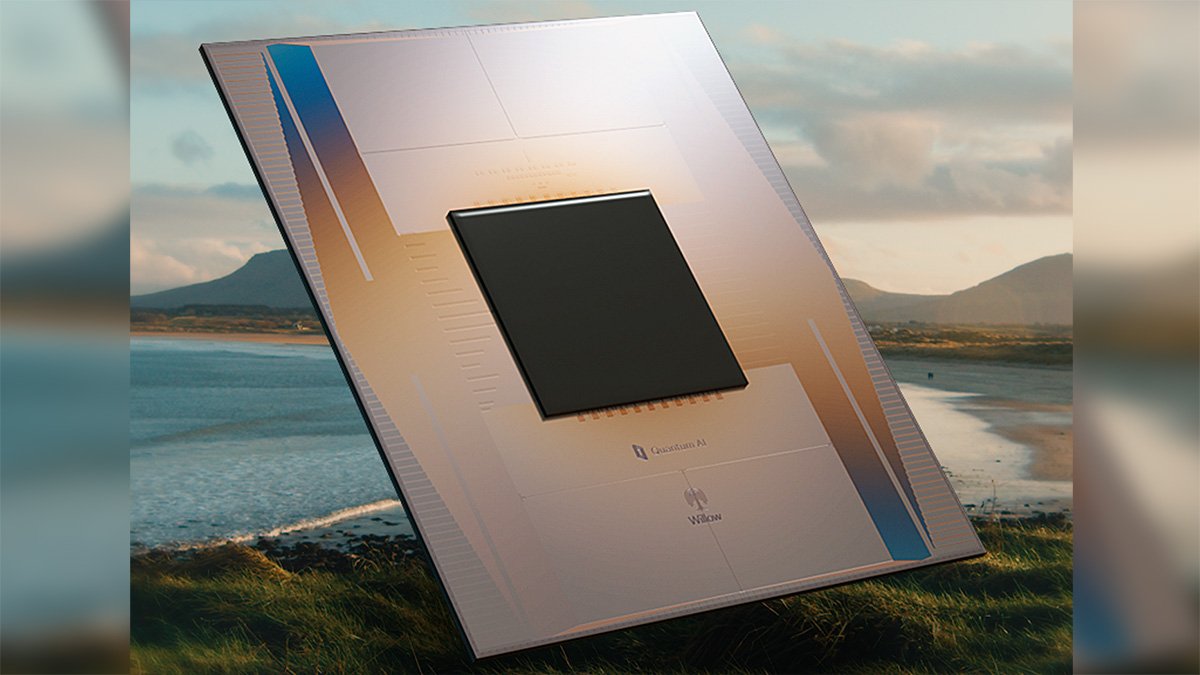
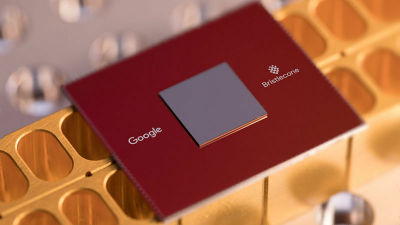
Google Quantum AI Lab, Google's quantum computing research division, is developing Willow , a next-generation quantum chip capable of calculations significantly faster than conventional computers. A research team at King's College London in the UK has been granted early access to Willow.
King's partners with Google Quantum AI and National Quantum Computing Center to explore quantum fundamentals | King's College London
https://www.kcl.ac.uk/news/kings-partners-with-google-quantum-ai-and-national-quantum-computing-centre-to-explore-quantum-fundamentals
Press-release_NQCC-and-Google-Quantum-AI-award-Kings-College-London_28May2026_Final.pdf
(PDF file) https://www.nqcc.ac.uk/wp-content/uploads/2026/05/Press-release_NQCC-and-Google-Quantum-AI-award-Kings-College-London_28May2026_Final.pdf
King's College London Awarded Access to Google's Willow Processor Through NQCC Initiative
https://thequantuminsider.com/2026/05/28/kings-college-london-awarded-access-to-googles-willow-processor-through-nqcc-initiative/
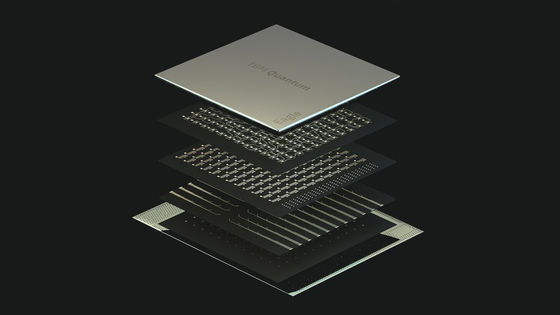
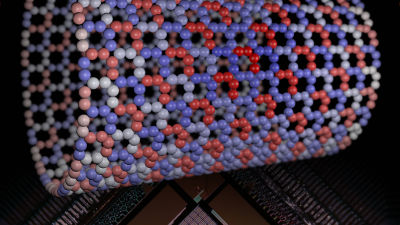
While conventional computers perform calculations using binary numbers ('0' or '1'), quantum computers use qubits that can simultaneously represent both '0' and '1,' enabling calculations at speeds incomparably faster than classical computers. However, because qubits are susceptible to errors from external influences, quantum error correction is crucial to correct these errors.
In 2024, Google Quantum AI Lab, Google's quantum computing research division , announced Willow, a new quantum chip that enables exponential improvements in quantum error correction and ultrafast computation. Willow is a quantum chip equipped with 105 qubits and has been demonstrated to be 13,000 times faster than the world's fastest supercomputer by 2025.
Google successfully performs calculations 13,000 times faster than supercomputers using a quantum computer, demonstrating the first verifiable results that quantum computers can surpass conventional computers - GIGAZINE
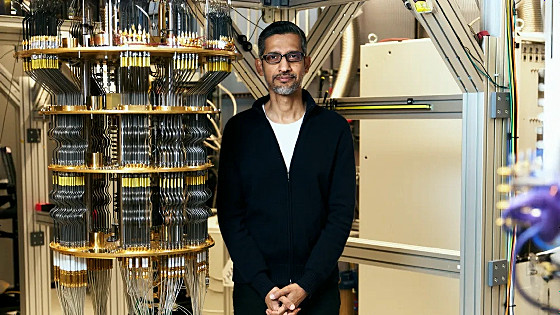
In December 2025, Google Quantum AI Lab, in collaboration with the UK's National Centre for Quantum Computing (NQCC) , launched a program to provide early access to Willow. This early access program solicited experimental plans from various research teams to be run on Willow, and the content of these plans was reviewed to determine whether or not early access would be granted. The deadline for submitting experimental plans was May 15, 2026, and the deadline for notification of the selection results was July 1 of the same year.
Then, on May 26, it was announced that a team led by Dr. Eleanor Crane of the Department of Physics at King's College London had received early access to Willow. Crane and her team will use Willow to model and study quantum analogs of neurons in the brain, opening up new avenues for collaboration between computational neuroscience and quantum correspondence modeling. In the future, this research is expected to provide a foundation for the development of better solar cells and more efficient power grid systems, as well as for the discovery of new treatments for diseases.
In a statement, Crane commented, 'We are pleased to be working with Google again. This time, the project will push the limits of how far quantum computers can surpass the capabilities of conventional computers. There are currently very few pieces of hardware in the world that can run such complex simulations, so we are deeply grateful to NQCC and Google for giving us this opportunity.'
Charina Chow, COO of Google Quantum AI, said, 'We believe quantum computing has immeasurable potential as a new tool for scientists to advance in various fields where classical computing faces fundamental limitations. King's College London has made an exciting research proposal with invaluable support from NQCC, and we would like to accelerate this research by providing our quantum computing resources and expertise.'
Related Posts: