The atomic-level reason why gold does not rust has been revealed.
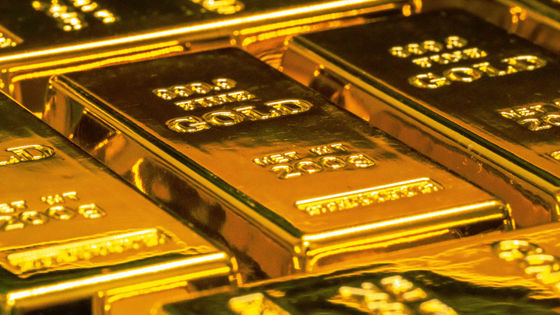
Gold is one of the most valuable metals on Earth, partly because of its beautiful luster. Unlike other metals, gold is extremely resistant to rust, discoloration, and corrosion, allowing it to maintain its brilliant shine for a long time. Recent research has revealed the reason why gold doesn't rust.
Role of Reconstruction in the Inertness of Gold toward Oxygen | Phys. Rev. Lett.

Scientists Found The Atomic Reason That Gold Refuses to Rust : ScienceAlert
https://www.sciencealert.com/scientists-found-the-atomic-reason-that-gold-refuses-to-rust
Computational chemists Santo Biswas and Matthew M. Montemore at Tulane University in New Orleans, Louisiana, have explained why gold does not readily react with substances such as oxygen that cause rust and discoloration.
Research shows that the arrangement of atoms on the surface of gold forms a very dense pattern. As a result, oxygen molecules that would normally interact with gold are not easily broken down, and therefore cannot trigger oxidation reactions.
If this pattern can be loosened slightly, gold will become a very useful catalyst, although it will become dramatically more susceptible to rust.
For example, converting carbon monoxide to carbon dioxide requires 'highly reactive free oxygen atoms that can combine with carbon monoxide to form carbon dioxide.' Therefore, scientists use metal surfaces to activate dioxygen molecules (O2), breaking them down into two highly reactive oxygen atoms.
However, some catalysts used as oxygen-activating catalysts are highly reactive, which can produce undesirable byproducts or cause the catalyst itself to corrode over time due to excessive bonding with oxygen. In contrast, gold is very inert and does not react strongly with other atoms or molecules, making it a highly desirable catalyst.
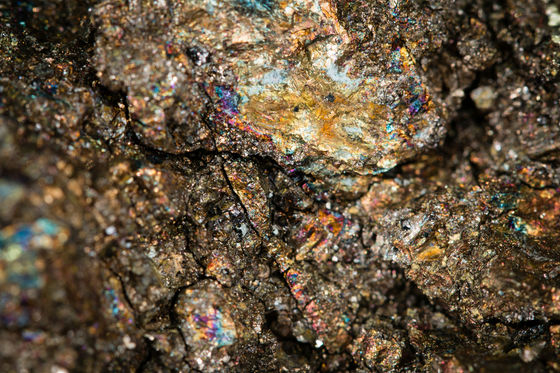
Furthermore, in the 1980s, scientists
Despite gold's strong resistance to oxygen, Biswas and his research team have unraveled the mystery of why its nanoparticles can accelerate oxidation reactions, revealing that 'the way atoms are arranged on the surface of gold' holds the key.
The research team used computer simulations to investigate what happens when oxygen molecules come into contact with a nanoscale gold surface with a different atomic arrangement. They also examined whether changes occur depending on whether or not ' surface reconstruction ' occurs.
The simulation results showed that when surface reconstruction occurred, the interactions unfolded as expected. The oxygen molecule did not split into two oxygen atoms, as observed in real-world situations using gold. On the other hand, when surface reconstruction did not occur, the oxygen molecule split easily.
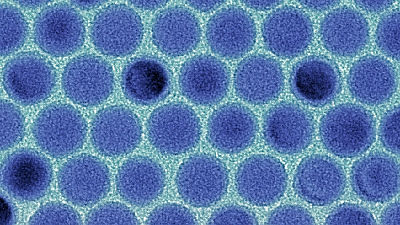
According to the research team, when gold undergoes surface reconstruction, oxygen dissociation becomes billions to trillions of times more difficult than before. Furthermore, regarding why gold nanoparticles effectively activate oxygen, the research team explains that 'gold nanoparticles do not form the densely packed surface reconstruction seen in large gold ingots, which may leave more reactive, square-shaped regions exposed.'

Furthermore, the reason gold undergoes surface reconstruction is not necessarily to prevent oxidation, but simply because it results in the most stable structure for the gold. The corrosion resistance of gold is merely a by-product of that structure.
The research team explained their findings, stating, 'This study provides a new understanding of why gold is highly inert to oxygen and suggests that creating surfaces with square or rectangular structures could significantly improve the catalytic activity of oxidation reactions. Our results offer new strategies for designing gold-based catalysts that promote the activation of oxygen molecules by minimizing surface reconstruction or stabilizing square structures.'
Related Posts:





in Science, Posted by logu_ii