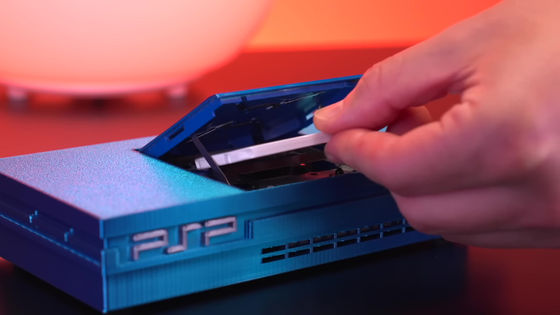
A 'PlayStation 2 Portable' has emerged, featuring a reverse-engineered PS2 packed onto a custom motherboard, developed as an open-source project.
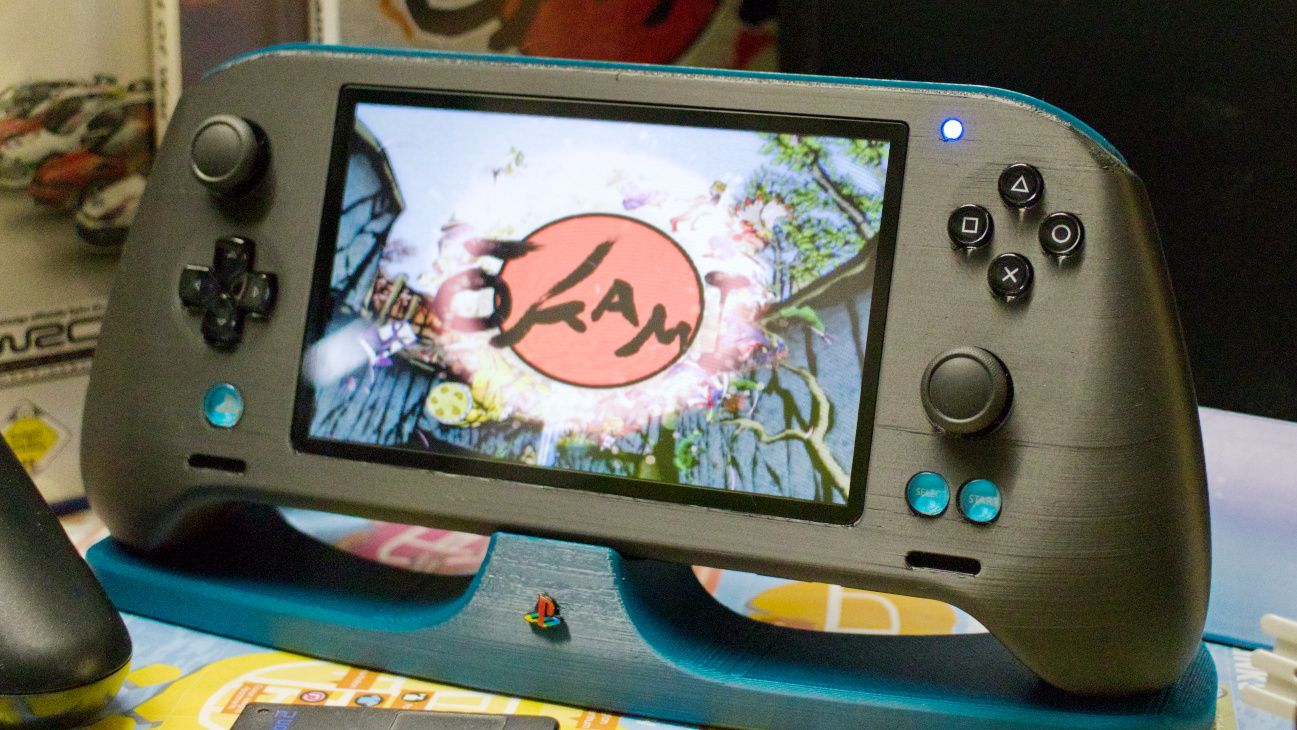
Tschicki, who modifies and analyzes game consoles, has developed a portable game console called ' PlayStation 2 Portable ' equipped with a custom PlayStation 2 (PS2) motherboard designed using reverse engineering. This project is an open-source project released on GitHub and is characterized by its use of a chip derived from an actual PS2 console, allowing it to run PS2 titles natively rather than through emulation.
GitHub - tschicki/PS2-Portable: A custom designed PS2 Portable · GitHub
Enthusiast crams reversed-engineered PS2 into a handheld, designs custom motherboard — bespoke 'PlayStation 2 Portable' pairs modern features with original silicon | Tom's Hardware
https://www.tomshardware.com/video-games/handheld-gaming/enthusiast-crams-reversed-engineered-ps2-into-a-handheld-designs-custom-motherboard-bespoke-playstation-2-portable-pairs-modern-features-with-original-silicon
The PlayStation 2 Portable is a portable PS2 that reuses six ICs removed from a PS2 circuit board and implements them on a newly designed custom motherboard. Tschicki explains that it is 'probably the world's first portable device with a custom, reverse-engineered PS2 mainboard that is not made by Sony.'
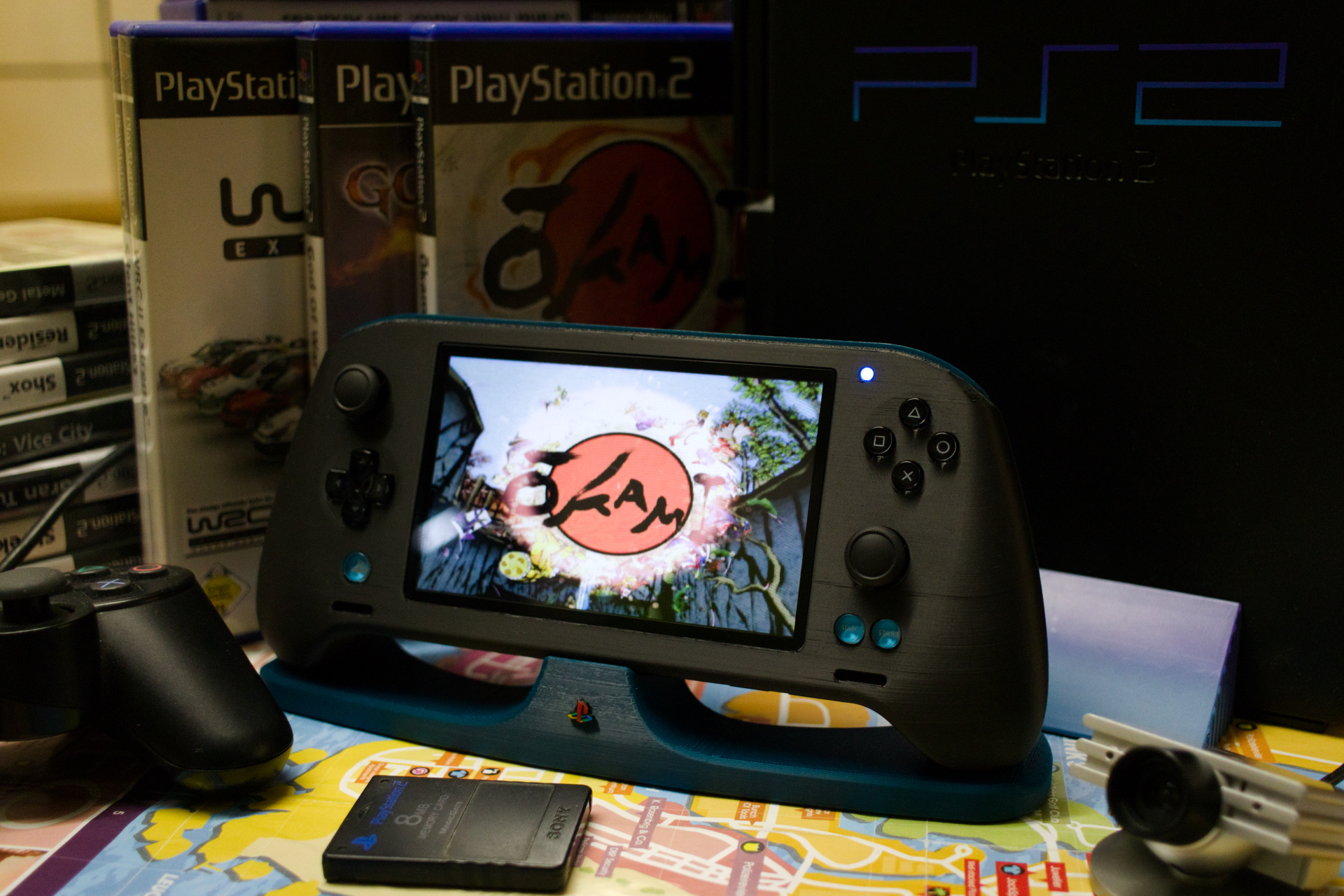
Development of the PlayStation 2 Portable began in 2022, and it was expected to be ready for public release in 2025. As of June 2025, tschicki has posted a video on YouTube showing him playing PS2 titles on the PlayStation 2 Portable.
The device's design is inspired by modern portable gaming PCs like the ROG Ally , and features a 3D-printed shell, a large grip, USB-PD charging, and a dedicated cooling system.
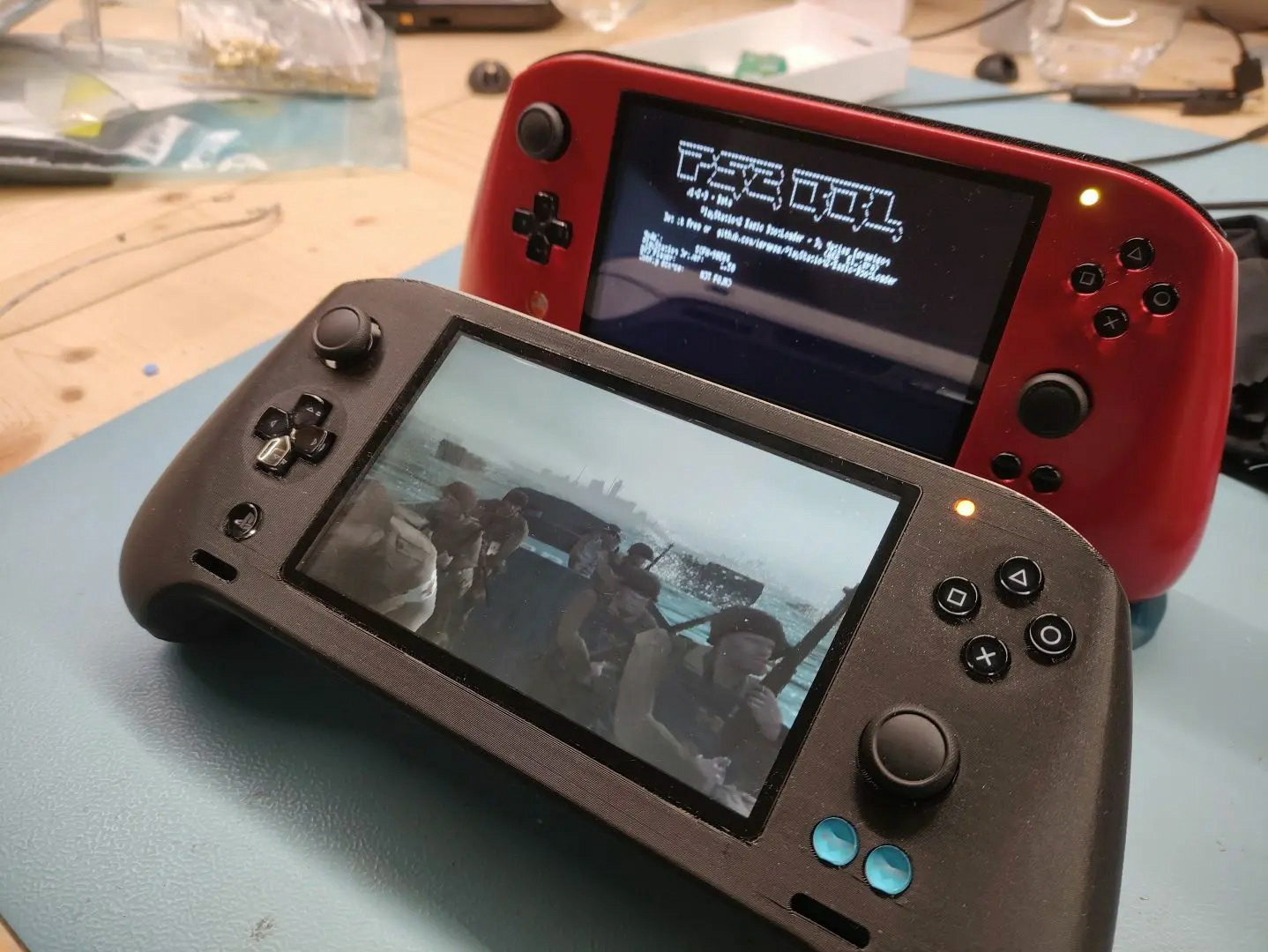
The controls feature an asymmetrical layout, incorporating the face buttons from the PS Vita 2000 and the 3.3V Hall Effect analog sticks from the Nintendo Switch, and a coin-type rumble motor for vibration. The exterior has a double-layered structure to facilitate assembly, disassembly, and shell replacement, and emphasis has been placed on using screw-in inserts for the screws and making it possible to replace the battery without soldering.
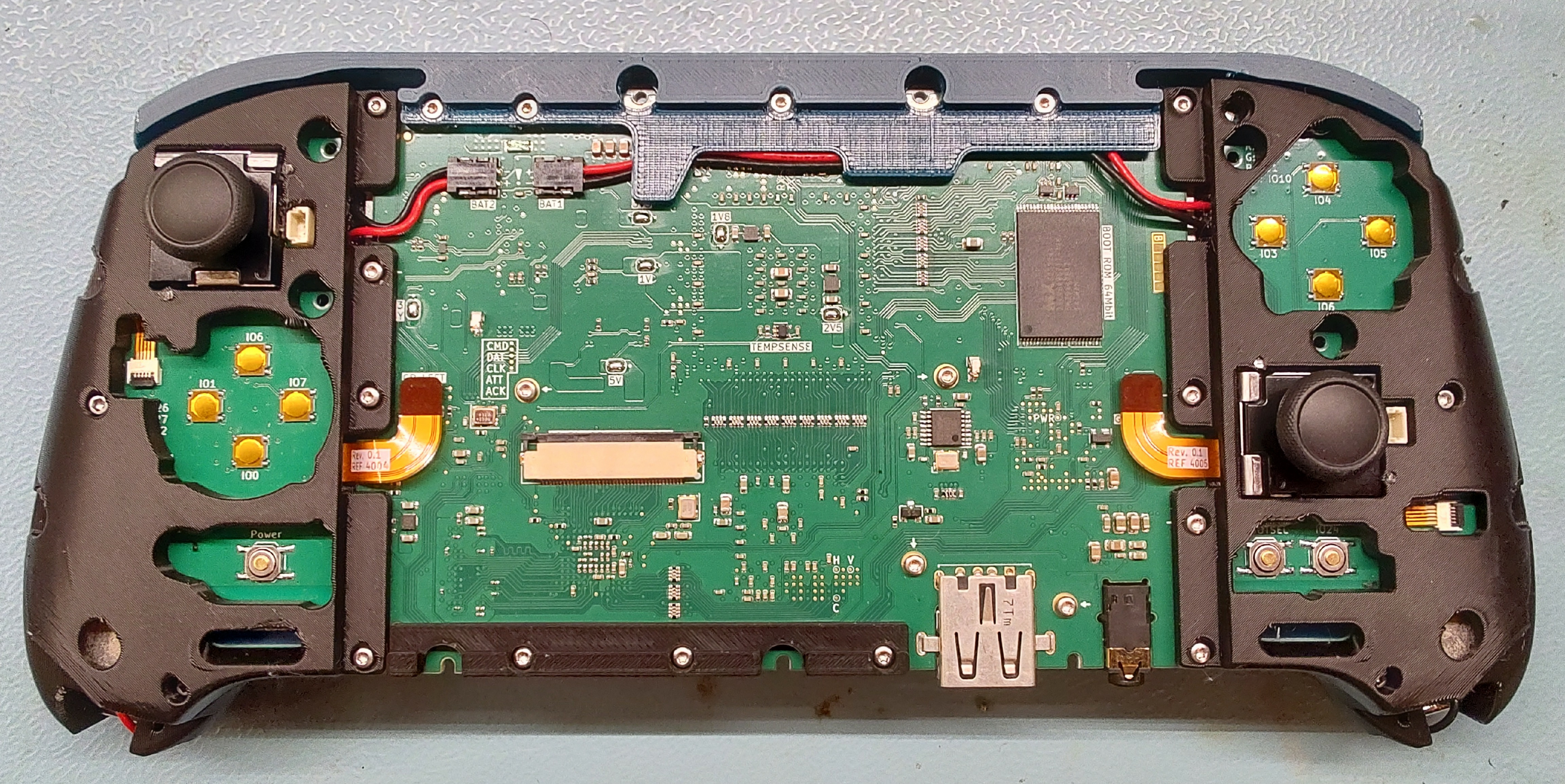
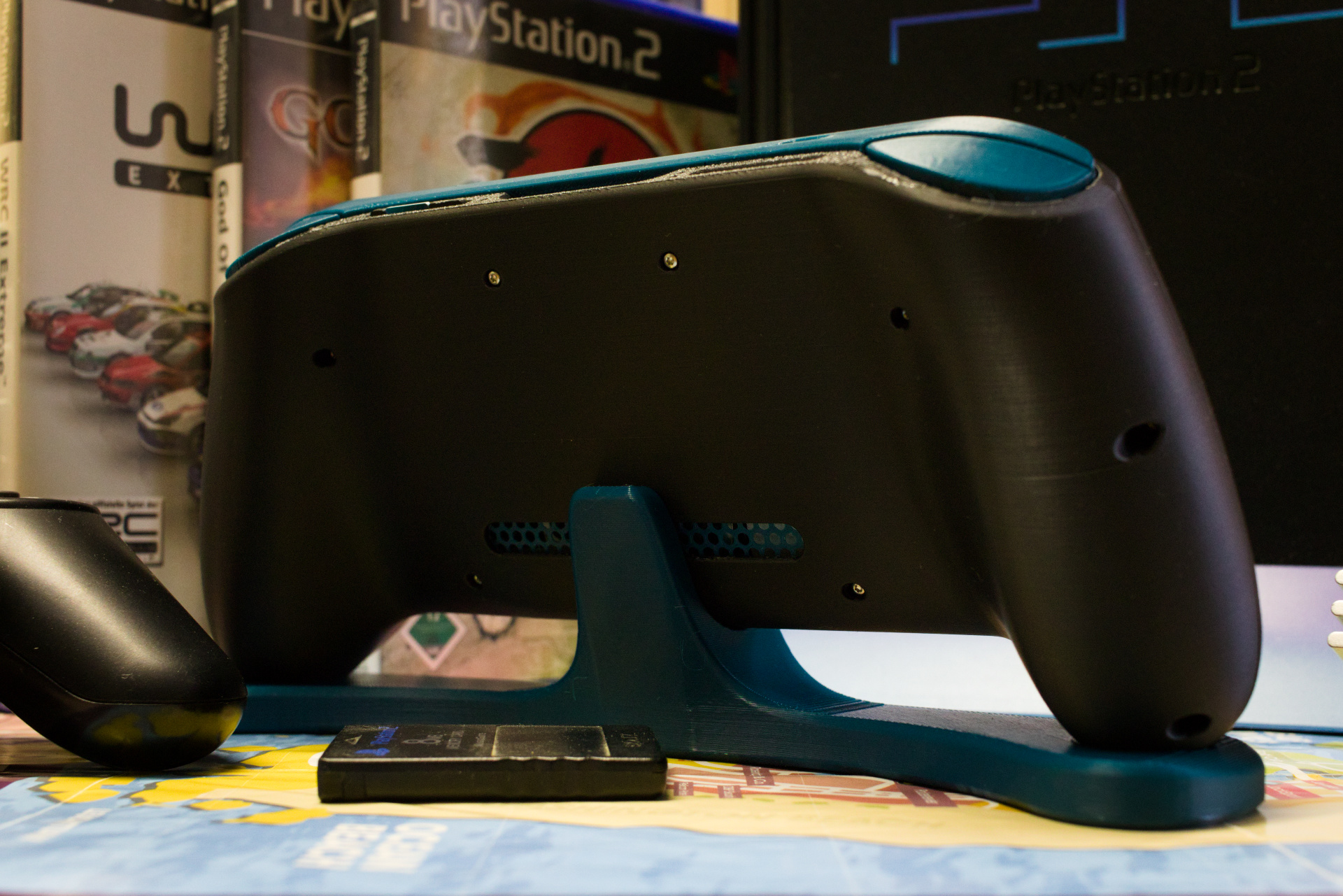
There are ventilation holes at the bottom of the back. The exterior of the main unit was designed from scratch using FDM 3D printing, aiming to achieve both a simple and minimalist appearance and the highest possible ergonomics.
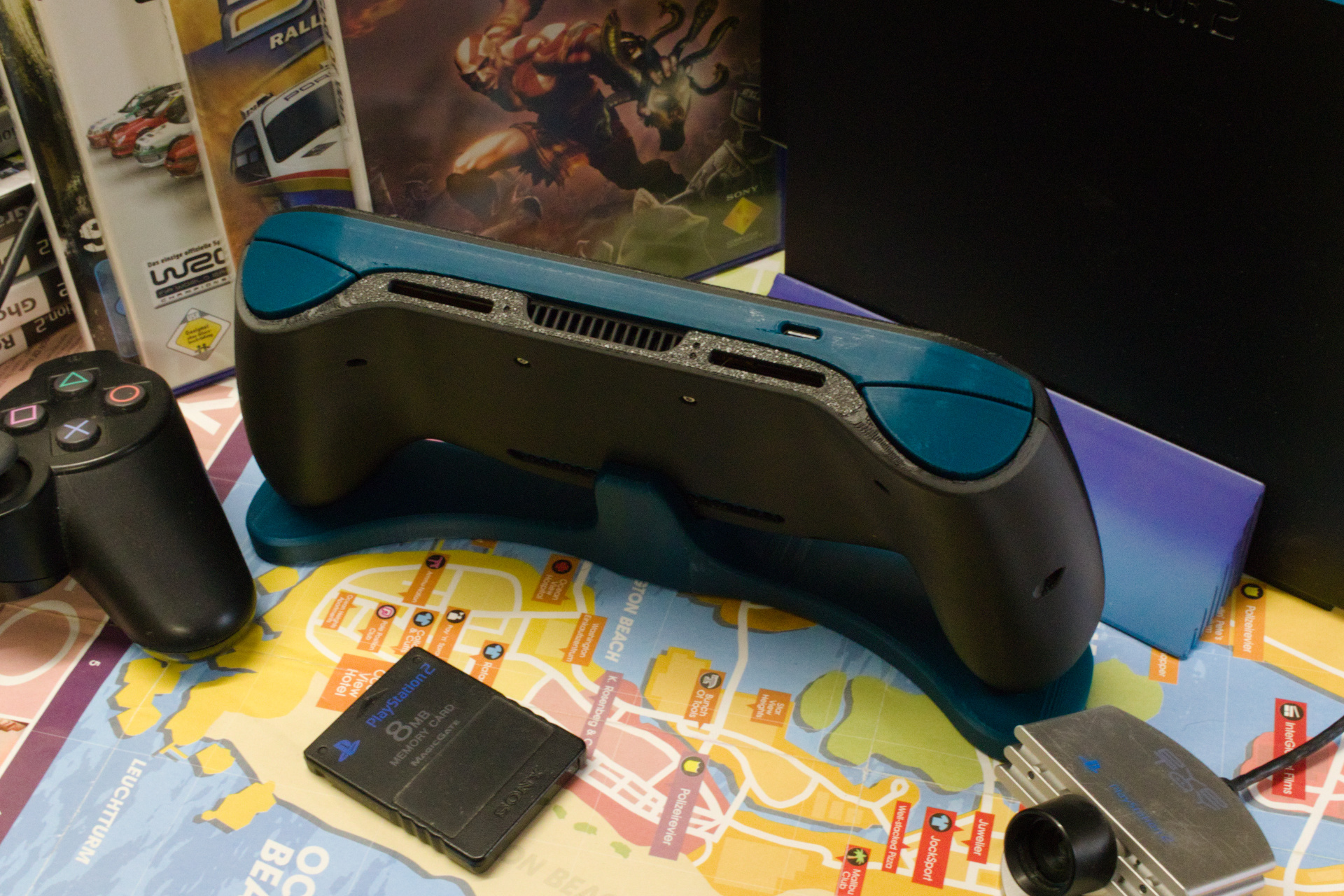
The top surface looks like this. External ports include two card slots, a USB-A port, a headphone jack, and a USB-C port for charging and updates.
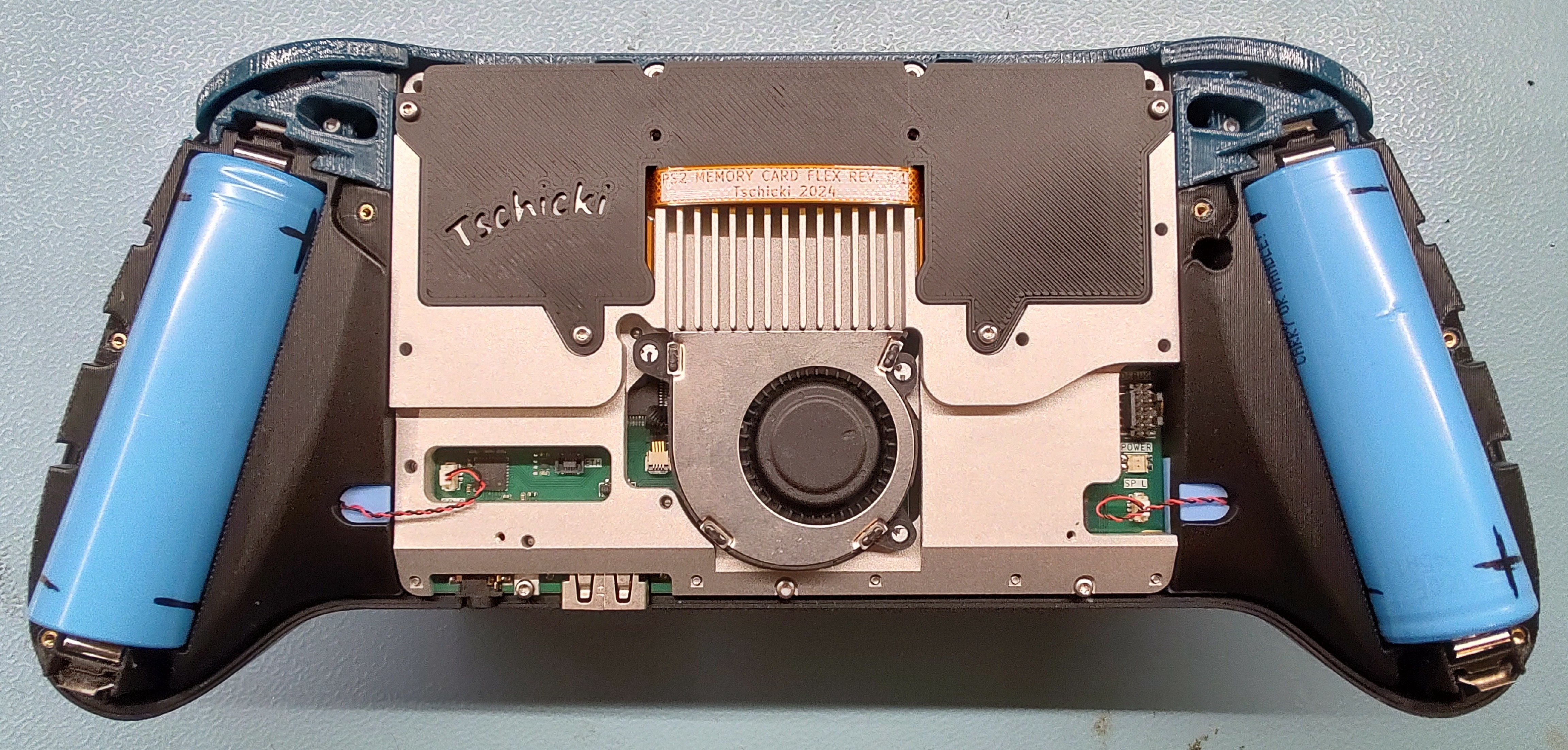
The grip section of the device houses two 5000mAh batteries, and according to the GitHub README, the 2S configuration of the 5000mAh 21700 batteries provides a total of 37Wh, allowing for approximately 4.5 hours of operation on a single charge. USB-C PD charging supports 5V, 9V, and 15V, and it also supports 'Charge & Play,' allowing you to play while charging. For cooling, a dedicated aluminum heatsink covering the inside of the device and a fan designed for the Nintendo Switch Lite are used.
The main objective of this PayStation 2 Portable development project is to reverse-engineer the entire PS2 circuit and, building on the work of the existing PS2 motherboard analysis community, manually design a motherboard with new wiring, video paths, and power management. The majority of the processing is handled by PS2-derived ICs such as
Motherboard surface
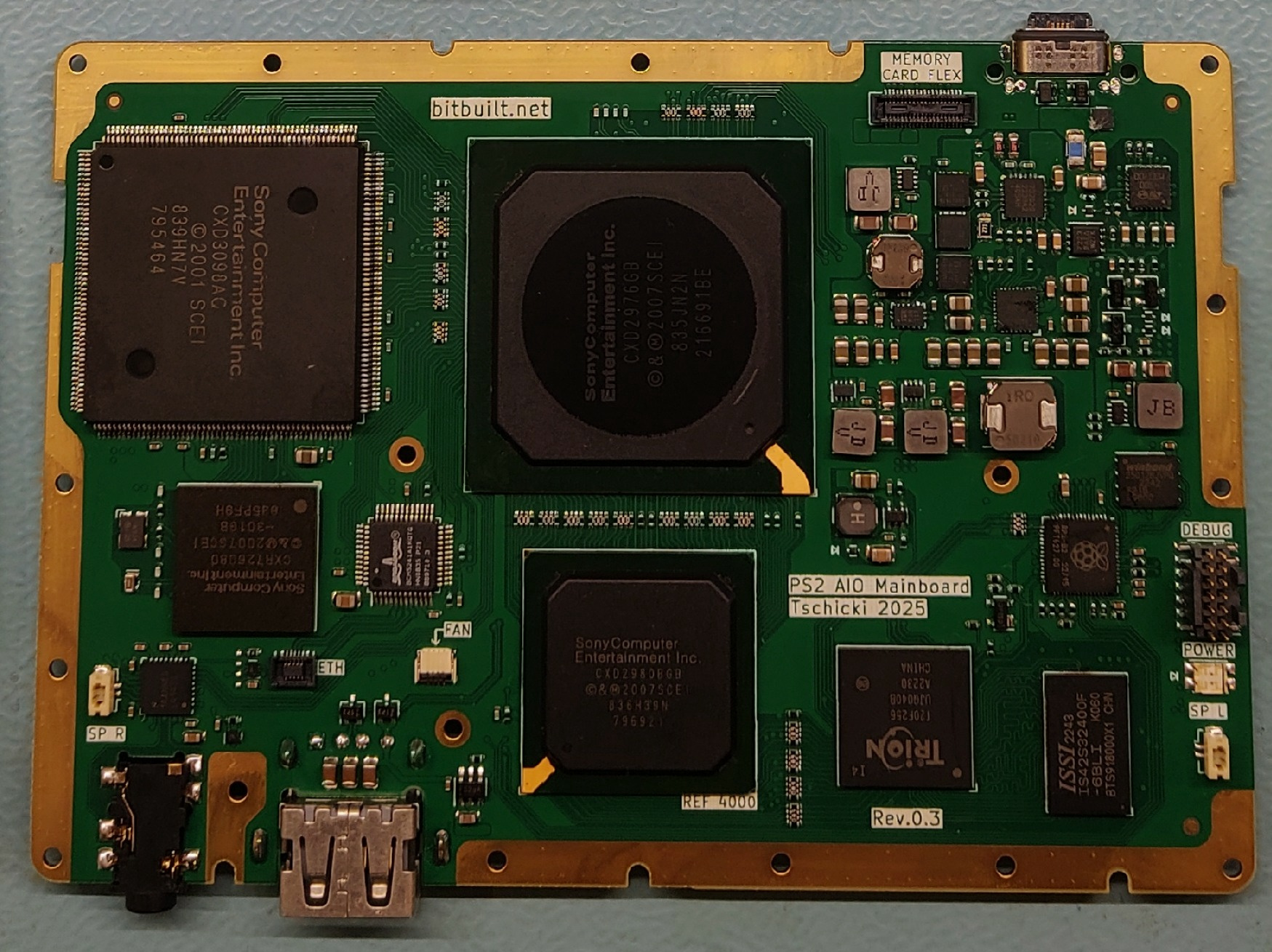
Back of the motherboard
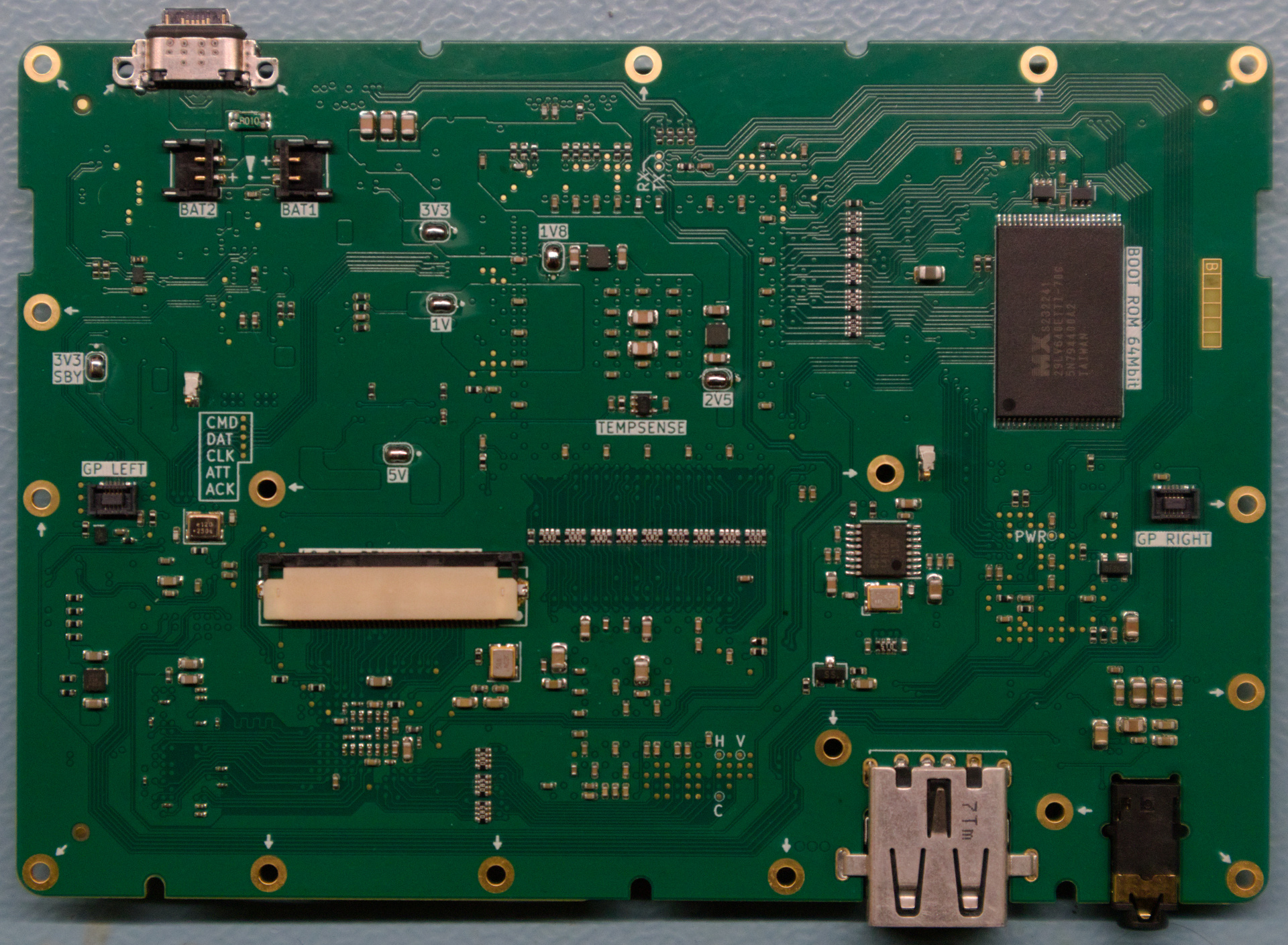
For video processing, a proprietary digital video processor using
In terms of audio, it features amplifiers for headphones and speakers, and the speakers use components from the Nintendo Switch OLED. Power management, charging, battery level, cooling fan, and input controls are all handled by a small control chip, which manages the entire system to make it easy to use as a portable gaming device.
The device also features its own settings menu, allowing you to check and adjust battery level, LED indicator, temperature, fan speed, volume, screen brightness, and joystick settings directly on the device. The internal software can be updated via USB-C.
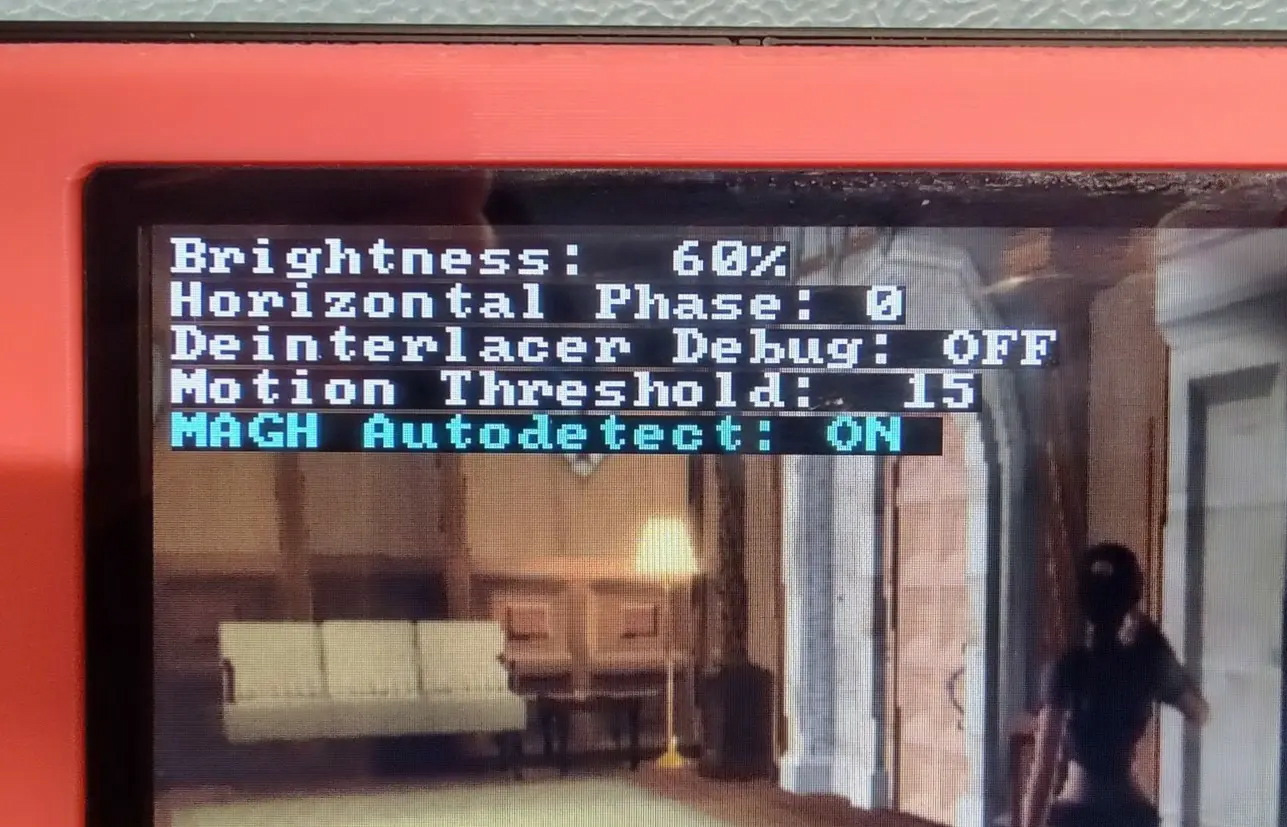
The boot mechanism has also been modified, allowing it to directly launch homebrew software instead of displaying the standard PS2 screen. This means that game loading software can be launched without requiring any additional modification steps. Two small card slots are used for saving games and save data. One functions like a PS2 memory card, while the other is for using an SD card as game storage.
The project is open source, with 3D printing data, circuit board data, bill of materials, control software, and image processing data available on GitHub. In theory, you can build the same thing yourself, but the creator does not recommend it, as it requires advanced soldering skills, knowledge of electronics, troubleshooting skills, and possibly programming knowledge. At the time of writing, there have been reports of issues such as the built-in clock drifting by about 7 seconds per day and the possibility of screen ghosting in some games.
Related Posts: