It has been discovered that bats have developed their own dialects.
Dialects are often thought to be unique to humans, but it turns out they exist in other animals as well, such as whales. Research at Charles Darwin University has revealed that bats also have dialects.
Dialect Formation in Ghost Bats: Genetic, Geographic and Morphological Drivers of Social and Echolocation Call Divergence - Hanrahan - 2026 - Ecology and Evolution - Wiley Online Library
Ghost bat dialects emerge across colonies, study suggests
Nicola Hanrahan and her colleagues at Charles Darwin University chose the ghost bat , a species endangered by the Northern Territory of Australia, as their research subject. The ghost bat is estimated to have a population of less than 10,000. The Northern Territory is said to be home to 20% of the world's total ghost bat population.
Hanrahan and his colleagues visited five bat colonies, recorded bat calls, and classified them into four categories: 'song,' 'argument,' 'social calls,' and 'echolocation.' They then analyzed whether there were acoustic differences between the colonies.
As a result, it was found that there were certain differences in all the calls. For example, the greater the genetic differences in a colony, the more different the calls made during songs and arguments were, and the sounds produced during songs were significantly different in colonies that were far apart. From this, Hanrahan et al. concluded that this 'suggests that dialects are being formed between colonies.'
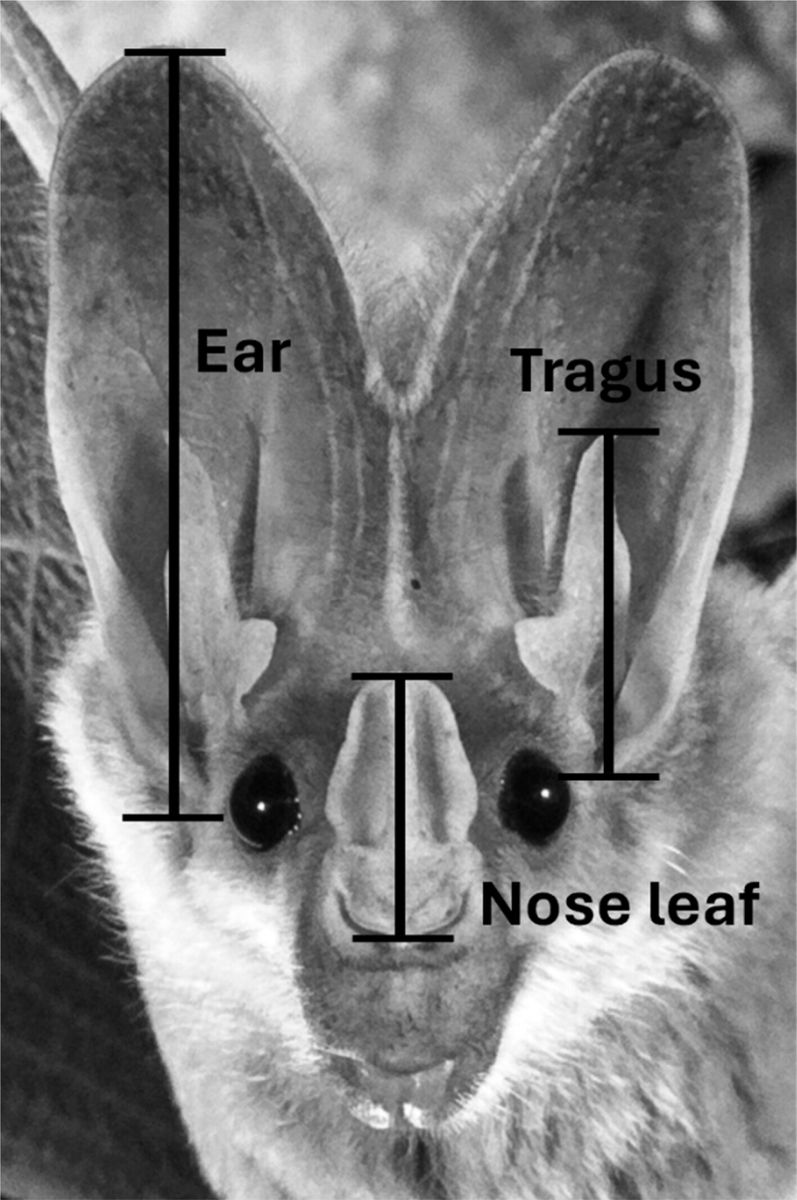
Individuals from different colonies differed genetically as they moved geographically further apart, with some differences observed, such as ear length. However, there were no significant differences in the ' nasal lobe ,' which is thought to control echolocation, leading Hanrahan et al. to suggest that 'the shape of the nasal lobe is likely subject to functional constraints.'
The distances between the colonies studied in this study ranged from a maximum of 800 km. While differences were observed in calls for singing and quarreling among these colonies, no differences were found in social calls or echolocation. Hanrahan et al. concluded that this suggests that the latter two are 'subject to strong functional constraints that limit the occurrence of differences between colonies.'
Hanrahan et al. wrote, 'While the differences in calls appear to be explainable by genetic and geographical distance, other mechanisms such as cultural factors may be at play, and further investigation is needed. There is still much to learn about the social behavior of this fascinating species.'
Related Posts: