'HumanoidTurk' is a system where a humanoid robot rocks the seat from behind in sync with a VR driving simulator.
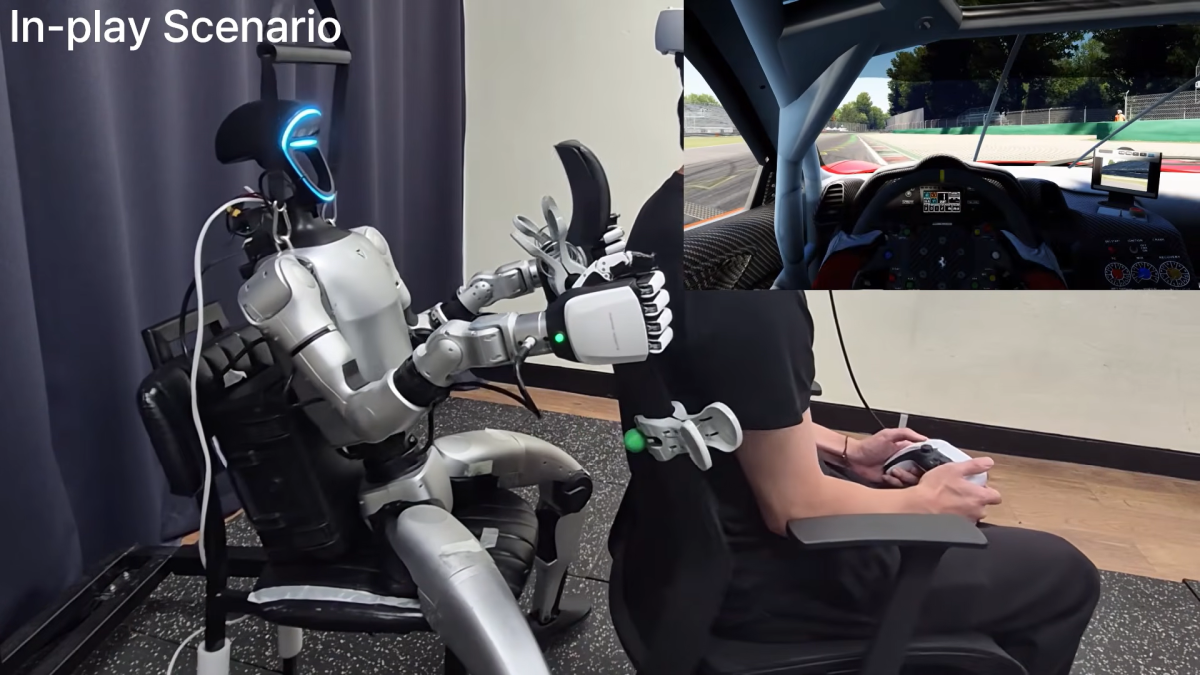
When driving a car in VR, the feeling of your body shaking in accordance with curves and acceleration creates a more realistic driving experience. A research team from Gwangju Institute of Science and Technology (GIST) and the University of Colorado Boulder has developed 'HumanoidTurk,' a haptic feedback system for VR driving in which a humanoid robot grasps the user's chair and physically shakes it.
HumanoidTurk: Expanding VR Haptics with Humanoids for Driving Simulations
Want Driving Simulator Feedback? Make The Robot Do It | Hackaday
https://hackaday.com/2026/05/11/want-driving-simulator-feedback-make-the-robot-do-it/
You can see HumanoidTurk in action in the following video.
[CHI 2026] HumanoidTurk: Expanding VR Haptics with Humanoids for Driving Simulations - YouTube
The research team envisioned using humanoid robots not only as conversation partners and work assistance robots, but also as devices to provide tactile feedback in VR experiences. Motion platforms that transmit movement to the entire body in VR tend to be bulky, and vibrations from controllers and wearable devices are limited to stimulating the hands or parts of the body. Therefore, the research team thought that a humanoid robot with a size and arms similar to a human could potentially provide full-body feedback in a way that is different from dedicated large-scale devices. This led to the development of 'HumanoidTurk.'
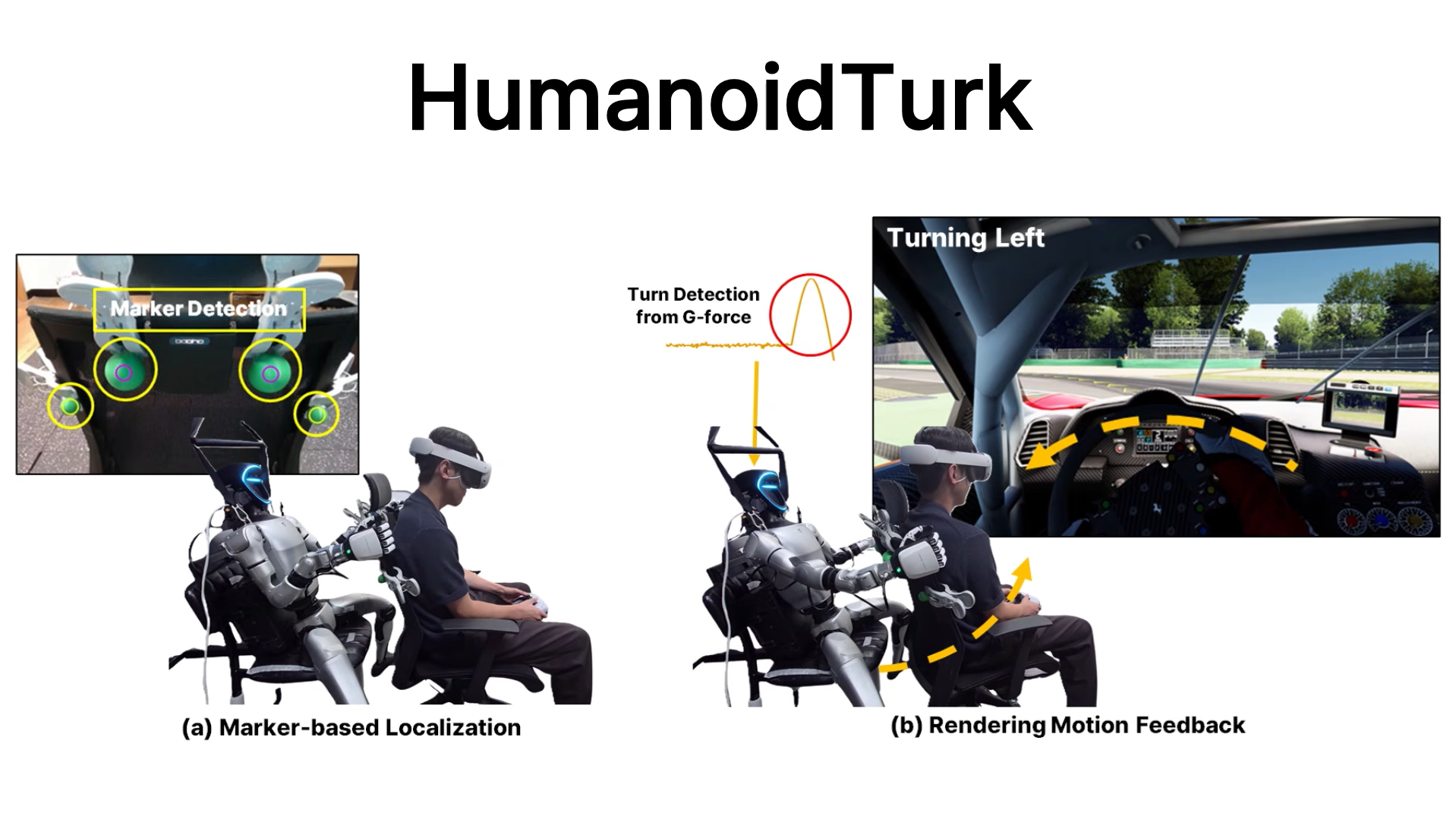
In HumanoidTurk, the humanoid robot '
The Unitree G1 uses spherical markers attached to chairs to determine their position. Intel's RealSense D435i depth camera, built into the Unitree G1, tracks these markers to estimate the chair's 3D position.
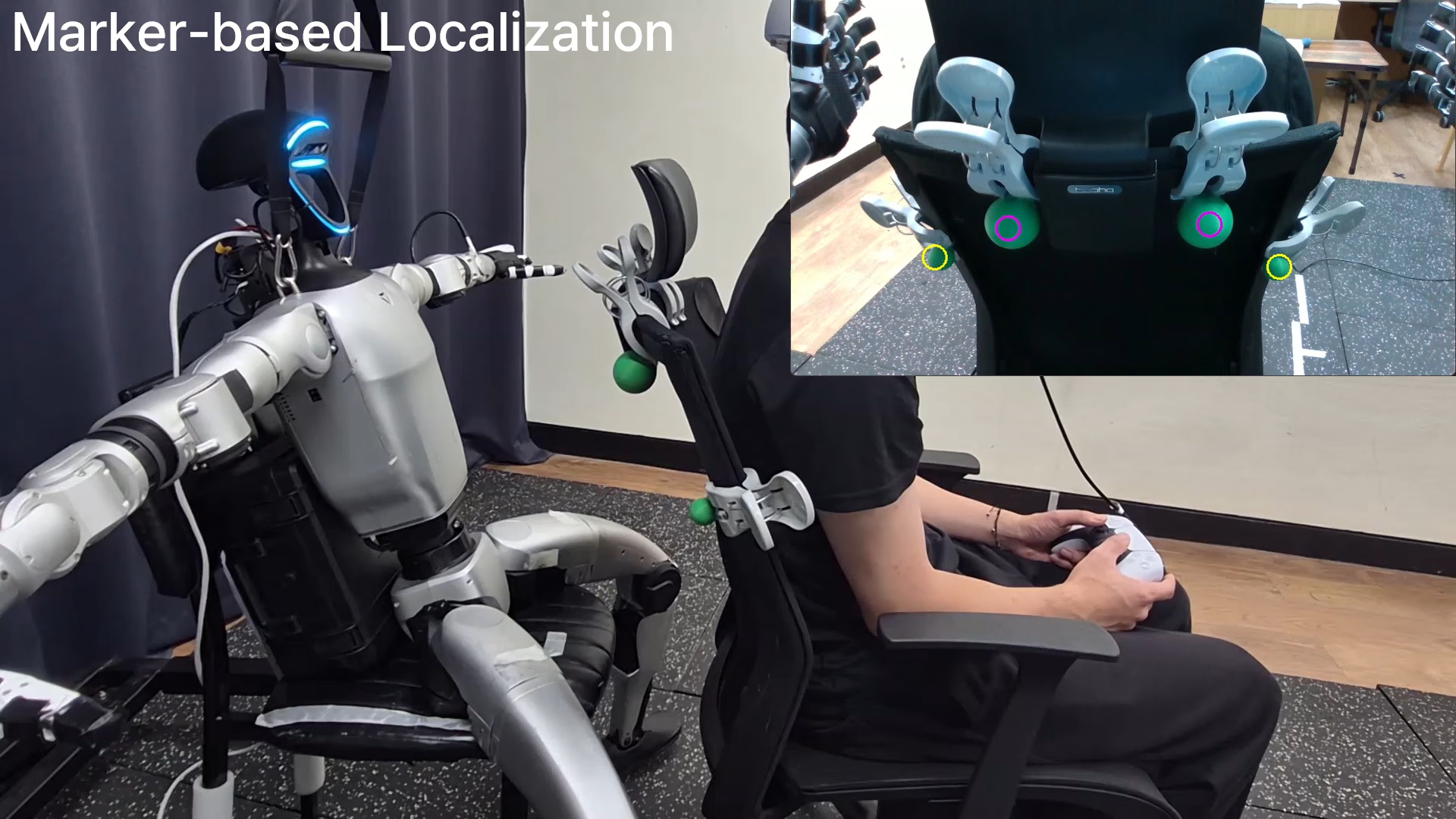
By employing a method that tracks markers, humanoid robots can grasp and move chairs without requiring extensive modifications to the chairs themselves, making it easier to accommodate various types of chairs.

The study used
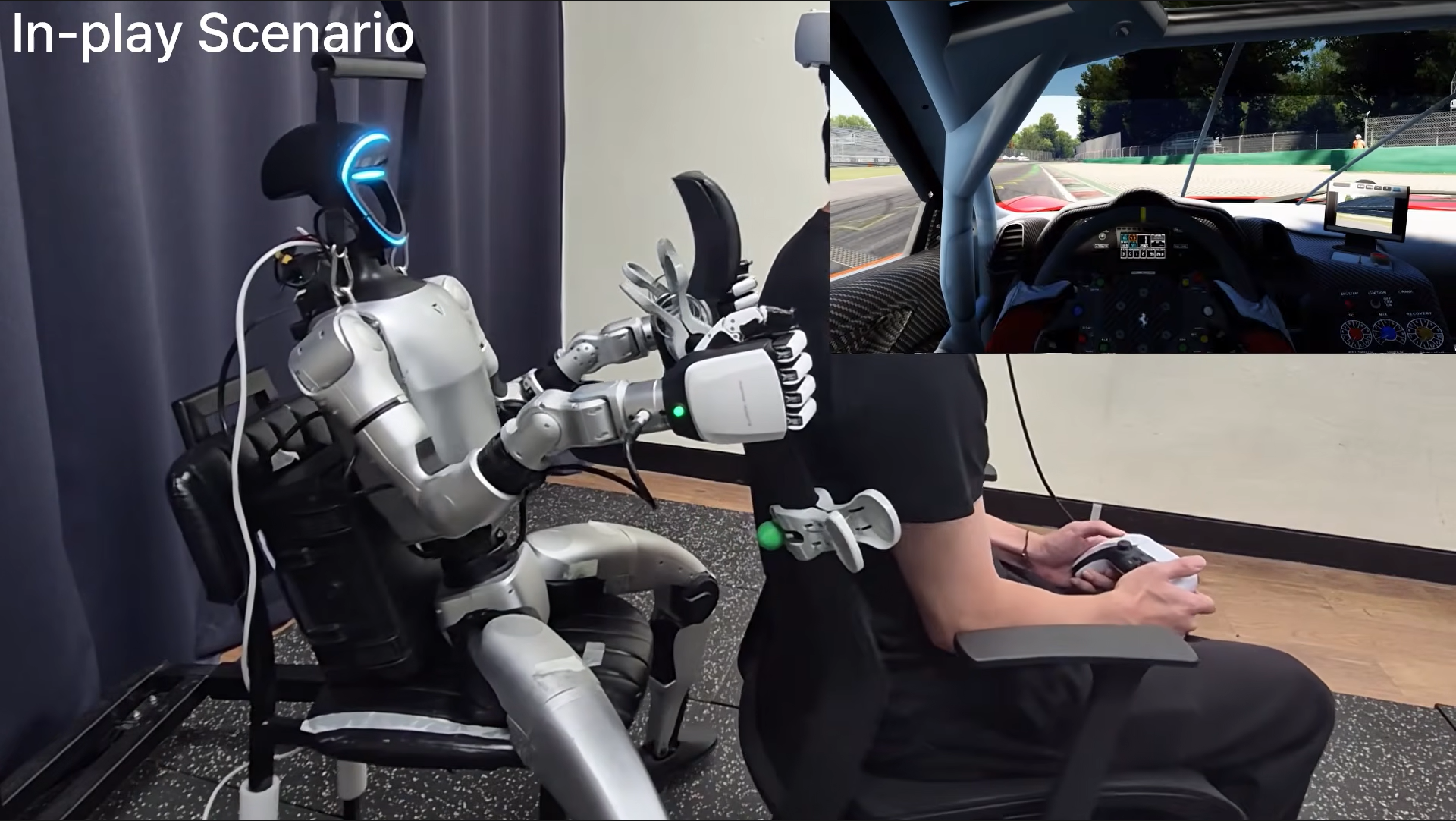
The research team compared four conditions with 16 participants: 'No-Feedback' (video and sound only), 'Controller' (using controller vibrations), 'Controller + Humanoid' (controller vibrations plus a humanoid robot moving the chair), and 'Controller + Human' (controller vibrations plus a human moving the chair from behind).

The research team reported that the conditions in which a humanoid robot or a human moved the chair were rated higher in terms of immersion, realism, enjoyment, and suitability for the game than when only video and sound were used, or only controller vibrations were used. On the other hand, the condition in which a humanoid robot moved the chair presented challenges in terms of comfort and simulator sickness, with participants giving mixed feedback, some praising the robot's timing in moving the chair, while others complained of fatigue due to the intensity of the shaking and continuous vibrations.
The research team positions HumanoidTurk as an early attempt to use a humanoid robot as a 'haptic medium' to convey events in VR space to the human body. Potential future applications include the resistance felt when holding heavy objects in VR, the feeling of force applied during tug-of-war, the stiffness of a joystick, the sensation of touching doors or leaves, and movements that surprise users in horror experiences.
However, this study was limited to a short 1-minute VR drive, and it was explained that future challenges include fatigue during prolonged use, robot noise, overheating, torque reduction, and safety in the event of unexpected malfunctions.
Related Posts: