China's 'Hanyuan-2' has emerged as the world's first dual-core quantum computer, boasting 200 qubits and remarkable power efficiency, although performance benchmarks have not yet been released.
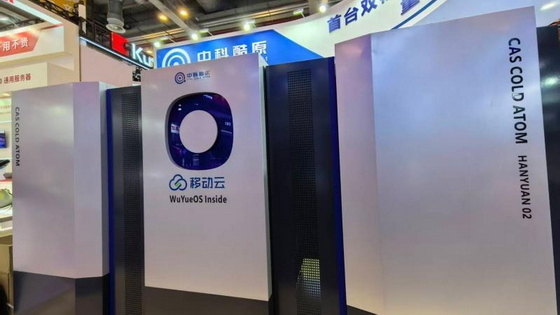
On May 7, 2026, Zhongke Kuyuan Technology, a Wuhan-based company under the Chinese Academy of Sciences, announced the ' Hanyuan-2, ' a dual-core neutral-atom quantum computer touted as the world's first. This follows the company's launch of the 'Hanyuan-1,' China's first commercial neutral-atom quantum computer, in 2024, as reported by the Chinese state-run media outlet Science and Technology Daily.
Global flagship twin-nuclear neutral atom quantum computer “Hanyuan No. 2” cloth
https://www.stdaily.com/web/gdxw/2026-05/07/content_512907.html
China's Hanyuan-2 debuts as 'world's first' dual-core quantum computer — 200-qubit claims incredible power efficiency, but lacks critical performance benchmarks | Tom's Hardware
https://www.tomshardware.com/tech-industry/quantum-computing/china-claims-worlds-first-dual-core-quantum-computer
Hanyuan-2 is configured to achieve 'dual-core cooperative computing' with a total of 200 qubits consisting of 100 rubidium-87 atoms and 100 rubidium-85 atoms, housed in a single cabinet-type enclosure, and equipped with two independent neutral atom arrays.
The enclosure features a standard rack-mount integrated design, operates with only a small laser cooling system, and can be quickly installed in a normal indoor environment without requiring a complex cryogenic cooling environment. The overall power consumption is said to be less than 7kW, which is expected to significantly reduce the application hurdles and introduction costs of quantum computing technology.
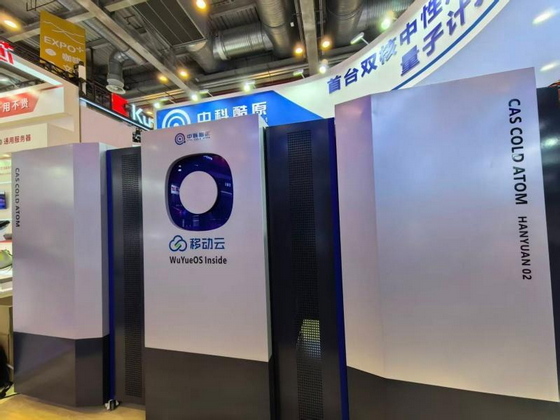
According to Ge Guiguo, a senior researcher at Zhongke Kuyuan, a Chinese startup specializing in quantum computing technology, this is the world's first transition from a 'single-core' to a 'dual-core' architecture for a quantum processor, representing a unique breakthrough in the core architecture of quantum computing.
Both cores are independent, fully neutral atom qubit arrays. In addition to a 'parallel computing' mode that shares the workload, they can also operate in a 'main + auxiliary' mode where the first array performs calculations and the second array handles real-time error correction. This aims to overcome technical bottlenecks such as the limitations of qubit expansion and crosstalk between adjacent qubits that plagued conventional single-core configurations.
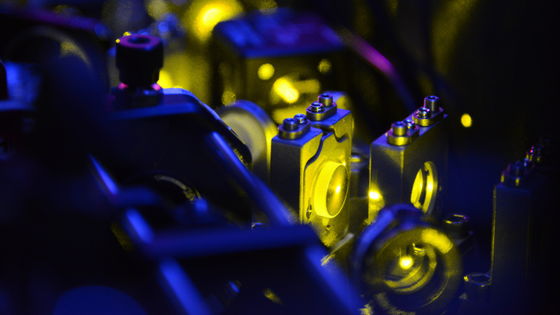
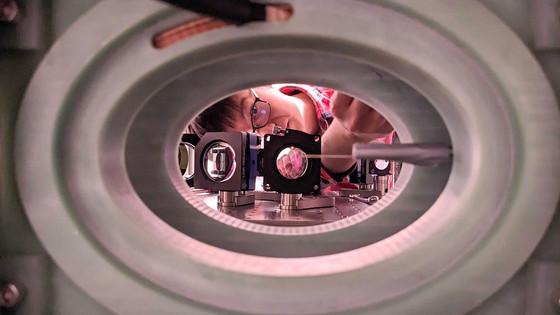
Neutral atom quantum computing is a method that uses laser arrays to capture and cool neutral atoms that have no electric charge, and manipulates each atom as a qubit. Due to its advantages such as high scalability, long coherence time, and high operational fidelity, it has become one of the main approaches in the development of quantum computing hardware worldwide.
Tang Biao, General Manager of Zhongke Kuyuan, claims that Hanyuan-2 has more than 500 optical tweezers arrays, a qubit lifetime (coherence time) of 100 seconds, and various core metrics have reached internationally advanced levels, while some key performance aspects are among the best in the industry.
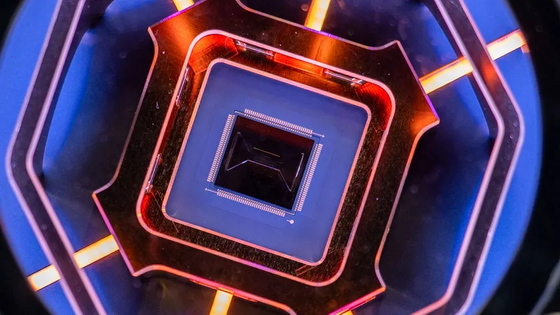
Zhongke Kuyuan is positioned as a leading enterprise in Hubei Province's quantum technology industry chain. Its core team originates from the Chinese Academy of Sciences' Institute of Precision Measurement Science and Technology Innovation, and has been conducting research on neutral atom quantum technology for over 20 years, successively mastering a series of core technologies such as the fabrication of optical tweezers arrays, high-fidelity quantum gate manipulation, dynamic atomic rearrangement, and extension of coherence time.
On the other hand, hardware news site Tom's Hardware points out that the 200-qubit scale lags considerably behind the leading group of neutral-atom quantum computers in the West.
American company Atom Computing demonstrated a 1180-qubit neutral atom array in 2023 and has since partnered with Microsoft to provide error-corrected logic qubits on commercially available hardware. Also, American company QuEra has delivered error-corrected machines to Japan's National Institute of Information and Communications Technology (NICT), and has raised over $230 million (36.1 billion yen) by 2025. These companies publish metrics such as quantum gate fidelity, coherence time, and error rate for the quantum computers they are developing.
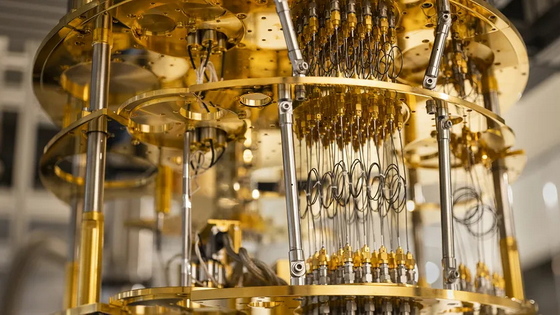
However, Tom's Hardware points out that Zhongke Kuyuan has not disclosed any of these indicators for Hanyuan No. 2, there are no peer-reviewed papers accompanying the announcement, and, as is common with this type of announcement originating in China, it all ends up in Chinese state-run media.
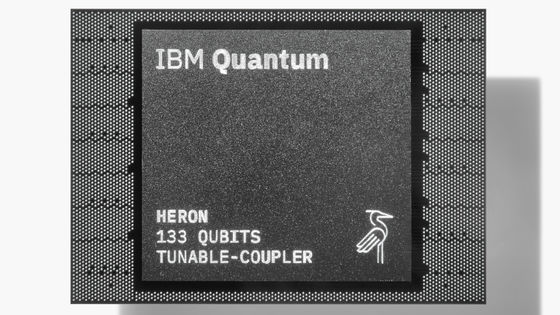
Furthermore, while the term 'dual-core' is intentionally used to evoke an analogy with classical multi-core CPUs, technically it is closer to the modular quantum computing concept that Western companies are pursuing on a larger scale. Tom's Hardware summarizes that IBM is focusing on connecting superconducting processors with classical and quantum interconnects, QuEra and Pasqal are advancing the balance between single-array scaling and inter-module connectivity, and Atom Computing and Microsoft are building integrated systems centered on networked quantum processors.
While Zhongke Kuyuan's approach is more tightly integrated than a networked approach by placing both arrays within a single enclosure, it remains to be seen whether it offers a practical advantage over methods for scaling a single large array, and published benchmarks are needed to answer that question, Tom's Hardware argued.
Related Posts:



in Hardware, Posted by log1i_yk