Burning Man, which creates a temporary city in the middle of the desert for just one week, spends several weeks cleaning up the trash after it ends.
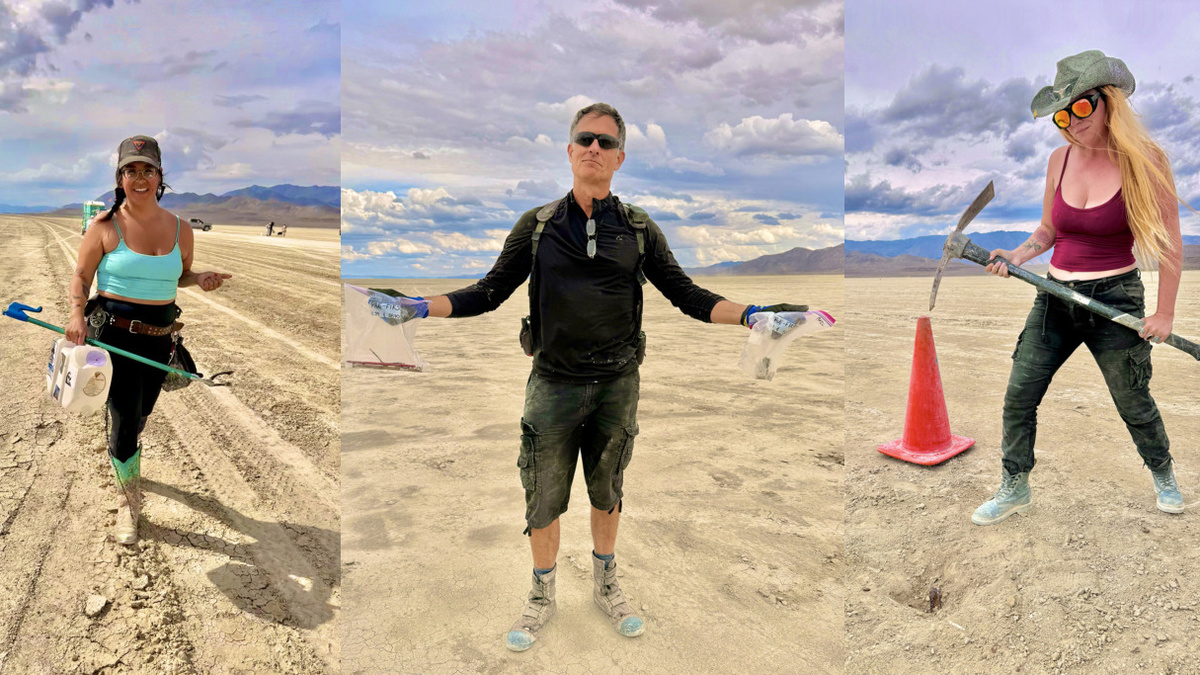
by BURNING MAN JOURNAL
The map that keeps Burning Man honest
https://www.not-ship.com/burning-man-moop/
Leaving No Trace: MOOP Map 2025, BLM Inspection & Solving Our Lag Bolt Problem | Burning Man Journal
https://journal.burningman.org/2026/03/black-rock-city/leaving-no-trace/moop-map-2025/
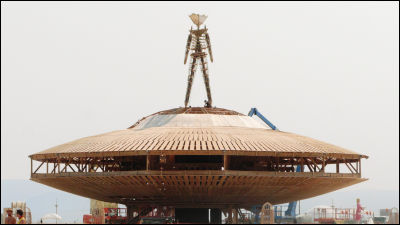
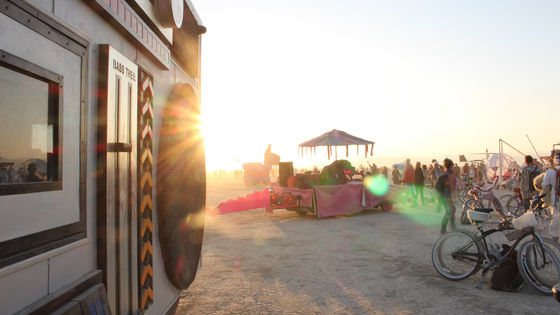
Burning Man is an event held annually in the Black Rock Desert in Nevada, USA, from the last Monday of August to the first Monday of September. During this period, tens of thousands of people gather to construct 'Black Rock City,' a temporary city equipped with massive art installations, camps, roads, and power generation facilities. Basic infrastructure such as electricity, water, and gas is not available, and mobile phone service is generally unavailable. Therefore, the event aims to foster interaction, community building, mutual support, and free artistic expression.
The following article will give you a good understanding of where Burning Man takes place.
This is what it's like to get to 'Burning Man,' a fictional city with a diameter of 2.4 km built in the middle of the desert - GIGAZINE
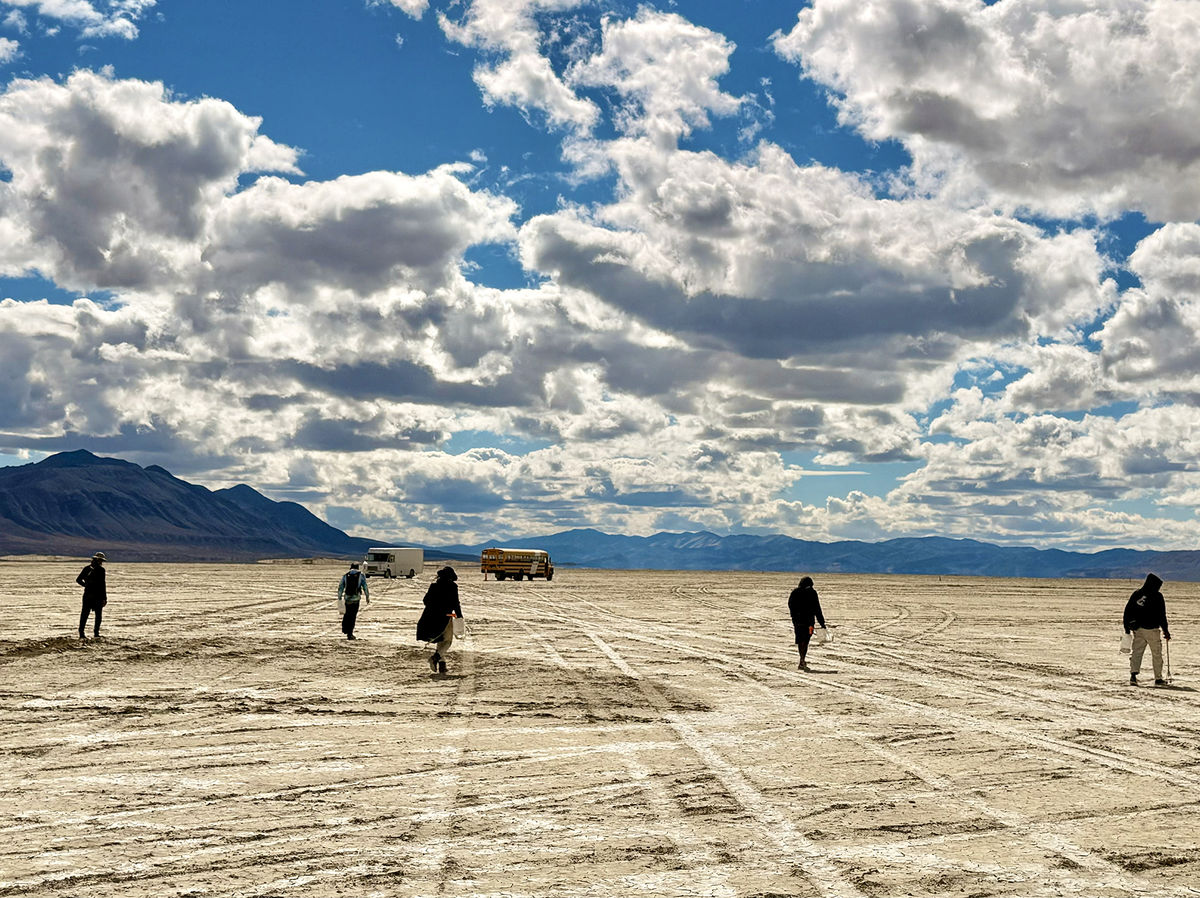
Burning Man is a shocking event due to its sheer scale, building and dismantling a city in the desert in just one week. Even after the city is gone, approximately 150 participants remain in the desert to continue cleaning. One of Burning Man's '10 Principles' is 'Leaving No Trace,' meaning participants must take everything they brought with them back, and thorough cleaning is carried out to ensure that not a single piece of trash is left behind.
After the event ends, approximately 150 members of the organizing team, 'Playa Restoration Team (PRT),' line up in a row, spaced about arm's width apart, and spend several weeks walking around and cleaning the vast venue, which covers approximately 15.4 square kilometers. The trash that shouldn't be there is called 'MOOP (Matter Out Of Place),' and includes plastic bottles, paper scraps, wood chips, metal fragments, cigarette butts, feathers, glitter, and hair.
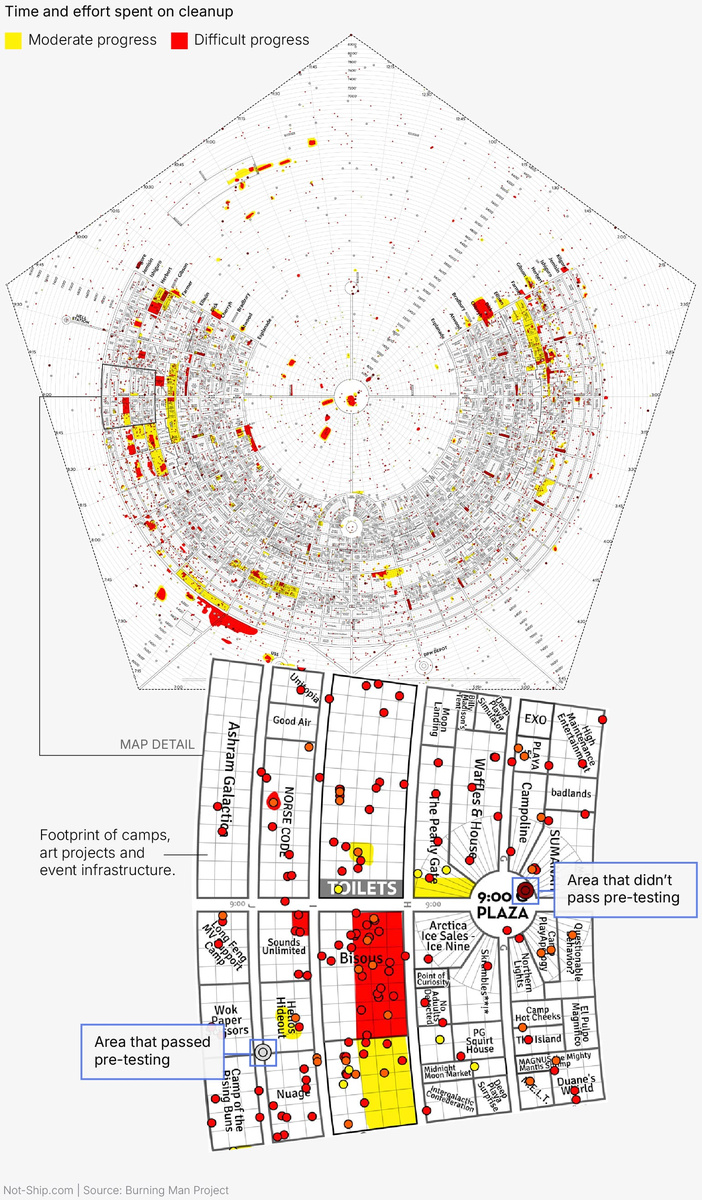
The following is the 'MOOP map' for Burning Man 2025. It maps the trash found at the pentagonal Black Rock City site, with moderate trash in yellow and problematic trash in red.
By thoroughly removing any man-made structures left in the desert, the annual event is only permitted to be held after passing a rigorous post-event inspection by the Land Management Authority (BLM).
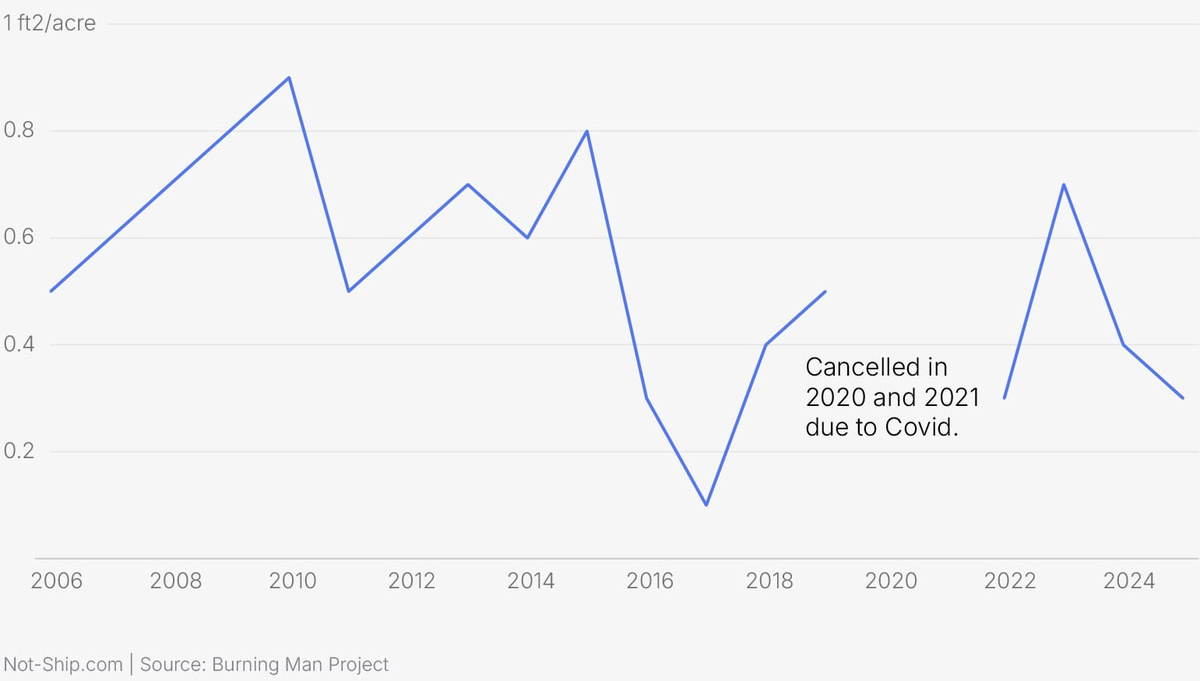
The following graph shows the average annual amount of waste discovered by PRT. While it met BLM standards in most years, in 2023, 11 out of 120 inspections exceeded the standard, making it the closest to a violation in recent years.
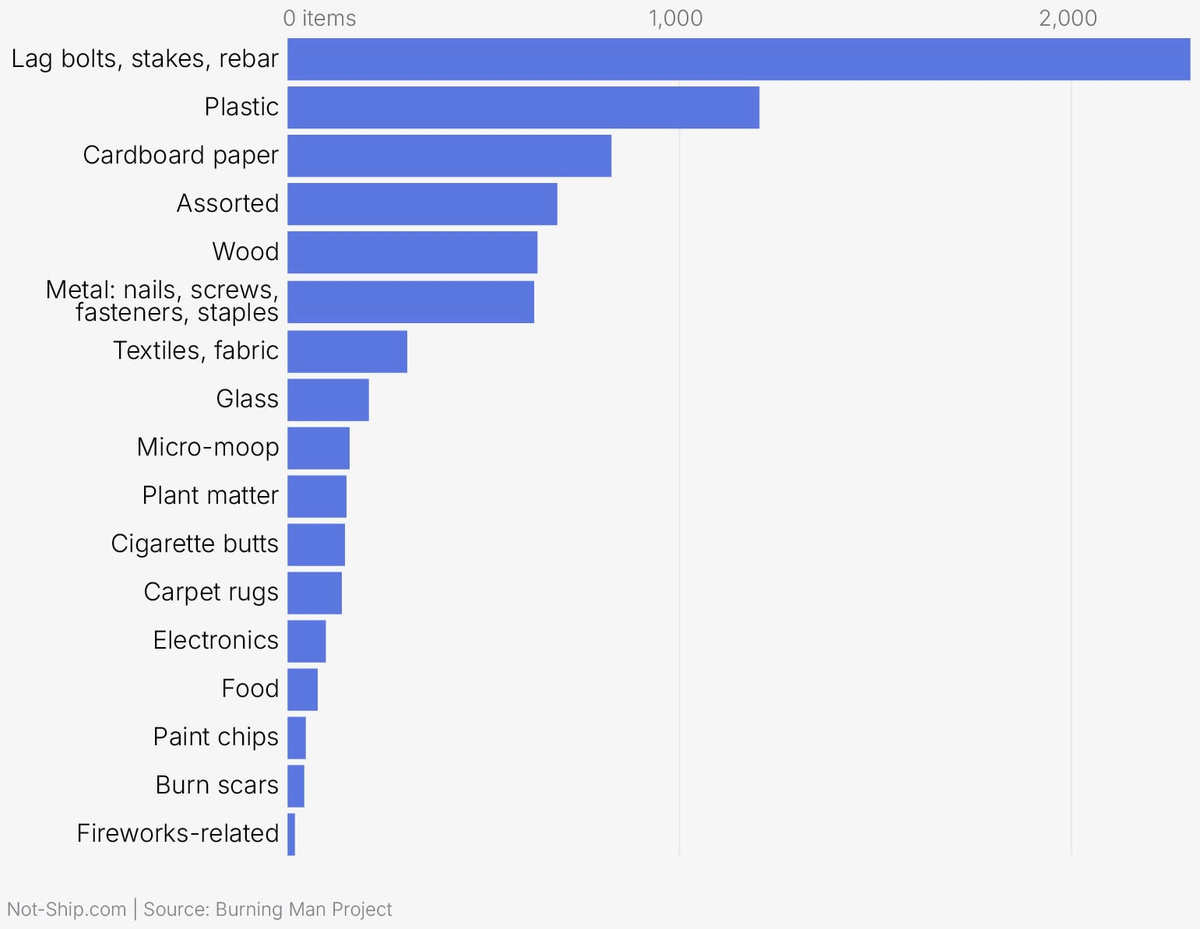
The following graph records the types of MOOPs found. The most common type of MOOP is large bolts used to secure tents, art, and other infrastructure to the ground, and these tend to remain because they are easily buried under dust clouds. Plastics and cardboard are the next most frequently found materials.
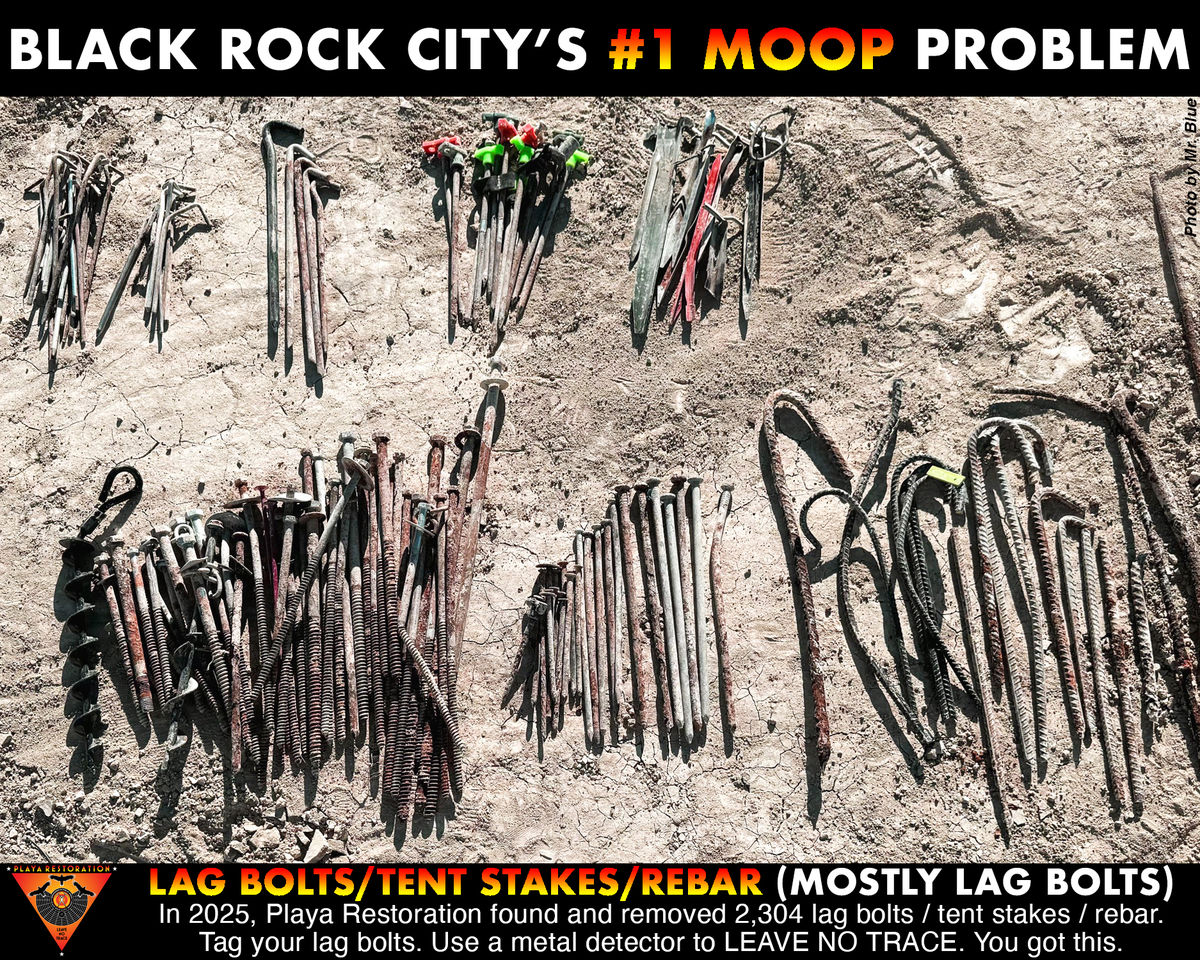
While the increase in bolts around 2022 was initially thought to be a temporary trend, Burning Man's top ranking in MOOP (Most Observed Persons) rankings for three consecutive years led to warnings being issued to participants by the Burning Man Journal, which publishes information about Burning Man. Records suggest that bolts are being left behind little by little at many camps, not just by a few participants, and by 2025, a total of 2,304 bolts were found. Burning Man organizers are seeking best practices for managing and collecting bolts.
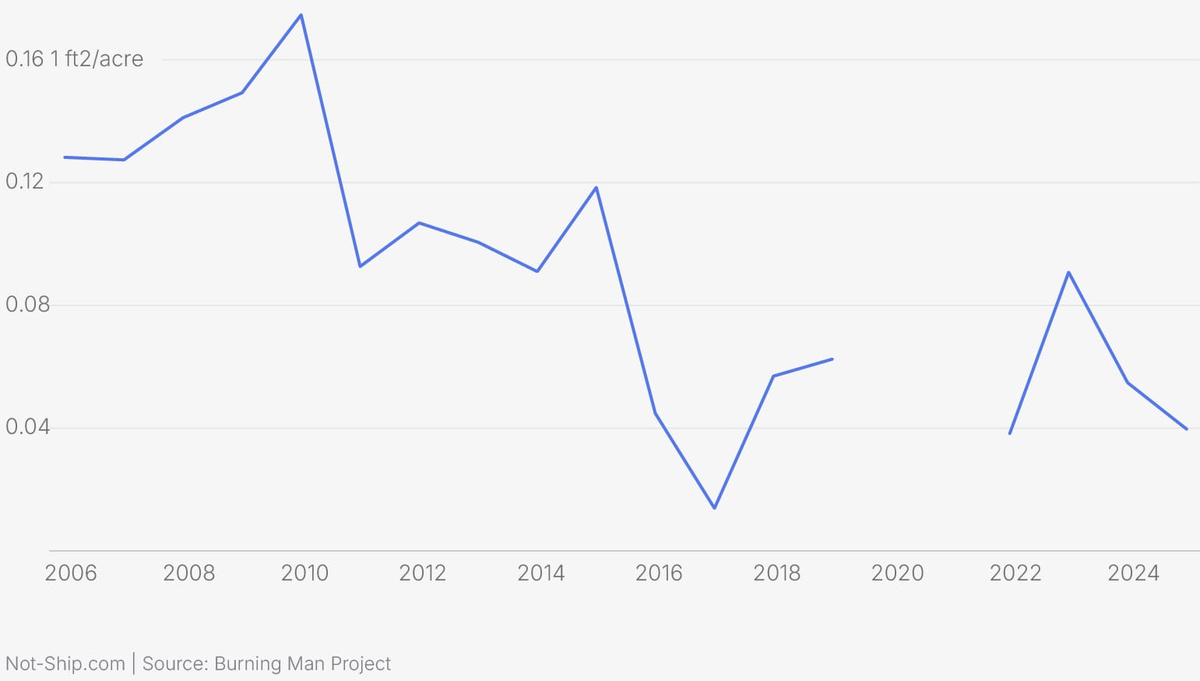
Dominic Tinio, Burning Man's environmental restoration manager responsible for waste disposal processes, says, 'The MOOP map is about shared responsibility in land use. It not only helps adhere to BLM standards, but also helps participants, camps, and art projects understand the impact their activities have on the environment. While Black Rock City has grown dramatically in size, complexity, and population since 2006, the participant community has steadily improved its 'Leave No Trace' practice through the MOOP map.' Below is a graph showing the amount of MOOP per 10,000 people in Black Rock City, which peaked in 2010 and has since improved significantly.
The social news site Hacker News has gathered comments from people who actually participated in the cleanup as part of the organizing team. According to one user , they documented and photographed everything, and conducted hundreds of tests exactly like those conducted by BLM to check on progress. The cleanup work is arduous, involving walking enormous distances across the desert with only a cleaning stick and a bucket, but the user stated, 'It's an incredibly wonderful feeling to be a part of a seemingly impossible challenge that the future of Burning Man depends on, and to be a part of our determination to never give up.' Another user mentioned that at Burning Man 2025, it rained for five consecutive nights, and there were days with strong winds that caused extensive damage to the camp facilities. After the rain, the trash gets buried in the mud, so they had to dig and sift through it to find it.
Related Posts:

in Note, Posted by log1e_dh