The largest wild chimpanzee colony has split into two factions due to violence and bloodshed.
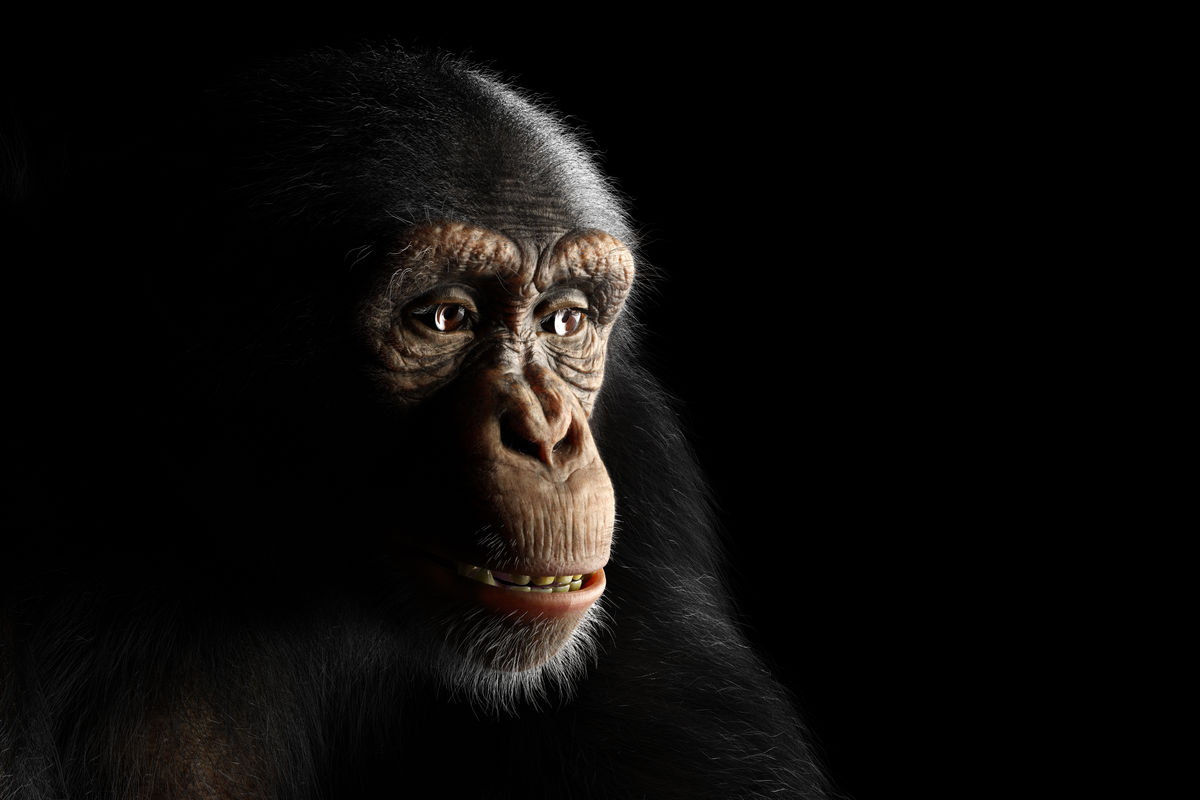
The largest known wild chimpanzee group has split into two. It appears that the group began killing each other after the death of a male believed to have held power.
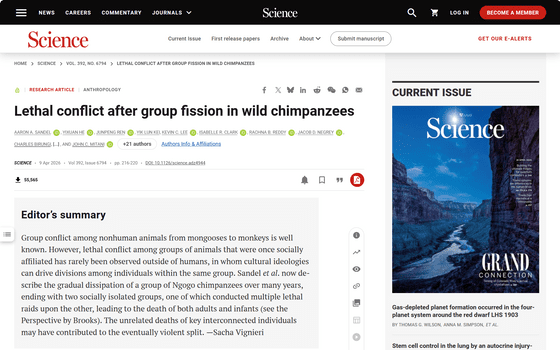
Lethal conflict after group fission in wild chimpanzees | Science
First Clearly Documented Split in World's Largest Known Chimpanzee Community Leads to Deadly Violence - UT Austin News - The University of Texas at Austin
Aaron Sandel of the University of Texas at Austin focused on chimpanzees living in the Ngogo forest of Kibale National Park in Uganda. The chimpanzees living in Ngogo have been tracked for over 30 years, and it has been confirmed that individuals in the largest group are generally friendly towards one another. Individual chimpanzees live by moving between several separate groups, and for the first 20 years, they maintained social ties throughout the entire community.
However, the situation changed in 2015, when the western and central groups gradually began to avoid each other. This change coincided with a shift in the male dominance hierarchy and occurred a year after the deaths of several males who were believed to have been holding the community together. By 2018, the split was complete, and as of the time of writing, the western and central groups were claiming separate territories.
Furthermore, it has been confirmed that the western group launched attacks against the central group between 2018 and 2024. It is estimated that there were 7 attacks against adult males and 17 attacks against juveniles.
Sandel pointed out, 'What makes this case particularly striking is that the chimpanzees are killing their former companions. A new group identity is overwriting long-standing cooperative relationships.'
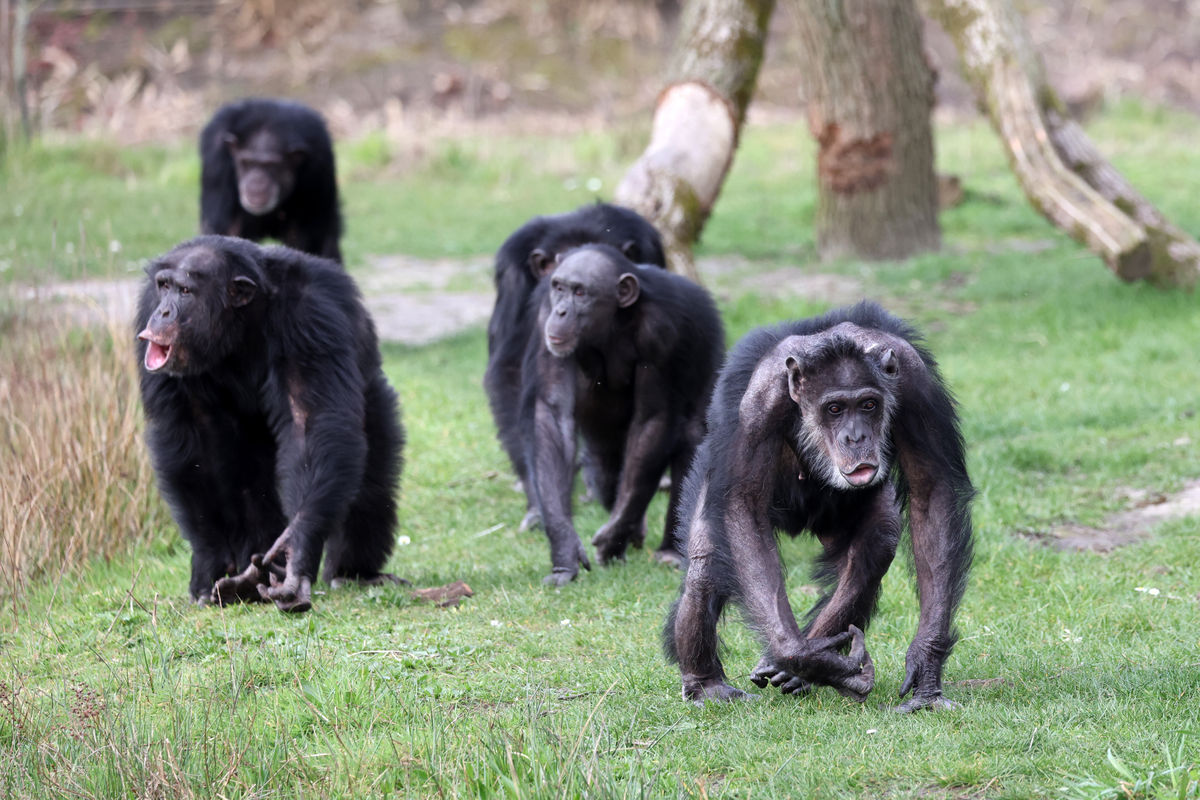
It's not uncommon for chimpanzees to attack other groups, and conflicts have been confirmed in Ngogo between 1998 and 2008. However, it's extremely rare for a group to split and fight amongst itself, with genetic analysis suggesting it happens only about once every 500 years.
While post-splitting conflicts were observed in Gombe, Tanzania in the 1970s, there are differing opinions on whether these actions can be considered natural behavior, as researchers had been feeding the birds in that region.
The exact cause of the herd split is unclear, but the group, consisting of approximately 200 individuals, is larger than other herds, and it is thought that the increased competition for food due to its larger size may have played a role.
In the past, in the Ngogo Forest, it has been observed that as a result of conflicts between groups, the winning group's habitat expanded, and the birth rate more than doubled.
A baby boom has been reported in a chimpanzee group that won a war against other chimpanzees - GIGAZINE
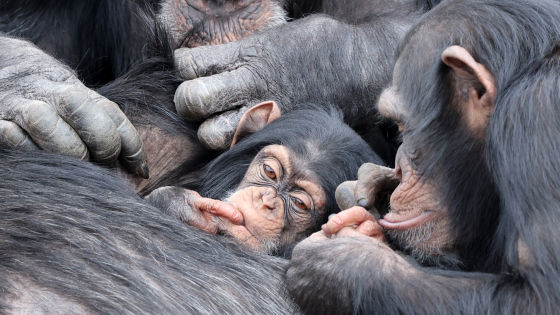
Sandel pointed out, 'The fact that individuals who had lived together, shared food, groomed each other, and patrolled together for years began to kill each other simply because they belonged to a new group suggests that chimpanzees, like humans, have an identity that goes beyond factors such as whether or not they are close.' He added, 'However, in humans, opportunities for peace may be found in small, everyday acts of reconciliation and reunion between individuals.'
Related Posts:
in Creature, Posted by log1p_kr