Google has announced a new AI agent, 'Deep Research Max,' based on Gemini 3.1 Pro.
Google has announced a new AI agent called ' Deep Research Max ,' built on Gemini 3.1 Pro.
Introducing Deep Research and Deep Research Max
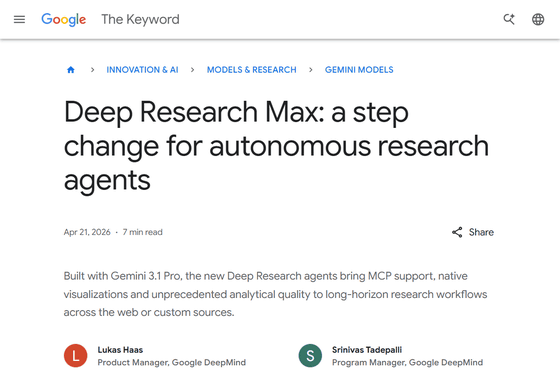
We are launching two powerful updates to Deep Research in the Gemini API, now with better quality, MCP support, and native chart/infographics generation.
— Sundar Pichai (@sundarpichai) April 21, 2026
Use Deep Research when you want speed and efficiency, and use Max when you want the highest quality context gathering &… pic.twitter.com/rTp7R6w3IT
Introducing one of our biggest updates to the Gemini Deep Research Agent, now available via the Interactions API!
— Google AI Developers (@googleaidevs) April 21, 2026
Trigger complex, long-horizon research workflows with arbitrary MCP support, get rich visualizations, plan before you execute, and more with these two… pic.twitter.com/qyt9FQ35J6
Deep Research and Deep Research Max are our latest autonomous research agents powered by Gemini 3.1 Pro.
— Google DeepMind (@GoogleDeepMind) April 21, 2026
They can safely navigate both the web and your custom data, like internal docs and specialized financial information, to create professional-grade, fully cited reports. 🧵 pic.twitter.com/Tt3zmjYLWJ
Google has updated Gemini Deep Research and announced two new AI agents: Deep Research and Deep Research Max. Deep Research and Deep Research Max integrate Gemini 3.1 Pro and have evolved from an advanced summarization engine to a foundation for enterprise workflows across a wide range of fields, including finance, life sciences, and market research.
Deep Research is an agent developed to optimize speed and efficiency, replacing the preview version of Gemini Deep Research released in December. It enables a higher level of quality while significantly reducing latency and cost. Google describes it as 'the ideal agent for search experiences that are directly integrated into interactive user interfaces where low latency is required.'
Deep Research Max is an agent designed to deliver maximum comprehensiveness and the highest quality analysis. Its models are well-suited for iterative inference, retrieval, and final report refinement, making it an ideal engine for asynchronous background workflows.
Google CEO Sundar Pichai explains, 'Use Deep Research when you need speed and efficiency, and use Deep Research Max when you need the highest quality context collection and synthesis.'
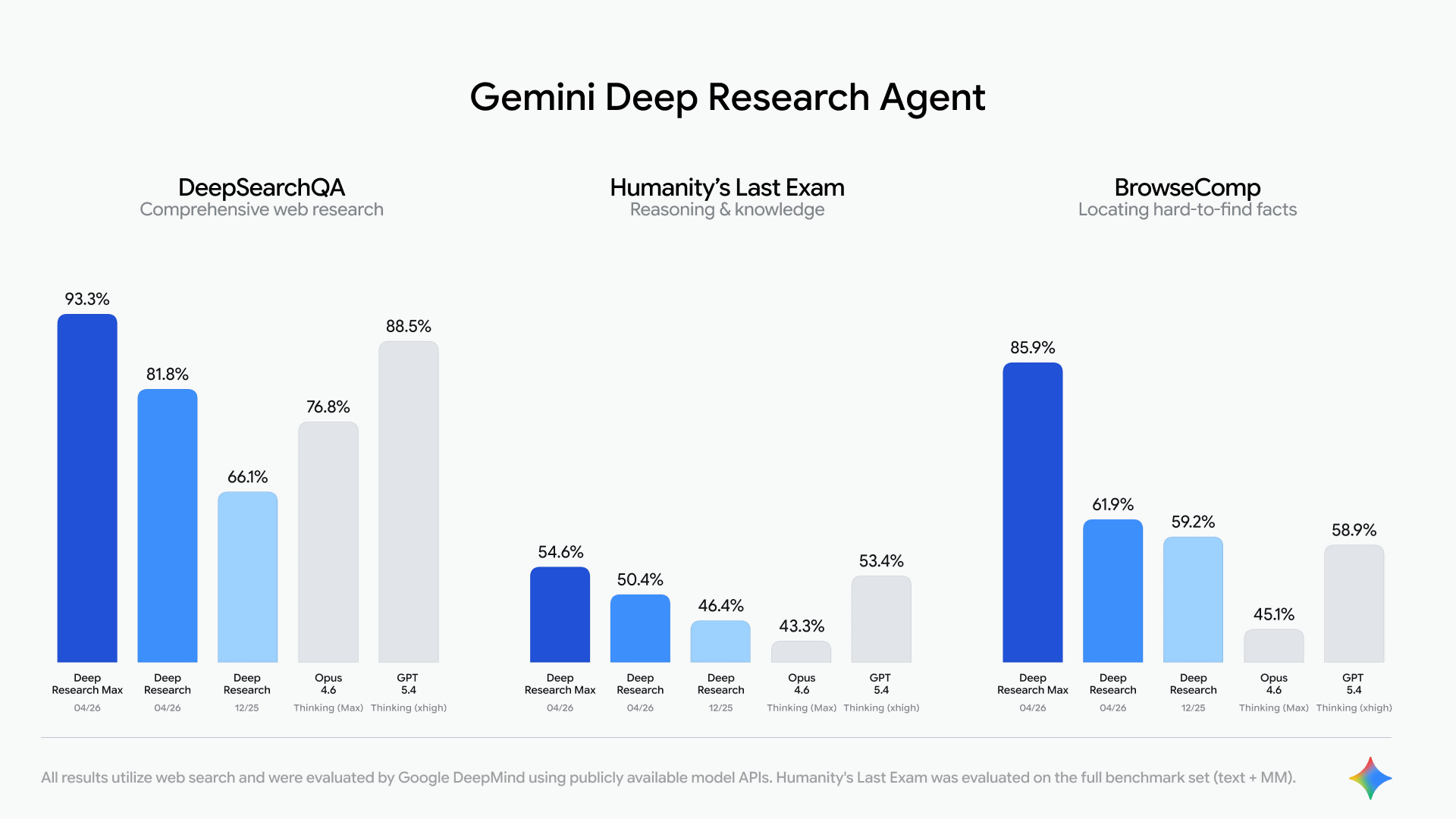
Furthermore, Deep Research Max has achieved high scores, including 93.3% in DeepSearchQA , a benchmark for search and question answering tasks for AI developed by Google; 54.6% in Humanity's Last Exam (HLE) , a benchmark that measures how close AI is to top-level human knowledge and reasoning; and 85.9% in BrowseComp , a benchmark that measures AI's search capabilities.
Deep Research enables searching the web, any remote MCP, file uploads, connected file stores, or any subset thereof, providing capabilities designed to handle the complex and restricted data environments that experts use on a daily basis.
For example, it's now possible to securely and seamlessly connect to custom data and specialized data streams via MCP. Deep Research supports arbitrary tool definitions, evolving from a web search tool to an autonomous agent capable of navigating any specialized data repository.
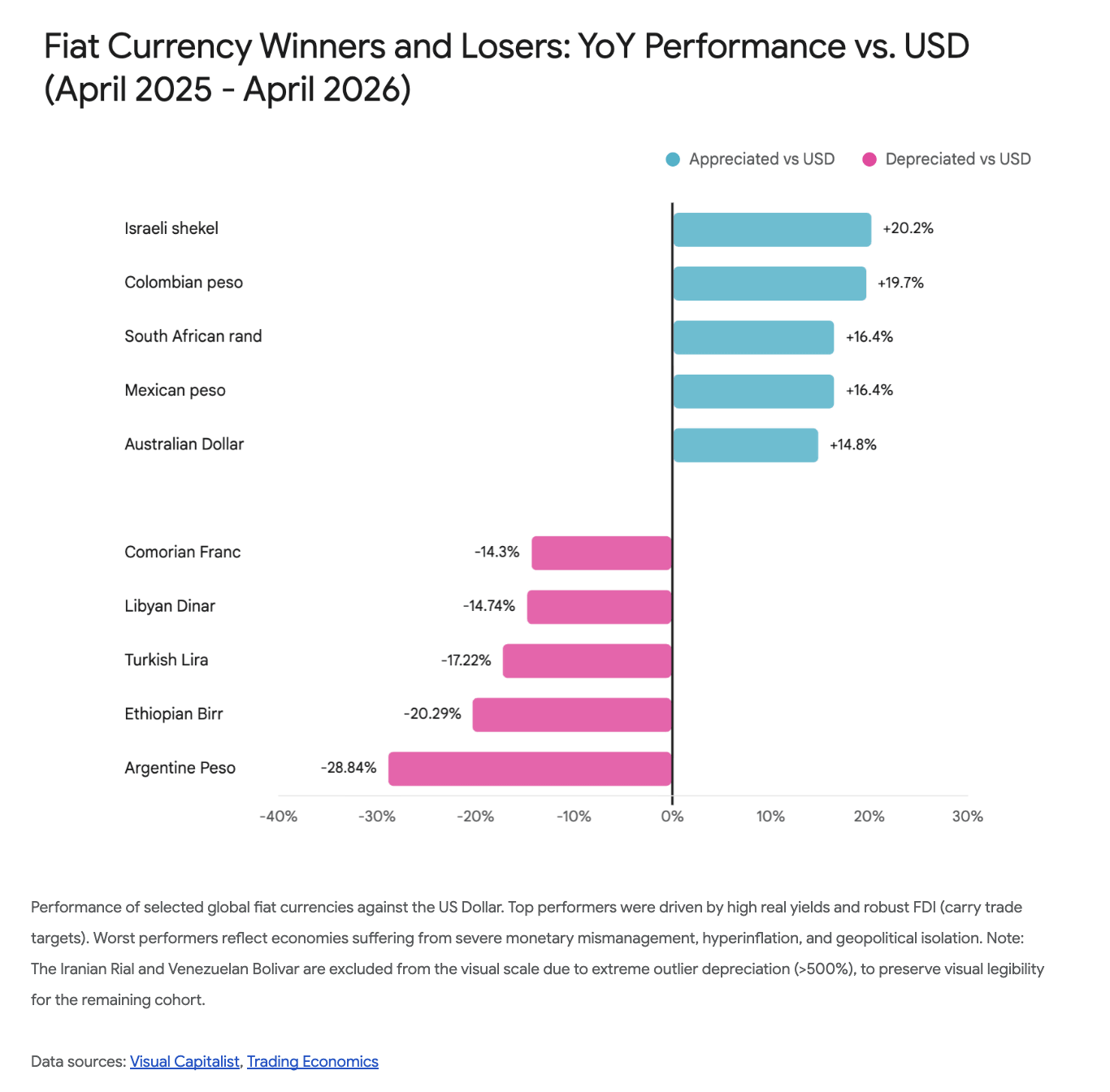
Furthermore, as a first for Deep Research in the Gemini API, it integrates not only text creation but also HTML page creation and Nano Banana image generation capabilities, making it possible to visualize complex datasets.
Below are some examples of charts and infographics generated by Deep Research.
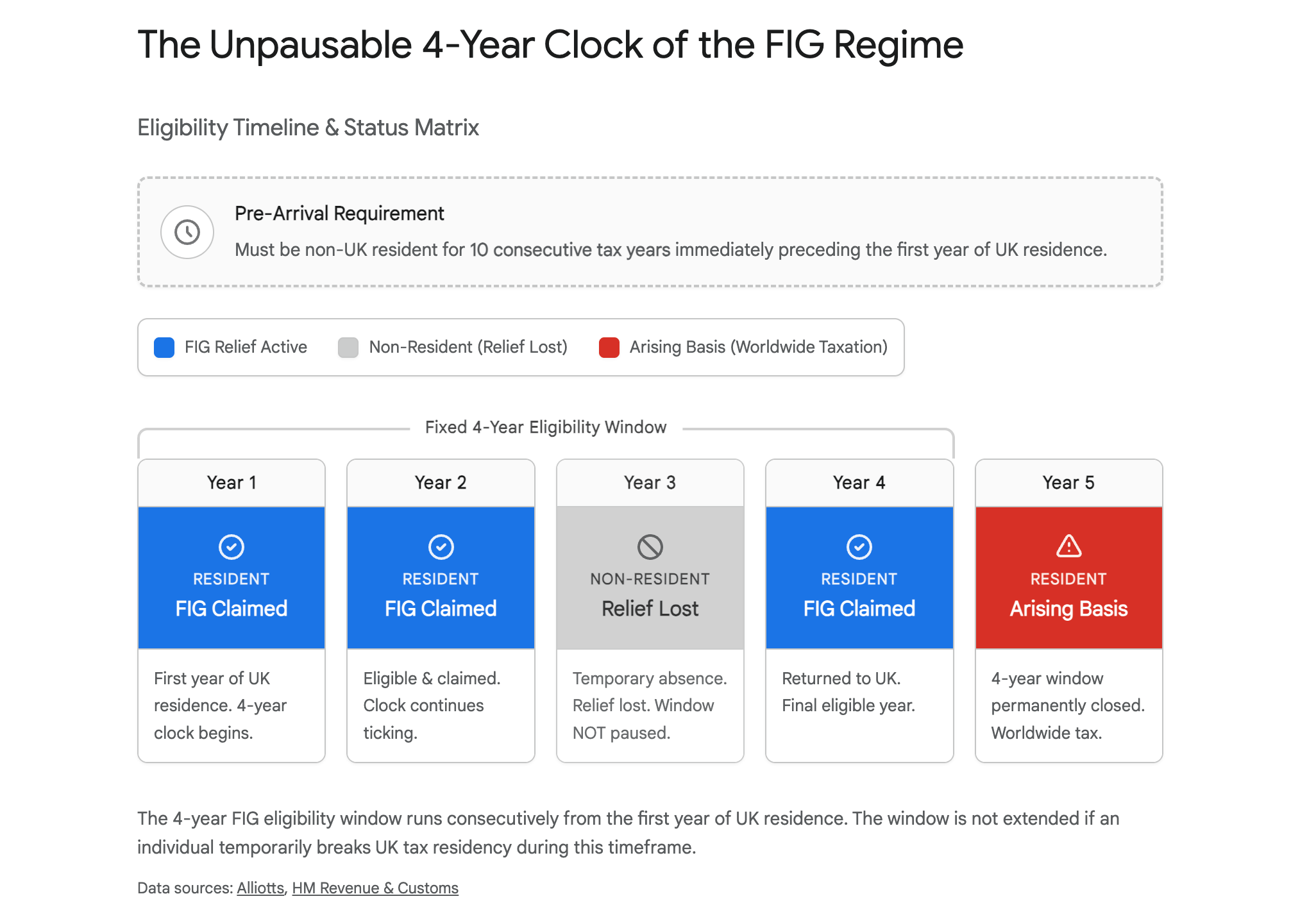
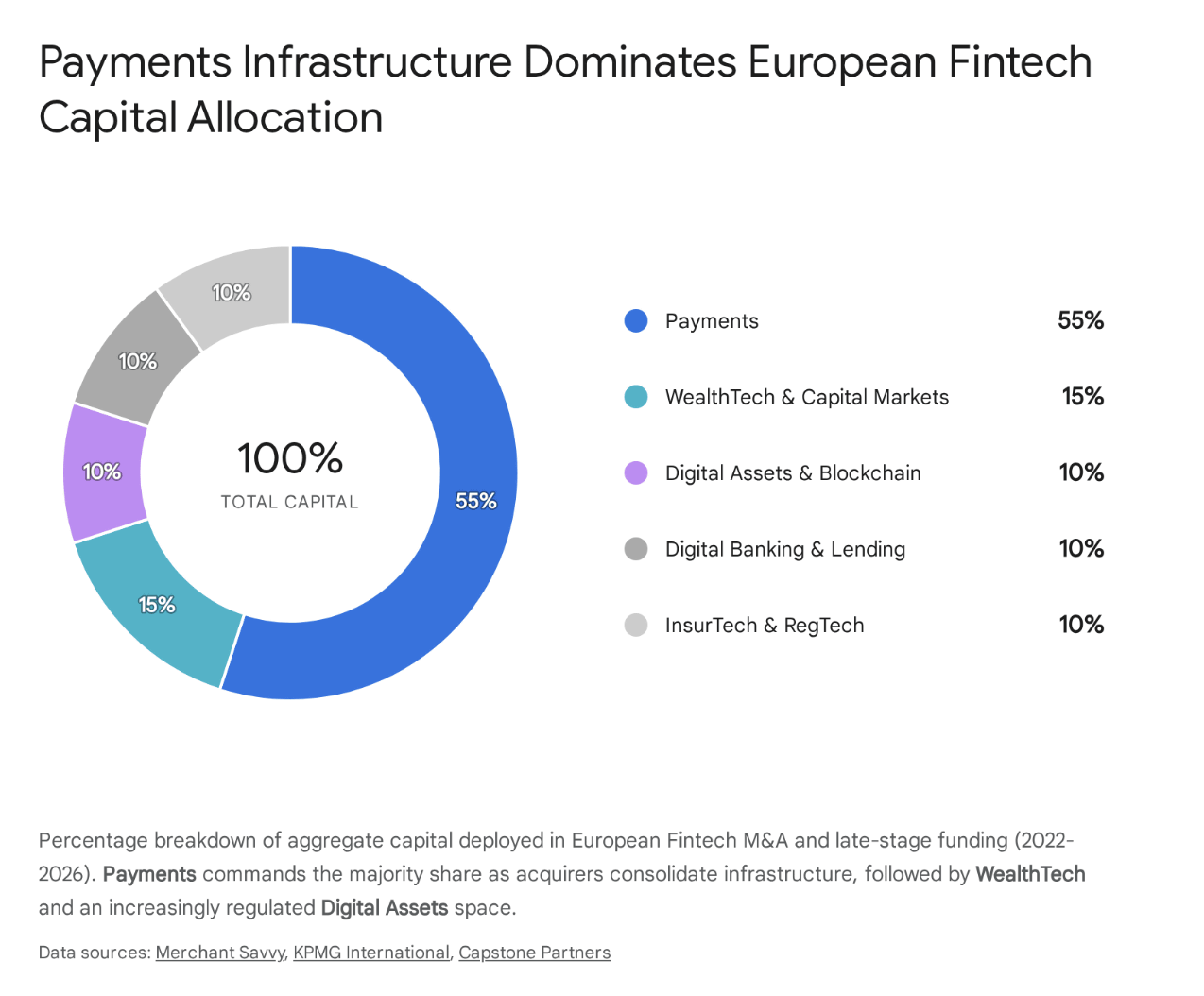
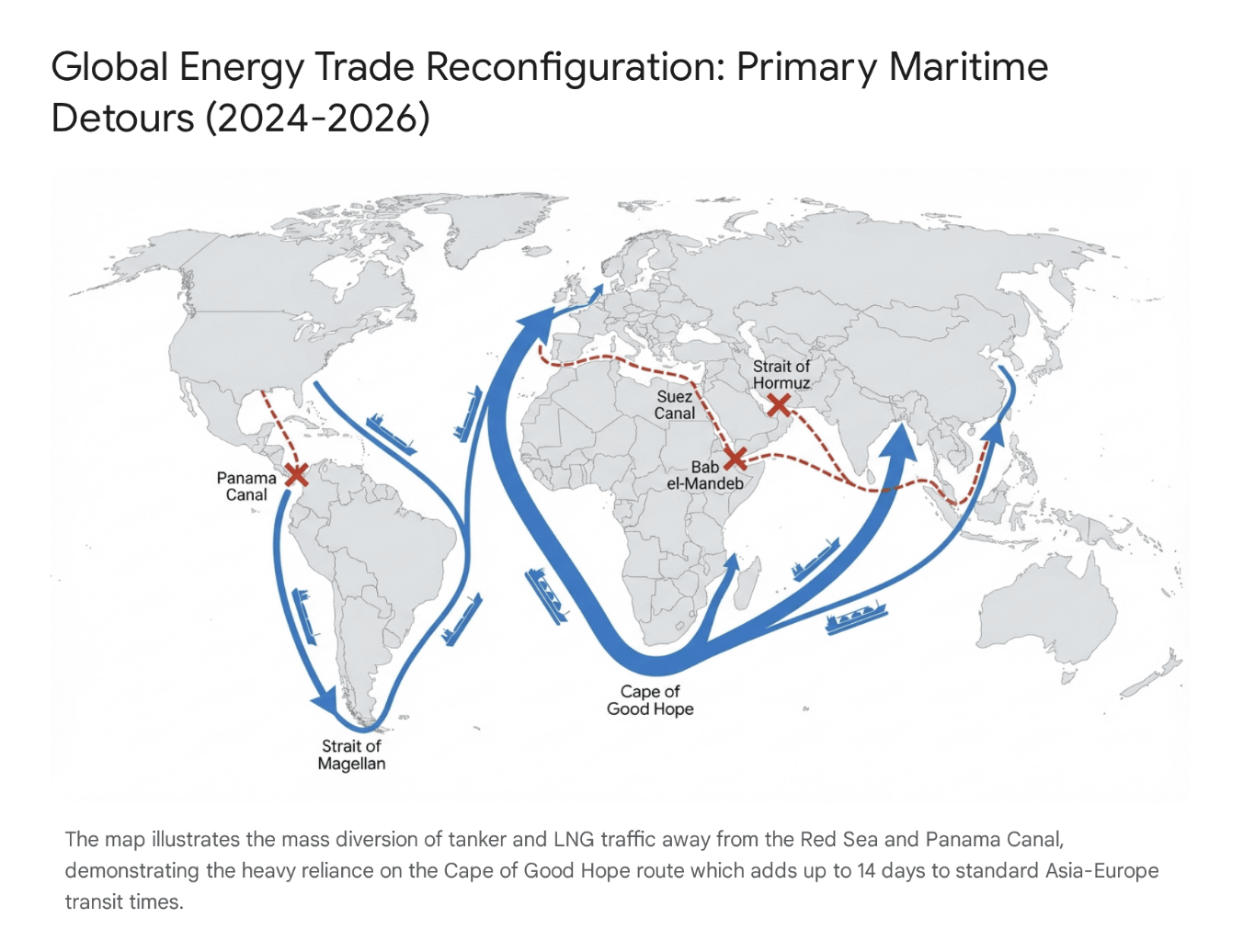
Deep Research Max delivers comprehensive reports, rigorous fact-checking, and expert-level analysis more cost-effectively and efficiently than ever before. Compared to the initial version of Deep Research released in December 2025, Deep Research Max offers a significantly increased number of referenced sources, allowing for the identification of crucial nuances that were often overlooked in the earlier version.
Furthermore, Google has improved Deep Research to allow it to reference diverse sources and carefully compare conflicting evidence. As a result, it is now possible to organize information clearly and transform complex technical data into a practical format that stakeholders can use, based on reliable sources such as documents filed with the U.S. Securities and Exchange Commission and open-access, peer-reviewed academic journals.
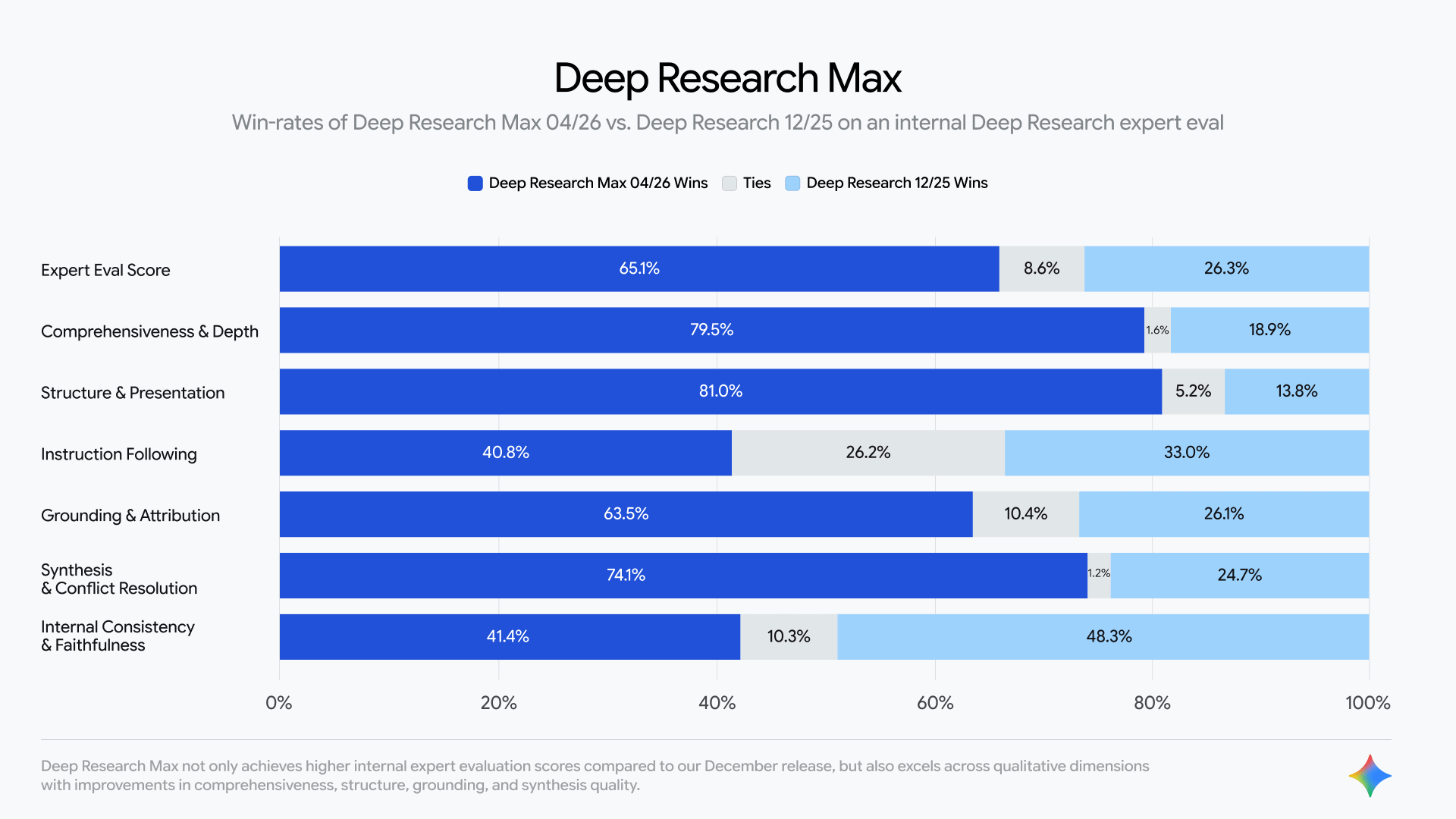
The graph below compares the performance of Deep Research Max with the initial version of Deep Research released in December 2025. In evaluation categories such as 'Expert Eval Score (score in which human experts evaluate the AI's answers)', 'Comprehensiveness & Depth', 'Struture & Presentation (structure & readability)', 'Instruction Following (how well it follows instructions)', 'Grounding & Attribution (clarity of evidence & reliability of sources)', 'Synthesis & Conflict Resolution (integration of information & handling of contradictions)', and 'Internal Consistency & Faithfulness (internal consistency & fidelity)', Deep Research Max clearly outperforms the initial Deep Research except for Internal Consistency & Faithfulness.
Deep Research and Deep Research Max are available as a public preview through paid plans of the Gemini API. Deep Research and Deep Research Max will soon be available to Google Cloud startups and large enterprises.
Related Posts:

in AI, Posted by logu_ii