What conspiracy was lurking behind the explosive increase in 'large truck and passenger car accidents' in suburban America?
In the mid-2010s, an unusual number of collisions between 18-wheel trucks and passenger cars began occurring in
New Orleans' Car-Crash Conspiracy | The New Yorker
https://www.newyorker.com/magazine/2026/04/20/the-car-crash-conspiracy
Around 2015, there was a sharp increase in collisions between 18-wheel trucks and cars on a short 14-mile (approximately 22.5 km) section of Interstate 10 that runs through a suburban area known as 'New Orleans East.' In New Orleans, the number of collisions between large trucks and cars was 69 per year in 2004, but by 2017, the number had nearly tripled.
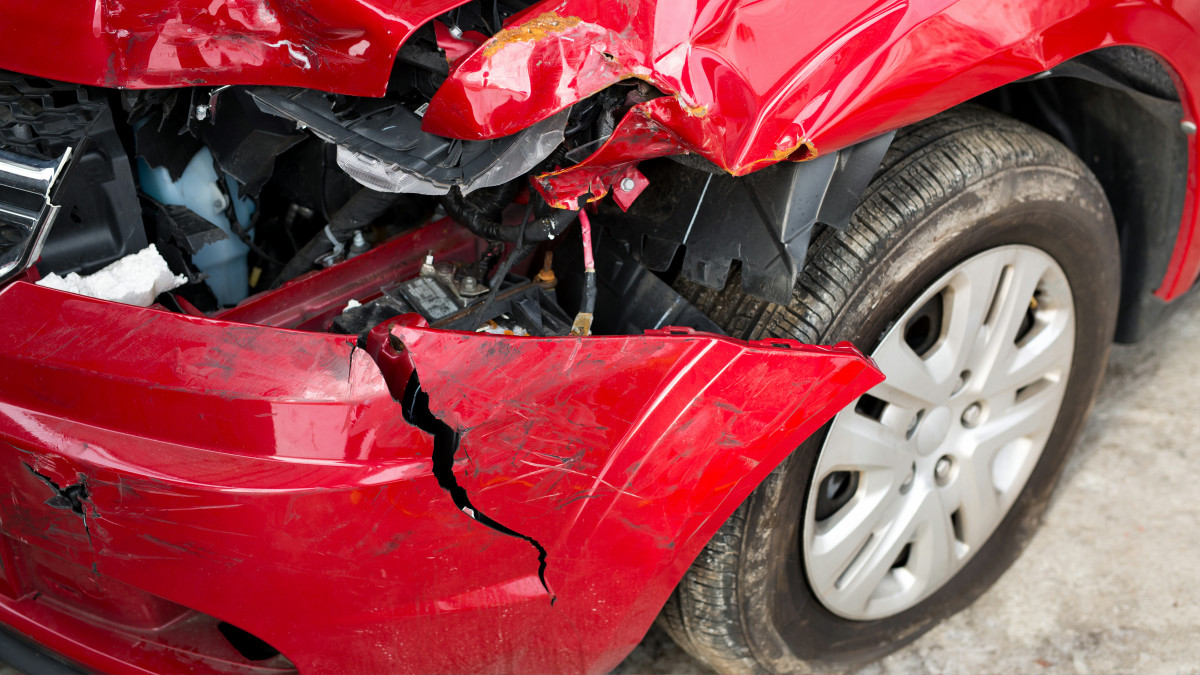
In accidents involving large trucks and passenger cars in East New Orleans, the passenger cars were often damaged, and the injured occupants required medical treatment. Insurance investigators found no apparent cause of the accidents, such as faulty lighting or steep inclines, even when examining the accident scenes, highlighting how the area had become a ' Bermuda Triangle of asphalt' for truck drivers.
Another puzzling point is that in most of the accidents in this region, there were multiple people in the passenger car. For many years in Louisiana, the average number of passengers in car accidents remained stable at around 1.4, but when accidents between large trucks and passenger cars began to increase in the suburbs of New Orleans, the average number of passengers reportedly exceeded 3.

One day in May 2017, a truck driver named Lee Mulligan was driving on Interstate 10 when he put on his turn signal to change lanes. However, when he checked his mirrors, he saw
After confirming that the Altima had reversed, Mr. Mulligan turned on his turn signal again and slowly attempted to move into the center lane. However, when he checked his mirror at that moment, he saw that the Altima was approaching right behind his truck, and the front of the Altima collided with Mr. Mulligan's truck. Fortunately, the Altima driver did not lose control of the vehicle and was able to pull over to the side of the road.
The driver of the Ultima was a 49-year-old Black woman named Demetra Henderson-Burkhalter, with a man named Gregory Offley and a woman named Jacqueline Thompson as passengers. A passing driver also called the police, claiming to have witnessed the accident. Henderson-Burkhalter and Thompson reported being seriously injured and filed a lawsuit against Mulligan and the shipper, Walmart. In the lawsuit, the two women claimed that Mulligan suddenly cut in their way without warning, and eyewitnesses provided testimony to support this.
At first glance, it looks like a simple traffic accident, but Mulligan says he felt as though the Altima didn't slow down when his truck started changing lanes, but rather accelerated and crashed into him. A consultant hired by the defense, Wayne Winkler, a former police officer, investigated the incident and found that it had many similarities to traffic accidents that had occurred in New Orleans East in the past 18 months. They found a staggering 64 accidents that shared similarities such as 'a passenger car hitting a large truck from behind while it was changing lanes,' 'there were witnesses in other vehicles,' and 'there were always multiple people in the vehicles involved in the collision.'
Further investigation revealed that Thompson, who was driving the Ultima, was a member of the 'Harris family,' which consisted of dozens of relatives, and that several other members of the Harris family were also victims of the collision with the large truck. A man named Ryan Harris (Red Harris), the owner of an auto repair shop, had been in contact with many of the people and their families who had filed lawsuits related to the truck collision.
Furthermore, Henderson-Burkholter, who was driving the Ultima, had been in contact with a man named Cornelius Garrison III, a resident of New Orleans, nearly 30 times in total, and had called him more than 10 times before and after the collision. Garrison was also in contact with Red Harris and other members of the Harris family, as well as people involved in other collisions with large trucks. In 2015, he himself was a plaintiff in a truck collision case, and in 2014, he was a witness to a truck collision. A lawyer who later investigated these records noted that Garrison had become 'the hub connecting the plaintiffs in all these cases.'

Some lawyers specializing in traffic accidents in New Orleans have long had ties with informal recruiters known as 'runners.' Runners reportedly intercept police radio communications and cultivate relationships with towing companies to quickly obtain information on traffic accidents, contact plaintiffs, and refer them to law firms, earning a commission. Garrison, born in 1966, also worked as a runner, having held jobs such as a restaurant cook and a shoe shiner at a tourist hotel.
One day, Garrison learned from a man named Jeffrey Delucell about a scam where people intentionally crash their cars into large trucks to collect insurance money. While accidents with large trucks naturally have a high probability of serious injury or death, the average car insurance only covers about $15,000 (approximately 2.4 million yen) per injured person, whereas large trucks are insured up to $1 million (approximately 160 million yen), making the risk high, but the return high as well.
In New Orleans, scammers who stage truck accidents are called 'slammers,' and around 2010, there were even individuals who would look for local residents to ride along in the car involved in the accident in exchange for a portion of the insurance money. As of 2015, Garrison had teamed up with Delucell and, in cooperation with a lawyer named Jason Giles, was earning $1,300 (approximately 210,000 yen) for each plaintiff he referred.
In New Orleans, where about a quarter of the population lives in poverty, it was easy to find locals willing to risk their lives for money. The New Yorker wrote, 'The prospect of making a lot of money in just a few hours of work clearly outweighed the fear of getting into a car that could be involved in a highway crash.'
Garrison was not only an excellent intermediary, but also an extremely skilled driver at staging accidents. There was a risk of everyone dying if he misjudged the point of collision with the 18-wheeled truck even slightly, or pressed the accelerator even a little too hard when accelerating, but Garrison carefully tracked the target truck and caused the accident. Over several years, Garrison staged numerous truck accidents, but miraculously, no one was seriously injured or killed.
Furthermore, Garrison collaborated with a second vehicle, a 'spotter,' to act as a neutral witness and assist in the lawsuit. After the collision with the truck, Garrison would get out of his car and switch to the spotter's vehicle, creating the illusion that another occupant was driving the car. This system prevented any record of Garrison repeatedly causing accidents, allowing him to continue his fraudulent activities for many years.

When Delousel was shot and killed for reasons unknown in 2016, Garrison teamed up with Vanessa Motta, a young lawyer who had just graduated from law school. Motta was a former Hollywood
Sean Alfortish, the head of this law firm, is a former lawyer who was disbarred for embezzling funds, but Motta fell in love with Alfortish, who is 14 years older than her. Alfortish, who had previously teamed up with Garrison to run slammers, began getting Motta to file lawsuits against trucking companies and insurance companies, and soon their combined annual income skyrocketed to several million dollars (hundreds of millions of yen), an extraordinary amount for rookie lawyers.
One reason Garrison and Motta's conspiracy remained uncovered for so long was a problem with the New Orleans judicial system: jurors tended to be sympathetic to working-class locals and were more likely to impose harsh fines on large, unseen corporations. The frequent accidents on the same roads eventually made the transportation companies realize that a large-scale fraud was taking place in New Orleans. However, because challenging the lawsuit and going to a jury trial would risk an even worse situation, they often settled by paying a certain amount of money.
However, in 2018, the shipping company and lawyers could no longer ignore the fraud and began collecting evidence, and in January 2019, that information fell into the hands of the FBI. In October of the same year, Garrison was arrested by local police on unrelated charges, and in negotiations with the FBI, he promised to cooperate with the investigation and provided various pieces of information. Garrison actually acted as a hub connecting the impoverished residents involved in the accident with lawyers, and he also cooperated with the investigation by having conversations with Alfortish while wearing an FBI wiretap.
When Motta and Alfortish learned that the investigation had reached Garrison, they offered him $500,000 (approximately 80 million yen) if he would take all the blame, but Garrison refused. In September 2020, Garrison was indicted, with Alfortish listed as 'Co-conspirator A' and Motta as 'Attorney B' in the indictment. The indictment concealed the fact that Garrison had cooperated with the FBI, but a closer reading of the document revealed that Garrison had indeed cooperated.
Four days after the indictment was made public, Garrison was shot and killed with 10 bullets while having dinner at his mother's apartment. It was eventually revealed that Al Fortish had hired Red Harris, who had previously worked with Garrison, to kill him, and that a man named Leon Parker, who had been romantically involved with Harris's mother, carried out the murder. It was discovered that Al Fortish and Parker met at Harris's auto factory and that Parker had offered to pay them for killing Garrison.

In December 2024, Alfortish and Motta were indicted for fraud, and Alfortish was imprisoned. The New Yorker reports that Alfortish, who will be 58 in 2025, has a history of felony convictions and is also charged as an accomplice in Garrison's murder, making it highly likely that he will spend the rest of his life in prison.
Furthermore, Motta, who gave birth to a child with Alfortish in 2023, had been out on bail for a long time, but in a trial in March 2026, she was found guilty of fraud, obstruction of justice, and threatening witnesses and was immediately detained. It is said that Motta could face a maximum sentence of 20 years in prison.
Related Posts: