Google's 'TurboQuant,' which reduces AI memory usage by one-sixth, is being criticized for actually increasing memory demand rather than decreasing it.
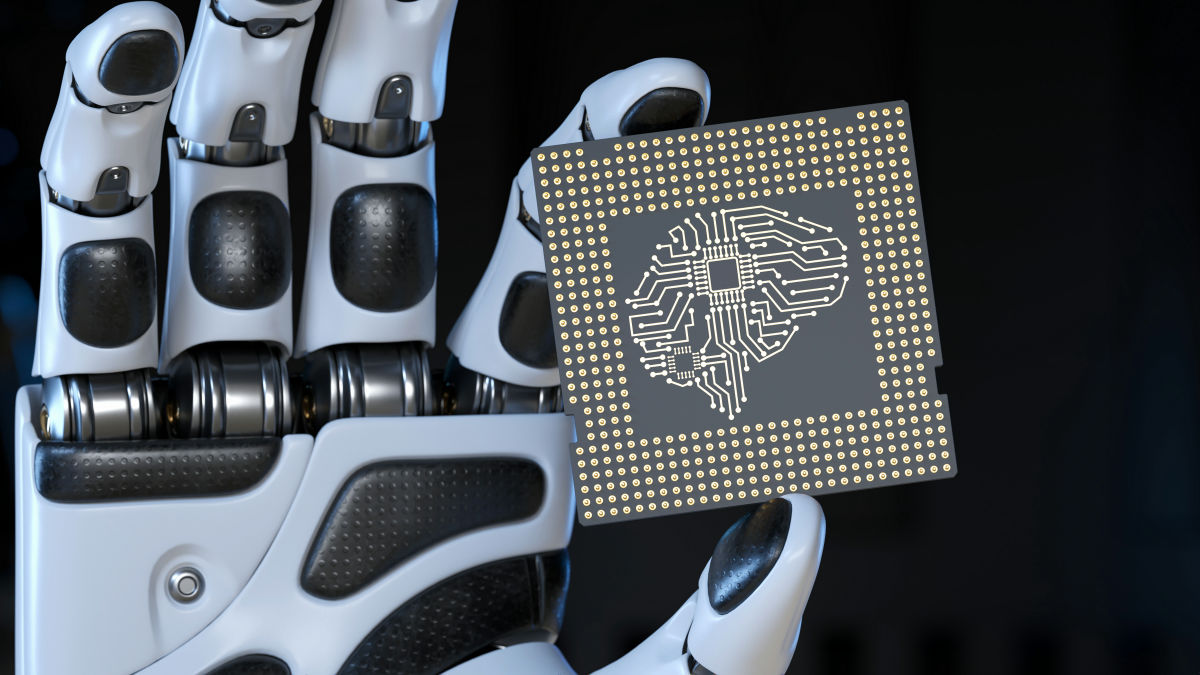
In March 2026, Google announced 'TurboQuant,' a compression technology that reduces memory usage, a major burden for AI, while also improving processing speed and search performance. There are hopes that this will reduce memory demand in the AI field and lead to lower memory prices, but several overseas media outlets have expressed the view that 'TurboQuant will not solve the memory shortage, but rather increase memory demand.'
Will Google's TurboQuant algorithm hurt AI demand for memory chips?
TurboQuant isn't the RAM crisis savior you're hoping for, analysts say — as memory prices continue to look bleak | TechRadar
https://www.techradar.com/computing/memory/turboquant-isnt-the-ram-crisis-savior-youre-hoping-for-analysts-say-as-memory-prices-continue-to-look-bleak
TurboQuant is a compression technique that stores high-dimensional vectors with as few bits as possible while minimizing the loss of the proximity and relationships between the original vectors. By using TurboQuant, it becomes possible to compress the 'key-value cache' that AIs such as ChatGPT and Claude use to store the context of conversations, and it is said that memory usage can be reduced to one-sixth of the conventional amount.
Following this announcement, memory chip-related stocks plummeted, resulting in a loss of nearly $100 billion (approximately 15.98 trillion yen) in market value.
The market value of memory-related products has fallen by approximately $100 billion, and Micron's stock price has dropped 15% following reports that Google's announcement of its TurboQuant compression algorithm will drastically reduce AI memory usage - GIGAZINE

However, financial newspapers such as the Financial Times and technology media outlets like TechRadar suggest that the introduction of TurboQuant will not reduce memory demand, but rather increase it.
Professor Kwon Seok-jun of Sungkyunkwan University in South Korea told the Financial Times that TurboQuant has the potential to reduce the execution cost of large language models by a quarter to an eighth, which at first glance seems to threaten the demand for high-bandwidth memory chips. However, he explains that the significant reduction in the cost of AI processing will enable workloads that were previously impossible due to high execution costs, such as 'real-time coding assistants' and 'simultaneous execution of AI agents,' and will actually increase the overall demand for AI computing.
This is an example of Jevons' paradox , where improved efficiency leads to an increase in overall resource usage. In his 1865 book ' The Coal Problem ,' Jevons pointed out that 'the efficient use of coal has made coal-powered technologies more economically feasible in more applications, resulting in increased coal usage.' The emergence of TurboQuant suggests that a similar phenomenon could occur in the memory field.
Kim Young-geun of Mirae Asset Securities, a South Korean investment bank, likens the arrival of TurboQuant to the arrival of the container management platform Kubernetes . Kubernetes is a technology that enables multiple applications to run on a single server, significantly improving hardware efficiency.
As Kubernetes became widespread in the late 2010s, there were concerns that demand for servers and memory would decrease because companies would need fewer resources to achieve the same results. However, in reality, the decrease in costs spurred a significant increase in usage, resulting in the exact opposite outcome. Ray Wang of research firm SemiAnalysis stated, 'The market has greatly misunderstood the trends in TurboQuant. We believe that the evolution and innovation of AI models will lead to increased memory demand in both training and inference.'

Furthermore, investment media outlet The Motley Fool pointed out that the number of parameters in large-scale language models has increased dramatically in recent years, and that the emergence of TurboQuant will boost memory demand. As a result, they argued that the stock prices of memory manufacturers such as Micron, Sandisk, and Seagate could rise.
Alphabet's Google Has Given Birth to 3 Millionaire-Maker Stocks Hiding in Plain Sight. All of Them Are Trading at Incredible Valuations Right Now. | The Motley Fool
https://www.fool.com/investing/2026/04/10/google-has-given-birth-to-3-millionaire-maker/
Related Posts: