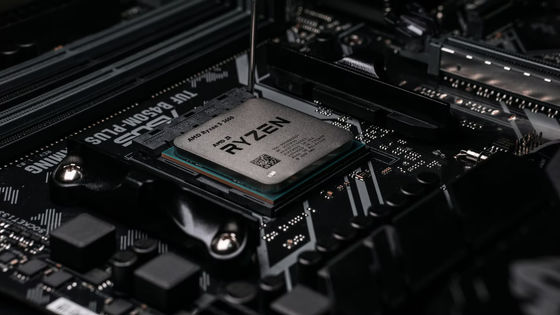
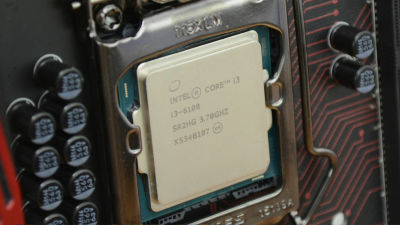
Geekbench 6.7 will add an Intel BOT detection feature to enable fair comparisons in benchmark results.
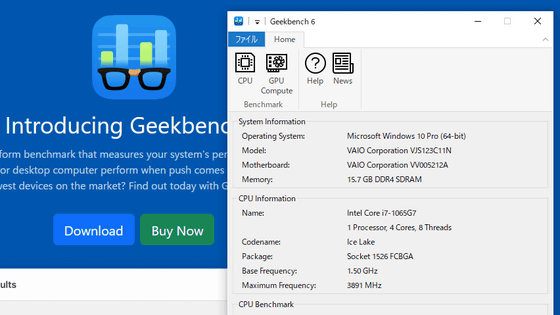
Primate Labs released Geekbench 6.7 , the latest version of its benchmark software
Geekbench 6.7 - Geekbench Blog
https://www.geekbench.com/blog/2026/04/geekbench-67/
Geekbench 6.7 adds Intel BOT detection to spoof out 'unrealistic' CPU scores — Benchmark runs with BOT enabled will be marked as invalid | Tom's Hardware
https://www.tomshardware.com/pc-components/cpus/geekbench-6-7-adds-intel-bot-detection-to-spoof-out-unrealistic-cpu-scores-benchmark-runs-with-bot-enabled-will-be-marked-as-invalid
The Intel BOT in question is a tool designed to improve the native performance of games. It takes a checksum from each executable file, identifies the target, and applies optimized processing. It is advertised as a new feature that boosts the performance of certain applications on the Intel Core Ultra 200 Plus (Arrow Lake Refresh) series and Core Ultra 300 (Panther Lake) series.
Intel® Binary Optimizer: Enhanced Performance for Gaming
https://www.intel.co.jp/content/www/jp/ja/support/articles/000102604/processors.html
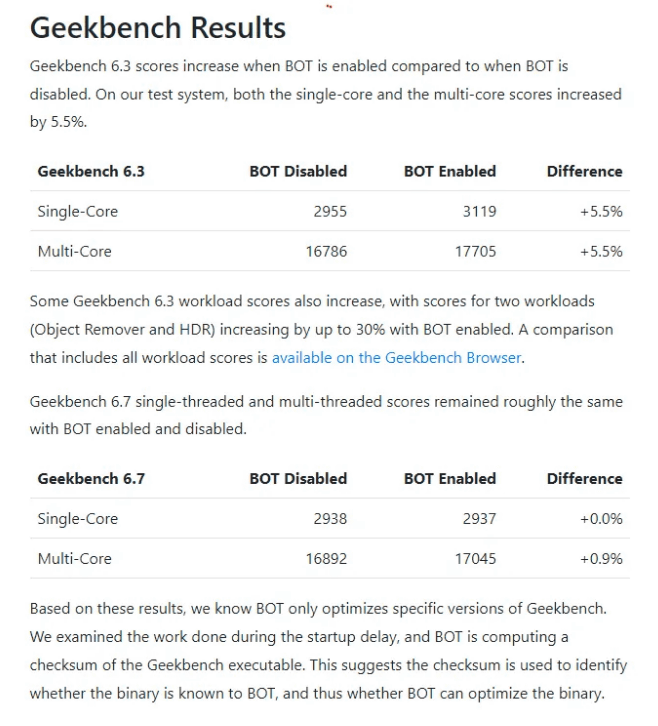
However, Primate Labs had warned that Intel BOT could potentially bring up to a 40% improvement in Geekbench workloads. Subsequent testing showed a 5.5% improvement in both single-core and multi-core overall scores, and a 30% higher result in certain tests such as HDR processing.
Primate Labs is concerned that the scores tend to boost only specific processes rather than increasing uniformly across the board. Since benchmarks are supposed to measure CPU performance across multiple workloads that broadly reflect real-world usage, technologies like Intel BOT 'may not produce benchmark results that accurately reflect typical usage.'
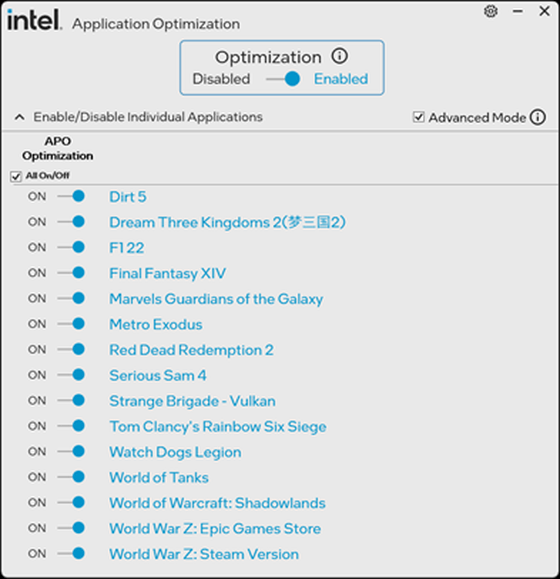
According to testing by the IT news site Tom's Hardware, Geekbench 6.3 showed a 5.5% increase in both single-core and multi-core performance when the BOT was enabled. On the other hand, Geekbench 6.7 currently shows almost no difference. Even if the BOT is optimized for 6.7, the results of that optimization will be treated as invalid and will not be used for comparison with other CPUs.
Geekbench 6.7 also includes several other improvements.
For example, the Android version now displays the manufacturer and model name of the SoC instead of the architecture name. Also, the RISC-V version now displays the CPU name instead of the long ISA string, and the Linux ARM version has fixed a hang that occurred during multithreaded processing. Note that both the RISC-V and ARM versions for Linux remain in preview. In addition, Primate Labs states that Geekbench 6.7 scores are fully comparable to those of 6.3, 6.4, 6.5, and 6.6, and recommends that all Geekbench 6 users update.
Related Posts: