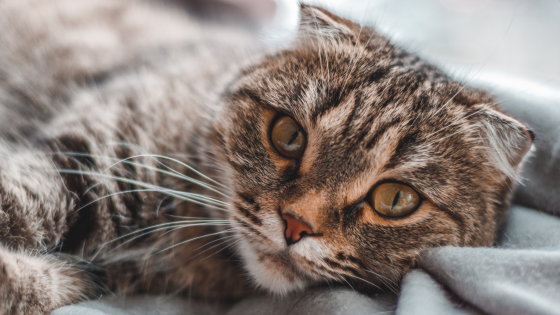
The reason why cats leave food uneaten has been explained: they will eat it again if the smell of the food changes.
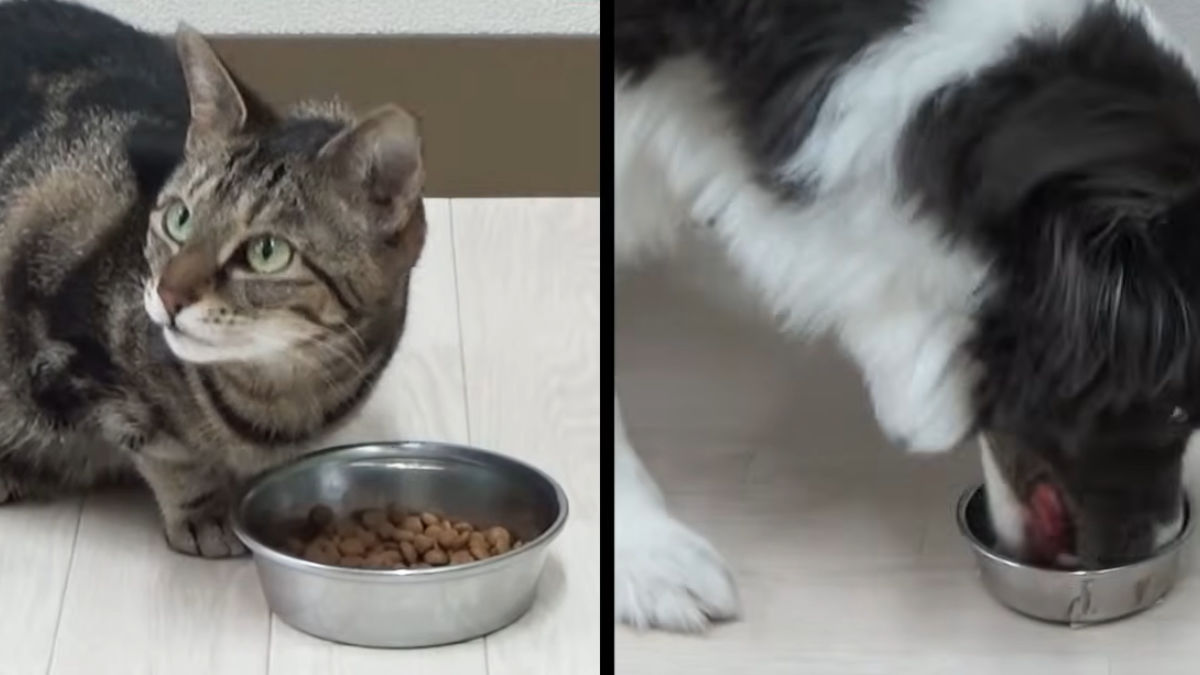
Cats often leave food uneaten, and while various reasons have been suggested, such as 'instincts from their wild days,' 'naturally small appetites,' or 'cats are fickle,' the exact mechanism was not well understood. A research group at Iwate University discovered that cats stop eating not only because they are full, but also because of the smell, by adjusting the type of food they are given.
Olfactory habituation and dishabituation dynamically regulate feeding motivation in domestic cats - ScienceDirect
Unraveling the Reason Cats Leave Food Behind – Changing the Scent of the Same Food Makes Them Eat It Again – | Iwate University (National University Corporation)
https://www.iwate-u.ac.jp/cat-research/2026/04/007818.html
Why Cats Stop Eating — It's Not Just Fullness - YouTube
While dogs tend to eat large amounts of food at once when available, cats are generally known to exhibit 'frequent small-meal feeding,' where they eat small amounts several times a day. This feeding behavior was thought to be a way to balance internal energy regulation with external environmental and sensory influences, but the underlying mechanisms of this unique feline feeding behavior were not well understood.
A research group led by Professor Masao Miyazaki and graduate student Takumi Takahashi of the Faculty of Agriculture at Iwate University conducted an experiment using 12 cats to observe their actual feeding behavior. First, they confirmed that even after fasting for 16 hours (from 6 PM the previous day to 10 AM the next morning), most of the cats spontaneously stopped eating before finishing the food they were given, confirming that frequent small-portion feeding actually occurs.
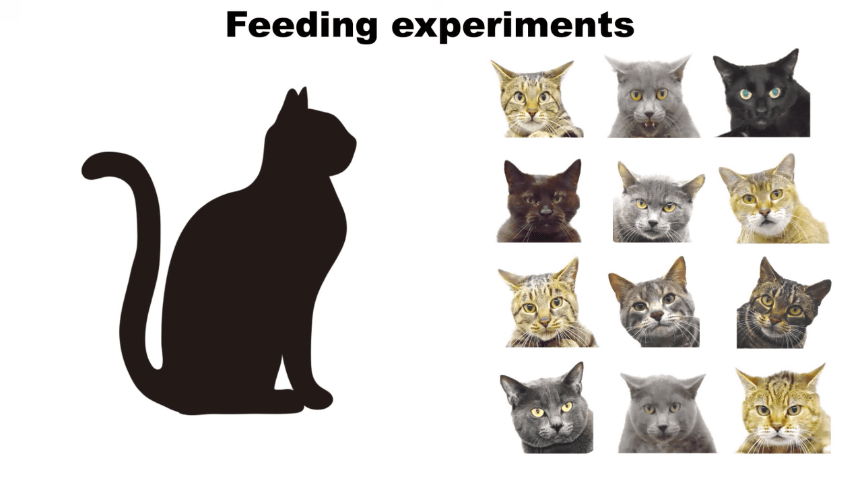
Next, we compared food intake in a feeding cycle consisting of six consecutive '10 minutes of feeding' followed by '10 minutes of rest' under several conditions. All cats were housed one to two at a time in three-tiered cages, at a temperature of 24 degrees Celsius, with lights on from 7 am to 5 pm. They had free access to water and were given standard dry food twice a day. Each cat was not isolated and had continuous contact with other cats in the same room. Under these conditions, we conducted an experiment adjusting the feeding method once daily for 10 consecutive days.
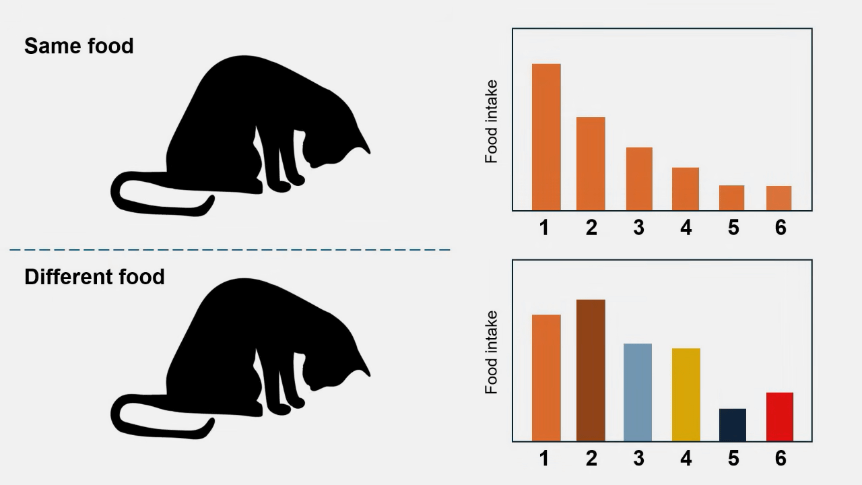
As a result, while intake gradually decreased under the condition of repeatedly giving the same food, this decrease was significantly mitigated and cumulative intake increased when six different foods were given. It was also observed that when a different food was given after repeatedly giving the same food, intake recovered regardless of the palatability of the new food.
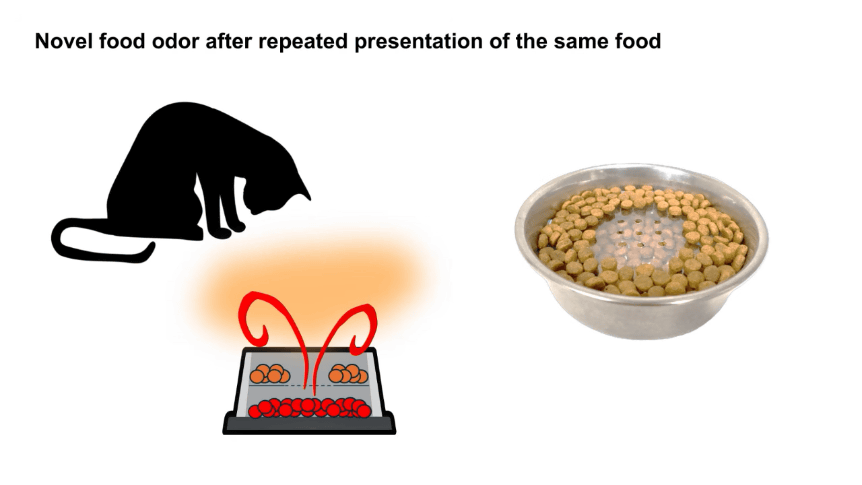
Furthermore, when only the 'scent of new food' was added using a dish with two compartments, while the same food itself was continued to be given, the same recovery was observed as when new food was introduced. Conversely, continuous exposure to the scent of the same food between feeding cycles suppressed subsequent food intake, leading the research team to conclude that the mechanism of small, frequent eating in cats is dependent on 'scent.'
Miyazaki, who led the research, stated, 'This study is the first to experimentally demonstrate that olfactory regulation is involved in cats' behavior of eating small amounts repeatedly. This finding is expected to not only deepen our understanding of feline feeding behavior but also lead to new feeding strategies for cats with reduced appetites and applications in pet food design.'
Related Posts: