Taking a warm bath may improve a marathon runner's performance.

For some, soaking in a warm bath at the end of the day to relieve fatigue is a daily pleasure. A paper published in the academic journal The Journal of Physiology reported an interesting finding: 'Soaking in a warm bath may improve the running performance of long-distance runners.'
Long‐term passive heat acclimation enhances maximal oxygen consumption via haematological and cardiac adaptation in endurance runners - Jenkins - The Journal of Physiology - Wiley Online Library
Marathon training: why hot baths might help you run faster
https://theconversation.com/marathon-training-why-hot-baths-might-help-you-run-faster-276796
Some long-distance runners, such as those competing in marathons, engage in 'altitude training' at high altitudes. This is because being in an environment with low oxygen levels causes the body to produce more red blood cells , which carry oxygen. When they return to lower altitudes, the increased red blood cell count leads to improved running performance.
However, high-altitude training has its drawbacks, including the significant time and financial burdens involved, as well as the need for long-distance travel. Therefore, a research team led by Elliot Jenkins, a doctoral student at Cardiff Metropolitan University in the UK, conducted an experiment to investigate whether a 'warm bath' could serve as a simple alternative to high-altitude training.
The research team recruited well-trained long-distance runners and asked them to continue their usual training while taking five baths a week for five weeks. The bathtubs used were ordinary household bathtubs, and the water temperature was maintained at 40 degrees Celsius using an inexpensive thermometer, with hot water added as needed to adjust the temperature if it dropped. Each bathing session lasted 45 minutes and was conducted immediately after the end of a normal training session.
Before and after a five-week experiment, subjects' red blood cell count, heart structure, and maximum oxygen uptake ( VO2 max) , an indicator of exercise endurance, were measured to investigate the effects of taking a warm bath.
The experiment revealed that subjects who took regular baths for five weeks showed a significant increase in red blood cell count. In other words, the amount of oxygen carried in the runners' blood increased simply by taking regular warm baths.
At first glance, it may seem surprising that simply taking a bath increases red blood cells, even though the person did not go to a high-altitude area with thin oxygen. Regarding the reason for this, Jenkins et al. explain, 'Even a single thermotherapy session causes
Furthermore, it was confirmed that the volume of the left ventricle , which is responsible for the heart's primary pumping function, also increases with prolonged soaking in a warm bath. This change in the left ventricle is thought to be due to the increased blood volume produced by soaking in the bath.
These changes combined to improve the subjects' aerobic capacity, with maximum oxygen uptake increasing by approximately 4% and the ability to reach faster speeds on treadmill tests. Jenkins et al. stated, 'While laboratory measurements are not the same as race results, such improvements are significant for trained athletes, especially considering they were achieved without increasing training intensity or mileage.'
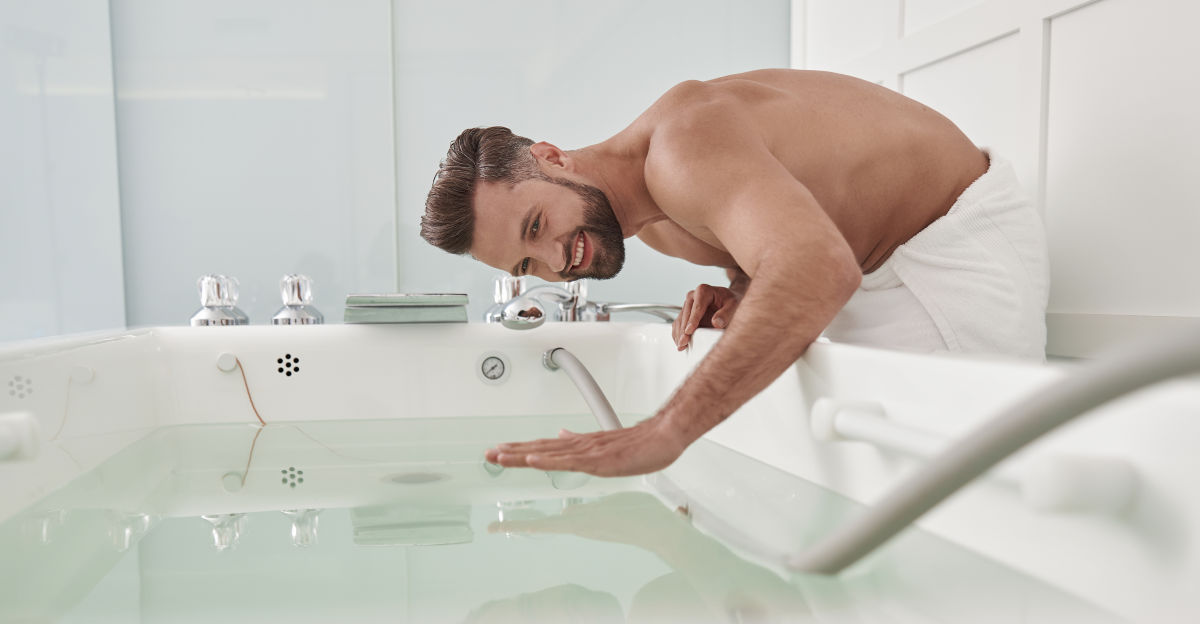
Soaking in a warm bath has the advantage of being relatively accessible to many athletes, as it reduces the risk of injury and physical strain. However, this experiment used only a specific protocol of 'water temperature of 40 degrees Celsius,' '45 minutes per session,' and '5 times a week for 5 weeks,' so it is unclear whether similar effects can be obtained at lower temperatures or for shorter durations. In addition, prolonged bathing can cause symptoms such as dehydration and dizziness, so the risks are not entirely zero.
However, these findings suggest that increasing exercise volume or altitude training is not always necessary to improve long-distance running performance. 'Sometimes, you can encourage physical adaptation in surprisingly simple ways. If marathon runners are looking for practical ways to support their training, passive thermotherapy may be a surprisingly simple tool worth considering,' said Jenkins et al.
Related Posts:





in Science, Posted by log1h_ik