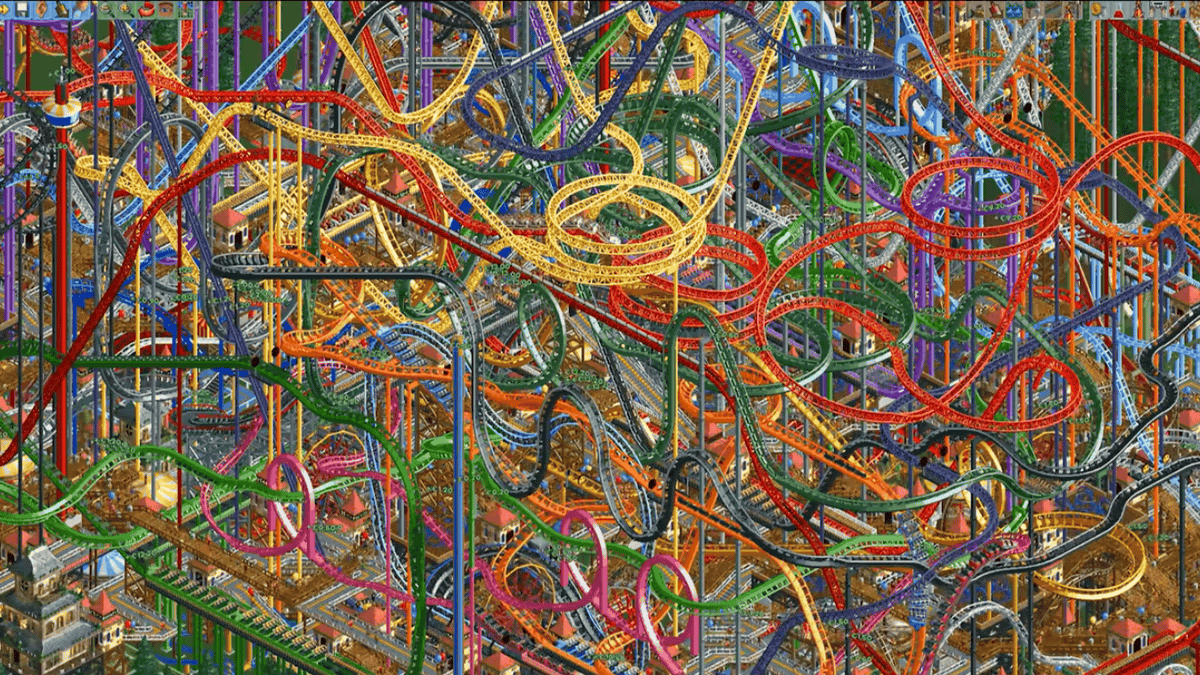
What makes 'RollerCoaster Tycoon,' the amusement park management simulation game renowned as the 'pinnacle of optimization,' so amazing?
'
The gold standard of optimization: A look under the hood of RollerCoaster Tycoon – Larst Of Us
https://larstofus.com/2026/03/22/the-gold-standard-of-optimization-a-look-under-the-hood-of-rollercoaster-tycoon/
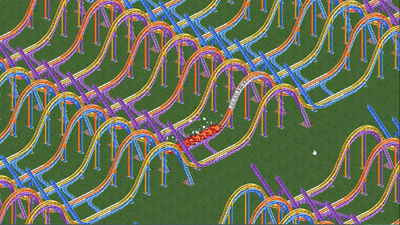
Even today, simulation games can become sluggish or freeze on low-spec PCs due to the placement of numerous objects such as buildings and characters, but 'RollerCoaster Tycoon' achieved a smooth-running simulation game for the machines of the time. Thiessen says, 'This game is often cited as an example of a well-optimized game, developed almost entirely in assembly language by Chris Sawyer . The fact that it could effortlessly simulate a full-fledged theme park with thousands of agents on the hardware of 1999 is truly an astonishing achievement.'
The following video, which showcases the appeal of 'RollerCoaster Tycoon,' also highlights the game's smooth performance, even with a large number of characters and attractions displayed.
The Story of RollerCoaster Tycoon | Noclip Greatest Hits - YouTube
A common explanation for the optimization of 'RollerCoaster Tycoon' is that the game was written in assembly language, a low-level language. Assembly language allows for the description of instructions executed by the CPU almost directly, making it easier to reduce unnecessary processing and achieve higher speeds and improved memory efficiency. On the other hand, development efficiency is extremely low, and writing and maintaining the code is difficult. Therefore, most games primarily use the more productive C or C++, and assembly language is generally used only for certain processes where performance is particularly important. As of 1999, assembly language was rarely used in game development coding, and even the original ' DOOM ,' released in 1993, was mostly written in C, with assembly language used only in a very small part.
In a 2024 interview , developer Sawyer said, 'Writing in a high-level language would have made the game too slow, or we would have had to limit the complexity of the simulation to maintain speed. The look and feel of the game are very important to me, and to achieve that, we needed to display the park wide enough and in enough detail, and simulate a sufficient number of trains, vehicles, and guests so that the game didn't feel cramped, while maintaining a high frame rate. Because there were so many objects the game had to handle, almost all the code involved in object handling had to be very efficient, so I opted for low-level assembly programming, which I've always preferred.'
Furthermore, Thiessen points out that not only was assembly language used, but the code for 'RollerCoaster Tycoon' was also actively optimized. Although the code for 'RollerCoaster Tycoon' is not publicly available, a project to re-implement 'RollerCoaster Tycoon 2,' which is almost identical but with enhanced scenarios and facilities, is underway by enthusiastic fans as open source. According to Thiessen, this project is also not the original source code, but it boasts a high degree of accuracy based on years of reverse engineering.
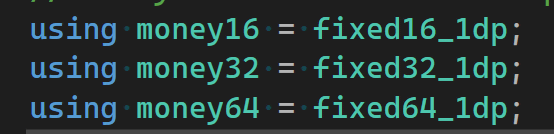
As an example of optimization for 'RollerCoaster Tycoon,' Thiessen explains the following specific example:
Types of money
The 'money' used in games is often managed with different sizes depending on its purpose, rather than a single data type. Normally, the data type is determined by assuming the maximum value, but in 'RollerCoaster Tycoon,' this is further subdivided, with 4 bytes used for large values such as facility values, and 1 byte used for small values such as shop prices, selecting the optimal size for each variable. Modern CPUs have little performance difference due to such optimizations, so many values are standardized to 8-byte variables, but in the design at the time, this was seen as an effective optimization.
- Replace mathematical operations with bit shifts.
In 'RollerCoaster Tycoon,' multiplication and division are sped up by replacing some operations with a process called '
- Game design that prioritizes performance
Mr. Thiessen also pointed out that 'RollerCoaster Tycoon' not only optimizes the game experience for the code, but also designs the game in a way that optimizes performance. For example, in the pathfinding used in the game, when a visitor decides which attraction they want to visit in the amusement park and walks to it, the 'pathfinder' that searches for the route to that attraction is a computationally intensive task. Therefore, in 'RollerCoaster Tycoon,' visitors decide on a destination and move there, but an upper limit is placed on pathfinding to reduce the processing load, and as a result, detours and getting lost, which are rarely seen in computationally intensive simulation games, can occur. Furthermore, this limitation is also incorporated into the game system, and optimization is used as a game element, such as allowing visitors who purchase a park map to explore a wider area.
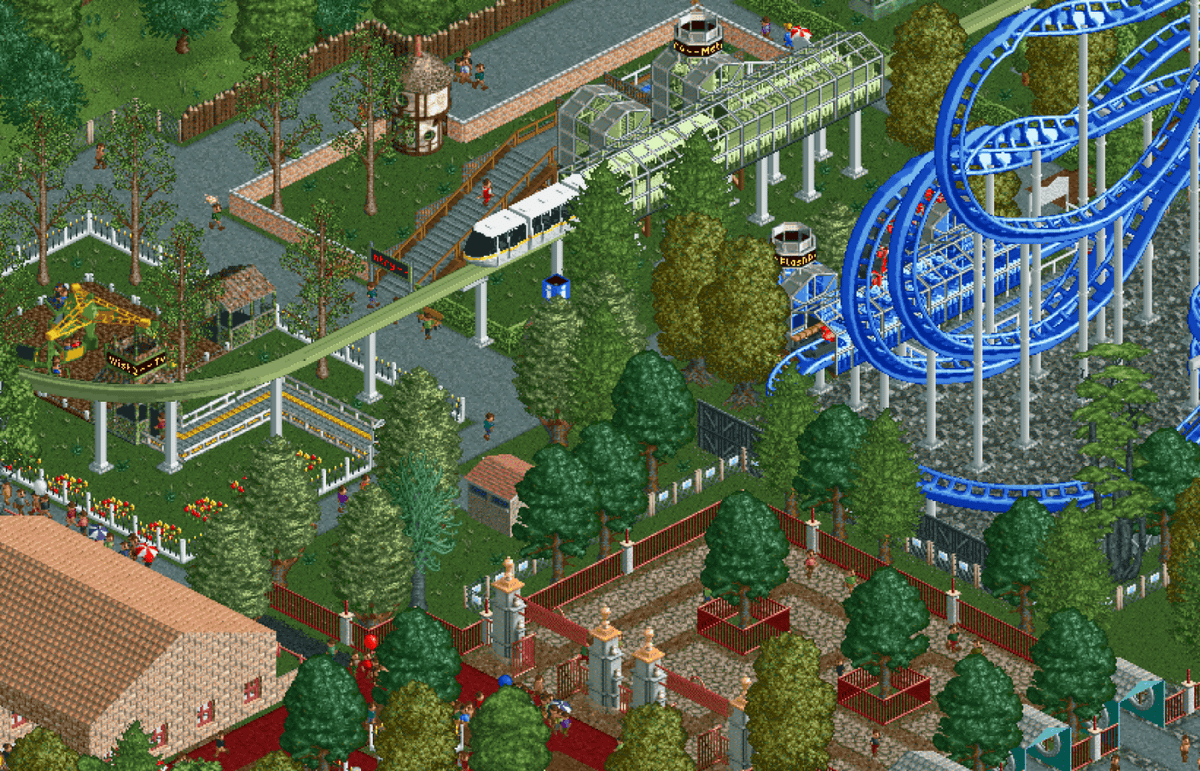
• Crowds without traffic jams
A common problem in business simulation games is that they lag due to attracting too many customers. In 'Rollercoaster Tycoon,' customers don't try to avoid each other or overlap; only a negative rating of 'too many people' is displayed. Like the example in Pathfinder, this behavior feels unnatural for a simulation game, but it can be seen as a game design choice to optimize performance.
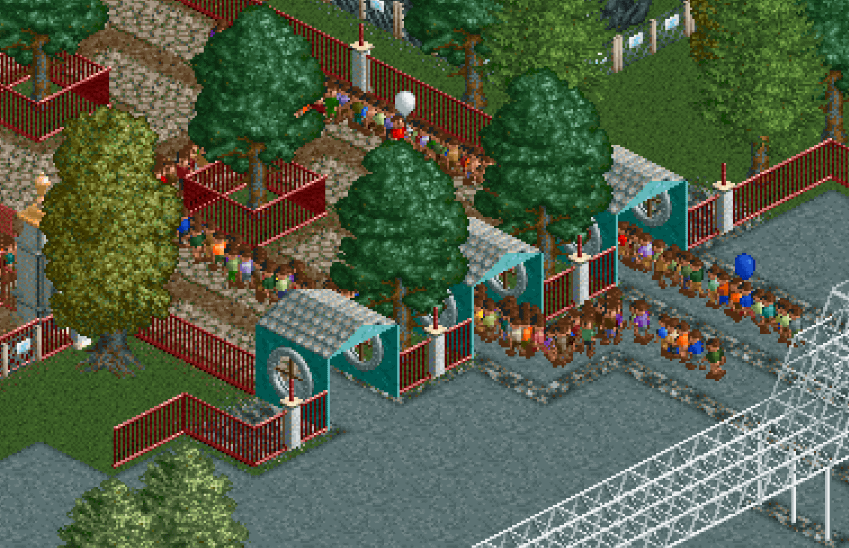
In summary, the superior performance of 'RollerCoaster Tycoon' stems from its excellent judgment in determining 'how much to calculate accurately' and 'what to omit,' as well as the fact that the same person handled both game design and programming, allowing for a game design that was optimized for the program. Thiessen stated, 'Some of this optimization was only possible at the time, but it's not impossible today. It just requires more dialogue between programmers and game designers, and the courage to say no to technical challenges.'
Related Posts: