Britain seriously considering banning social media for under-16s, banning mobile phones in all schools

In December 2025, Australia passed a law banning the use of social media by people under the age of 16, and similar regulations are being considered in the UK.
Government to drive action to improve children's relationships with mobile phones and social media - GOV.UK
The Online Safety Amendment Bill, which was passed in Australia in 2024 and came into effect in December 2025, is also known as the Social Media Minimum Age Bill or the Social Media Prohibition Act, and requires platforms to prevent minors under the age of 16 from using social media.

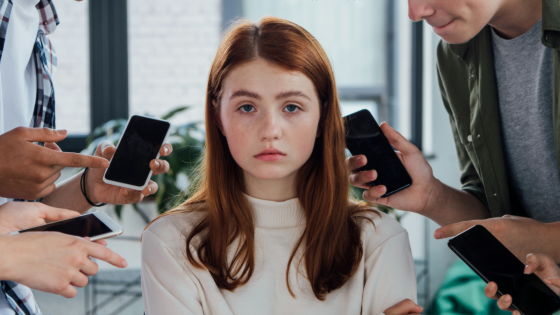
The reason for the creation of these laws is the negative influence that social media has on young people. Smartphones and social media are highly addictive, and there are reports of negative effects on mental health.
This issue is also a concern in the EU, and in November 2025 the European Parliament adopted a proposal to set the minimum age for using social media at 16. Development of an 'EU age verification app' is also underway.

Conservative MP John Nash has already introduced a bill in the House of Lords, the UK's upper house, to restrict the use of social media to those aged 16 and over, and 61 members of the ruling Labour Party have expressed their support for the bill to Prime Minister Starmer.
'The longer we delay this legislation, the more children we will sacrifice,' said Senator Nash. 'I continue to urge all my colleagues to support the amendments I have introduced to end the devastating harm being done to our generation.'
In response to these developments, the government is currently discussing measures, including banning the use of social media by people under the age of 16. The discussions are expected to include an exchange of opinions on the following measures:
Setting an appropriate minimum age for children to access social media, including considering banning use by children under a certain age.
Explore improvements to our 'age guarantees' to help enforce minimum age restrictions so that children have age-appropriate experiences and view age-appropriate content.
- Removing or restricting features such as 'infinite scrolling' that encourage addictive or compulsive use of social media.
Consider further measures to help parents support their children's digital environment, such as providing more detailed guidance and introducing simpler parental controls.
Speaking on this matter, Minister for Science, Innovation and Technology Liz Kendall said: 'Through the Online Safety Act, the Government is already taking concrete steps to provide a safe online world for children and young people. These laws were never intended to be an end in themselves, I understand that parents still have serious concerns and I stand ready to take further action. Technology has huge potential to create jobs, transform public services and improve lives - but this potential can only be seized if people know they and their children are safe online. We are committed to ensuring that technology enriches, not harms, children's lives and providing every child with the childhood they deserve.'
The Online Safety Act mentioned by Minister Kendall is a law that will be gradually implemented from 2023 with the aim of protecting minors, and will require age verification to ensure minors do not encounter inappropriate content when using the internet.
According to the government, 8 million users visit pornographic sites with age checks every day, and the number of site visitors has fallen by one-third since July 2025, making it less likely that children will encounter content they should not be viewing.
Major porn site Pornhub loses 47% of traffic due to mandatory age verification in the UK, XVideos and xHamster also see sharp declines - GIGAZINE

However, it has also been reported that sites that ignore the obligation to 'verify age' have seen their traffic more than double, raising questions about the accuracy of the government's claims.

Related Posts:





in Note, Posted by logc_nt