Research shows conservatives are prone to 'slippery slope reasoning'

Political ideology is primarily divided into two categories: '
“And the Next Thing You Know . . .”: Ideological Differences in Slippery Slope Thinking
https://journals.sagepub.com/doi/10.1177/01461672251391893
Conservatives are more prone to slippery slope thinking - PsyPost
https://www.psypost.org/conservatives-are-more-prone-to-slippery-slope-thinking/
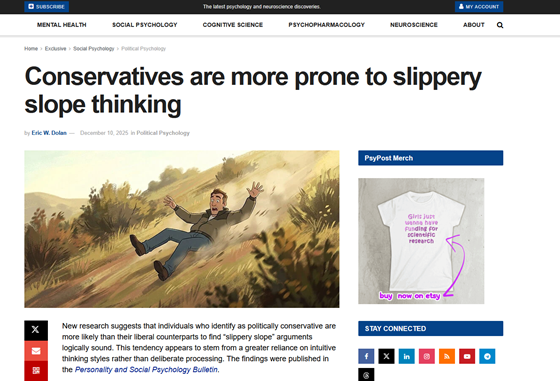
The slippery slope argument is an argument that proceeds in stages, such as 'Accepting A means accepting B, and accepting B means accepting C...', and finally concludes, 'Therefore, A should not be accepted either.' For example, an example of a slippery slope argument would be, 'If euthanasia is legalized, it may eventually be abused, leading to people being euthanized against their will. Therefore, it should not be legalized.'
The slippery slope argument can be an exaggerated leap unless it is clear that 'if A is accepted, will B really happen?' and 'if B does happen, will it really progress to C?' However, if the situation is such that a chain reaction is likely to occur beyond A, it can be a valid caution.
The focus of this study was on whether there is a political bias in people who are more likely to perceive texts using similar slippery slope arguments as 'logical.'
The research team, led by Rajen A. Anderson of the University of Leeds in the UK, conducted 15 studies involving participants from the United States, the Netherlands, Finland, and Chile, combining questionnaire surveys, experiments, and social media analysis. First, in the questionnaire survey, participants were presented with typical slippery slope arguments gleaned from textbooks and philosophy websites, while avoiding politically charged topics as much as possible. They were asked to read a scenario in which a small initial omission leads to a major deterioration, and to rate how 'logical' it seemed to them.
Below is a Japanese translation of the text actually used in the survey.
| the study | Examples of slippery slope reasoning |
|---|---|
| 1a | If we lower the drinking age, before you know it, kids will be able to drive at 10 and vote at 15. |
| 1a | Even if you're only 10 minutes late today, you might be an hour late tomorrow, and eventually you won't even show up to work (attend) at all. |
| 1a | If you're on a diet and eat one cookie tonight, you'll want to eat ten tomorrow, and before you know it, you'll have gained back the 15 pounds you lost. |
| 1a | If I allow him to redo this test, he will ask to redo every assignment for the rest of the year. |
| 1a | Don't be easy on anyone, because if you are, they will take advantage of you. |
| 1a | If you listen to your baby every time he cries, he'll always cry to get what he wants, and you'll end up in jail because you didn't draw the line on discipline. |
| 1c | If Dan spends an extra $5 today, he'll spend an extra $20 tomorrow, and before he knows it, he'll be broke. |
| 1c | If Jim eats an extra 100 calories today, he'll eat an extra 500 calories tomorrow and suddenly find himself 15 pounds heavier. |
| 1c | If Simon's parents let him skip washing the dishes today, he won't take out the trash next week and won't clean at all by the end of the month. |
| 1c | If you allow Mark to be one minute late to work today, he'll be five minutes late tomorrow and before you know it, he'll always be the last one to arrive. |
| 1c | If John gets a bad grade on this test, he will fail the subject, which will likely result in him being expelled from school altogether. |
| 1c | If Bill doesn't tidy up the living room, he won't bother with the other rooms. If he doesn't bother with the other rooms, the whole house will fall apart before you know it. |
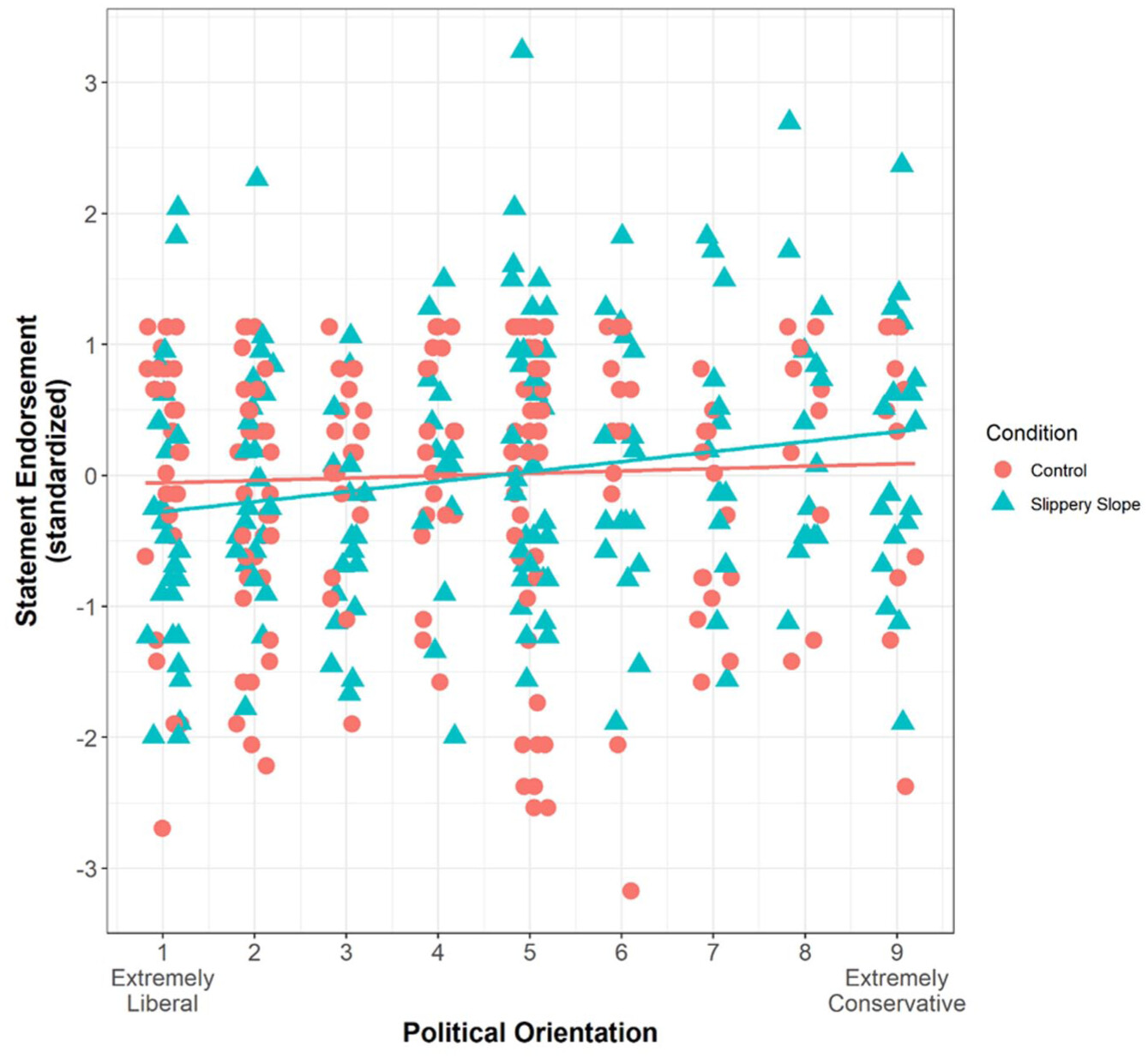
The participants' responses showed that those who reported being politically conservative were more likely to perceive arguments using the slippery slope argument as 'logical.' However, when it came to writing on the same topic that did not use the slippery slope argument, the difference based on political stance was less pronounced.
Next, to see if the trend emerged not only in the questionnaire but also in actual wording, the research team collected political posts on the message board site Reddit and used ChatGPT to determine the extent to which they contained 'slippery slope reasoning.' The results showed that conservative-leaning groups used more slippery slope-like phrases, and comments containing slippery slope-like phrases also tended to receive more upvotes.
Similar surveys were conducted in the United States, the Netherlands, Finland, and Chile, and the results generally showed a consistent tendency in all countries that 'the more conservative people are, the more likely they are to support slippery slope arguments.'
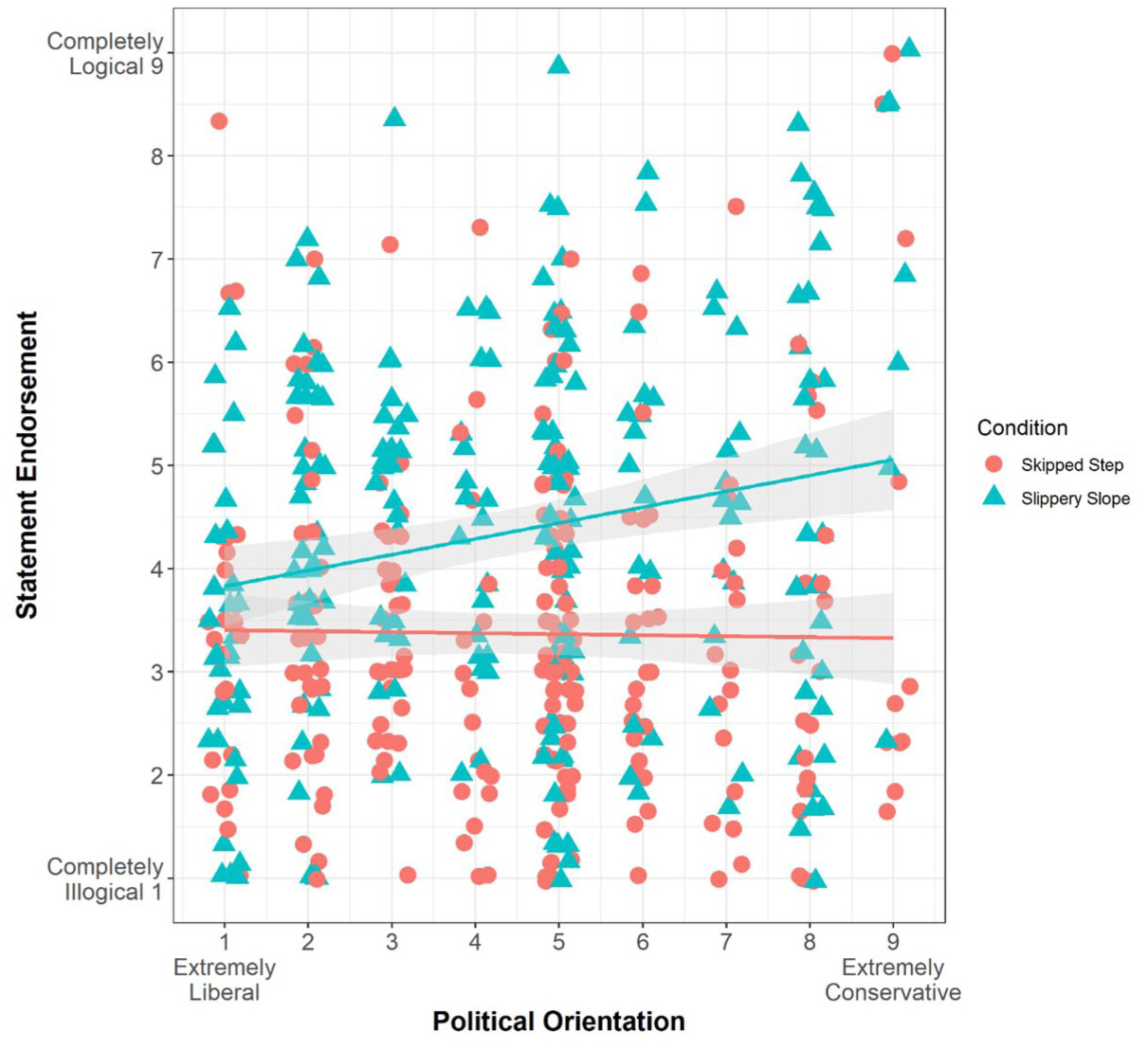
Next, the research team investigated why slippery slope reasoning appears plausible. They compared sentences that listed the steps to show a chain of events with sentences that skipped the steps and jumped straight to the conclusion. Conservatives found the former to be particularly persuasive. The omitted sentences did not garner significantly higher ratings, even if they were more conservative.
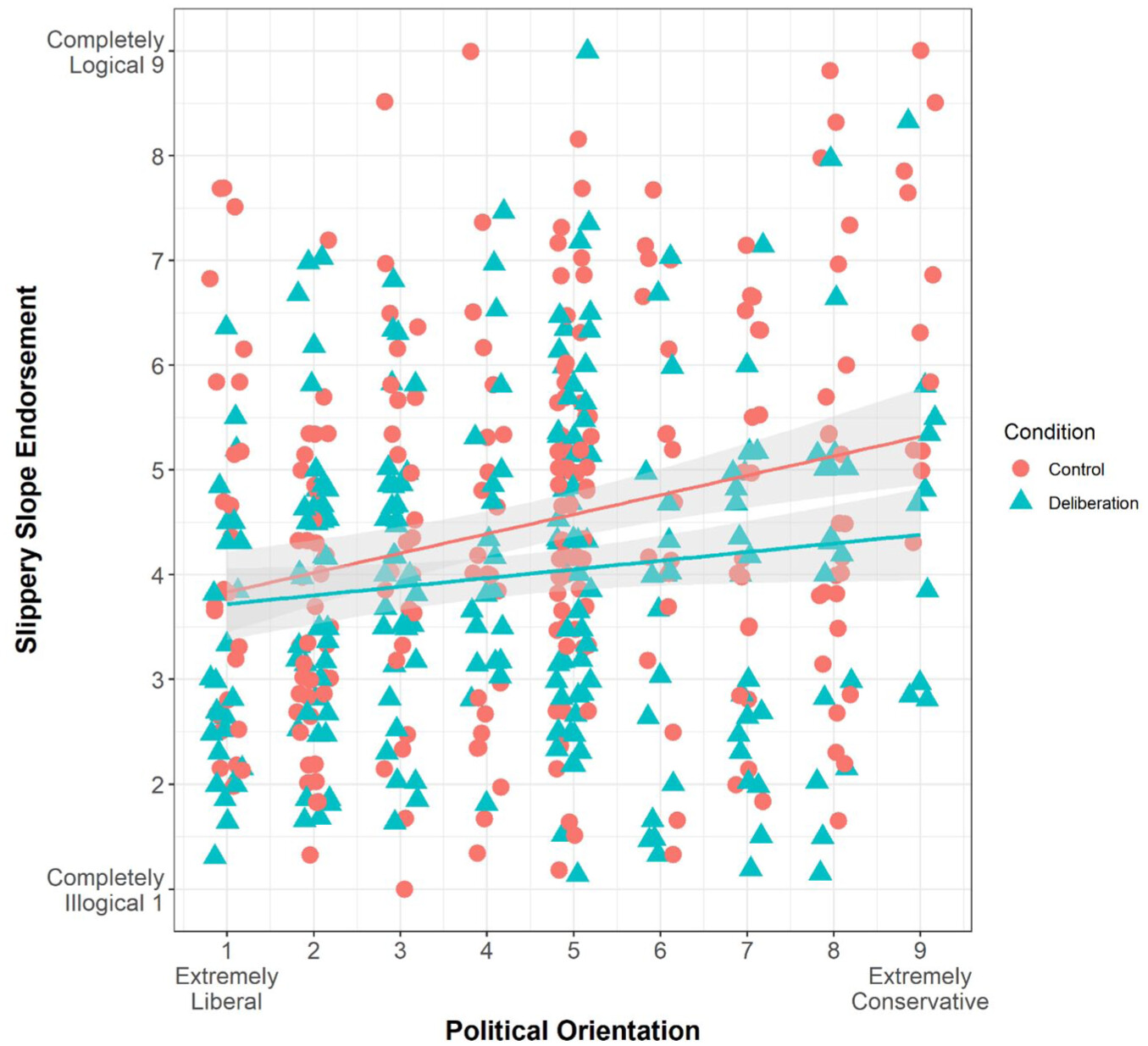
The research team also tested whether slippery slope reasoning appears stronger in situations where people are prone to making hasty decisions, and whether the impression changes if people stop and think about it. A situation where people are prone to making hasty decisions refers to a judgment method where people tend to jump to a conclusion based on 'probably this is what will happen' before checking the evidence. In the experiment, participants were encouraged to 'think carefully before answering' and made it difficult to respond reflexively by having them wait a short time before pressing an option immediately. This resulted in a smaller difference between conservative and non-conservative people in their evaluation of slippery slope reasoning.
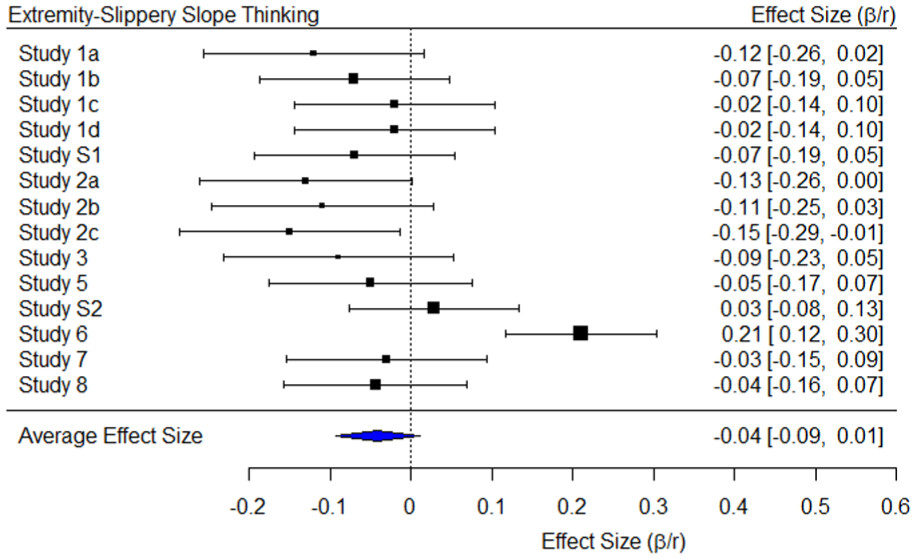
To determine whether this trend was a coincidence, the research team collated the results across multiple studies. While there was some variability across studies, most studies consistently showed that the more conservative people were, the more likely they were to support the slippery slope argument.
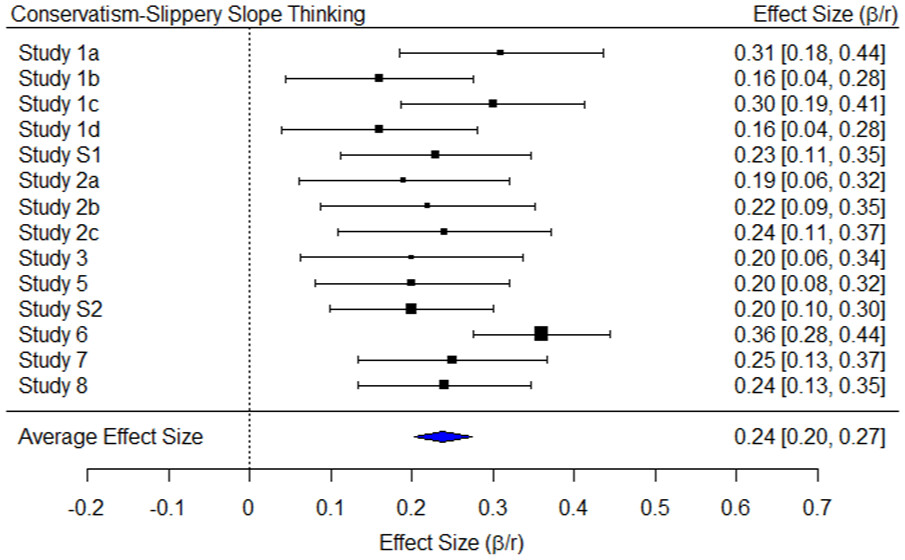
On the other hand, there is also the view that 'whether conservative or liberal, the more extreme a person's position is, the more likely they are to be drawn to the slippery slope argument,' so when we summarized the results in the same way, it was difficult to say that political extremeness was the deciding factor, at least based on the data in this study.
PsyPost states that the study 'does not mean to suggest that conservatives are illogical.' While the slippery slope argument can be a valid caution in situations where institutional restraints are weak, it can also be a leap of faith if the evidence is weak. The study concludes, 'This study shows that when the same text is presented in a linked, chain-like format, politically right-leaning people are more likely to perceive it as 'logical.''
Related Posts: