What environmental damage does 'shopping carts left on the side of the road' cause?

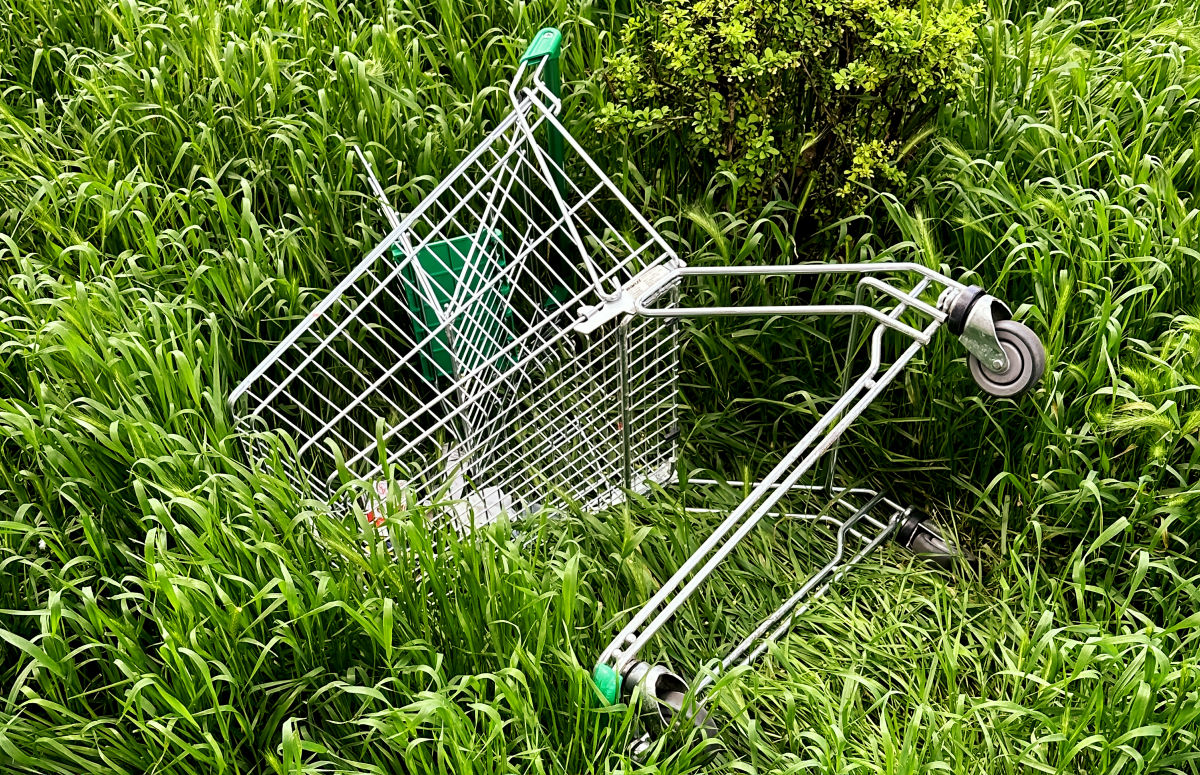
Shopping carts are convenient for bulk purchases at supermarkets and other stores, but some shoppers don't want to bother returning them and end up abandoning them far from the store. A study has been published that examines the environmental damage caused by abandoned shopping carts.
The Environmental Impact of Collecting and Processing Abandoned Shopping Trolleys in the UK
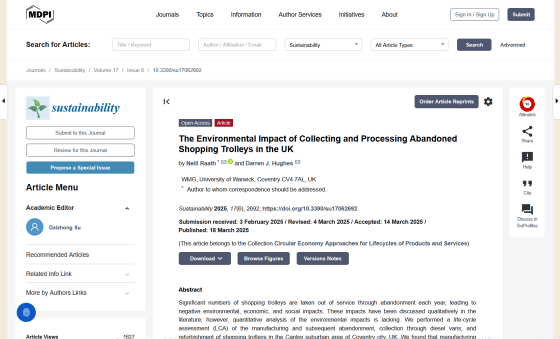
The environmental toll of abandoning a shopping trolley
https://warwick.ac.uk/news/pressreleases/new_research_shows_that_abandoning_a_shopping_trolley_is_worse_for_the_planet_than_you_think
Abandoned Shopping Carts Do More Damage Than You Think : ScienceAlert
https://www.sciencealert.com/abandoned-shopping-carts-do-more-damage-than-you-think
Of course, after paying at the supermarket, you should return your shopping cart to its original location, but some customers leave their shopping carts away from the store. According to a 2017 survey by global shopping cart manufacturer Wanzl , the number of abandoned shopping carts in the UK is reported to be as high as 520,000 per year.
Supermarkets outsource the collection of abandoned shopping carts to commercial collection services, primarily diesel vans, which incur significant environmental costs for the collection of these carts and the repair of damaged parts.
Neil Rath, an assistant professor of materials engineering at the University of Warwick in the UK, points out, 'It's estimated that hundreds of thousands of abandoned shopping carts are left behind in the UK every year. If you add up the carbon emissions from collecting each one, the impact is significant and worrying.'
Lars and his colleague, materials engineer
The analysis estimated that the environmental impact of manufacturing one shopping cart is equivalent to 65.15 kg of carbon dioxide, collection and return is equivalent to 0.69 kg of carbon dioxide, and transportation and repair is equivalent to 5.5 kg of carbon dioxide.
If we apply this to the 520,000 abandoned shopping carts in the UK in 2017, the environmental impact of refurbishing them would be 343 tonnes of carbon dioxide – roughly the same as the total emissions from driving 80 gasoline-powered cars for a year.
While the environmental impact of collecting and repairing shopping carts is not insignificant, it is a significantly more environmentally friendly option than manufacturing new shopping carts. 'We found that to have the same environmental impact as manufacturing a new shopping cart, one cart would have to be collected 93 times by diesel vehicles,' Lars said.

The results of this study clearly show that collecting abandoned shopping carts or sending them for repair and continuing to use them is an environmentally friendly and beneficial action. 'It may be impossible to completely prevent shopping carts from being abandoned, but the next time you see a shopping cart abandoned in an alley or in the bushes of a park, I hope you will think about the environmental impact of leaving it there,' said Lars.
Related Posts:








in Science, Posted by log1h_ik