Study finds bees can read simple light signals
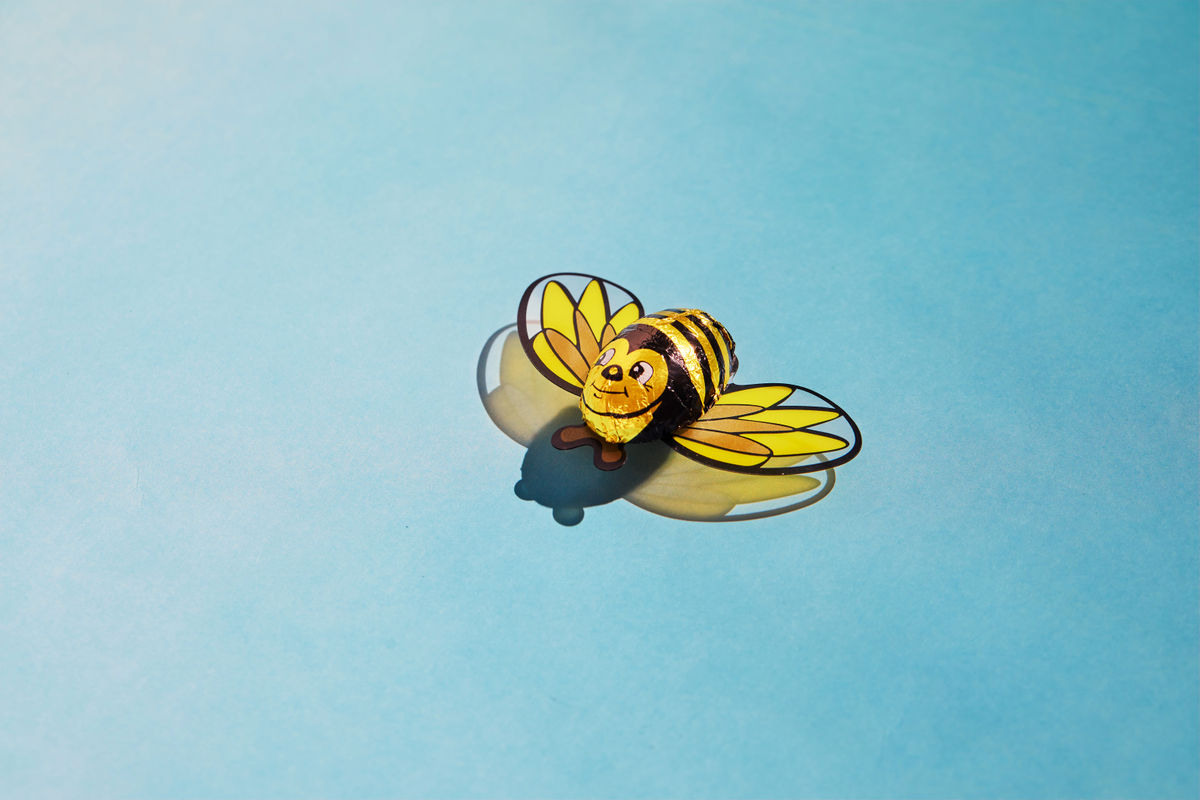
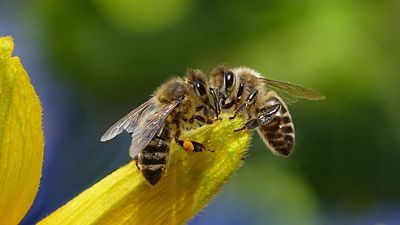
It has been discovered that bumblebees have achieved the ability to discriminate between different light signals, something previously thought to be only possible in vertebrates. This raises the question of how bumblebees, who do not encounter flashing stimuli in their natural environment, have acquired this ability.
Duration discrimination in the bumblebee Bombus terrestris | Biology Letters | The Royal Society
Bees learn to read simple 'Morse code' - Queen Mary University of London
Previous experiments have tested various animals by showing them long flashing lines and short flashing dots to see if they could distinguish between them like Morse code, but this ability to distinguish between them has only been confirmed in vertebrates such as humans, rhesus monkeys, and pigeons.
Alexander Davidson and his colleagues at Queen Mary University of Science focused on whether insects could distinguish between these types of light. They chose bumblebees, which have been shown to be able to distinguish between simple flashes of light, as their research subjects. They investigated whether they could distinguish between long and short flashes.
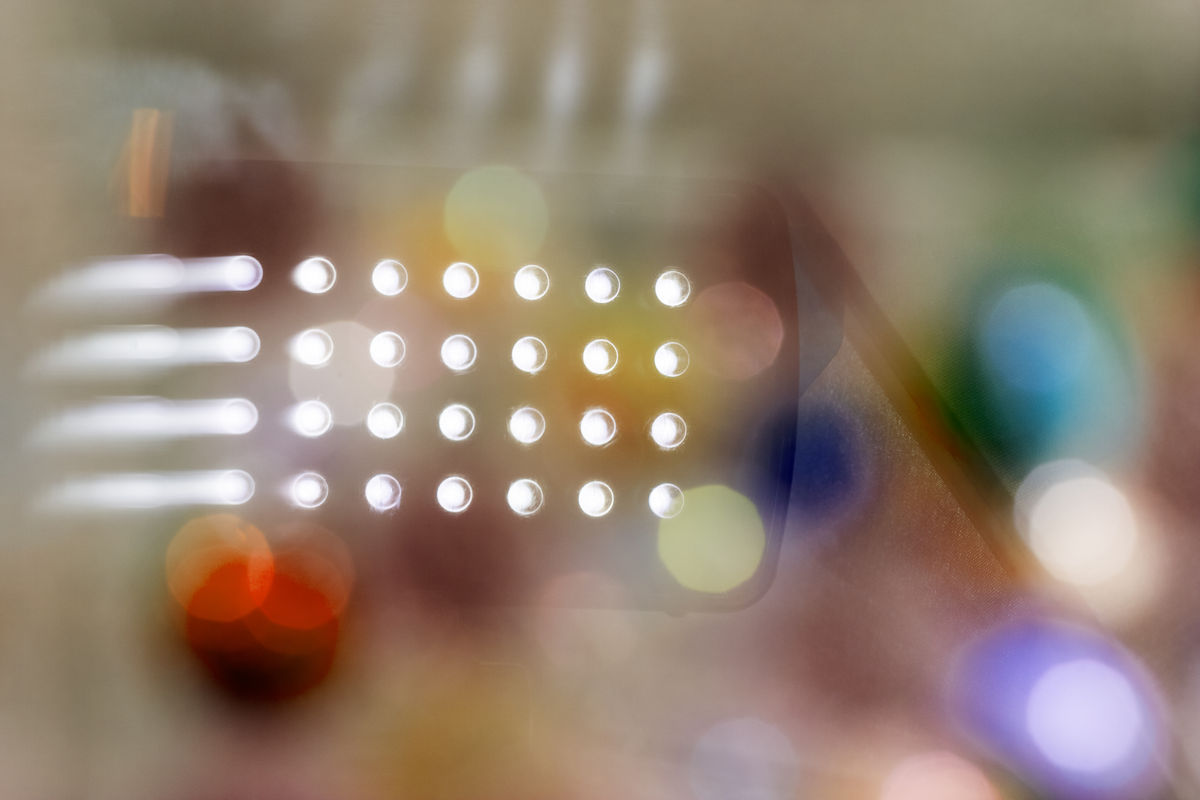
Davidson and his colleagues created the following special maze. Bees start in a nest box, pass through an observation chamber (shown on the right) and enter an experimental chamber divided into three sections: 'a,' 'b,' and 'c.' Each section of the experimental chamber displays two yellow circles, one lit for a different duration on the left and one on the right, on a monitor. In front of the monitors are a sweet sucrose solution and a bitter quinine solution.
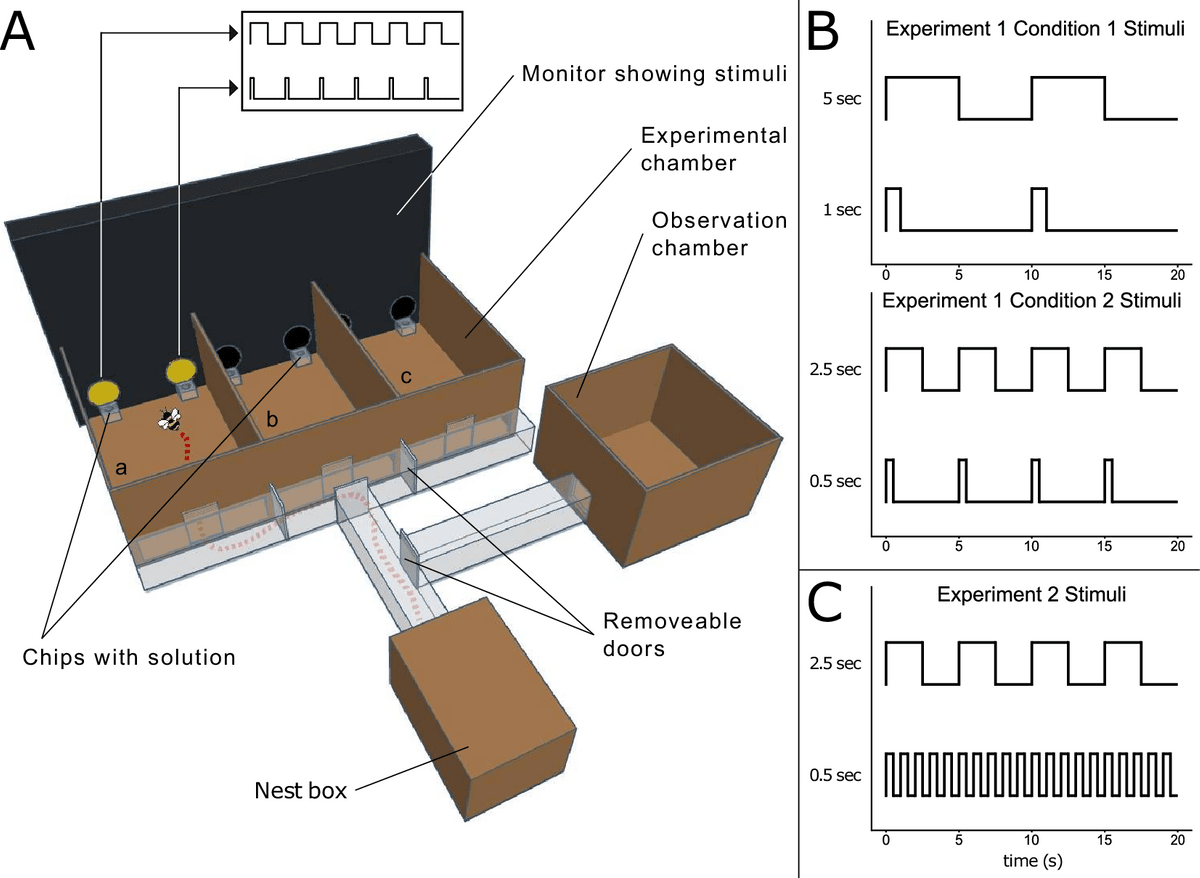
Bumblebees were placed in a maze and shown either long or short flashes through a clear acrylic wall, training them to associate the light with the solution: long flashes led to a sweet solution, and short flashes led to a bitter solution. The observation chamber was used to select single bumblebees that actively engaged in foraging behavior.
The results showed that most bumblebees learned the flashing pattern and were able to find the sweet solution with a high percentage of success simply by seeing the light. The fact that the devices worked even when they were relocated suggests that they were using the light stimulus as a cue rather than spatial information. Furthermore, considering the possibility that the difference between long and short flashes may be determined by the 'total time the light stimulus was present' or 'number of repetitions of the light stimulus,' experiments were conducted in which the length and amount of the light cycle were changed. Similar learning was observed, demonstrating that the bees understand the 'length of the flash itself.'
'It was exciting to see them learn the difference between different flash durations,' said Davidson. 'It's remarkable that they were able to do this because bees don't encounter flashing light stimuli in their natural environment. The fact that they can remember light durations suggests that the same time-processing abilities that bumblebees use for tracking movement in space and for communication may also be applicable for other purposes.'
Related Posts: