Science magazine's 2025 scientific breakthrough roundup: a look at what scientific advances have occurred this year
The scientific journal Science has compiled a list of scientific breakthroughs for 2025. The list spans several fields, including life sciences, astronomy, and archaeology.
Science's 2025 Breakthrough of the Year: The unstoppable rise of renewable energy | Science | AAAS
Lower renewable energy prices finally curb emissions - YouTube
Treating rare diseases with gene editing technology
In 2025, a baby boy with a defective CSP1 gene, which encodes an enzyme needed by the liver to detoxify ammonia, became the first to receive personalized gene editing therapy. Infants with this condition must be kept on a strict protein-restricted diet to prevent harmful ammonia from building up in their blood and brain, and often require risky liver transplants.
Shortly after the boy's birth, researchers developed a 'base editing tool' (a derivative of CRISPR gene editing technology) that corrected a single base sequence error in the boy's defective gene in just six months, and the treatment was approved by the authorities. The treatment allowed the boy to consume more protein, gain weight, and reduce the amount of medication he needed to control his ammonia levels.
World's first personalized gene editing therapy helps babies overcome life-threatening risks - GIGAZINE

Discovery of a cure for gonorrhea
In 2025, two effective drugs for gonorrhea, which had not had any novel treatments for decades, were discovered, demonstrated efficacy in clinical trials, and approved by authorities.
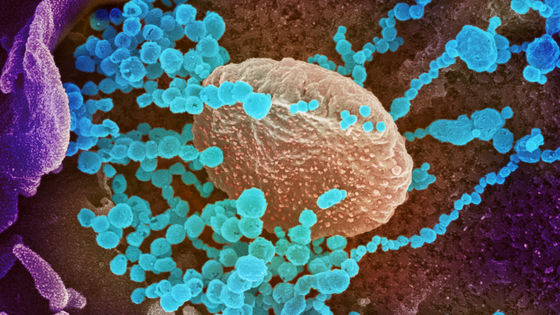
Gonorrhea, which infects more than 80 million people each year, not only causes pain, genital discharge, and bleeding, but can also lead to serious complications, such as pelvic inflammatory disease in women and infertility in both men and women. It also increases the patient's risk of HIV infection, and can cause blindness in newborns if the eyes of the baby become infected. The causative bacteria, Neisseria gonorrhoeae, has become resistant to almost all antibiotics, and even cephalosporin antibiotics, the last effective class of drugs, are beginning to lose their effectiveness.
One of the new drugs that showed promise is gepotidacin, a drug already approved for the treatment of urinary tract infections, which showed comparable efficacy in treating gonorrhea to existing drugs. The other new drug, zoliflodacin, also targets two enzymes essential for bacterial DNA replication, but belongs to a different drug class with a different mechanism of action. Both drugs have the advantage of being taken as a pill rather than by injection.

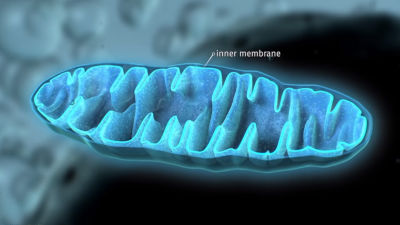
Tumors entice various body cells, including nerve cells, to help them grow and spread. In 2025, researchers discovered how nerve cells help cancer cells by transferring mitochondria, organelles that provide most of the cell's chemical energy. This assistance allows activated cancer cells to more easily metastasize to other parts of the body. This research suggests that inhibiting this transfer may slow metastasis.
Completion of the new telescope
The Vera C. Rubin Observatory , housing a new telescope designed to accelerate new astronomy, has completed construction on a mountaintop in Chile, with its first images released in 2025. Unlike other major telescopes that zoom in on their subjects, the Vera C. Rubin Observatory will capture a wide field of view across the celestial sphere. Over the next year, the Vera C. Rubin Observatory will collect more optical data than any other telescope in history, gradually building the most detailed 3D map of the universe ever created, accessible to everyone through an online portal.
What's so great about the Rubin Observatory, which is expected to revolutionize astronomy? - GIGAZINE

◆ Denisovan skull discovered
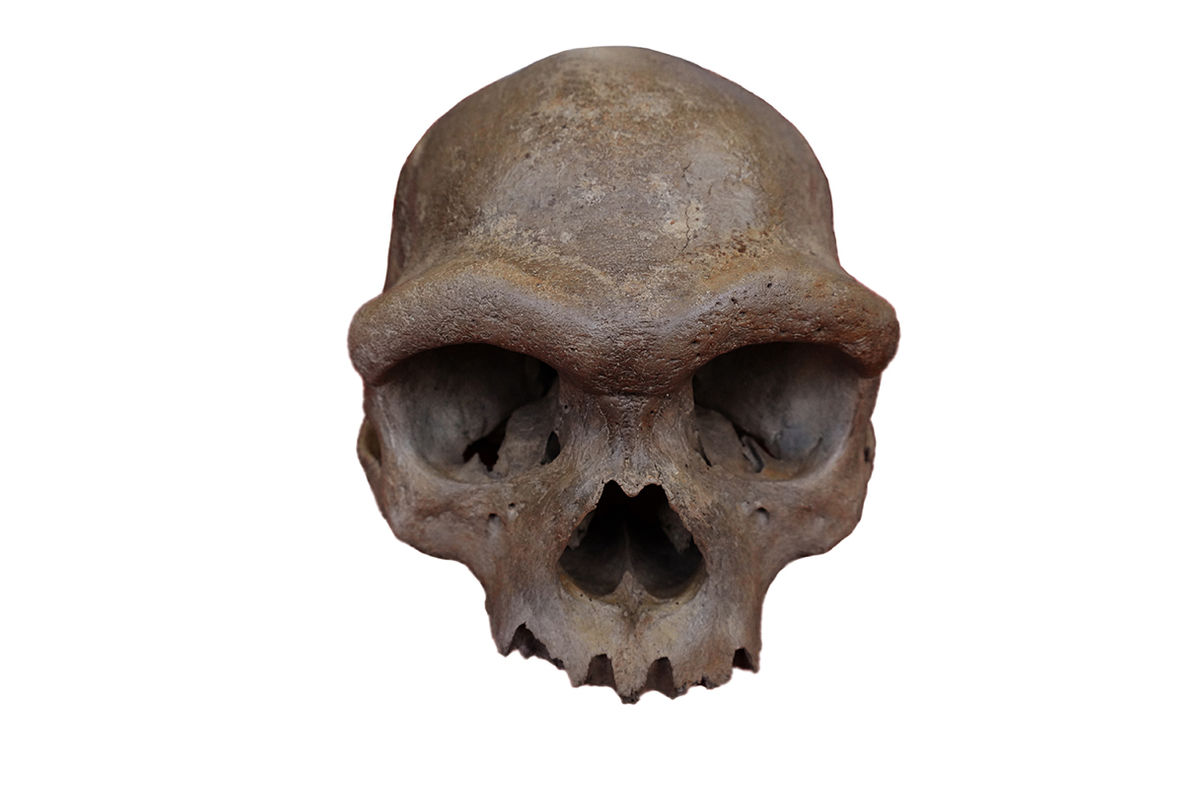
Denisovans are an archaic species of humans thought to be closely related to Neanderthals and modern humans. Their existence was revealed in 2010 through the discovery of a finger bone fragment in the Denisova Cave in Siberia, and Denisovan DNA has also been detected in small bone fragments found at archaeological sites across Asia, from Taiwan to Tibet. However, because no complete individuals, or even skulls, had ever been found, researchers had no way of knowing what Denisovans looked like.
However, in 2025, researchers successfully extracted DNA from a skull discovered decades earlier near Harbin, China, and determined it belonged to a Denisovan. Researchers were able to predict its appearance from the skull's thick brow ridges, thick bones, and powerful jaws.
◆Contributions to the science of large-scale language models
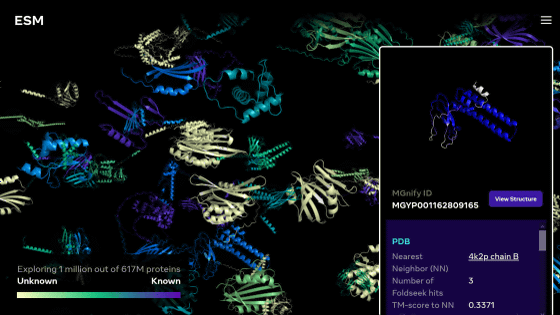
Starting with the release of the protein structure prediction model 'AlphaFold2' by Google DeepMind in 2020, it was demonstrated that large-scale language models can make significant contributions to the field of science.
For example, in chemistry, a fine-tuned version of Meta's Llama LLM identified previously undescribed optimal conditions for a complex reaction in just 15 experiments. In biology, Google's agent-based AI identified new candidates for treating liver fibrosis from among existing drugs, and replicated findings about the parasitic spread of DNA in bacteria in just two days—discoveries that previously took researchers years to achieve.
The mystery of the elementary particle 'muon' is solved
A particle called a muon is a 'relative' of the electron, but is heavier and more unstable. Its magnetism is slightly enhanced by particles moving in and out of the vacuum surrounding it due to quantum uncertainty. However, if these particles include particles not predicted by the Standard Model, the muon's magnetism could differ from that predicted by existing theories. Experiments begun in 2001 have suggested that the muon's magnetism is about 4 billion times stronger than predicted.
Xenotransplantation sets new record
Genetic engineering has made organ transplants from other species into humans safer. Recent advances have included the development of pigs with reduced rejection by the human immune system, and in 2025, a pig kidney modified with 69 genes was shown to function in the human body for approximately nine months. This was just a few days shorter than the previous record, set in 1964 with a natural chimpanzee kidney, which is currently not an ethical organ donor source. A pig kidney modified with just six genetic sites also lasted for a similar period in a female patient in China.
◆ Developing rice that can withstand the heat
Crops can tolerate the intense heat of direct sunlight with sufficient moisture, but hot, humid nights pose a particularly serious problem. In 2025, Chinese researchers discovered a gene that helps protect rice plants from heat-related yield and quality losses. By breeding or incorporating this gene into commercial rice varieties, researchers have raised the possibility that rice harvests could be protected as farmland warms due to climate change. Japonica rice subspecies, which are grown in cooler climates and are more susceptible to heat, may particularly benefit from this gene.

Science magazine also selected 'the phenomenal growth of renewable energy' as its top Breakthrough of the Year. Tim Appenzeller of Science said, 'China's green energy transition is overwhelmingly large, with new solar and wind power capacity equivalent to about 100 nuclear power plants being installed in 2024 alone, and the pace is accelerating into 2025. China is also creating an export industry worth approximately $180 billion (approximately ¥28.1 trillion) by 2024, making low-cost renewable energy available in many parts of the world.'
Related Posts:



in Science, Posted by log1p_kr