The mastermind behind the 'Under 16 Social Media Ban Law' may have been an advertising agency that wanted to block the regulation of online gambling ads

In December 2025, Australia became the first country in the world to enact
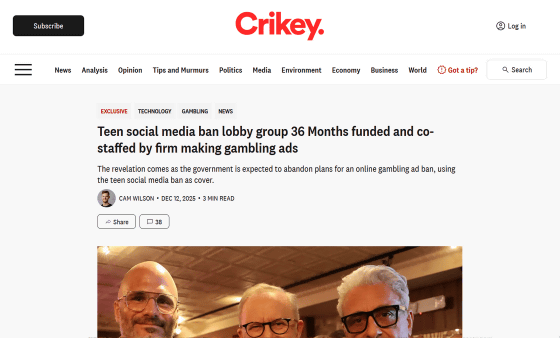
Teen social media ban group funded by firm making gambling ads
https://www.crikey.com.au/2025/12/12/pro-teen-social-media-ban-group-funded-firm-making-gambling-ads/
Australia's Social Media Ban Was Pushed By Ad Agency Focused On Gambling Ads It Didn't Want Banned | Techdirt
https://www.techdirt.com/2025/12/15/australias-social-media-ban-was-pushed-by-ad-agency-focused-on-gambling-ads-it-didnt-want-banned/
Australia's new social media law requires government-designated platforms such as X, Instagram, TikTok, YouTube, Twitch, Threads, Facebook, and Snapchat to disable all accounts of users under the age of 16 and prevent them from using the platform until they turn 16.
This law has sparked much controversy, with Reddit filing a lawsuit in the High Court , claiming that it violates the constitutional right to freedom of political speech. Meanwhile, Australian online media outlet Crikey reported that a campaign promoting a law banning the use of social media by people under the age of 16 was run by an advertising agency that handles online gambling advertisements.
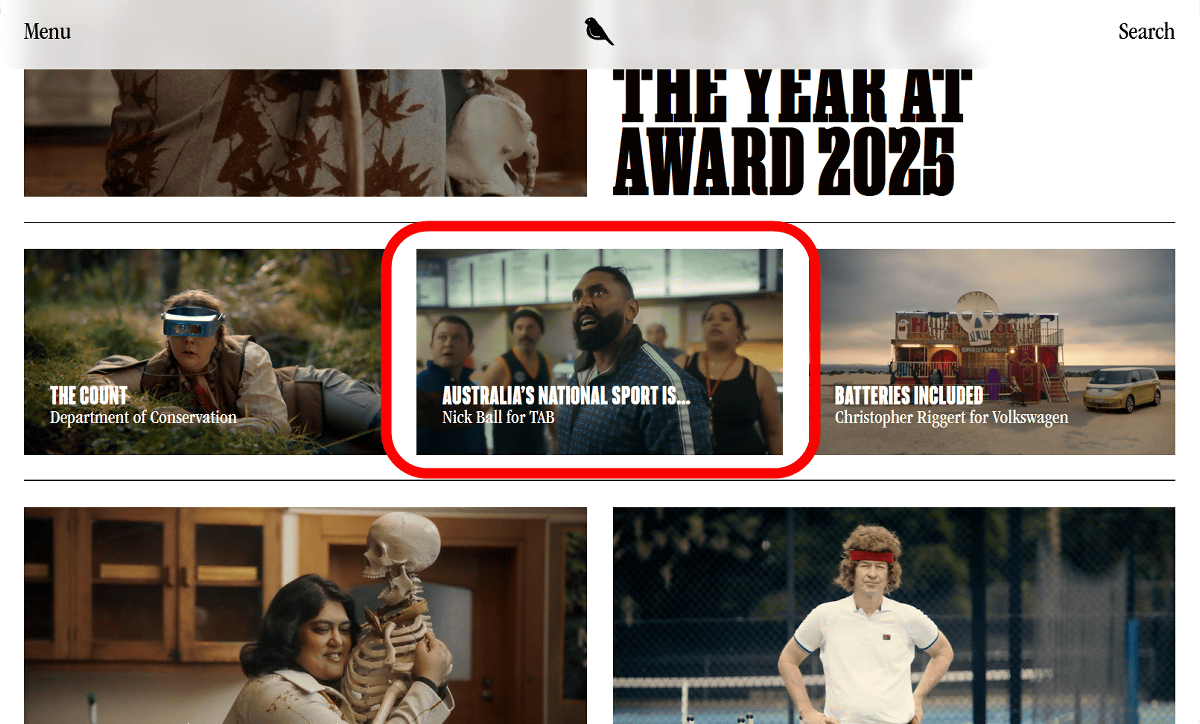
The lobbying group that pushed for the law to ban social media use by people under the age of 16 is called '36 Months,' referring to the three-year (36-month) increase in the age limit for social media bans from 13 to 16. The 36 Months campaign was planned and produced by an advertising agency called FINCH , which also handles large-scale gambling advertising campaigns for TAB , a major Australian online gambling company.
A check of FINCH's website shows that it has produced sports betting ads for TAB. According to Crikey, FINCH has produced at least five gambling ads since 2017 alone, and FINCH's head of communications also served as managing director of 36 Months for a period.
Australia had previously considered banning online gambling advertising, but in November 2025, just before the law was due to come into force, it decided not to conduct further investigation, citing the prohibition on social media use by people under the age of 16, who are vulnerable to online gambling advertising.
Techdirt, a technology media outlet, points out that even if social media use by people under the age of 16 were banned, children would still continue to access the internet through various means, and argues that the idea that 'online gambling ads can remain as they are because children are protected is wrong.'
There is no clear evidence that FINCH's push to ban social media use by people under the age of 16 was aimed at circumventing regulations on online gambling advertising. However, FINCH claims to have independently funded the 36 Months campaign, and there appears to be no other objective for the campaign than to protect online gambling advertising.
Part of the FINCH 36 Months campaign included accusing people who questioned the social media ban of being shills for major tech companies, without any evidence to support the claim. A spokesperson for 36 Months told Crikey that they had not investigated whether the accusers were paid by major tech companies.

Techdirt points out that FINCH's move to ban social media users under the age of 16 in order to protect online gambling advertising sounds like an analogy between ' moonshiners and Baptists .'
Moonshiners could increase their profits by driving out legal alcohol with the enactment of Prohibition . Therefore, in the first half of the 20th century, moonshiners supported Christian Baptists, who warned against the harm of alcohol, and promoted efforts to ban the sale of legal alcohol. This structure in which a 'group that officially wants regulation' and a 'group that benefits from undermining the purpose of regulation' collude to support regulation is called the 'moonshiners-Baptists' structure.
Techdirt argues that the gambling industry, including FINCH, faced with the threat of social media advertising bans, has launched a moral panic campaign calling for 'think of the kids,' which appears to have ultimately succeeded in protecting itself. 'Gambling ads now flow freely to the demographics the government declared 'protected,' while actual children slip through the cracks without any new safety measures in place,' the report states.
Related Posts:








in Web Service, Posted by log1h_ik