macOS Tahoe 26.2 adds the ability to connect multiple Macs to create AI clusters
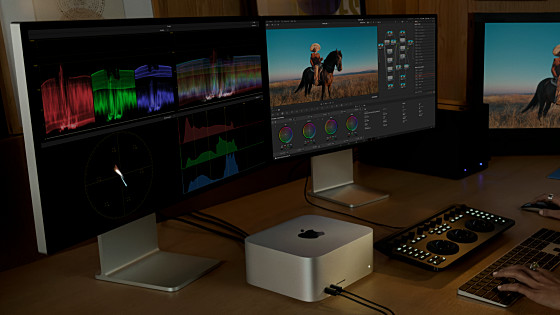
macOS Tahoe 26.2 was released on Friday, December 12, 2025. This version adds low-latency connectivity between Macs via Thunderbolt 5 ports, which is said to be useful for building AI clusters.
macOS Tahoe 26.2 Release Notes | Apple Developer Documentation
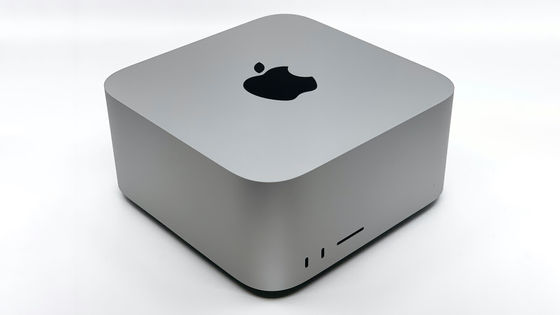
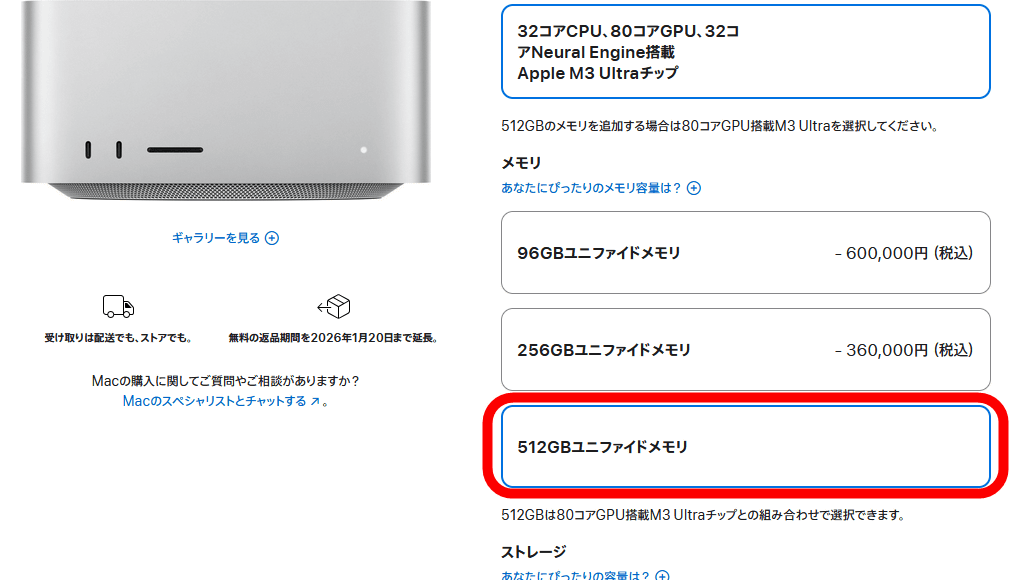
Macs use a memory technology called Unified Memory, which shares the memory built into the SoC between the CPU and GPU. This allows for a large amount of memory to be allocated to the GPU, enabling large AI models to be executed quickly. For example, the Mac Studio with M3 Ultra can be equipped with up to 512GB of memory, and by allocating most of the memory to the GPU, it is possible to execute large AI models at high speed. This has attracted the attention of local AI users.
macOS Tahoe 26.2 now supports a feature called 'RDMA over Thunderbolt,' which enables low-latency connections via Thunderbolt 5 ports. Apple explains that connecting multiple Macs using RDMA over Thunderbolt improves AI inference performance using
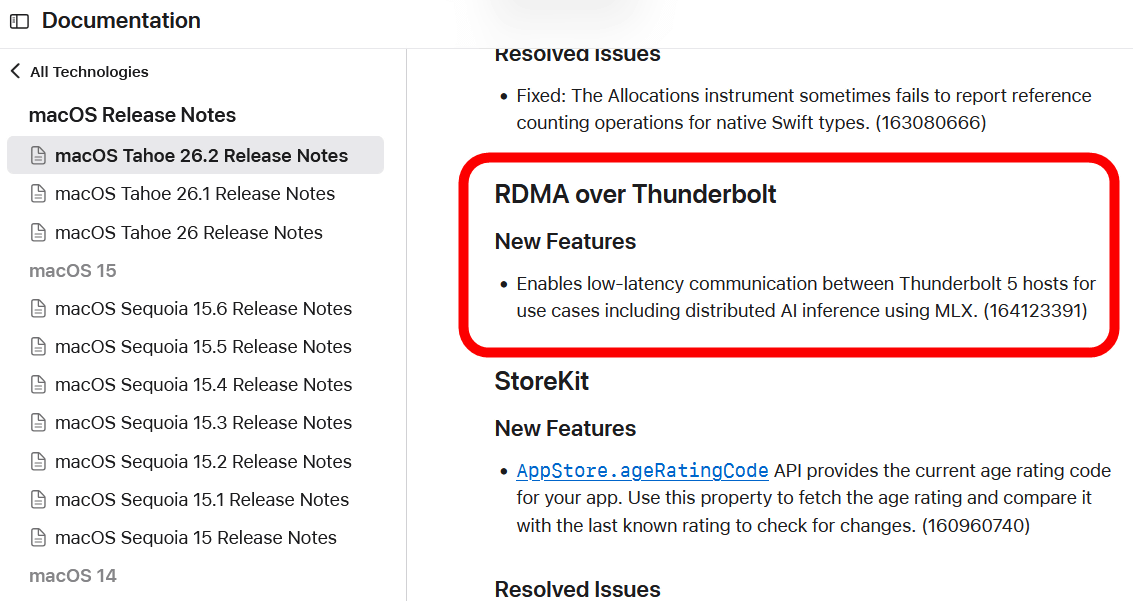
It is expected that RDMA over Thunderbolt will enable AI researchers and others to build AI clusters relatively inexpensively.
Awni Hannun , a member of Apple's AI research division, reported on November 7, 2025, that he had connected two Macs equipped with M3 Ultra and successfully executed the Kimi K2 Thinking algorithm with 1 trillion parameters at a speed of 15 tokens per second.
The new 1 Trillion parameter Kimi K2 Thinking model runs well on 2 M3 Ultras in its native format - no loss in quality!
— Awni Hannun (@awnihannun) November 7, 2025
The model was quantization aware trained (qat) at int4.
Here it generated ~3500 tokens at 15 toks/sec using pipeline-parallelism in mlx-lm: pic.twitter.com/oH5DPi7kAg
Related Posts: