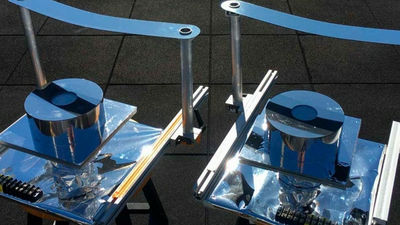
A system that generates electricity using the heat of the Earth and the cold of space is being developed

Researchers at the University of California, Davis, have developed a system that harnesses the temperature difference between the warmth of the Earth and the cold of space to generate electricity, potentially for ventilation in greenhouses and other buildings.
Mechanical power generation using Earth's ambient radiation | Science Advances

Mechanical Power by Linking Earth's Warmth to Space | College of Engineering
https://engineering.ucdavis.edu/news/mechanical-power-linking-earths-warmth-space
The power generation system devised by the research team, which utilizes the warmth of the Earth and the cold of space, uses the mechanism of a Stirling engine , an external combustion engine that heats and cools gas inside a cylinder from the outside, generating energy through the change in volume.
While internal combustion engines, such as those found in automobiles, burn fuels such as gasoline to generate large thermal gradients, which they then use to generate energy, Stirling engines operate using very small thermal gradients, such as the temperature difference between a hot coffee cup and its surroundings.
This time, a research team led by Jeremy Munday, a professor of electrical and computer engineering at the University of California, Davis, has devised a system that uses the 'warmth near the Earth's surface and the coldness of space' as a thermal gradient. Munday's system is explained in the video below.
Ambient Energy Harvesting: UC Davis Engine Uses Earth's Warmth and Space's Cold to Make Power - YouTube
In the environment in which humans normally live, various objects are at roughly the same temperature, making it difficult to generate energy using a Stirling engine.
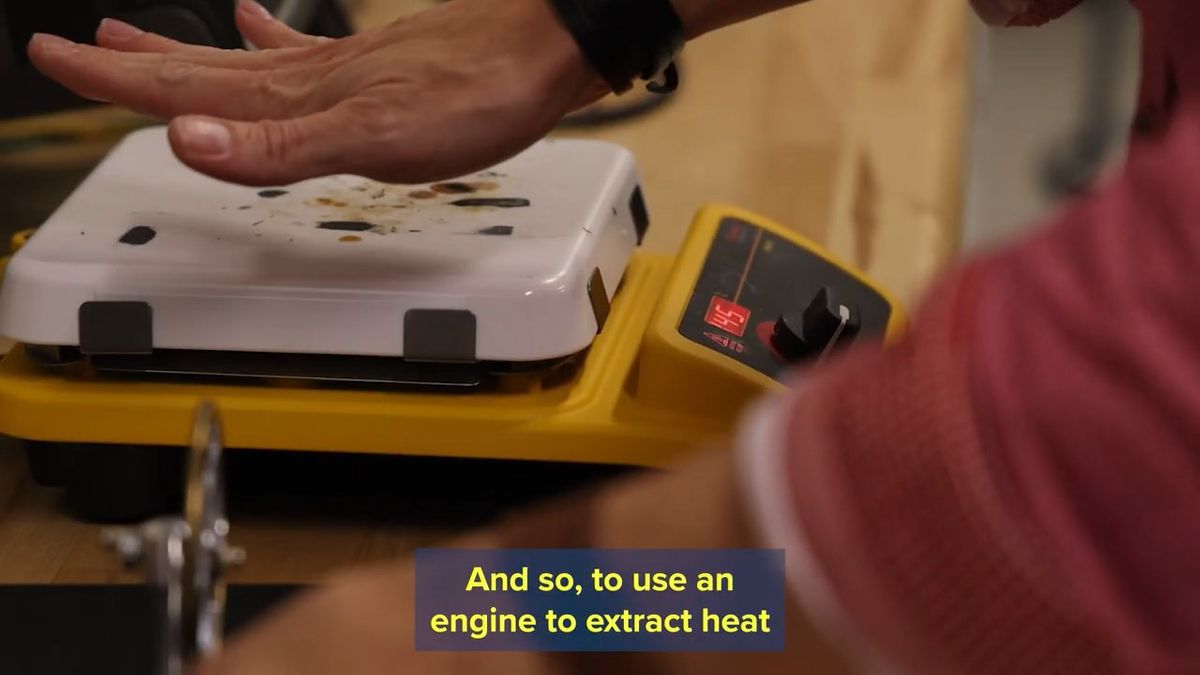
Not just with Stirling engines, but any engine that extracts heat requires a hot object and a cold object.

'We may have warm things around us, but we also need cool areas. We need that temperature difference,' Munday said.

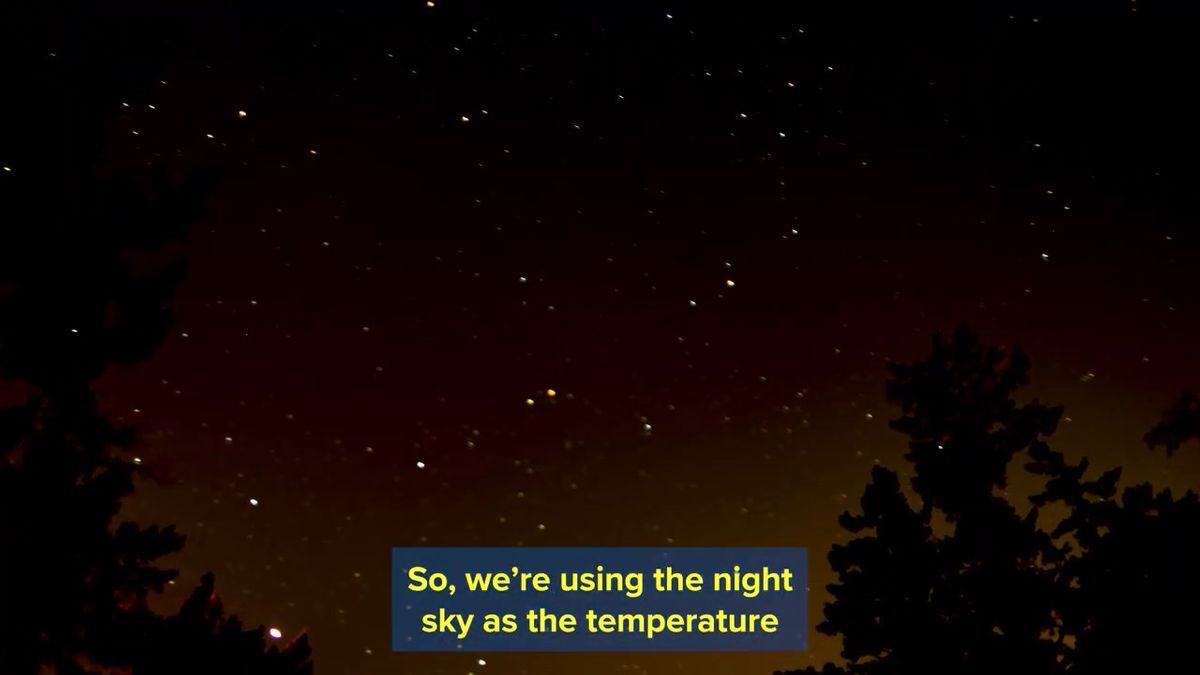
The research team therefore devised a system that utilizes the night sky, which is connected to space, as an extremely cold place.
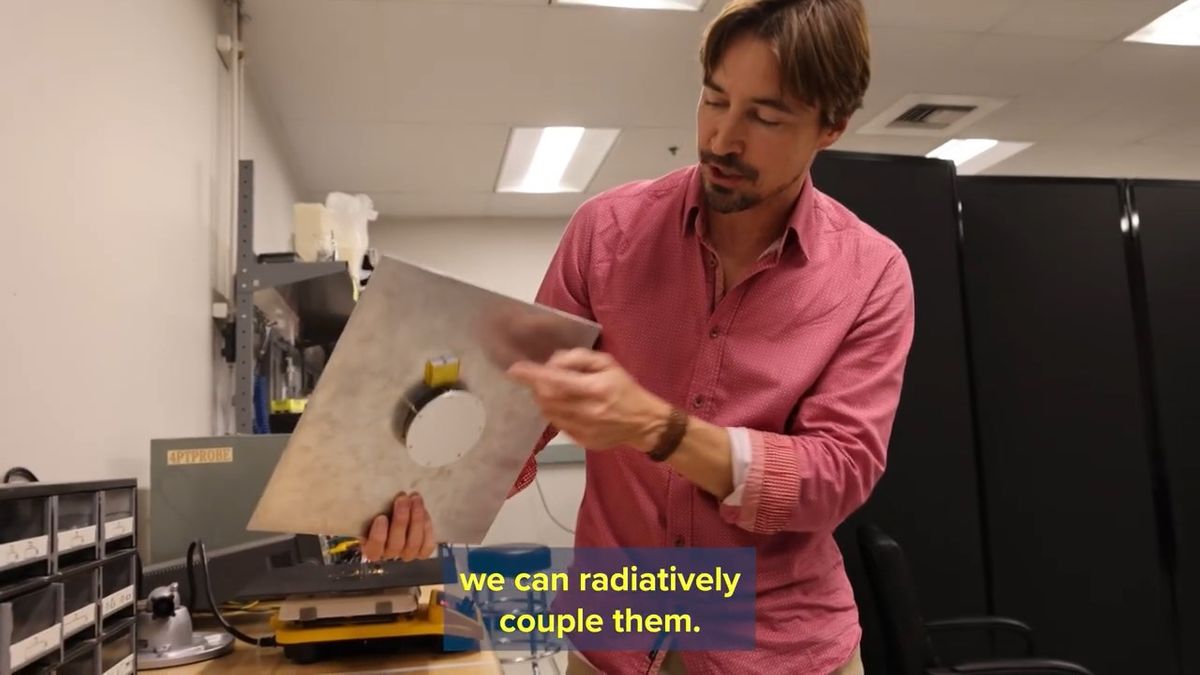
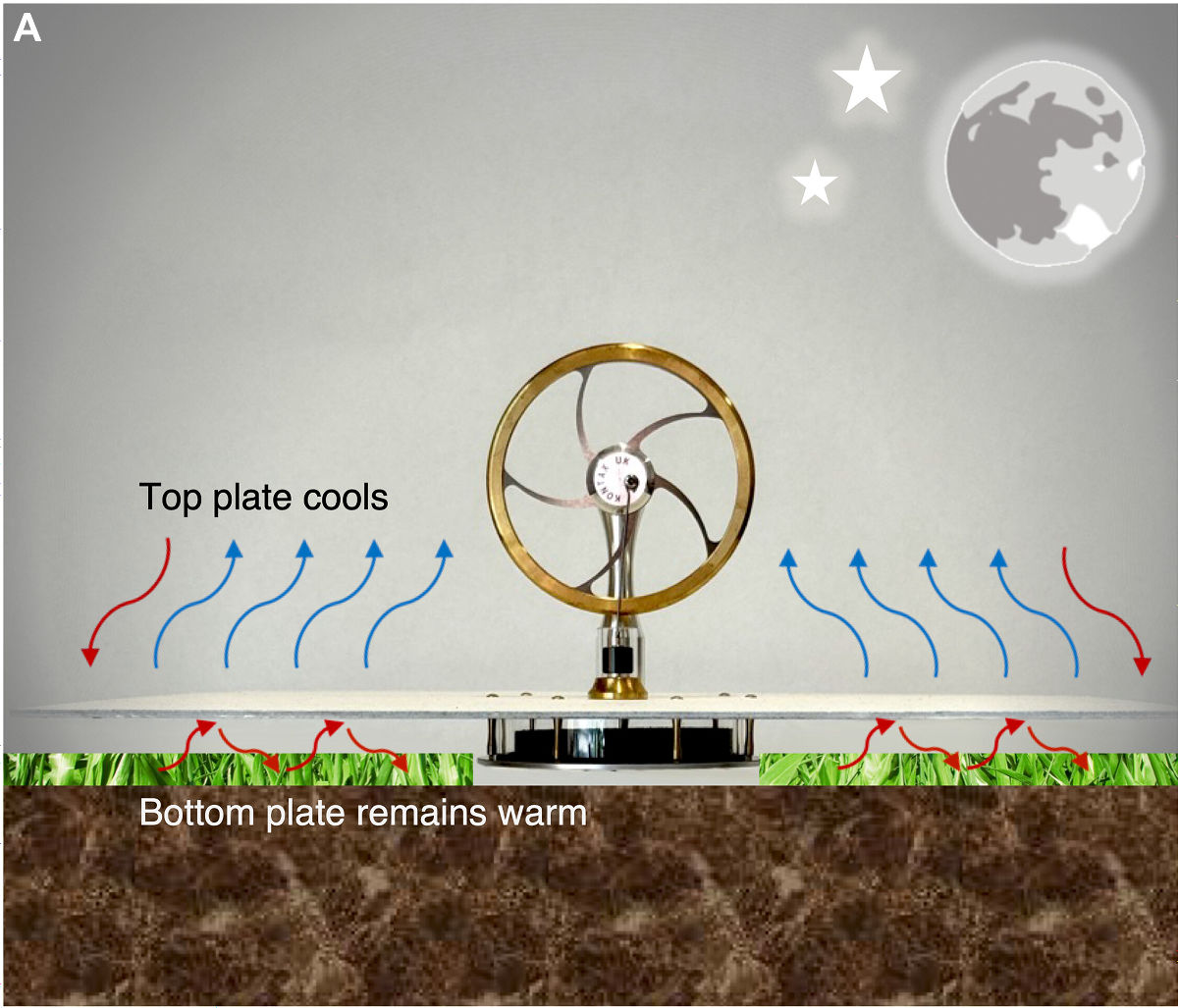
The system the researchers came up with involves a simple piston-driven Stirling engine mounted on a panel that acts as a heat-radiating antenna.
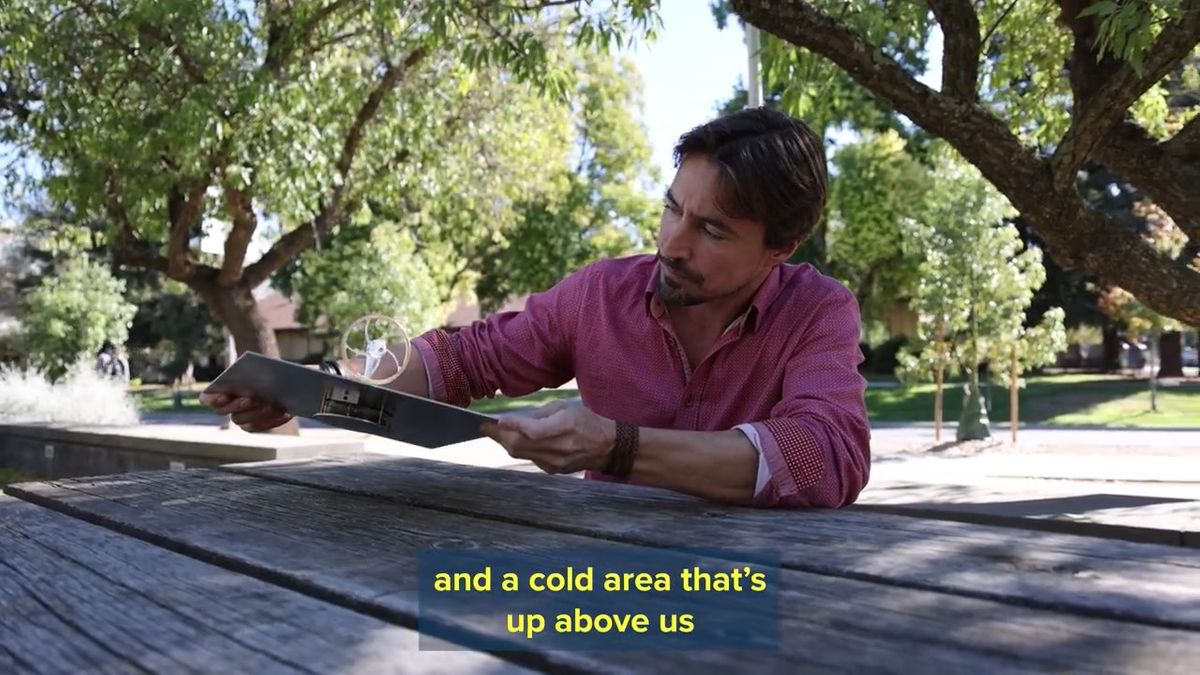
The aluminum mounts at the bottom of the panels are buried in the soil, thermally coupling the panels to the ground, and the top surface of the panels is coated with infrared radiation paint, which radiates electromagnetic waves toward the sky, similar to
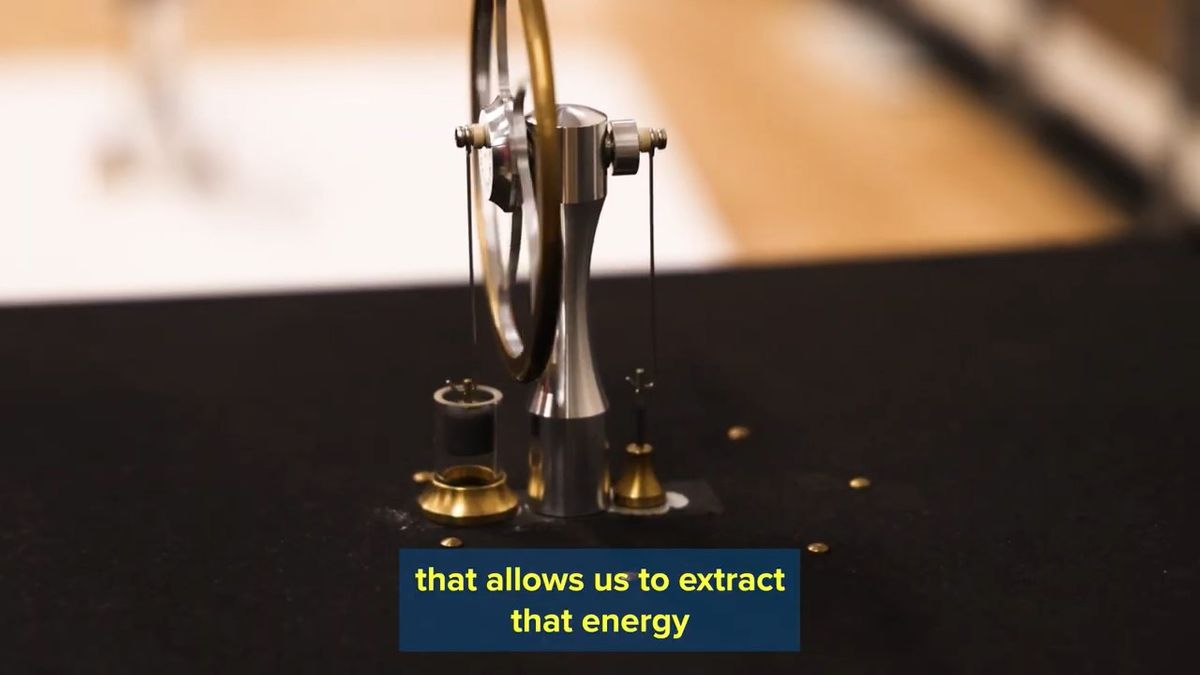
This creates a temperature difference between the top and bottom of the panel, allowing the Stirling engine to extract energy.
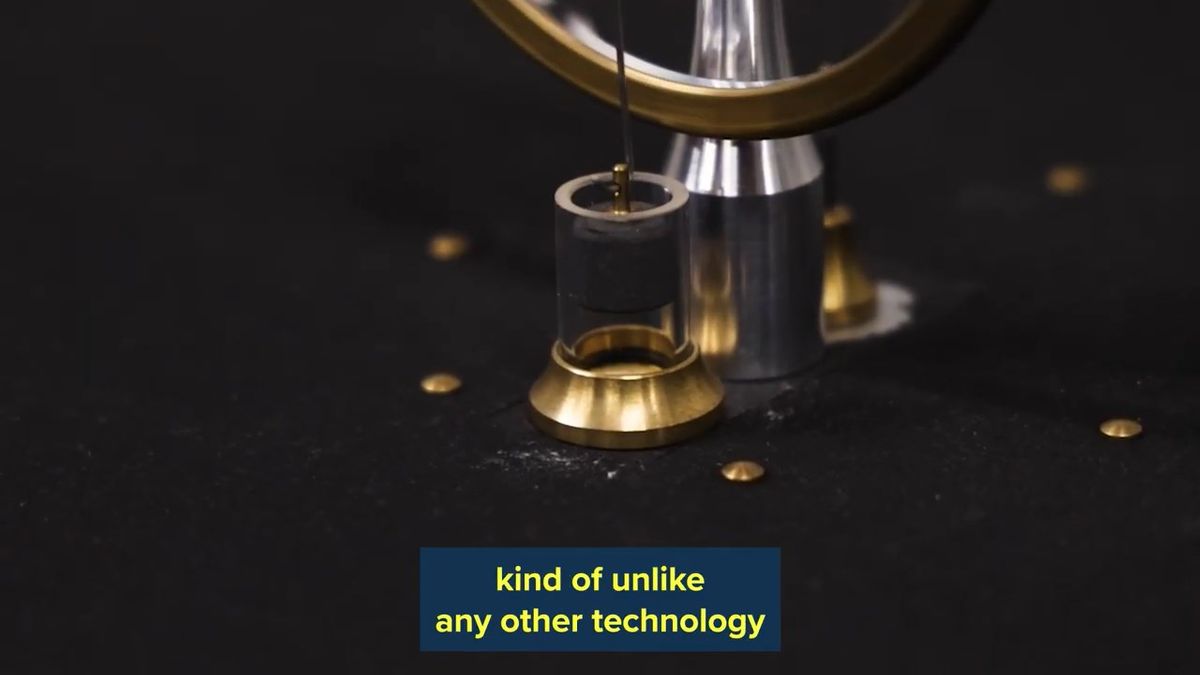
Munday argues that what makes the new system different is that it links the very distant 'surface' and 'space,' whereas most other engines have 'hot' and 'cold' components side by side.
'The leap we've taken is that even though these things are far apart, we can still radiatively couple them together,' Munday said.
The researchers tested the system on a California farm and found that the top of the panels remained cool and the bottom warm at night, generating energy from the thermal gradient. Over a year of testing, the temperature difference remained above 10 degrees Celsius for most months, generating more than 400mW of mechanical power per square meter.
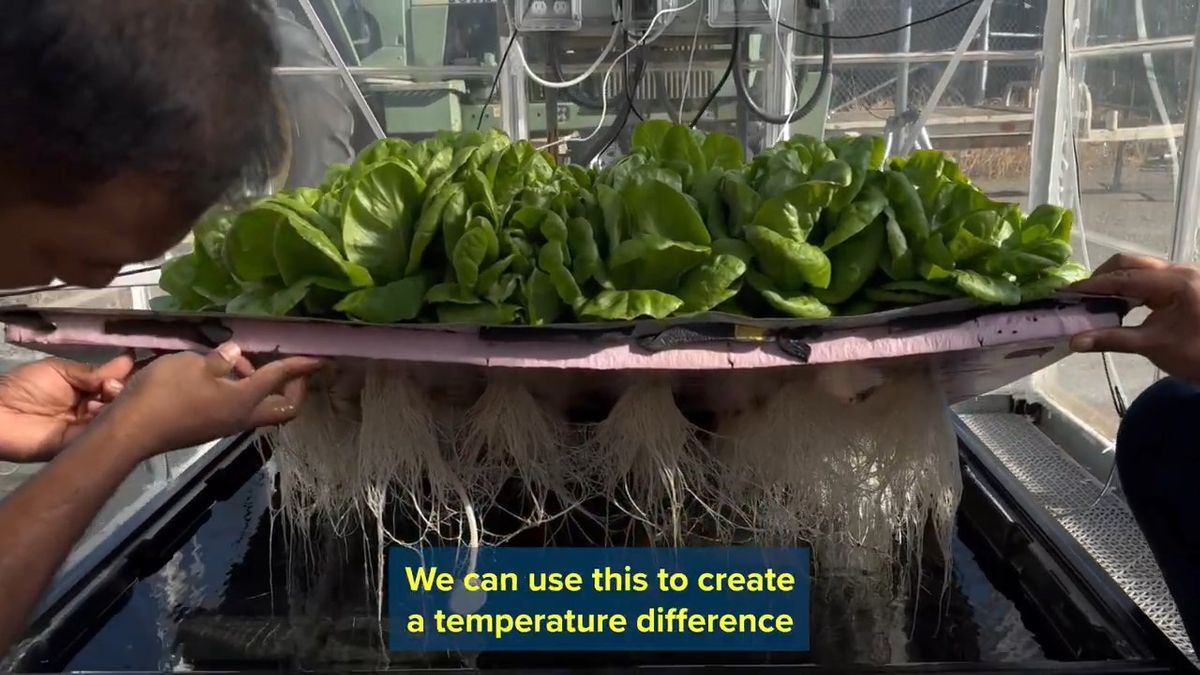
The research team is considering applications for this system, such as using fans to circulate air inside greenhouses and buildings.
Related Posts: