In American discount stores, the prices displayed are often lies, with discrepancies of several hundred yen common.
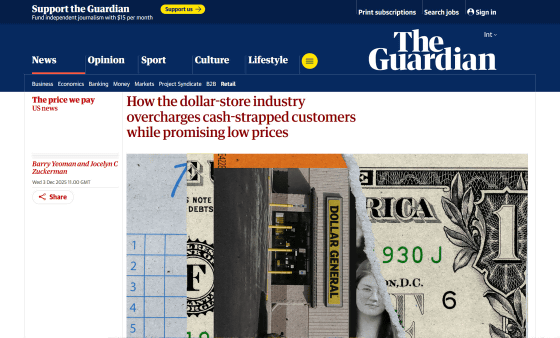
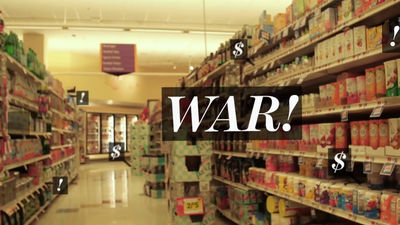
In Japanese retail stores, although there is a difference between prices excluding tax and those including tax, the displayed price on the sales floor and the price after the register are exactly the same. However, in the US, discount retailers known as 'dollar shops,' it has become common for the displayed price on the sales floor and the price after the register to differ. The major daily newspaper The Guardian reports on the ridiculous situation at dollar shops.
How the dollar-store industry overcharges cash-strapped customers while promising low prices | US news | The Guardian
One winter day, state inspector Ryan Cofield entered a Family Dollar store in Windsor , North Carolina, to check the price tags on the shelves of 300 items and to see how much they differed from the actual prices at the register.
As a result, a frozen pizza that was priced at $5 (about 780 yen) at the storefront went up to $7.65 (about 1190 yen), paper towels that were priced at $10.99 (about 1700 yen) at the storefront went up to $15.50 (about 2400 yen), and puppy food that was priced at $12.25 (about 1900 yen) at the storefront went up to $14.75 (about 2300 yen). In addition, various products such as cereal, frozen meatloaf, Sprite, Pepsi Cola, and the painkiller ibuprofen were found to have actual prices higher than the price tags on the shelves.
In the end, 69 of the 300 items were priced higher at the register than the price tag on the shelf, a 23% error rate—more than 10 times higher than the state's allowable error rate. Some items hadn't had their price tags updated for months.
The store had previously repeatedly recorded higher error rates than the standard, and Cofield's North Carolina Department of Agriculture and Consumer Services had fined Family Dollar based on the results of two previous inspections. However, North Carolina caps fines at $5,000 per inspection, leaving little incentive for retailers to improve their error rates. 'Sometimes it's better to pay the fine,' says Chad Parker, who runs the department's Weights and Measures program.
The dollar store industry, including Family Dollar and its competitor Dollar General, touts low prices on essential items, but an investigation by The Guardian found that in dollar stores in North Carolina and across the country, prices displayed on shelves often differ from the actual prices.
For example, Dollar General stores have failed more than 4,300 price accuracy inspections in 23 states since January 2022. Family Dollar stores have also failed more than 2,100 price inspections in 20 states during the same period. Among the highest error rates were a Dollar General in Hamilton, Ohio, which recorded a 76% error rate in October 2022, a Family Dollar in
Many stores that failed state or local inspections tended to be repeat violations. For example, a Family Dollar in Provo , Utah, failed 28 consecutive price inspections, with an error rate of 48% in May 2024 and 12% in October 2025.
State governments are also aware of this problem, and in May 2025, the Arizona Attorney General announced a $600,000 (approximately 93 million yen) settlement with Family Dollar to resolve a consumer fraud investigation. In October, the Colorado Attorney General also settled with Dollar General for $400,000 (approximately 62 million yen) after Dollar General stores repeatedly failed state inspections. However, the problem of price tags on shelves and actual prices differing remains unresolved.
As the cost of living rises across the United States, the dollar store industry is a reliance of many consumers. Dollar General, which operates more than 20,000 stores across the United States, reported a 5% increase in sales in the second quarter of 2025 compared to the same period last year. Dollar General and Family Dollar have a strong presence in urban areas with high levels of low-income residents, as well as rural areas like Windsor.
For example, Windsor, located on the coastal plain of North Carolina, is a small town with a population of about 3,400, and its main street is full of vacant storefronts. There is one supermarket on the outskirts of town, but many people have to go to the next town to buy clothes. However, even in Windsor, there is one Dollar General and two Family Dollar stores open, so local residents have no choice but to shop there.
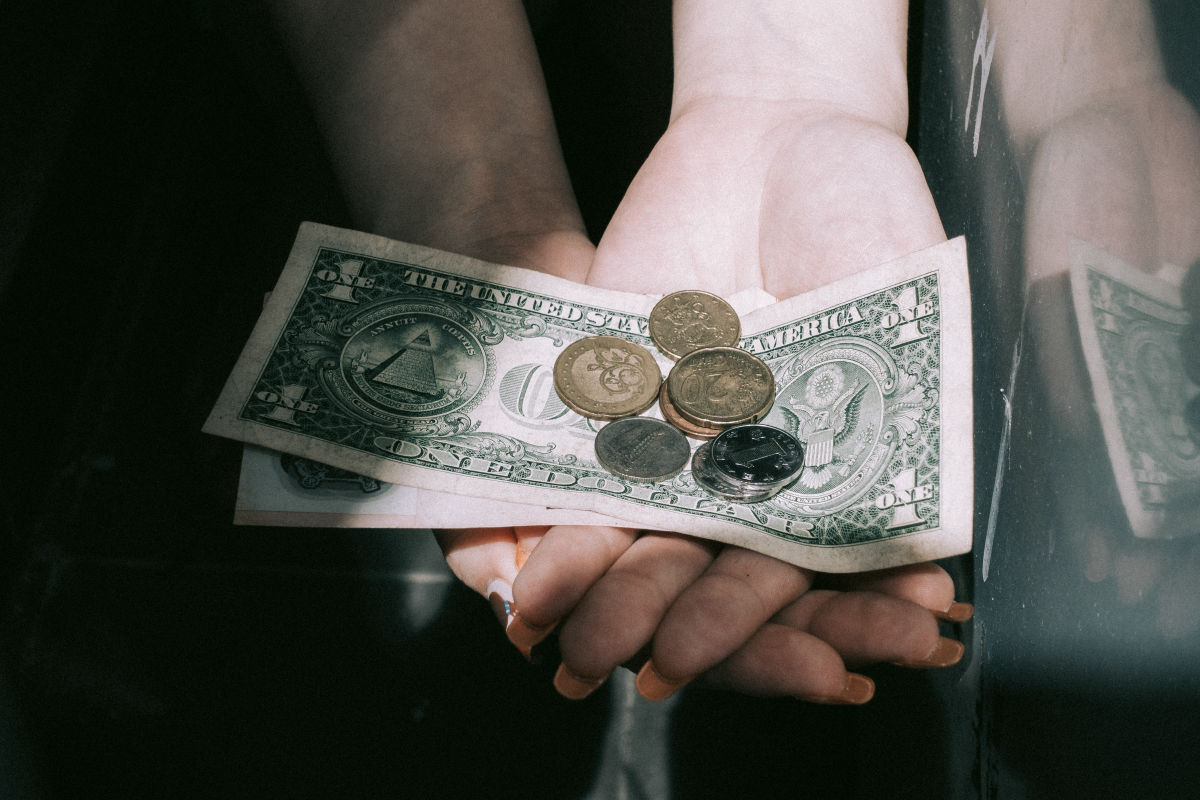
Dollar store pricing errors are borne by the most financially disadvantaged consumers. Linda Davis, 64, of Ohio, reported the incident to the state attorney general's office after returning home from a Family Dollar store in February 2025 and noticing that the prices on 12 of the 23 items she had purchased were different from the price tags on the shelves.
'I was doing the math in my head while I was shopping, but I got it so wrong and I didn't know why. I thought, 'Where did I go wrong? I don't have that much cash.'' Davis said she lives on social security, so she can't afford to pay extra bus fare to go to another store farther away.
Both Family Dollar and Dollar General declined interview requests from The Guardian, nor did they respond to a detailed list of questions. Instead, Family Dollar sent a statement saying, 'We take our customers' trust seriously and are committed to ensuring price accuracy in all our stores. We are currently reviewing your concerns and working to better understand potential price discrepancies.'
Dollar General also said in a statement to The Guardian, 'We are committed to providing customers with accurate prices for the items they purchase in our stores. We are always disappointed when we fail to deliver on this promise.' Dollar General's lawyers also argued in the Ohio lawsuit that 'it is virtually impossible for a retailer to achieve 100% match between shelf prices and scanned prices for every product. Perfection in this regard is neither realistic nor expected, even from a legal perspective.'
According to industry experts, store employees, and court documents, the discrepancies between shelf prices and actual prices are largely due to dollar store labor practices. When companies change product prices, the price displayed when a barcode is scanned at the register is automatically updated, but price tags on shelves must be manually replaced by employees. However, dollar stores are often chronically understaffed, and price tag replacements sometimes cannot keep up with price changes.
In a survey of current and former Dollar General employees in 15 states by The Guardian, more than 20 acknowledged that the discrepancy between the price on the shelf and the actual price was a by-product of the company's hiring policies. Often, only one or two other employees worked the same shift. A former assistant manager at an Illinois store said, 'You're lucky if you get to work two to four hours with other people during an eight- to 13-hour shift.'
'Even small per-item overcharges can put a strain on a very tight budget,' said Elizabeth Harris, acting commissioner of the New Jersey Department of Consumer Affairs. 'If you've ever been in a store with kids like I have, you know they're creating chaos at the register and not really paying attention to the prices of items.'
Kennedy Smith, a researcher at Local Self-Reliance, a nonprofit organization that works to protect communities from the harmful influence of large corporations, said the industry likely chose not to fix problems it has known about for years. 'If they were to point out the problem, they would say, 'Oh, it was our mistake.' Until then, they're allowing the scanners to fail and cost millions of dollars,' he said.
Related Posts:
in Note, Posted by log1h_ik