Human hair grows by being 'pulled' rather than pushed.
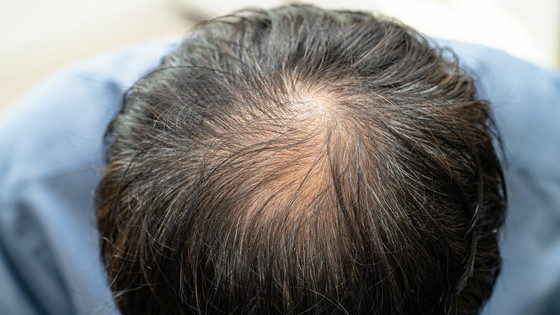
Using 3D live imaging of living human hair follicles, a research team from cosmetics company L'Oréal and Queen Mary University of London discovered that hair growth is driven not by pushing forces from dividing cells in the hair root, but by an upward pulling force from a hidden network of cells.
Mapping cell dynamics in human ex vivo hair follicles suggests pulling mechanism of hair growth | Nature Communications
Human hair grows through 'pulling' not pushing, study shows
https://phys.org/news/2025-12-human-hair.html
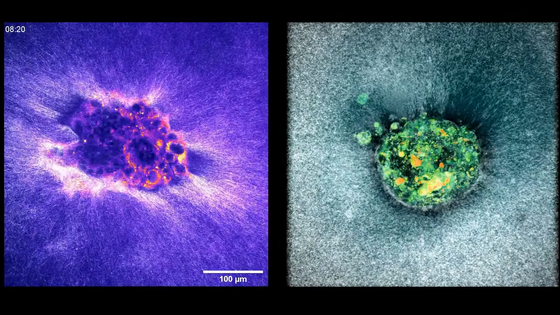
The research team extracted hair follicles , which surround the hair roots, from human scalp tissue obtained during facelift surgery, cultured them in vitro, and performed 3D live imaging using a multiphoton microscope , successfully tracking the movement of individual cells within the hair follicles for up to 90 hours.
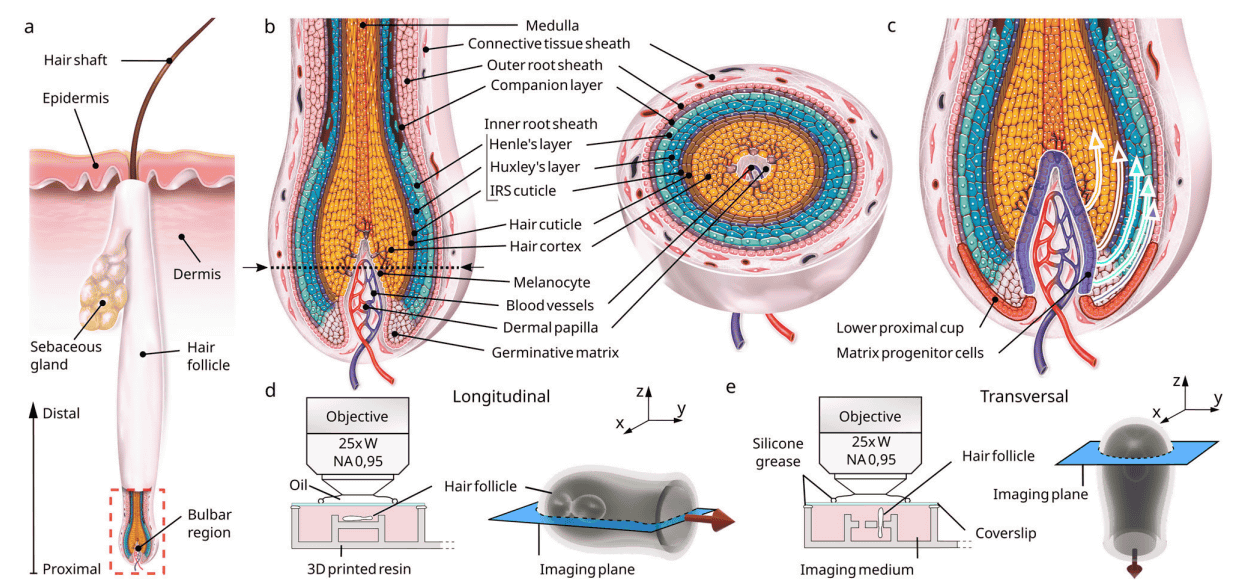
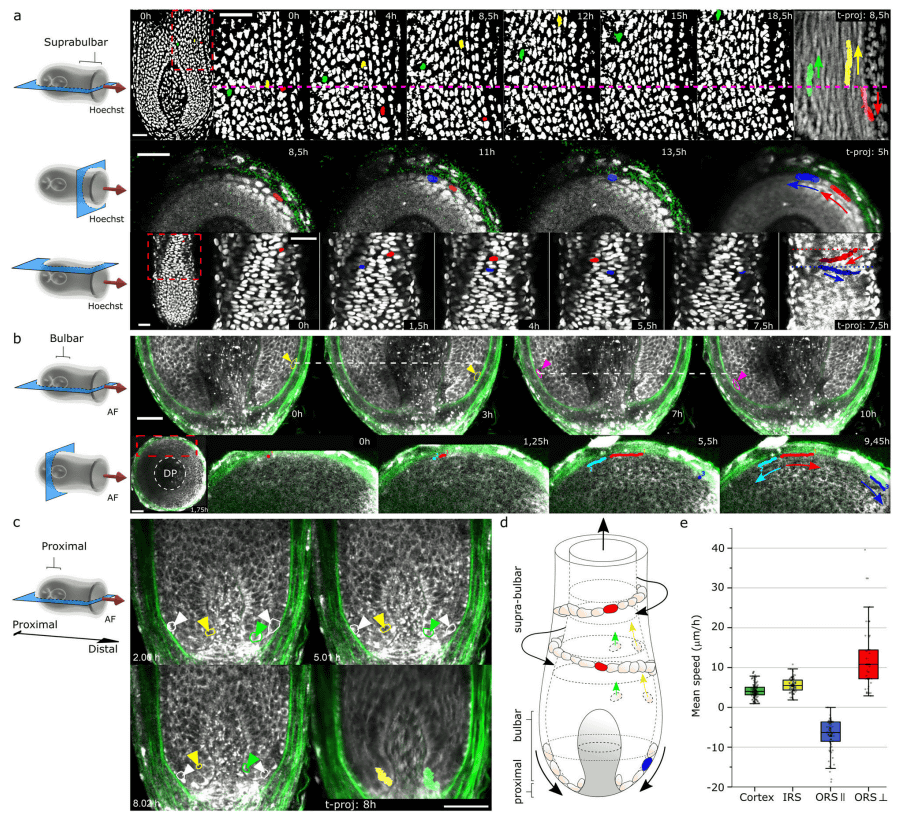
As a result of the observations, it was found that the cells of the outer root sheath on the outside of the hair follicle rotated in a spiral as they descended at the top of
Furthermore, the researchers found that cells in the inner root sheath, which surrounds the base of the hair, migrated upward at a faster rate than cells in the cortex inside it. If the pressure from cell division was the only driving force behind growth, this difference in speed would be difficult to explain, suggesting that an external force is at work.
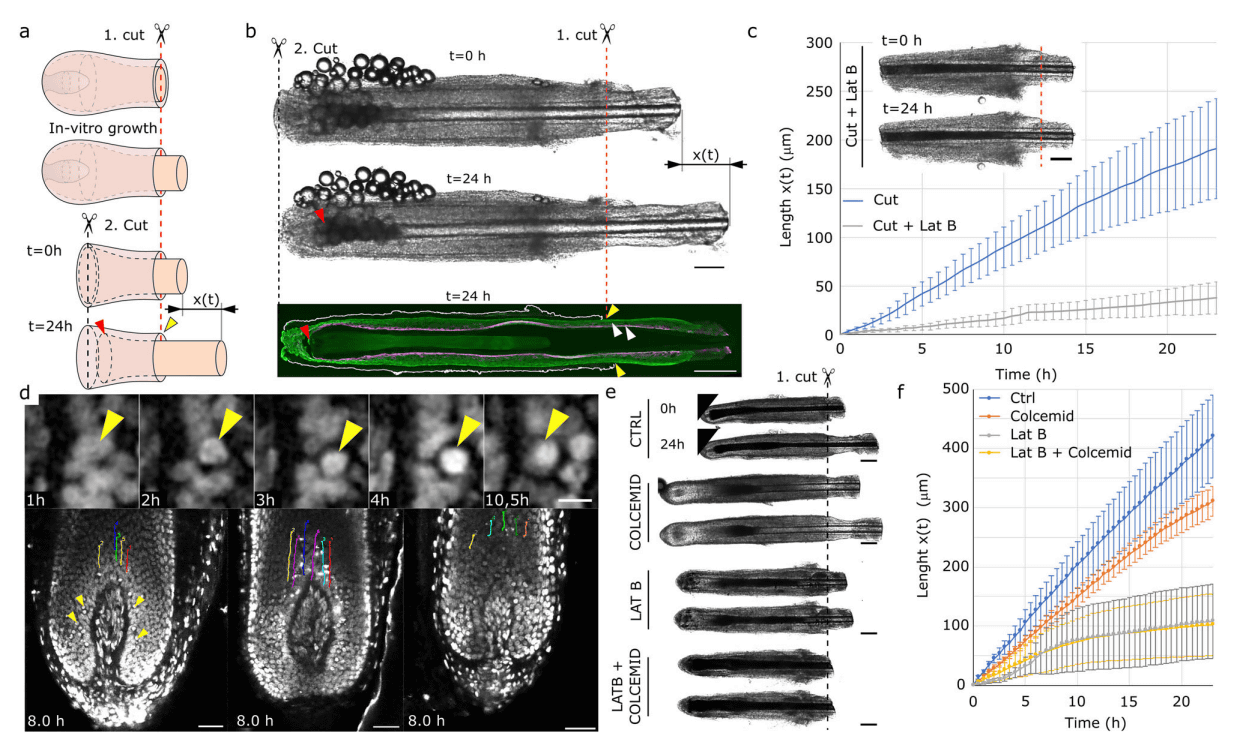
To test this hypothesis, the research team conducted several inhibition experiments. First, they administered a drug that inhibits cell division. Although hair matrix cell division was halted, hair growth rate was only reduced by 24%.
On the other hand, when latrunculin B, which inhibits the polymerization of actin, a cytoskeleton, was administered, the hair growth rate was significantly reduced by more than 80%. Furthermore, even when the bulb of the hair follicle was excised and the hair matrix cells were removed, the remaining tissue continued to migrate upward, confirming that the driving force for growth is not in the hair bulb, but in the region above it.
Combining these experimental results with fluid dynamics simulations that treat cells as viscous fluids, the research team proposed a model in which, as the outer root sheath moves downward, an actin-mediated interaction generates a force that 'pulls' the inner layer upward.
The simulations did not match the experimental data when the outer wall was assumed to be fixed, but only matched the velocity profile observed in the experiment when the wall was assumed to move upwards, suggesting that hair growth is driven by the organization of actin filaments rather than by being pushed by the cell.
'Our findings reveal a fascinating mechanism inside the hair follicle,' said Ines Sequeira, lecturer in oral and skin biology at Queen Mary University of the Arts and one of the study's lead authors. 'For decades, it was thought that hair was pushed out by dividing cells in the hair bulb. But we now know that the surrounding tissues act like tiny motors, actively pulling the hair upwards.'
'Our study shows that hair growth is not driven solely by cell division, but that the outer root sheath actively pulls the hair upwards,' said L'Oréal researcher Thomas Bornschlägl. 'This new insight into the mechanisms of the hair follicle opens up new possibilities for the study of hair diseases, drug testing and the development of tissue engineering and regenerative medicine.'
Related Posts:






in Free Member, Science, Posted by log1i_yk