Celebrities' pet cloning puts animals' health and well-being at risk
Pets such as dogs and cats generally have a shorter lifespan than their owners, and most owners are left grieving the loss of their pets. In recent years, advances in cloning technology have led some celebrities to clone their pets, but Jacqueline Boyd, a senior lecturer in animal science at Nottingham Trent University in the UK, pointed out that this endeavor puts the health and well-being of animals at risk.
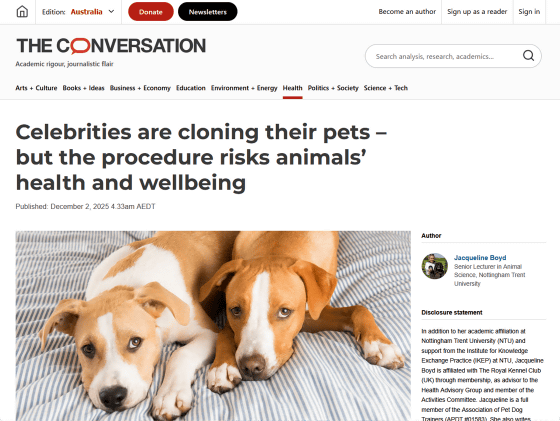
Celebrities are cloning their pets – but the procedure risks animals' health and wellbeing
People give their pets a lot of love and time, but they can't live forever, so it's no surprise that some celebrities are trying to clone their pets.
Since the birth of Dolly the sheep, the world's first cloned mammal, in 1997, cloning technology has developed into a big business. In fact, former American football player Tom Brady and actress Barbra Streisand have reportedly cloned their pet dogs.
'Creating a copy of a special pet may be a way to preserve the deep bond between people and their pets, especially since losing a pet can be so painful,' Boyd said, offering some support for pet cloning.
'Is cloning a pet really a good idea? Not only is cloning expensive, but it can also pose risks to the cloned pet's health and welfare. It's also highly likely that the cloned pet will be completely different to the original in terms of personality, behavior, and appearance,' he said.
The fundamental principle of cloning is to create an 'exact genetic duplicate' of a source organism. Just as identical twins have the same genetic profile, cloned animals are genetically identical to the 'parent animal' from which they obtained their genetic material.
The process of animal cloning involves extracting genetic material from the nucleus of a parent animal's cell and transferring it into an unfertilized egg whose nucleus has been removed, a technique known as
It's also important to note that the cloned animal produced through the cloning process is not necessarily identical to the original animal. While it is genetically identical, an animal's personality, traits, and behavior are influenced not only by genes but also by experiences and the environment, which can affect gene expression .
Therefore, unless a cloned pet can be given exactly the same influences, upbringing, habits, and living environment as the original, it will not behave exactly like the original.
Furthermore, even the appearance of a cloned animal can differ from the original animal because it depends on differences in gene expression. For example, the world's first cloned cat, CC , was originally a calico cat, but CC's coat color was not calico, but a white and brown tabby cat. Boyd points out that even if the genes are the same, it does not necessarily mean that the animals will look the same.
Further issues arise with the ethical implications of cloning pets: pets cannot consent to or refuse cloning, and tissue samples may be taken for future cloning and may be subjected to unwanted pain.
'The cloning process requires careful consideration of the care and welfare of donors and surrogates throughout the entire process. Harvesting eggs from females for somatic cell nuclear transfer can require
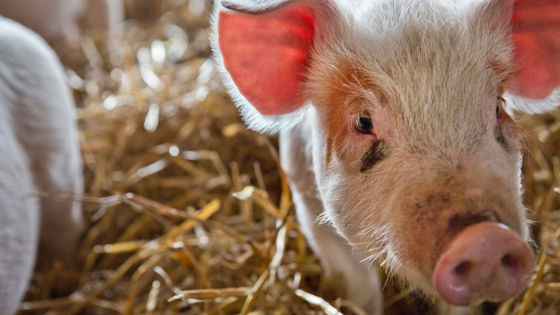
Cloning also poses potential health risks. One study found that 48% of cloned pigs died within one month of birth. Cloned cattle often suffer from musculoskeletal disorders , such as lameness and tendon abnormalities. Furthermore, if the original animal had a genetic disorder, the cloned animal will also inherit that risk.
The cost of cloning an animal is also a concern. At the time of writing, cloning typically costs more than $50,000. However, if this money could be used to help foster pets, more animals could be saved.
'Pets are cherished family members, and at first glance, cloning may seem like the perfect way to extend the life of our pets. However, given the challenges and potential concerns associated with cloning, we are better off dedicating our time, money, and emotional energy to our current pets and making their time with us as happy and memorable as possible. This is often the best legacy a deeply loved pet can leave behind,' Boyd said.
Related Posts: